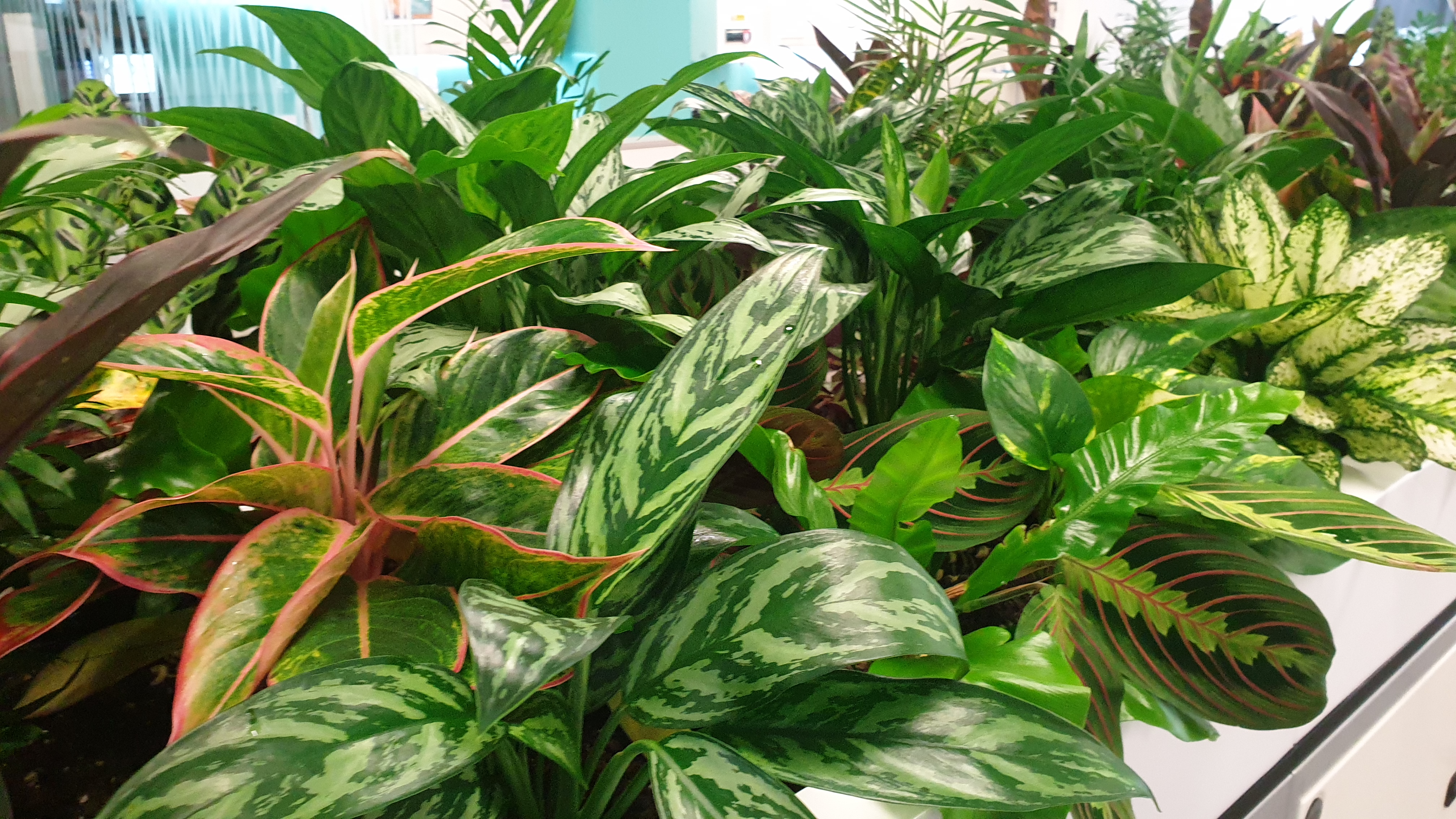
The interior landscaping industry is booming, driven by the demand for biophilic design in office spaces. While houseplants thrive in homes, not all are suitable for commercial environments. Successful interior landscapes require resilient plants adapted to low light and infrequent care. Understanding plant origins and care techniques is essential for designers.
Are you a new or aspiring interior landscaping designer? Have you been inspired by the multitude of houseplant influencers that have been promoting the benefits of indoor greenery? Perhaps you are a houseplant enthusiast or influencer and you fancy a new career in commercial interior landscaping. Well, there are some fantastic career opportunities (and I’d be happy to introduce you to good companies – get in touch). Maybe you run one of the new mail order houseplant companies that has dipped its toes into corporate horticulture. Are you wondering how to do it profitably?
If any of those apply to you, read on. Be prepared for some preconceptions to be challenged.
Read on even they don’t apply – I think you will find the rest of the article interesting anyway.
What has changed?
Over the last few years (pretty much since the end of the pandemic and the drive to get people back into offices), the interior landscaping industry has experienced something of a boom. A lot of interior designers are specifying plants and other elements of biophilic design, which is very welcome. However, many of these designs are clearly inspired by domestic interior design trends and Pinterest boards.
Last week (and not for the first time), I was asked whether the plants suggested by an interior architect would be suitable for an office. I’m afraid the answer was no.
Despite the drive for making offices more welcoming and home-like, using fashionable houseplants in the workplace can pose challenges for the interior landscaper.
All indoor plants have to be adaptable to low light and lack of seasonal variation. Interior landscape plants also have to cope with being in a more hostile environment. Office plants often have to contend with a dry atmosphere, irregular lighting (due to motion sensors), care on a three-weekly service cycle and possible abuse (usually accidental, occasionally malicious) by the users of a building.
On the other hand, houseplants – even if not watered or fed very often – are usually checked quite frequently. Houseplants can be moved around to take advantage of changing environments, treated for pests as soon as they appear, and are looked after as valued members of the household.
All interior landscaping plants will make good houseplants (assuming you have the space and the right environmental conditions). Not all houseplants are suitable for a commercial interior.
Why is that?
This is not a house!
Offices and rainforests have a lot in common. The natural origins of indoor plants
There are over a quarter of a million species of flowering plants alive on Earth. About 500 or so will live as houseplants, but interior landscapers tend to use only a fraction of that number.
Understanding something about the natural origins of interior plants will help with the design and specification of successful and resilient planting schemes. It is important for a designer to know about plants’ environmental needs and how they interact with the indoor environment.
The range of plants interior landscapers use comes, broadly, from three distinct climate types. these are the:
Rainforests (tropical and subtropical). About 75% of interior plant species have their natural origins there,
Semi-arid areas (deserts and semi-deserts), which account for about 20% of interior plant species (including succulents and spiky plants), and
Mediterranean climate zones. These include not just the area around the Mediterranean Sea, but also areas with a similar environment, such as California, South Africa (The Cape) and parts of Japan, Taiwan, Chile, Australia and New Zealand (generally at altitude).
The rainforests and semi-arid regions are characterized by very little seasonal variation. This means that plants from these areas are well adapted to interior conditions. Most workplaces have pretty constant conditions all the year round – just like a jungle. The only difference is that instead of lots of rain, the plants are watered by experienced horticultural technicians.
Tropical rainforest in Northern Queensland, Australia (image by the author)
The differences between a houseplant and an interior landscape plant
A lot of popular houseplants are easy to care for, as long as you don’t mind checking them every few days. They are often quite fast growing and also quite short-lived – although you can often take cuttings. Several species benefit from being moved around the house according to the season and availability of light. They are often quite happy on a windowsill (especially if the house is unoccupied during the day and window light is all they get). Furthermore, dealing with an occasional pest is quite easy – especially if you catch them quickly and can take the necessary time to nurture your plant back to health.
Houseplants are often grown to a different quality standard to those destined for the interior landscaping market. Root systems are often weaker and they have been grown on a nursery to promote lots of lush foliage. This makes them very appealing in a garden centre or DIY store. The retailer isn’t fussed if the plant doesn’t live too long. Most people assume that their dying houseplant is down to their own lack of green fingers. Houseplants are often quite small too, but if you are green fingered, they can be allowed to grow quite big.
15 years ago, this was a cheap plant in a 15cm pot, which I bought from a DIY store. Now it is well over 2m in height and still growing.
However, if you are a commercial interior landscaper, you need proven, resilient plants. These must be capable of surviving for several years in the hostile environment of an office. They have to be resistant to pests, they shouldn’t grow too quickly and they should be long lived. You also need them to thrive between service visits – and these could be three weeks apart (or more). You also need to use a different set of horticultural techniques, substrates and a different way of setting up the plant displays.
Where to learn more
If you would like more information about indoor plants, have a rummage around this blog. There are lots of posts, and more to come, about indoor greenery.
If you would like advice or training on interior landscaping, get in touch or join my mailing list (see below). You can also find out more about my services and training courses here.
Office designers are increasingly using cabinet-top planters, but these shallow containers often result in poor plant health due to rapid water depletion and incompatible species. To improve outcomes, designers should consult professional interior landscapers and consider hydro-culture or low-water plants, while potentially adjusting service cycles to better maintain these installations.
Over the last few years, office designers have specified cabinet-top planters (sometimes called furniture-based planters). They are rectangular troughs that are designed to hold several small plants – often a mixture of species.
These planters are often rather shallow: 150mm to 200mm depth is quite common. They can look great, but they can also have some issues – especially if you have to maintain the plants in them.
I have seen increasing numbers of this type of planting not looking their best after a relatively short time. Sometimes, this is down to having a mix of plants that are incompatible with each other. (I have a training course about that, by the way – please get in touch). However, more often, it seems to be because the planters are very shallow. Office furniture designers – get in touch with a horticulturist (me, for example) before you design your planters. Some of your work is very sub-optimal. Why do you think 150mm depth is adequate?
Most of these planters take large numbers of small plants in a relatively small volume of growing medium. As a result, they tend get through water quite quickly. Because they are quite high (often above shoulder height), they are also tricky to water and groom.
Vulcaponics can work very well with furniture-based planters, but even they can struggle when the planter is especially shallow.
Most commercial interior landscaping companies have a service cycle of two weeks or more (three weeks is common in Europe). This is fine for larger, solo plants displayed in decent-sized planters. Three or even four week watering intervals are no problem, but this is a stretch for such small plants.
It strikes me that the best way to think of these planters is as a horizontal green wall. Green walls have large volumes of small plants in a relatively small space. They work because the watering element of plant care is managed by having an irrigation system, or hydroponic set-up.
Shallow cabinet-top planter set up with hydro-culture plants Image by the author
Interior landscapers: you have options
First, you can shorten your service cycles
This will work, but will be costly. It might make planning of service schedules quite difficult if you have a mix of 2-week and 3-week cycles.
Second, try using more succulents and other low-water plants
This will also work, but you will need to check to make sure the light levels are high enough.
Next, do nothing …
… but make sure you price in much higher plant replacement costs.
Finally, consider using hydro-culture For this type of plant display
This will enable you to stretch your service intervals back to three weeks. You will also solve many of the plant incompatibility issues that would arise from the species having different water requirements when grown in compost. This is the closest to a green wall in terms of care and maintenance.
Get in touch for advice, training or consultancy, whether you are an interior landscaper, designer or furniture supplier – I can help you get it right. Please also sign up to get my emails about my services and training programmes.
Biophilic design enhances well-being and productivity by integrating nature into built environments. While plants are essential, non-rhythmic sensory stimuli like sounds of water or flickering flames enrich the experience. These elements reduce stress and improve mood, thereby fostering cognitive benefits and a stronger connection to nature.
Fast running water cascading over rocks. Picture by the author
Biophilic design has gained significant traction over the last decade or so as a way to support well-being, improve quality of life in built environments and even improve productivity. For some designers – especially people in my own industry of interior landscaping – this starts and finishes with plants. However, there is much more to it than just greenery.
I have written before about the need to stimulate all of our senses to be truly biophilic. One way to achieve this is by incorporating non-rhythmic sensory stimuli. These include elements such as the sound of running water, the sight of flickering flames, rustling leaves, or the sensation of a gentle breeze. Ambient scenting may also be considered a non-rhythmic sensory stimulus, although this is a much more complicated issue and worthy of a separate article.
The incorporation of non-rhythmic sensory experiences into the built environment can offer additional ways to enhance well-being, productivity, and overall quality of life by making the biophilic experience more rounded. This is one of the 14+ patterns of biophilic design recognised in the iconic report by Terrapin Bright Green (which has been recently updated in its 10th anniversary edition, and which is very much worth a read).
The science behind non-rhythmic sensory stimuli
Non-rhythmic sensory stimuli are characterized by their variability and unpredictability, which is in contrast to the often monotonous and repetitive patterns found in the artificial settings of the built environment. These stimuli are common in natural settings. Research suggests that such patterns engage our senses in a way that promotes relaxation, reduces stress and may even enhance our cognitive abilities.
One study Joye et al. (2013) suggested that non-visual sensory stimuli, such as the sound of water or wind, can significantly reduce stress and improve mood. The study found that these stimuli activate the parasympathetic nervous system, which is responsible for the body’s “rest and digest” response. It has been suggested that this could counteract the effects of chronic stress. Similarly, the visual unpredictability of natural elements, such as the movement of flames or shifting shadows as the sun shines through vegetation blowing in the breeze, might capture attention in a non-intrusive way, fostering a sense of calm.
One of the most significant benefits of non-rhythmic sensory experiences is their ability to reduce stress and anxiety. In a world dominated by structured routines and artificial environments, the introduction of natural, irregular patterns can provide some form of mental escape back to nature. For instance, the sound of running water, whether from a fountain, an indoor waterfall or even from an electronic soundscaping system has been shown to reduce stress, as measured by skin conductance (Alvarsson et al., 2010), something that could be valuable in high-stress environments such as some offices, hospitals, and schools.
Moreover, non-rhythmic stimuli can evoke positive emotional responses. The sight of dancing flames in a fireplace or the gentle movement of curtains in a breeze can create a sense of warmth, comfort, and nostalgia. These experiences tap into our evolutionary connection to nature, fostering feelings of safety and well-being. Over 30 years ago, Roger Ulrich (1993) wrote that exposure to natural elements can elicit positive emotions and reduce feelings of anger, fear, and sadness, which are often exacerbated by sterile, artificial environments.
Cognitive and productivity benefits
Incorporating non-rhythmic sensory experiences into indoor spaces can also enhance cognitive performance and productivity. Research by Kaplan and Kaplan (1989) on Attention Restoration Theory (ART) suggests that natural environments, with their innate variability, provide a restorative effect on mental fatigue. Non-rhythmic stimuli, such as the sound of a breeze or the sight of moving water, can serve as “soft fascinations” that allow the brain to recover from the demands of focused attention.
In the workplace, it has been suggested that the introduction of non-rhythmic elements might be linked to improved concentration, creativity, and problem-solving abilities. Anecdotal reports suggest that people working in environments with natural sounds, such as flowing water or bird songs, experienced higher levels of satisfaction and productivity compared to those in traditional office settings.
Similarly, the use of dynamic lighting systems that mimic the shifting patterns of natural light can help regulate circadian rhythms, improving alertness and reducing fatigue. Research carried out at the BRE and presented at the Wellness and Biophilia Symposium in 2019 showed a relationship (in some scales) between dynamic lighting and improved self-reported wellbeing.
Practical applications in the built environment
The use of non-rhythmic sensory experiences into indoor spaces is now being incorporated in some workplaces, and can be achieved through a variety of design strategies. Water features, such as indoor fountains or aquariums, can provide both auditory and visual stimulation. . Similarly, the use of natural materials, such as moss, foliage, wood and stone, can enhance tactile experiences and evoke a sense of warmth and authenticity.
An indoor water feature in an airport
In addition to these physical elements, technology can play a role in bringing non-rhythmic experiences indoors. For example, dynamic lighting systems that mimic the changing patterns of natural light can stimulate the brain not unlike being outdoors throughout the day and soundscapes that replicate natural environments, such as forests or beaches, can be used to create a calming atmosphere in offices, schools, and healthcare facilities.
Virtual reality systems that simulate natural settings can also provide immersive sensory experiences, particularly in environments where access to nature is limited. I once visited a place where there were no windows in one part of the building, so screens were set up linked to cameras mounted on the external walls so the view from outside could be brought in.
I can help you with your biophilic designs
If you are a designer or are planning some biophilic interventions in your building and would like some advice on how to incorporate non-rhythmic stimuli, please get in touch. I know lots about plants, a fair bit about water and scenting and I can put you in touch with plenty of people that are experts in some of the other patterns.
Evidence-based design (EBD) emphasizes designing spaces based on measurable evidence rather than intuition. Originating in healthcare, EBD applies principles that focus on understanding client goals and developing relevant metrics. Engaging end-users throughout the design process enhances outcomes. By utilizing continuous data analysis, EBD aims to create efficient and user-centric environments.
What is evidence-based design?
Evidence-based design (EBD) is the design of spaces based on evidence, not simple ‘rules of thumb’ (also referred to as heuristics). The discipline of EBD was first developed in the healthcare industry, and its principles are increasingly being applied across the built environment.
An important part of the design process has to be a real understanding of what the client is really trying to achieve and then develop some metrics and indicators to determine whether those objectives have been achieved.
What is important for the customer? What is the starting point? What is the end point? How do we know that we’ve got there?
For example, is the client concerned about health and wellbeing, colleague engagement or productivity? These can all be measured, to an extent.
Some measurements may be physical or observational, e.g. how space is used. Other measurements might be associated with HR indicators such as absenteeism or complaints about the indoor air quality.
Maybe, the client is mainly interested in achieving a building certification (such as WELL) or a high Glassdoor rating in order to attract and retain staff (or to gain a “great place to work” recognition). These may require a different set of metrics and, in some cases, might be achieved by ticking boxes and completing spreadsheets without needing to engage with the end-users of the space at all.
Having said that, such a workplace, whilst meeting the specified end point of getting a certification, may not be especially effective. It is now well known that empowered, involved and engaged workers tend to be happier, healthier, more satisfied and more productive than those for whom a change was imposed.
However, without defining terms at the beginning of a project, the designer cannot really justify claims for its subsequent success. Objectives and KPIs must be clearly defined. If not, the wrong metrics may be used. Without good evidence, knowing what tweaks might be needed is impossible. This is especially true once a new workplace design has been commissioned to keep it working effectively.
If EBD is applied without direct involvement from the end-users, the designer limits the amount and quality of evidence available.
Five-step approach to evidence-based guided design
I will illustrate the process using an example of creating an new interior landscape scheme in an office-based workplace, although the principles would apply to almost any types of design project. Get in touch to discuss your specific needs.
Step 1: setting the intent and identifying needs
Here, we state the intent of the exercise. We seek to discover the needs of the client and identify any issues or areas that are important to the organization. These may relate to health and well being, productivity / financial indicators, staff engagement or even sustainability. Initial discussions would probably be with the client’s management team. It would be wise to also engage informally with the premises users at this time. This helps see if the management’s concerns align with those of their staff.
Outputs: KPIs agreed, scope and boundaries of surveys agreed, communications plan, workshops and end-user communications (e.g. newsletters)
Step 2: surveys and initial data
The next step would be to carry out a detailed set of surveys. This will include an assessment of the physical space (light, noise, layout, air quality, etc.) and a tailor-made staff survey, which will identify and quantify areas of concern. I can design these surveys for you so you get the information you really need.
The designer would also ensure that we have some objective baseline data from the client (if required) that could be compared against the designer’s own findings.
Outputs: initial surveys and data analysis, second staff communications, scope and boundaries of design agreed, design budget agreed.
Step 3: consultation and engagement
Before any intervention is made (for example, a redesign of the office space), the office staff should be kept engaged.
Research has demonstrated that giving office workers a genuine stake in the project (hearing their views and giving them real choices) results in better, and more durable, outcomes.
Throughout the process, the designer would ensure that all stakeholders in the project are kept informed of the progress of the project. This will be achieved using newsletters, social media and face-to-face discussions. At this point, the designer would have a fair idea of options available.
Outputs: ideas and requests collected from client’s staff, third staff communications
Step 4: design
At this point, an experienced design team would be brought in to discuss design options with all the stakeholders. The designer will have an idea of what might work after reviewing all the initial survey information. The designer will then present some outline options to the client.
The designer would then take their collected ideas forward for discussion and engage all users of the office space in the final decision. Once this has been agreed, the design team would make arrangements for the space to be redesigned accordingly.
Throughout this process, it is important to keep all stakeholders informed. There is often a few weeks lead time for a design to be installed. The designer and the client need to keep everyone’s enthusiasm alive. They should build up to the day when their ideas are realized in their newly-designed work space.
Outputs: first design proposals for discussion by staff and management. Revisions and final design choices. Design specification and order. Fourth (and possibly fifth) staff newsletter. Design installation.
Step 5: Follow-up and continuous review
The client will need to know whether the interventions carried out in the offices have been successful. Therefore, a series of follow-up surveys could be carried out shortly after the new designs have been installed. These surveys could include staff questionnaires, analysis of the client’s data, and physical measurements of the environment.
Such surveys might be repeated every 2 months or so for at least 9 months to confirm that the interventions have had a durable effect. If necessary, designs could be reviewed and adjusted as needed to satisfy the customer or end-users. Their experience may highlight unforeseen needs.
Again, the designer would continue to communicate and engage with all stakeholders to let them know what is going on, and to get some qualitative evidence as well as quantitative data.
Outputs: follow-up surveys, data analysis, continuing staff newsletters
How will you know whether an environment is successful?
At each step of the process, data will be gathered to determine whether process is working. Data for evidence-based design can come from direct, indirect or proxy sources.
Pre-intervention
At installation
Post intervention
Direct measures (examples)
End-user surveys End-user focus groups Sentiment / satisfaction measures Customer interviews Observational data Sensors and monitors
Discussions with end users – confirm needs have been met Discussions with customer – confirm needs have been met Sentiment / satisfaction measures
Ongoing Post intervention surveys (every few months for at least one year) Ongoing sentiment / satisfaction measures Interviews and focus groups Observational data Sensors and monitors
Indirect measures (examples)
WELL scorecard Fitwel scorecard RESET scorecard Sustainability scorecard Leesman index Revenue / person Revenue / square foot Absenteeism records Staff retention rates Review sites (e.g. Glassdoor, Trustpilot, etc.)
WELL scorecard Fitwel scorecard RESET scorecard Sustainability scorecard Leesman index Revenue / person Revenue / square foot Absenteeism records Staff retention rates Review sites (e.g. Glassdoor, Trustpilot, etc.)
Proxy measures (examples)
Tests and quizzes Simulations Comparison with similar organizations (impact seen with them probably similar to impact on us) Case studies References
Tests and quizzes Simulations Designer feedback
Tests and quizzes Simulations Comparison with similar organizations (impact seen with them probably similar to impact on us)
Big Brother is watching you
Direct sources of data may be from automated systems and sensors. Sensors are increasingly being used to give building managers and space planners real-time data on how space is used and the environmental conditions in different parts of a building. This is becoming increasingly important now that hybrid ways of working are becoming more common and workplace usage patterns are changing rapidly.
Data collected on environmental and space utilization parameters allows for rapid changes in layout or environmental management. This ensures that users get as comfortable and as useful a workspace as possible.
Mapping survey data to culture, demographics and location: unveiling the nuances
Understanding the collective preferences of the end users of the workplace – the office workers – is crucial. However, digging deeper into the data is essential. Attempting to map these preferences onto the cultural, demographic, and locational peculiarities of the organization can give invaluable insights. This reveals patterns and nuances that can be easily overlooked in broader surveys.
The benefits of longitudinal studies
Collecting survey data immediately before and after the installation of a new interior design is not especially valuable. People notice the immediate impact of change. However, tracking individual responses over time (whilst meticulously maintaining privacy) is very beneficial. It includes collecting data for an extended period post-intervention. This allows the designer to distinguish the subtle effects of design interventions from the larger waves of, say, a new CEO or a major business shift.
Granular analysis of data over time, ideally with the aid of a statistician, can offer a clear picture. It will reduce the risk of misinterpretations and helps to ensure that design decisions are informed by the most accurate trends.
Longitudinal studies, with frequent data analysis, also allow for post-design tweaks. Whilst easy-to-digest broad data can be appealing, the detail is where hidden gems of insight can be found.
Hidden gems
Demographic studies can hold surprising potential, as long as you know what to look for. For example, a seemingly innocuous study (carried out in the late 1990s) into the plant preferences of staff in a local government office revealed a hidden layer of cultural influence. The headline findings clearly showed a relationship between plant preference and the seniority of the office worker. Closer examination unearthed a deeper connection to gender, rooted in the organization’s history and norms. Men occupied the bulk of the senior positions, whilst there were far more women occupying more junior roles. This highlights the importance of not solely relying on surface-level observations and instead delving into the details woven into the data.
Another small study challenged preconceived notions by demonstrating that job role, regardless of age, could be a stronger reflector of plant preferences than previously thought. Stereotypes, both reinforced and shattered, illustrate the power of data to illuminate the complexities of human behaviour within a specific context.
Ultimately, mapping data to culture, demographics, and location is not about finding definitive answers, but rather about uncovering the rich tapestry of influences that shape how people interact with their environment. By exploring the nuances found in data, evidence-based design transcends mere aesthetics and can be a tool that transforms workplaces into spaces that truly resonate with their users.
Measuring the right thing!
If the aim of a project is to improve employee wellbeing, then there is no point in measuring the organization’s Net Promoter Score. Likewise, measuring indoor air quality is unlikely to tell you much about a company’s brand reputation.
Having said that, there are likely to be some interesting interactions. Improving indoor air quality may well have an impact on productivity, especially if carbon dioxide levels are kept low, leading to greater alertness and less fatigue. However, you won’t know if productivity has been improved unless you actually measure it. Similarly, whilst improving employee wellbeing may lead to a better NPS score – happy staff are probably going to give better customer service after all – NPS isn’t, on its own, going to be a reliable measure of wellbeing.
Here are some possible aims of a design interventions with some of the metrics that could be used.
Project aim
Possible metrics
Improved productivity
Revenue (or profit) per employee Revenue (or profit) per unit area of office space
Reduced absenteeism
Work days lost, long term absence, etc.
Increased office space utilization
Time spent in the office Workspace occupancy Sensor data
Improved wellbeing
Survey data: complaints of SBS, symptoms, reasons for absenteeism, etc. Health monitoring data
NPS data Ranking in reviews / indices (e.g. Glassdoor, Leesman, Trustpilot, etc.)
Improved colleague engagement
Staff engagement surveys, e.g. Q10, Hays Group,
Improved customer engagement
NPS Customer comments and complaints, reviews, etc. Customer satisfaction surveys Trip Advisor scores (for hospitality sector) Trustpilot scores (for service providers, retail, etc.) Increased footfall or dwell time (retail sector) Increase in return custom (retail, healthcare and hospitality) Customer referrals (retail, healthcare, hospitality)
Improved sustainability
GHG emissions normalized against revenue or per capita (rather than against floor space) Reductions in energy costs
Add value to your interior design
If you are involved in design, consider an evidence-based approach. This is especially important if you are an interior landscaper who wants to add value to your service. If you need help in putting together a programme, or if you need assistance designing surveys and other elements of data collection, then please get in touch. Check out my services page for information about my specific areas of expertise and consultancy.
Vulcaponics is a hybrid growing system that blends soil and hydroculture methods, enhancing plant health through improved water management and root growth. It uses a substrate of pumice granules, providing easy watering and reducing pest risks. While suitable for small to medium plants, it has some weight and cost disadvantages.
Interior landscape where all the plants are set up using a vulcaponic growing system
Vulcaponics is the latest evolutionary step in interior landscaping and is becoming increasingly popular. If you are not familiar with the term, it is a growing system that combines the advantages of hydroculture with the convenience of soil culture. The system encourages good root growth, makes water and fertilizer management easier, reduces the risk of soil pests (especially fungus gnats) and helps the interior landscaping industry reduce its reliance on peat-based substrates.
So, what is a vulcaponic growing system?
Close-up image of vulcaponic substrate
Vulcaponics is a hybrid growing system that combines the benefits of both soil and hydroculture systems. It is effectively a semi-hydro system: the plants start out as conventional soil-cultured plants growing in a lightweight compost but over the course of a few weeks, the roots grow into the vulcaponic substrate and behave more like the water roots that are found with hydroculture plants.
In many respects, the system is similar to the Seramis system that developed in the 1990s, and which encourages exceptional root growth. Seramis is composed of small granules of expanded, aerated clay (much smaller and denser than LECA, used in hydroculture plants), which are able to hold water and allow root hairs to penetrate them. If I remember correctly, the product was originally developed as a type of cat litter, but was soon found to be an exceptional substrate for indoor plants.
Vulcaponic substrate shares many of the same characteristics, but instead of being made from clay, is composed of fine granules of pumice (the result of volcanic activity – hence the name) and some other naturally-occurring minerals.
What are the benefits?
Vulcaponic systems have several benefits, and most relate to better root growth and root health due to improved water management.
Watering a vulcaponic system is very easy – you check the soil moisture of the root ball (using a soil probe), and if it is dry, you add water. Sometimes, vulcaponic displays are fitted with a float gauge (the same as with a full hydroculture system), but it isn’t essential.
Assessing moisture in the rootball of a plant when a depth gauge is not used
Water is added to substrate, which then percolates down the to the bottom. The water is then absorbed by the substrate, which can lift it as much as 20cm. This then creates a jacket of moisture right around the root ball which initially soaks into the soil. After a while, roots from the rootball will grow into the vulcaponic substrate and take water from there. This means that the rootball remains aerated and oxygen can get to the roots easily. It also means that the soil is not compacted as it often is when top-watered.
Water the surface, not individual plants
Delivering the water to the roots this way has another benefit – the soil surface remains dry. If the soil surface is dry, then fungus gnats (sciarid flies) have a hard time getting established. Furthermore, a vulcaponic display should include a 2 – 3cm deep layer on the surface as well as around the sides and underneath the rootball. This makes it even harder for soil-dwelling pests to establish.
Watering intervals can also be extended. My own experiments have shown that it is easily possible to extend watering intervals to as much as six weeks (depending on plant species). This means that interior landscapers can spend more time cleaning, grooming, trimming and pruning their plants (the interesting part of the job) and less time lugging heavy watering cans around and just having enough time to give the plants a quick drink. The ‘splash and dash’ approach to plant maintenance can be eliminated, resulting in higher quality, longer lasting plant displays. Commercial interior landscapers will have fewer customer complaints, fewer plant replacements and improved operating margins.
Planter containing two 17cm Aglaonema plants set up in a vulcaponic system. These are typically watered every 5 – 6 weeks
The downsides
Vulcaponics are not a panacea, but the system is ideal for small and medium-sized plants (up to about 2m in height). Really large plants are still better off in a decent soil-based compost. The main disadvantages are:
Vulcaponic substrate is heavy, so you must ensure that any plant containers, or furniture that they are placed on, can take the extra weight.
Compared with lightweight compost media, vulcaponic substrate can be pricey. However, the benefits outweigh the initial expense quite quickly
When planting mixtures of plants in a large container, it is important to ensure that the plants have a similar rootball depth
For deeper plant containers, you will have to use a liner – you don’t want more than 5 – 8cm depth of vulcaponic substrate under the rootball, otherwise the water will not rise far enough
The problems associated with using different-sized plants in a mixed planter when using the vulcaponic system
Want to learn more?
If you are an interior landscaper interested in discovering more about vulcaponics, please get in touch. I’d be happy to discuss the system and I offer a training programme on this subject.