Category: home working

  • Houseplants and interior landscaping plants – what’s the difference?

    Houseplants and interior landscaping plants – what’s the difference?

    Image of a young woman in a contemporary domestic living room surrounded by houseplants.  Image generated by Bard Imagen ai

    Are you a new or aspiring interior landscaping designer? Have you been inspired by the multitude of houseplant influencers that have been promoting the benefits of indoor greenery? Perhaps you are a houseplant enthusiast or influencer and you fancy a new career in commercial interior landscaping. Well, there are some fantastic career opportunities (and I’d be happy to put you in touch with good companies – get in touch). Maybe you run one of the new mail order houseplant companies that has dipped its toes into corporate horticulture. Are you wondering how to do it profitably?

    If any of those apply to you, read on. Be prepared for some preconceptions to be challenged.

    Read on even they don’t apply – I think you will find the rest of the article interesting anyway.

    What has changed?

    Over the last few years (pretty much since the end of the pandemic and the drive to get people back into offices), the interior landscaping industry has experienced something of a boom. A lot of interior designers are specifying plants and other elements of biophilic design, which is very welcome. However, many of these designs are clearly inspired by domestic interior design trends and Pinterest boards.

    Last week (and not for the first time), I was asked whether the plants suggested by an interior architect would be suitable for an office. I’m afraid the answer was no.

    Despite the drive for making offices more welcoming and home-like, using fashionable houseplants in the workplace can pose challenges for the interior landscaper.

    Interior designer working on an office design that features plants.  AI-generated image by Bard Imagen 3

    All indoor plants have to be adaptable to low light and lack of seasonal variation. Interior landscape plants also have to cope with being in a more hostile environment. Office plants often have to contend with a dry atmosphere, irregular lighting (due to motion sensors), care on a three-weekly service cycle and possible abuse (usually accidental, occasionally malicious) by the users of a building.

    On the other hand, houseplants – even if not watered or fed very often – are usually checked quite frequently. Houseplants can be moved around to take advantage of changing environments, treated for pests as soon as they appear, and are looked after as valued members of the household.

    All interior landscaping plants will make good houseplants (assuming you have the space and the right environmental conditions). Not all houseplants are suitable for a commercial interior.

    Why is that?

    Inside of a modern office building in London.  Image taken by the author.
    This is not a house!

    Offices and rainforests have a lot in common. The natural origins of indoor plants

    There are over a quarter of a million species of flowering plants alive on Earth. About 500 or so will live as houseplants, but interior landscapers tend to use only a fraction of that number.

    Understanding something about the natural origins of interior plants will help with the design and specification of successful and resilient planting schemes. It is important for a designer to know about plants’ environmental needs and how they interact with the indoor environment.

    The range of plants interior landscapers use comes, broadly, from three distinct climate types. these are the:

    • Rainforests (tropical and subtropical). About 75% of interior plant species have their natural origins there,
    • Semi-arid areas (deserts and semi-deserts), which account for about 20% of interior plant species (including succulents and spiky plants), and
    • Mediterranean climate zones. These include not just the area around the Mediterranean Sea, but also areas with a similar environment, such as California, South Africa (The Cape) and parts of Japan, Taiwan, Chile, Australia and New Zealand (generally at altitude).

    The rainforests and semi-arid regions are characterized by very little seasonal variation. This means that plants from these areas are well adapted to interior conditions. Most workplaces have pretty constant conditions all the year round – just like a jungle. The only difference is that instead of lots of rain, the plants are watered by experienced horticultural technicians.

    Northern Queensland rainforest, Australia. Image taken by the author
    Tropical rainforest in Northern Queensland, Australia
    (image by the author)

    The differences between a houseplant and an interior landscape plant

    A lot of popular houseplants are easy to care for, as long as you don’t mind checking them every few days. They are often quite fast growing and also quite short-lived – although you can often take cuttings. Several species benefit from being moved around the house according to the season and availability of light. They are often quite happy on a windowsill (especially if the house is unoccupied during the day and window light is all they get). Furthermore, dealing with an occasional pest is quite easy – especially if you catch them quickly and can take the necessary time to nurture your plant back to health.

    Houseplants are often grown to a different quality standard to those destined for the interior landscaping market. Root systems are often weaker and they have been grown on a nursery to promote lots of lush foliage. This makes them very appealing in a garden centre or DIY store. The retailer isn’t fussed if the plant doesn’t live too long. Most people assume that their dying houseplant is down to their own lack of green fingers. Houseplants are often quite small too, but if you are green fingered, they can be allowed to grow quite big.

    Schefflera arboricola.  13 years ago, this was a cheap plant from a DIY store in a 15cm pot.  Image by the author.
    13 years ago, this was a cheap plant in a 15cm pot, which I bought from a DIY store. Now it is well over 2m in height and still growing.

    However, if you are a commercial interior landscaper, you need proven, resilient plants. These must be capable of surviving for several years in the hostile environment of an office. They have to be resistant to pests, they shouldn’t grow too quickly and they should be long lived. You also need them to thrive between service visits – and these could be three weeks apart (or more). You also need to use a different set of horticultural techniques, substrates and a different way of setting up the plant displays.

    Where to learn more

    If you would like more information about indoor plants, have a rummage around this blog. There are lots of posts, and more to come, about indoor greenery.

    If you would like advice or training on interior landscaping, get in touch or join my mailing list (see below). You can also find out more about my services and training courses here.

    Processing…
    Success! You're on the list.
  • Biophilia in the home: why you should take a warm shower, even if you are clean

    Biophilia in the home: why you should take a warm shower, even if you are clean

    Image of the head of a person taking a shower
    Photo by Photo By: Kaboompics.com on Pexels.com

    In my last post, I wrote about the benefits of incorporating non-rhythmic stimuli into the built environment as a biophilic design intervention. In both the home and the workplace, we can use such stimuli to add an extra dimension to our sensory experiences, which ought to improve our wellbeing and comfort.

    In the home, one of the most potent things you can do to create a biophilic experience is to take a nice, warm shower.

    A warm shower can be more than a utilitarian act of hygiene – it is a deeply pleasurable, biophilic experience. It engages so many of our senses: sound, touch, smell (if your shower gel is nice) and warmth in ways that can be both soothing and invigorating. This offers a good blend of physical and psychological benefits. One reason for this pleasure lies in the non-rhythmic sensory experience it provides, which is an important element of biophilia and our innate need to connect with nature.

    Unlike the predictable, repetitive stimuli we often encounter in daily life, such as the hum of a computer or the ticking of a clock, the sensation of water cascading over the skin is irregular and varied. This non-rhythmic stimulation captures our attention without overwhelming is. The gentle, unpredictable patterns of water droplets hitting the skin can almost induce a meditative state, allowing the mind to unwind and release stress and provide a mental escape.

    The skin, as our largest sense organ, plays a central role in this experience. When warm water flows over the body, it stimulates countless nerve endings embedded in the skin, sending signals to the brain that trigger the release of feel-good neurotransmitters like endorphins and serotonin. The warmth of the water also promotes vasodilation, improving blood circulation and creating a comforting, enveloping sensation. This tactile stimulation is deeply grounding and fosters a sense of physical and emotional well-being. Furthermore, the contrast between the warmth of the water and the cooler air outside the shower can heighten sensory awareness, making the experience even more vivid and enjoyable. These elements could be thought of as a multisensory ritual that not only cleanses the body but also rejuvenates the mind. A warm shower a profoundly pleasurable, restorative and essentially biophilic act – cleansing both mind and body.

  • Autumn challenges for your houseplants

    Autumn challenges for your houseplants

    woodland in autumn, showing shades of green, red, orange and brown

    Last week, we passed the autumn equinox. The day when we enter a period of more night time than daylight. More people are also working away from home as employers are trying hard to encourage their staff back to the office. With this in mind, please spare a thought for your houseplants.

    Lights on in the home

    Offices are getting busier and more people are spending their working hours away from home.
    We are also entering autumn. This means a lot less daylight, as a result of shorter days, less intense sunlight and far fewer hours of daylight.

    It also means that the lights at home are off. On a dull day in an unlit house, light levels may be very low only a short distance from the windows. For houseplants, this can be tricky – they need light to photosynthesize, so prolonged darkness can cause problems. However, there are ways to minimize those potential issues.

    By the windows

    cacti on a windowsill
    Cacti on a windowsill

    If you haven’t already filled every available gap on your window sills with plants, now is the time to move some of your smaller plants a bit closer. Those that are sensitive to direct light (even at this time of year) such as Calatheas and Alocasias can go on north-facing window sills.

    If you have a conservatory, and some room, some of your other plants might welcome a change of scene. Again, be aware that some species might not appreciate direct light, and watch out for cooler nighttime temperatures.

    Many species, especially those with their natural origins in the undergrowth of a tropical rainforest, will be able to cope with the lower light levels quite easily without needing to be moved and without the need for additional lighting.

    Plant by a window
    Plant by a window

    Be smart with your lighting

    A lot of people have embraced smart technology and can control much of their home through an app or smart speaker (such as an Amazon Alexa or Google Home device). Smart lighting is one way of giving your houseplants a light boost, and as many lights use very little energy, they won’t add too much to your energy bills (and may save the cost of replacing some plants). A few extra hours of lighting whilst you are away from the home can easily be programmed, and you can also programme your lights to be on when you get home. Having your lights turn on and off throughout the day can also be a useful security benefit.

    If your smart bulbs have different light quality settings, use daylight (sometimes called cool white) at the highest brightness during the day, and then change to a more comfortable warm white when you get home. You probably won’t need the lights to be on all of the time, but some species that do best in higher light conditions might benefit.

    Comparison between daylight (l) and warm white (r) light from a programmable smart bulb

    Cut back on water and feed

    If you are spending more time away from the home, the chances are that as well as light being diminished, your home might be a little cooler as well: there is no need for the central heating if no-one is home.

    If that is the case, your plants will be metabolizing a little slower, so they won’t be needing as much fertilizer and water as usual.

    Always be guided by your plant – water according to the plant’s needs, not to a timetable. You can probably do without fertilizer until the spring as well.

    If you have your houseplants potted in coir pots or set up with vulcaponics, that will certainly help regulate the water given to the plant. Adding water to the decorative pot and allowing it to soak gradually through the coir pot is an ideal way of managing the amount of water in the soil, reducing the risk of the roots becoming saturated.

    Don’t worry

    Most houseplants have their natural origins in the tropics and sub-tropics, where there isn’t much in the way of seasonal variation, much like inside a building. This is the main reason why native species of plants cannot cope with the indoor environment – they need seasonal variation to trigger different processes, such as flowering time or leaf drop.

    However, when there is a seasonal change, some tropical houseplants will respond and you might notice more in the way of leaf drop than usual, especially on plants such as Ficus benjamina and other small-leaved tree species. Unlike temperate trees that tend to drop their leaves in the autumn, tropical species drop leaves continuously as they grow old, but you might find that if light and temperature levels do fall, they might drop more leaves as a result.

    If this happens, don’t be alarmed (unless they drop all of their leaves). They will start producing a lot more foliage in the spring.

    Ficus ‘Green Kinky’

    Houseplants are pretty resilient. Breeders and growers have selected species and varieties over time to ensure that they can cope with the indoor environment. Working from home has probably given many houseplants a bit of a boost, but they will adapt to emptier, darker homes quite quickly.

  • Office plants when offices are empty?  How interior landscapers can adapt to a rapidly evolving workplace environment

    Office plants when offices are empty?  How interior landscapers can adapt to a rapidly evolving workplace environment

    Even before the pandemic, the nature of office work was changing.  There was an increasing shift to creating more purpose-based workspaces that accommodated different styles of activity, such as collaborative working or quiet focused work.  This also led to an increase in the use of non-allocated desks (let alone private offices), so there was no guarantee, or expectation, that an office user would be at the same desk every hour of every day.

    Then, the pandemic forced huge numbers of office workers to work from home, and many of them found it preferable.  This has led to a rise in hybrid working, but has also acted as a catalyst for evolution of workplace design.  

    A decade’s-worth of change seems to have happened in about 18 months and many employers have completely remodelled their office space as a result: partly to attract workers back to the office by making them more comfortable and homely, and partly to adapt them to new ways of working.  

    However, with all the changes in workspace design, many offices are still less than half full for several days a week.  A recent report quoted in The Guardian suggests that the Monday to Friday office occupancy rate across the UK is 29% for the first three months of 2023, and slightly less in London, compared with typical pre-pandemic levels of 60%-80% (according to data from Remit Consulting).  

    Empty open-plan office
    Where is everyone?

    As a result of this, it is quite likely that suppliers of business-to-business (B2B) services are going to be impacted.  Those companies selling discretionary B2B services, such as interior landscaping (my area of interest), are probably going to be especially exposed. 

    B2B companies that already have a nicely diverse mix of customers in terms of sector, size, and geography are probably going to be able to absorb some of the possible shocks, for reasons I’ll discuss later. However, those that are heavily dependent on one part of the marketplace, such as  large corporate offices, might find themselves living in ‘interesting times.’  This is especially true where B2B service providers are not a directly-employed contractor, but appointed by a facilities management company.

    What does this mean for interior landscapers?

    The benefits of interior landscaping and workplace wellbeing are pretty much understood and accepted, so I don’t think there will be a large-scale chuck-out of plants as a cost-saving measure that we have seen in the past (such as the aftermath of the 2008 financial crisis). However, if offices are only – on average – one third full, then it stands to reason that there will be a significant reduction in the floor space needed for organizations.  Those empty floors won’t need plants, art, ambient scenting or coffee machines.

    There is an upside for those businesses agile and imaginative to grasp the opportunities.  Those office workers not commuting as often will still be working somewhere – and not necessarily at home.  They will probably be spending more time working in places such as local co-working venues (several being set up in the suburbs and small satellite towns), coffee shops, or even in hotel lounges.  All of these settings (often called third spaces) would certainly benefit from some nice plants – ideally supplied and maintained by a good interior landscaper.  By offering their services to these spaces, interior landscapers can ensure that their plants continue to be seen and appreciated by workers, even if they are not based in a traditional office environment.

    People working in a coffee shop
    Photo by Marcus Aurelius on Pexels.com

    Employers still have a duty of care

    Even when the workforce is remote, employers still have a responsibility for the health, safety, and wellbeing of all their staff.  It stands to reason that some of those discretionary B2B services could be reimagined as something to enhance wellbeing in the home working environment.

    Many interior plant companies, especially those that have the infrastructure in place to deliver plant displays, could adapt quite quickly – some have already by offering mail order houseplants.  Those companies could easily refine their offer by providing plants that are especially well suited to home working environments.  

    A well-designed home office
    A well-designed home office

    These could include plants that are easy to maintain (and maybe even be set up in such a way as to make plant care especially straightforward), and be properly matched to the home worker’s office environment.  Advice and guidance on selecting the right plants for the space, together with instructions on plant care could be given, alongside tips on how to create a more effective home office space.

  • Indoor air quality in the age of hybrid working: what employers should consider

    Indoor air quality in the age of hybrid working: what employers should consider

    Workspaces are not as full as they used to be and hybrid and remote working is more common and more popular than ever before. Even with incentives (and demands) that people ‘return to the office’, there seems little evidence that office occupancy rates are getting back to pre-pandemic levels any time soon, or even ever. Indeed a recent report quoted in The Guardian suggests that the Monday to Friday office occupancy rate across the UK is 29% for 2023 to date, and slightly less in London, compared with typical pre-pandemic levels of 60%-80% (according to data from Remit Consulting).

    Home workers have needs as well as office workers, and employers have a duty of care to their home-based colleagues as well as those in the office.

    Here we discuss how the pandemic has accelerated the evolution of the workspace and why personal control over the working environment can benefit organizations and workers alike, especially when it comes to the air that we breathe.

    Personal, portable air purifiers and monitors empower workers to maintain a healthy working environment, whether at home or in the office, and give reassurance to employers that they are fulfilling their obligations to ensure that their staff are safe while they are working.

    Accelerated evolution

    Even before the pandemic, the nature of office work was changing. There was an increasing shift to creating more purpose-based workspaces that accommodated different styles of activity, such as collaborative working or quiet focused work. This also led to an increase in the use of non-allocated desks (let alone private offices), so there was no guarantee, or expectation, that an office user would be at the same desk every hour of every day.

    The pandemic forced huge numbers of office workers to work from home, and many of them found it preferable. This has led to a rise in hybrid working, but has also acted as a catalyst for evolution of workplace design. A decade’s-worth of change seems to have happened in about 18 months and many employers have completely remodelled their office space as a result: partly to attract workers back to the office by making them more comfortable and homely, and partly to adapt them to new ways of working. However, with all the improvements in workspace design, many offices are still less than half full for several days a week and those workers that do go to the office are often scattered widely around the place.

    Inviting Big Brother to watch over us

    Another element of our lives that has changed considerably over the last 10 years, and especially rapidly in the last five, is the use of technology to record aspects of our health and wellbeing. The first Apple watch was launched as recently as 2015 and, as well as being a smart timepiece, it can track many aspects of personal health and fitness. The data generated are available for detailed analysis and lifestyle changes can be encouraged.

    Smart watches and smart fitness devices provide a minute-by-minute history of activity and health – including data about health whilst at work. These devices can be used to provide objective evidence of the health of employees in an organization.

    And employers have an obligation to ensure that their employees are working in a safe and healthy environment – wherever they work.

    Other smart, connected devices are also found in the workplace, providing valuable data in real time. These include occupancy sensors and, importantly for wellbeing as well as building management, environmental sensors such as air quality monitors.

    The pandemic also increased awareness of indoor air quality, especially once it was recognized that Covid was transmitted in the air. Air monitoring is a useful tool here. For example, carbon dioxide concentration is a good proxy measurement of ventilation rate – the lower the CO2, the more the air is being refreshed from outside. Higher ventilation rates clearly result in the concentration of airborne pathogens being reduced. However, CO2 is not the only thing worth measuring – increasing ventilation might reduce CO2 and virus concentration, but it could mean bringing in other pollutants from outside, which also need to be measured and controlled.
    Some recent research has shown a relationship between relative humidity, CO2, temperature and virus transmission – this has led to an interesting algorithm that has been deployed on some air monitors that gives an indication of Covid risk(1) (see this Whitepaper, published by RESET).

    Creating wellness instead of fixing problems

    Alongside the development of health and wellness tracking devices, there has been a proliferation of voluntary standards designed to encourage and demonstrate how buildings impact the environment and the people that use them.

    The WELL building standard is one of the best known. It rates a building’s ability to sustain and promote wellbeing across a wide range of parameters. Since launching in 2014, many thousands of buildings around the world have been certified. Other standards include Fitwel and the Living Building Challenge. A very useful comparison of 15 environmental and wellbeing standards can be found here.
    However, these standards primarily relate to how a building works rather than how people work. There is an overlap, but the standards have not yet caught up with hybrid, or completely remote, ways of working.
    How can we know whether our working environment is healthy?

    When offices were predictably occupied, it was very easy to ensure that the working environment met legal and voluntary standards. The environment rarely changed and, if it did, it changed in a predictable and manageable way. Data were collected and facilities managers were able to control the environment of whole buildings from their computer.

    This is still, of course, possible. But the control of whole buildings, or even fixed zones within buildings, is a bit of a blunt instrument when you don’t know where your employees are, when they will be in the building, or what they will be doing whilst they are there. At worst, it means making sure that the whole building is lighted, heated and air-conditioned just in case someone wants to use part of it. This is potentially wasteful of energy and resources.

    Obviously, smart technology, such as occupancy sensors and light sensors can help, but even then, it is often the case that a large zone in a building is ‘switched on’ even if only 20% of the desks are occupied, and the occupiers of those desks scatter themselves as far and wide as possible.

    In these cases, the building provides a safe working environment, even if the resources deployed are used inefficiently and expensively, but how can an organization discharge its health and safety obligations to remote workers – especially those that are new to remote working, or doing work that was previously wholly office based?

    Empowerment

    Over recent years, a lot of interesting research carried out in the UK and The Netherlands(2,3) has demonstrated that empowerment of the working environment yields huge benefits to workers and their employers.

    Data can be very empowering. As discussed earlier, wearable technology and connected devices provide a huge amount of real time data about health and the environment.

    Indoor air quality monitors can be very empowering. If they are visible and showing that there is something not quite right about the air, then the evidence required to make a complaint to the facilities help desk is provided.
    As well as the office worker seeing the data, the facilities help desk should be able to see the same information. Not only that, but there will be a record of the data, so trends can be observed and potential problems identified and fixed quickly.

    Sometimes, people are reluctant to complain, for fear of being regarded as moaners. However, a dispassionate air quality monitor can empower and embolden people to encourage their employers to manage the environment better, or even hand over control, where practical, to the users of the space concerned.
    Where organizations are struggling to retain and recruit, such a visual demonstration of provision of a decent quality working environment is very helpful.

    An air quality monitor might be one way to resolve arguments between facilities managers and building users – the decision to open a window can be validated by an improvement in the particular indoor air quality parameters that mattered to the user at the time.

    This applies to home-based workers as well as those permanently in the office. Although the solution to the problem may not be in the hands of the facilities manager, it can still be facilitated by the employer.

    Taking the solution with you

    Portable, personal air purifiers, such as Vitesy’s Eteria, offer employers and their staff the ability to manage one very important aspect of their working environment – the air they breathe.

    It is a low power personal air purifier that creates a ‘bubble’ of cleaned air around the user, regardless of the size of the room. Instead of cleaning the air in the whole space, it is possible to optimize the quality of the air just where it is needed – around the person. Eteria uses information from the smart air quality monitor module to control the power of the purifier unit when it is connected.

    Important indoor air pollutants can be removed or reduced below safety thresholds in approximately one hour, and the low air velocities means less noise. Low air velocities also means less air turbulence, which means that pollutants are not stirred up and spread around the room.

    The air monitor component is very small, powered through a USB cable and is separate from the purifier. The purifier only works when connected to the monitor, but the monitor works all the time, providing data in real time and accessible through an app.

    This means that it is possible to have a monitor on the desk at home as well as monitors on desks in the office – whether they are assigned workspaces or hot desks.

    The purifier unit is very lightweight and can fit in a small bag or briefcase, making it easy to transport between home and the office.


    (1) Raefer Wallis, Anjanette Green, Bela Nigudkar, Shichuan Xi, Stanton Wong. (2022) RESET Viral Index v1.1

    (2) Knight, C., Postmes, T., & Haslam, S. A (2010). The Relative Merits of Lean, Enriched, and Empowered Offices: An Experimental Examination of the Impact of Workspace Management Strategies on Well-Being and Productivity. Journal of Experimental Psychology: Applied Vol. 16, No. 2, 158–172

    (3) Nieuwenhuis, M., Knight, C., Postmes, T., & Haslam, S. A. (2014, July 28). The Relative Benefits of Green Versus Lean Office Space: Three Field Experiments. Journal of Experimental Psychology: Applied.

  • Is air quality worse in winter?

    Is air quality worse in winter?

    Picture of a snow scene in woodland

    The short answer to this is “often”. There is a lot of day-to-day variation, especially when the weather is quite active: a stiff breeze will disperse air pollution quite effectively. However, on average, most pollutants are at higher concentrations during the winter, and this is due to two main factors.

    First, when it is cold we burn more fuel. These are fuels to warm our homes, such as gas or oil in a boiler, wood or coal on a fire, or fuels for power stations to generate electricity. All these combustion processes put pollutants, such as fine particulates and sulphur dioxide, into the atmosphere close to ground. We also burn more fuel in vehicles because the cold and wet weather makes walking and cycling a less attractive option for travel.

    The other main factor is the weather. Often, we experience prolonged periods of cold, still weather. This is a result of high pressure systems that build up and trap pollutants close to the ground. This is especially pronounced in urban areas with high concentrations of people and traffic, but even in the countryside, pollution from home heating (especially wood burners) can become a local problem.

    When you combine the generally poorer outdoor air, which will find its way indoors, with the greater amount of indoor activity that happens at this time of year, then it is pretty certain that indoor air quality will deteriorate unless you do something about it.

    A log burner with burning wood

    What do we mean by Air Quality and why does it matter?

    The atmosphere is composed of approximately 78% nitrogen, 21% oxygen, 0.9% argon and 0.1% of all other gases (including 0.04% carbon dioxide).

    About 80% of the entire atmosphere is within 15km (10 miles) of the earth’s surface (which is only 0.2% of the earth’s diameter) – a fragile and wafer-thin envelope upon which all life depends.

    The air that we breathe is made up of a mixture of gases, vapours and very tiny particles. Some of those components are essential for our survival (oxygen, being the most obvious example), most of the rest are harmless, but some can be troublesome, even in really low concentrations. Those troublesome components are what we would define as pollutants, and they are made up of particulates and a variety of chemicals (some of which are naturally-occurring). These pollutants can have an adverse impact on our health.

    The amount of pollutants in the air that we breathe determines what we call air quality, and air quality can vary considerably from place to place and season to season and is influenced by weather, climate, volcanic activity and, most profoundly, by human activity.

    Did you know…?

    • Poor air quality is responsible for 10 times as many deaths per year than malaria. According to the World Health Organization, poor air quality is responsible for 7 million premature deaths every year, including over 3 million premature deaths caused by household air pollution (overwhelmingly in developing countries).
    • In the United Kingdom, a rich nation, poor air quality contributes to between 28,000 and 36,000 premature deaths a year. Public Health England states that ‘In the UK, air pollution is the largest environmental risk to public health’. Between 2017 and 2025, the costs to the NHS as a result of air pollution are estimated to be in the order of £1.6 billion.
    • Having said that, the concentrations of most pollutants in the UK is now about a third of what they were in 1970, largely as the result of cleaner vehicle fuels and the near elimination of coal as a fuel for electricity generation and domestic heating.
    • Poor air quality affects our health in many ways. The WHO estimates that in 2016, worldwide, some 58% of outdoor air pollution-related premature deaths were due to ischaemic heart disease and stroke, while 18% of deaths were due to chronic obstructive pulmonary disease and acute lower respiratory infections respectively, and 6% of deaths were due to lung cancer.

    What causes poor indoor air quality?

    The quality of indoor air is determined by the concentrations of a variety of components, and can be divided into those that are generated in the home and those that are brought in from the outside. They can also be divided according to their nature.

    The most serious pollutants found in the home, and outside, are fine particulates. These are tiny particles, usually of soot emitted from vehicles and other combustion processes. They are between 2.5μm and 10μm in diameter and can be breathed deeply into the lungs, where they remain or break down – they don’t get coughed or sneezed out of our airways like dust and pollen. For comparison, human hair is typically between 50μm and 90μm in diameter.
    Other pollutants that can affect our long-term health include a variety of volatile organic compounds, as well as other combustion products such as various oxides of nitrogen and sulphur.

    Ozone produced and trapped in the lower atmosphere can also be harmful (when it is at the top of the atmosphere it provides vital protection against UV radiation).

    Very many of the pollutants we find indoors are carried in from the outside – especially if you live in an urban environment or near a busy road. However, a lot are also generated within the home.

    Cleaning products, room scenters and cosmetics all contain volatile organic compounds, as do alcoholic drinks and foods (if they didn’t, you wouldn’t be able to smell them). Additionally VOCs can be emitted from products such as adhesives, particle boards, paints and wood stains – and even Christmas trees. That fresh, piney smell is loaded with terpenes and other VOCs. Levels of many VOCs can be 5 to 10 times higher indoors than outdoors, and VOC concentrations of as little as 25mg/m3 have been found to induce airway inflammation and irritation.

    Homemade pollution: what is it and how do we know?

    I’m very interested in seeing how indoor air quality changes in my home, and I have a couple of monitors that give me the information I want, including the monitor that comes with Vitesy’s Eteria air purifier. I am also a RESET accredited professional, the training for which gave me some very useful insights and knowledge.

    Here are the charts for my living room over a seven-day period in November 2022 (recorded on a professional-grade Air Gradient monitor):

    Particulates

    The first chart shows the concentration of PM2.5 particulates. These are the fine particles that can be breathed deep into the lungs. There are some concerning spikes (although very short-lived) and I think that they correspond to the times when my log burner was first lit, before it started to burn most efficiently. In some indoor environments, high levels of particulates will be generated by smoking – second-hand tobacco smoke is a major contributor to poor respiratory health.

    Chart showing concentrations of particulate matter from an indoor air quality monitor

    Carbon dioxide

    The middle trace relates to carbon dioxide. This is not, in itself, a serious pollutant, but is a very good proxy measurement for ventilation, and it also relates to the number of people in the room. There are some very good reasons for measuring carbon dioxide – especially in places like offices or schools, but less so in the home.
    Recent research has shown that there is a relationship between carbon dioxide (as a proxy for ventilation), humidity, temperature and the risk of catching airborne viruses, such as SARS CoV-2 (Covid), and many air monitor manufacturers have incorporated an algorithm to give an indication of risk.

    Chart showing concentrations of carbon dioxide from an indoor air quality monitor

    Volatile organic compounds (VOCs)

    The next chart (below) is a record of total volatile compounds (tVOC). These can be generated in many ways and they spread around the air very quickly. In my case, I suspect that the spikes corresponded mainly to cooking.

    Interestingly, on six occasions, VOC concentrations went above 25mg/m3, which is the level at which irritation and to the airways of sensitive people can occur.

    Chart showing concentrations of volatile organic compounds from an indoor air quality monitor

    External pollutants

    I live in a semi-rural area away from busy roads. Whilst there is some traffic, most of the pollution inside my home is generated inside my home. Some external pollutants will find their way indoors (possibly by going up my chimney and back into the house when a door or window was opened), but local air outdoor quality at the time was very good – it has been windy and wet, which means that pollutants are well dispersed.

    You can check local air quality measurements and forecasts on the UK Government’s UK Air Information Resource.

    Screenshot of an air quality forecast for the UK
    Map of air quality data for a local area in the UK

    What can we do about it?

    Knowledge is power. If you know what the air quality is like in the home (and outdoors), then you are in a good position to be able to do something about it.

    Air purifiers, such as Vitesy’s new Eteria and their Natede products, are not only excellent at removing pollutants, but they are packed with top quality sensors, which can supply up-to-date information via the web to a smartphone. The screenshot here shows VOCs recorded on the Eteria air purifier that I have in my living room.

    Screenshot of data from a personal air purifier shown on a smartphone screen

    Once you know about the various air quality parameters, you can then do something about it – or let a smart device like Eteria do it for you.

    As well as the suite of sensors in the device, there is an algorithm that tells it when to act, and with how much effort.

    However, air purifiers can only operate over a small distance – unless you have room for a fridge-sized device, so there are other things you can do.

    Eteria personal air purifier by Vitesy

    First, look at the data and see what is getting close to acceptable thresholds. If carbon dioxide is high, opening a window for a few minutes will be enough to refresh the indoor air. You might also be able to flush out some VOCs as well. However, if the outdoor air is cold and still, there is a risk that you might bring something nasty indoors.

    The other thing you might be able to do is stop the activity that is causing the problem, or minimize the effect. If cooking is adding pollution, then use an extractor. If using a wood burner, then make sure that it is as efficient as possible, the flue is clean, the doors are closed and the wood is well seasoned.

    With portable air purifiers, like Eteria, you can move the device closer to the source of the problem. The light-activated catalyst inside the machine can break down VOCs very quickly.

    One thing to remember is that having information about indoor air quality should not be alarming.

    Air quality monitors are completely dispassionate. They record and report on objective data and make no judgement about the activities that led to the data. High VOCs might be as a result of a room scenter, new perfume, a delicious meal or even a Christmas tree – the machine doesn’t know. However, if you do get an alert when you don’t have a reasonable explanation, you then have the option to start looking for the cause, which might be less benign.

    Vitesy air purifiers (Eteria, Natede Smart and Natede Basic) are distributed in the UK to domestic and commercial customers by Nemesis Ltd

    If you would like to learn more about indoor air quality or Vitesy’s excellent products, get in touch.

    Email: kenneth@purposefulplaces.co.uk

  • The best office I ever worked in

    The best office I ever worked in

    Last week, I visited the Workspace Design Show in London. It was a fascinating experience and there were lots of new, spangly products to help organizations create better, more effective workspaces, as well as some excellent talks and discussions.

    Image of the Workspace Design Show from their web site
    Workspace Design Show, London February 2023 (image from http://www.workspaceshow.co.uk)

    It got me thinking about what it is that makes for a good office experience, and the characteristics of the best office environment that I have worked in.

    I have been home-based for the last 14 years, but my various home offices over the years have not been the best offices that I’ve worked in.

    Garden office
    One of my home offices (but not my current one)

    That office was in an ageing building belonging to the head office of a multinational FTSE 100 plc where I worked for a little over 10 years in the late 1990s and early 2000s.

    So, what made it special?

    It wasn’t the condition of the building, that is for sure. It was built in the late 1940s, with additions from later decades. The heating was ancient, the network was flaky, the windows were tatty (although they were openable) and every so often, a vein of asbestos would be found, necessitating disruptive and costly removal.

    However, there were many things to like about it.

    First, almost everyone, no matter how junior, had there own office, or shared with one other person. They were adequately furnished, but every office was different, and every one reflected the person that used it – we were able to personalise our workspace considerably – plants, pictures from home, etc. I was allowed to choose the colour on the wall when the office was redecorated (after the asbestos had been removed), and I even brought in a coffee machine and a radio!

    Another reason for it being a good place to work was its layout. Everyone tended to leave their doors open, meaning anyone walking along the corridor could pop their heads in and have a chat – usually work related, but not always. The building was very long and narrow, with toilets at opposite ends, and the post room / copier room also at a far end. This meant that several times a day, dozens of colleagues would walk past the office or pass each other in the corridor. It was a very social space, and it was a creative and productive space as well.

    There were other features that made it a good, productive and creative environment, not least the nature of the work that was carried out there. As well as offices, there were laboratories and workshops. It had a collegiate atmosphere with a lot in common with academic institutions, despite it being a very commercial operation. However, there were two features that really stood out.

    First, due to the nature of much of the work that was going on, especially in the laboratories, breaks were at fixed times and everyone went to the canteen at the same time – a really good time to talk to colleagues in different departments, and a really good place to exchange ideas and solve problems. A lot of lateral thinking went on in those coffee breaks and many of those conversations turned out to be serendipitous.

    Secondly, there was the fact that the buildings were set in landscaped grounds. The site was a country house set in several acres of gardens, so absolutely atypical of 99% of workplaces. But those grounds gave everyone that worked there access to space to decompress, relax and reset – or just enjoy the greenery.

    Evolution

    All that was achieved through a process of evolution and when I worked there, had developed over a period of roughly 50 years.

    Of course, things change, and a new CEO decided that what the company really needed was a swanky open-plan floor in a posh, new office building in an expensive part Central London. The company crashed out of the FTSE 100 shortly afterwards, but I’m sure the two events weren’t entirely connected.

    Modern office building in London

    I recognise that my workplace was unusual, and had much more in common with an academic institution than the cut and thrust of a technology business or finance company. The building was owned by the company and its location was on the outskirts of a small town, not in a big city, but there are some lessons from that style of working that could be considered in modern metropolitan office buildings.

    Having visited many office buildings in the last couple of years, most of which were barely a quarter-full, I have been struck by how organizations are desperately trying to create workplaces that will attract people to work in them – especially now that hybrid working patterns are taking hold and a lot of people would rather work from home.

    Interior of a modern office building in London - 2022

    The exhibitors at the show certainly had lots of ideas: zones for collaboration, pods for focused work and wellness rooms to recover from stress. Sofas and screens abounded, and of course, plants featured heavily (a good thing, of course). Every one of those solutions, however, lacked something really important – the ability for office workers to really realise something of their own identity. And as has been explained in older posts – identity realisation is the key to productivity. My friend Dr Craig Knight explains more here.

    Whilst some degree of autonomy is available (the choice to work in a zone, pod or hot desk, for example), there is very limited ability to personalize individual workspaces. Despite huge budgets to create comfortable, ergonomic and efficient workspaces, and the provision of many amenities, such as high quality catering and recreation spaces, the new office building still remains far removed from the home environment where you can arrange your working environment to suit you.

    Is it possible to recreate the style of office working that I experienced 25 years ago in a modern office building?

    I don’t know. It would require people like HR managers and brand managers to relax a bit, and it might mean a different approach to space management, or even the architecture of office buildings.

    Of course, my personal experience of what made for a good environment is just that – my own, personal experience. What worked for me might not work for anyone else at all, and the current design and management of workspaces might actually be the best possible way – feel free to comment.

  • When did you last hear birdsong?

    When did you last hear birdsong?

    Today is the 22nd of December, 2020. Here, in tier 4 Kent, it is quiet. Schools have broken up for the Christmas holidays and, thanks to a new strain of the Covid-19 virus, we are experiencing a near lockdown. This means the roads, and the skies, are nearly empty.

    Oddly, it is also 14 degrees Celsius, the rain has stopped (for a while at any rate), and it is warm enough to sit in the garden with a cup of coffee and contemplate life. As I sat, looking at the garden (and thinking about the jobs that need to be done there, as well as those indoor chores, and for work), I tuned into the sounds. A robin was singing, pigeons and doves were making their less tuneful noises, and sparrows were chirping.

    Photo by Pixabay on Pexels.com

    Around here, we also have small flocks of parakeets, which add an exotic touch to the area. Whilst they don’t have a pretty song, they do look stunning as they flash by.

    That fifteen minute break cleared the mind in a way that a fifteen minute break on the sofa, or at the desk, couldn’t do. It allowed my eyes to focus on distant object (trying to find the tuneful robin in a holly tree), my sense of smell was treated to fresh coffee (which somehow smells better outside) mingled with the evergreen mossy smells of a damp garden and my ears tuned in to that bird. The sensory stimulation was congruent – there were no clashes.

    A recent paper in Frontiers in Psychology (Minimum Time Dose in Nature to Positively Impact the Mental Health of College-Aged Students, and How to Measure It: A Scoping Review) investigated the research that has been carried out into how much time in nature is needed to positively impact the mental health of college-aged students.

    It turns out that it isn’t very much. The authors sifted through over a thousand papers and carried out a detailed review of 14 of them. The key finding of the review was:

    These studies show that, when contrasted with equal durations spent in urbanized settings, as little as 10 min of sitting or walking in a diverse array of natural settings significantly and positively impacted defined psychological and physiological markers of mental well-being for college-aged individuals.

    Making yourself aware

    One of the questions in the WorkFree assessment tool asks “When did you last hear birdsong?” It is not a trick question, it is there to make you think consciously about the last time you were aware of the sounds of nature. It is there to remind you to take as break from your desk once in a while and go outside and just be in the moment. Tune in to your surroundings and let your senses be stimulated from every direction.

    This is even more important in the winter. It is too tempting to just stay indoors. For home workers, it could mean that you don’t even get a daily walk from your front door to the car or station (which office-based workers have to do, regardless of the weather), and that means your world shrinks to a few square metres.

    Being in nature does not necessarily mean being in the countryside

    The study mentioned above refers to how much time in nature is needed to benefit mental health. The studies excluded long excursions into deep wilderness (which is just as well, given the scarcity of real wilderness in Southeast England) and concentrated on easily accessible nature. That means public parks and gardens as well as walks in the countryside, and almost everyone in the UK is within a few minutes walk of a public open green space, whether it is a pocket park, canal towpath or some woodland.

    The benefits of being in nature, for even a brief period, are now well understood.

    “The future belongs to the nature-smart – those individuals, families, businesses and political leaders who develop a deeper understanding of the transformative power of the natural world and who balance the virtual with the real. The more high-tech we become, the more nature we need”
    Richard Louv

    Richard Louv, in his book The Nature Principle, explains it really well. The whole book is very readable and I highly recommend it, but the chapters in the section called “Creating Everyday Eden” are especially relevant to the world of work, especially chapter 15, Nature Neurons go to Work. The book was written just as the benefits of biophilic workplace design were becoming understood – references to office design and indoor greenery abound, but the message is just as relevant now in times of home-based and hybrid working.

  • The biophilic home office

    The biophilic home office

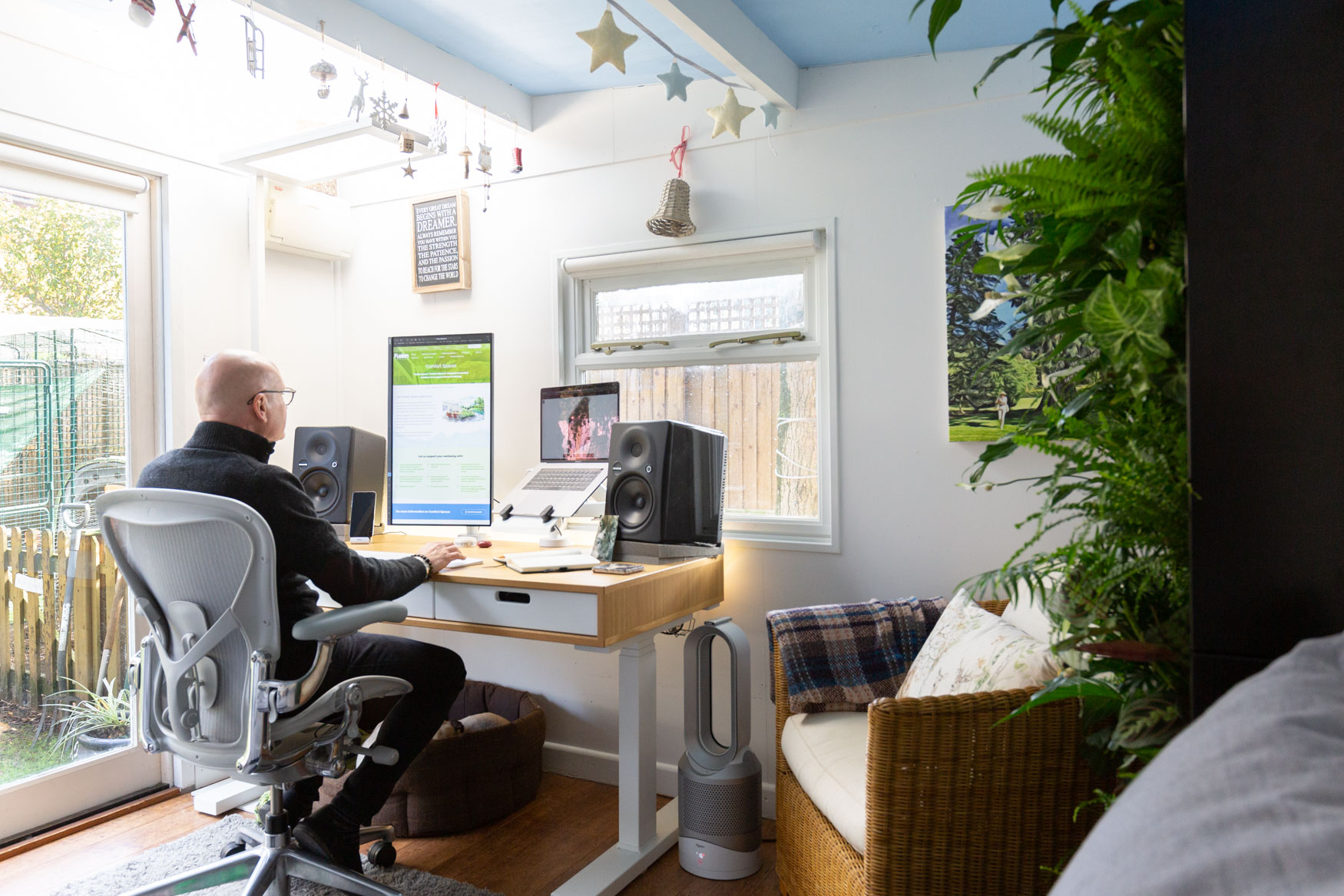
    Image of a home-working set up that is ergonomic and has elements of biophilic design
    Image by Simply-C-Photography for Fusion Spaces

    Biophilic design need not be confined to office buildings and other commercial spaces. The benefits of biophilic design can be obtained in the home office too, and without having to spend a fortune. This post explores the benefits of biophilic design and gives some very simple and cost-effective tips to help you thrive in your home working setting.

    What is biophilic design?

    Biophilic design is a design process that brings the theory of biophilia into the built environment. Biophilia is a theory rooted in evolutionary biology and genetics, and was first popularized by Edward O Wilson in his classic book, Biophilia, published in 1984. Essentially, the theory reminds us that we are animals that have spent over 99% of our evolutionary history living in environments, such as the open plains of Africa. During that time, our survival as a species depended our senses being fine-tuned to that environment, and our reliance on various species of plant, animal and fungus for food, shelter and fuel.

    image of the book cover of EO Wilson's booked entitles Biophilia

    It is only a few short centuries since we ceased being hunter-gatherers and domesticated ourselves to live in artificial environments, such as cities. In less than a thousand generations, we divorced ourselves from our natural environment and the sensory stimuli that we need to thrive.

    Biophilic design is a way of creating environments that rebuild some of those sensory and biological connections, which reduce stress and increase wellbeing and happiness. Consider the domestic chicken. As a wild animal, the jungle fowl is a forest-dwelling bird that thrives by scrabbling around on the ground, picking up a varied diet of seeds, leaves, insects and other invertebrates. When domesticated and placed in conditions of intense population density and cramped conditions, they fail to thrive. However, the free-range hen, even though far from its jungle home, has an environment much closer to its natural conditions, and can lead a less stressful life, often living longer and requiring fewer veterinary interventions.

    Image of battery hens
    Photo by Artem Beliaikin on Pexels.com

    The battery human, also once released into a free-range environment (even though we are still constrained by our physical environment and societal expectations – hunting and gathering in the streets of our cities will be frowned upon) will thrive, and biophilic design is one way of creating such an environment.

    The home office environment

    The office worker has, in many instances, been let loose from the constraints of the office. During the pandemic, the cathedrals of capitalism were deserted and the shiny factories of data processing and document production went quiet. Even now, offices are significantly less occupied than they were before Covid-19 and, despite the frantic calls from the owners and managers of underused and expensive property assets, it looks likely that working from home, at least part time, will remain a normal part of working life.

    Image of an unoccupied modern open-plan office

    As a result, the newly liberated office worker was forced to create a new working environment in their homes.

    For some, this has been easy – there may be a spare room that can be used, or space at a large dining table, or even a garden building that can be used. However, for many, especially younger people living in expensive shared accommodation, creating a usable space has proved a challenge.

    Good weather in the spring and summer gives opportunities to take breaks outdoors, whether in a garden, a public spark, or even a walk around the local streets. However, wet and cold autumn and winter weather means that the outdoors is a little less appealing. We need to consider how to create a working environment that maintains some of those connections with the outside world. So how do we do it?

    Image of a park in summertime

    Some simple tips for a biophilic home office

    Give yourself a view

    If possible, arrange your workspace so that when you look up from the keyboard or screen you can see out of a window. Even if the view is of another building, it will be something distant to focus on, and that will ease eye strain and bring give you a sense of what is going on outside – it might hello you decide whether to venture out on a break, or hunker down in the warm, but whatever the weather, you will connect to the world outside.

    Open a window

    An open window will refresh the air and flush out excess carbon dioxide and other pollutants generated from within the home. It will also bring the sounds of the outside world in – you may hear voices or birdsong or the sound of the wind. It might also be traffic noise, but even that can sometimes be a relief from silence.

    Buy some houseplants

    Image of a group of houseplants on a ledge

    This is the eye-catching, Instagram-friendly intervention that will illustrate the pages of the colour supplements and lifestyle websites. However, it is an effective way of bringing some life indoors.
    Houseplants need not be expensive or huge. Ikea, for example, has some terrific plants and pots at very good prices (and I am an expert on indoor plants, so you can trust my judgement on this). They add green interest to the indoor environment and also demand some care. Watering (not too much), cleaning and trimming and arranging plants can be very therapeutic.

    Follow your nose

    Our sense of smell is our most primitive – detecting chemicals in the environment (which is what the sense of smell is all about) was the first sense to evolve in the animal kingdom. We often react to scents instinctively and before we are consciously aware of them, so we can use fragrances to create a multi-dimensional sensory environment very easily. The range and quality of home fragrances is more comprehensive than ever before, so there is bound to be something appealing.
    I’m not going to go down the road of recommending particular scents for particular settings or tasks – we risk straying into pseudoscience – just choose something that you, and your housemates, like.

    Water

    We use our sense of hearing and smell to detect the presence of water, often before we see it – this is a survival mechanism. As wild animals, we needed to be able to find safe water – not just to drink, but to find prey that also needed a drink.

    The sound of rainfall or babbling streams can be found easily just by asking Alexa (or other smart speaker system). A fish tank or small indoor water feature can also be soothing.

    Take care of your skin

    The skin is your largest sense organ, but often the least stimulated in the working environment. As well as stopping your insides from falling out, your skin is home to sensors that detect temperature, pressure, movement and resistance, shape and texture and even changes in humidity and static electricity.

    Don’t starve it of sensation. Use different textures around your workstation and allow your skin to be stimulated. Create a breeze (not a draught), experience some sunlight, walk barefoot, wear less if the temperature (or your need to be on a webcam) allows it or even take a shower for pleasure rather than utility.

    Image of skin on a hand

    Comfort is the key

    Biophilic design isn’t just about plants. It isn’t about bringing nature indoors. It is about being comfortable – physically and mentally. Comfort brings happiness and happiness is the key to both life satisfaction and also job satisfaction. A little investment in comfort can pay huge dividends for the individual and employers relying on home-based workers.

  • Indoor air quality management for home-based office workers

    Indoor air quality management for home-based office workers

    As we move deeper into autumn and, with the knowledge that for very many people, working from home will be commonplace for the foreseeable future, the issue of air quality becomes more important.

    ‘Good’ indoor air quality is very hard to define, and very subjective. There are some pollutants that must be considered as potentially damaging to health, such as fine particulates (PM10, PM2.5), various oxides of Nitrogen (often written as NOx), a cocktail of volatile organic compounds (VOCs) and ozone. These are often generated outside of the home, especially as combustion products or from vehicle emissions, although some are also produced by domestic activities, such as cooking and cleaning.

    Local air quality is affected by a whole host of factors, such as proximity to roads or industry, and also the weather. In the autumn and winter we experience storing winds, which are good for dispersing and diluting pollution, but also very still days when pollutants can be trapped in the lower atmosphere where they build up to risky levels. This air also finds its way inside our homes – more so than in offices, which are often quite air tight and fitted with sophisticated air management systems (usually referred to as HVAC systems: heating, ventilation and air conditioning)

    Something else to consider is the amount of pollution created in the home, especially in the kitchen. Cooking produces a whole host of volatile organic compounds. Particulates and combustion products are also produced – especially if you are prone to burning food.

    Now, of course, we have an additional factor to consider. Airborne infections spread on aerosols (the fine droplets created when coughing or sneezing), whether as a result of Covid-19, or the common cold, will have to be factored into the way that homes are heated and ventilated.

    Health advice recommends high levels of ventilation to reduce the risk from aerosol infections, but in a house, that means opening doors and windows (rather than adjusting a complex HVAC system), and that might mean letting expensively heated air out and polluted cold air in.

    On the other hand, it also means letting cooking fumes and carbon dioxide out, so it might be possible to maintain a healthy balance. But how would you know?

    Air quality data

    There is an old saw that says that you can’t manage what you can’t measure. With air quality, that is especially true. Pollution is pretty-much undetectable by the senses (you might smell fumes, but you couldn’t possibly estimate the concentration), so the only way to know for sure is to have access to data.

    Local outdoor air quality data can be found on various web sites, and these are pretty accurate within a few miles (but generally not down to street level). A good example is https://www.iqair.com

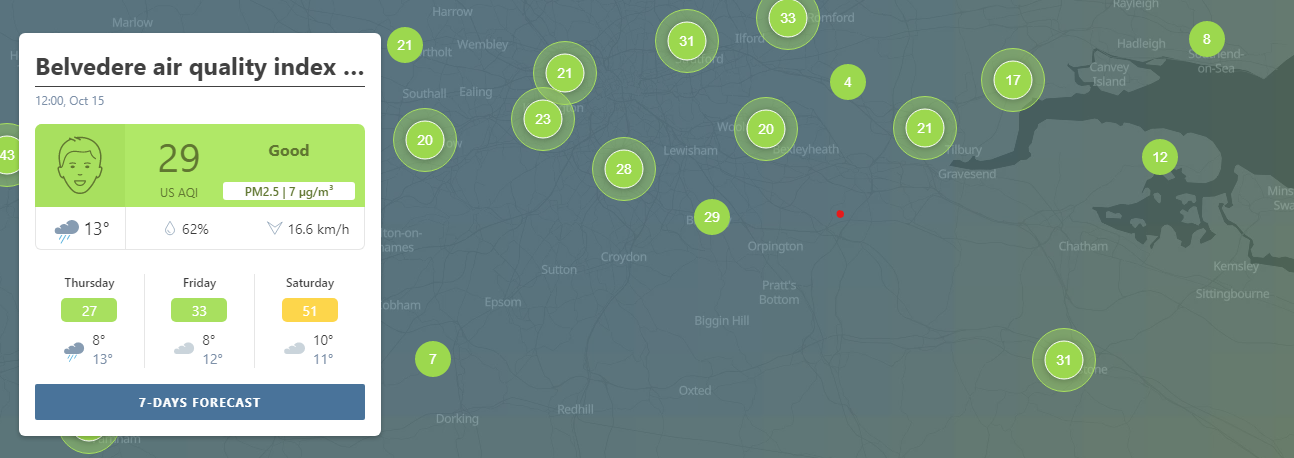
    This screenshot shows the air quality around my location (marked by a red dot), with my closest monitoring station shown in the box. However, local knowledge tells me that the air quality in Belvedere – an urban area – is likely to be a little different from my semi-rural location (although on the occasion of this reading, the whole area looks to have very similar air, and pretty good, air quality.)

    Indoor air quality is a different matter, however, and the only way to know what is in the air inside your house is to measure it.

    There are very many indoor air quality (IAQ) monitors on the market for domestic use. Some resemble toys and others look a bit like medical devices. Others are a little more subtle.

    With IAQ monitors, the quality of the data depends very much on the quality of the sensors, and that can vary. There is some truth that you get what you pay for and if you can afford it, spending a little more will get you a better monitor.

    Some IAQ monitors connect via WiFi and will send data to an app on your phone, and some can even be connected to smart home devices, so if a certain threshold is breached, it can switch on a fan, or an air purifier or dehumidifier, for example.

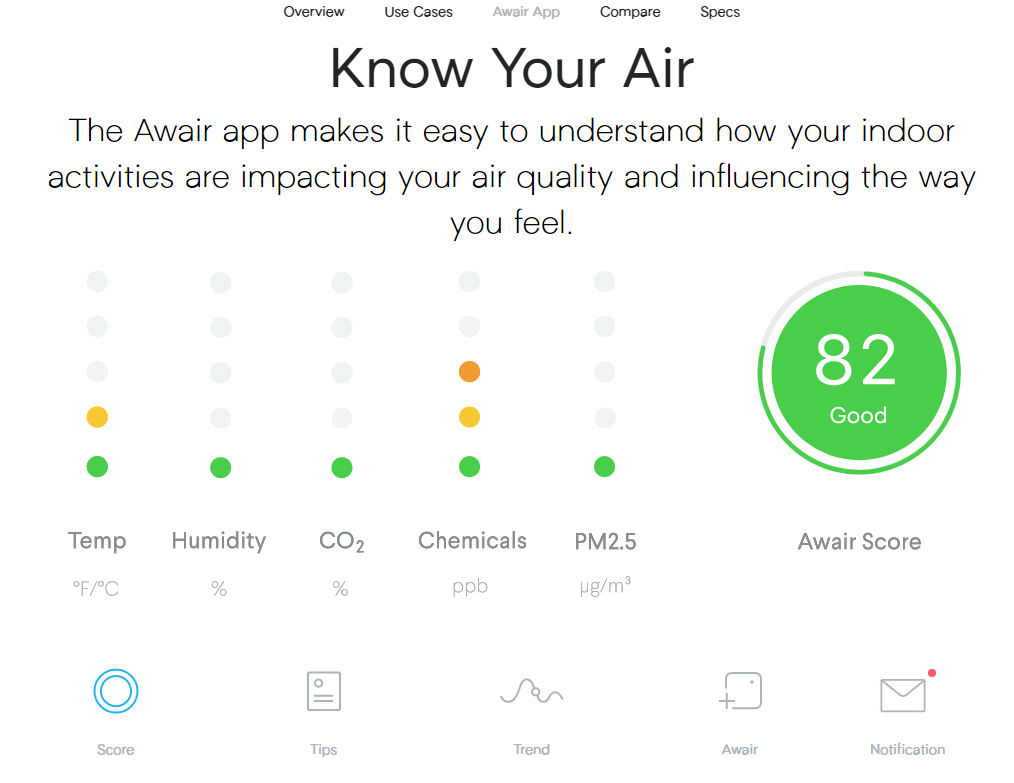
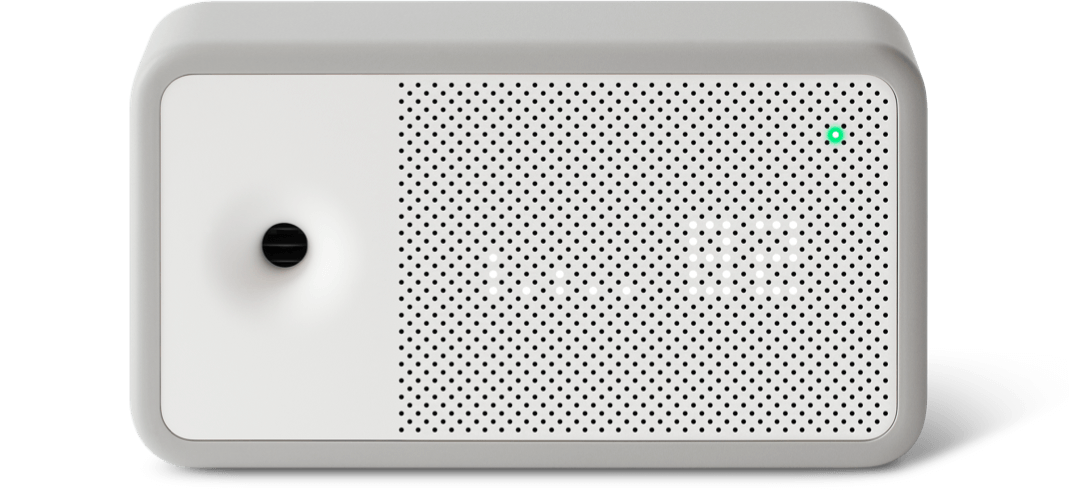
    This is an example of a domestic IAQ monitor (the Awair Element) that displays IAQ data on the front of the monitor and on an app.

    What should be measured

    As a minimum, a domestic IAQ monitor should be able to measure total VOCs, fine particulates, temperature and humidity. Carbon dioxide measurement is also useful. The monitors should also be able to display an overall air quality score as well as the individual parameters, and that can help the user to decide what to do (e.g. open or close a window).

    VOCs and fine particulates (PM2.5) can be quite dangerous. Carbon dioxide less so, unless at extreme concentrations. However, carbon dioxide is worth keeping an eye on, as at concentrations well below harmful levels, it can make you feel drowsy, have an effect on the ability to concentrate and can impair cognitive functions. The source of carbon dioxide is mainly people, and it doesn’t take long for levels to increase in a well sealed building with a few people in it.

    Using data to help you make decisions

    There may be times when you see the various IAQ parameters on your monitor telling you different things about the overall IAQ. For example, you may notice that particulates and VOCs are quite low, but carbon dioxide is increasing. Opening a window will certainly reduce the concentrations of carbon dioxide, but may result in the other pollutants increasing as outside air is let in. However, unless outdoor air quality is really bad, it is unlikely that in the short time a window is opened to flush out the carbon dioxide that concentrations of the other pollutants will rise to concerning levels.

    Knowing about IAQ will help you make informed decisions about how to manage your indoor environment, such as heating, ventilation, use of plants or avoidance of certain chemicals or activities – will you work in the kitchen while someone else is frying bacon or burning toast, for example?
    Without the data, you wouldn’t know.

    IAQ monitoring as part of the home-workers office kit

    If you are used to working in an office, there is a good chance that IAQ is already monitored – it will be used to help manage HVAC systems. If your office has a wellbeing certification, such as WELL or RESET, you should find that IAQ data is shared with all the users of the building.

    Knowing about IAQ in an office can be empowering and be useful to help building managers understand local issues (i.e. your immediate surroundings), as well as what is going on in the whole building.

    As a home worker, this information is also very useful, as it will help you manage your working environment and keep it as healthy as possible.

    Working with my colleagues at Fusion Spaces, we are developing the WorkFreeTM home workspace assessment method to look further into managing home office space to be as healthy, safe, comfortable and empowering as it can be.

    For further information about WorkFree ™, please contact us by email or take a look at the web site.

  • Where we work now

    Where we work now

    Here in the UK, it is the last day of National Plants at Work Week, organized by the interior landscaping trade association, Plants at Work. Usually, this is a celebration of the benefits of greenery in the office.

    This year, however, our workplaces are very different, and may continue to be for a while yet, and Plants at Work have been discussing the ways by which we can all use plants wherever we work – the home office, kitchen table, spare room or even in the garden.

    Where we work is not just a room, with a desk and computer. For many, the place where we really work often isn’t physical at all, but inside our heads. The office and the laptop are just tools to communicate the outputs of work. For many, work can’t be measured by keystrokes or attentiveness to a camera or attendance at virtual meetings. At best, that is just a measure of activity.

    Certainly, for some jobs, activity measures are the only practical proxy of work outputs, but those for whom the office is primarily the place to transfer ideas to a document or communicate them to a colleague, then the place where those ideas are formed is the real workplace. That means being in environments that forge creativity.

    That could be a warm bath, or a walk in the woods. It could be the laptop on the dining table, but it may also be somewhere else entirely. Inspiration can happen anywhere and at any time – not just between 9 and 5 in an office block.

    As good a place to be creative as anywhere. Photo by Tanner Vote on Pexels.com

    For many years, those that have worked from home as a matter of course were often viewed with suspicion by employers and colleagues alike. Were they really working, or were they slacking off? (Were those employers incapable of actually measuring outputs?)

    Some employers did insist on monitoring remote staff using technology, but now that even those managers are forced to working at home, maybe there is a little more understanding that people can be trusted to do good work without the need for a desk in the corporate office.

    Evolution

    It may be that as we contemplate the future of work, there will be a more rapid evolution of the home working environment. Already, employers, faced with a future when more and more people will be working away from the corporate office for extended periods, are examining their responsibilities for creating safe and healthy working environments.

    This certainly includes getting technology right, and ergonomics. Good chairs and lighting are going to be vital, along with legal obligations such as complying with display screen regulations.

    As well as the bare minimum, enlightened employers might be considering providing some of the things that make office life more bearable – perhaps some professionally prepared plant displays (e.g. this service from a London firm, Indoor Garden Design through their new venture https://www.intrayplants.com/ ).

    Photo by Min An on Pexels.com

    Some are even offering the delivery of home office buildings, although that raises many questions.

    I wonder about how insecure a company must feel that it needs to remind its employees who they work for with a branded pod placed, presumably rent-free, in the back garden with the desk facing away from the window – recreating the environment of the office battery cage. If company culture has to be reinforced by having a massive logo, rather than by decent management, then I would be very worried. And what might be the consequence of hanging a poster over the logo?

    The pod itself looks really well designed – good acoustics, modern lighting and all pre-cabled, but is this where you will be expected to be creative and imaginative? Maybe a few pot plants would help.

    The nature of work is changing, and it is changing in ways not even imagined at the beginning of the year. Many office workers have had nightmares of trying to juggle space, homes schooling and caring along with work, but many have also experienced the benefits of being able to manage their work with more freedom, and have found themselves more productive, more creative and more engaged.

    By being forced to loosen the leash on staff, employers should be seeing the benefits of empowerment and trust. The benefits to employers and employees of being liberated from the constraints of the workplace battery farm need to be preserved.

  • Skin: our largest sense organ, and our least stimulated in the workplace

    Skin: our largest sense organ, and our least stimulated in the workplace

    I am strongly of the belief that biophilia is far more than the emotional and psychological connection to nature that is most often suggested as the basis of biophilic design. For me, true biophilic design is about creating physical and psychological comfort. It involves creating a sensory environment where our senses are stimulated congruently.

    Physical comfort depends on our brain interpreting the inputs of sense receptors, which allows us to create an internal map of our environment. This helps us know how to behave: whether to fight, flee, feed, shelter, nurture, create, etc. Stress hormones can prime us to move quickly, whereas our pleasure centres can encourage us to stay put and indulge more.

    An environment that allows our senses to work in concert should be comfortable and, in a workplace setting, will enhance effectiveness (thence engagement, productivity, job satisfaction, etc.)

    Designers can be very good at addressing many of our sensory needs, but all too often, our largest sensory organ is ignored.

    image of the skin on a hand

    Our skin is densely packed with sensors that react to temperature, air movement, pressure and even static electricity and chemical irritation. Our skin sensors tell us when a surface is safe to grip or walk on. We have sensors that provide feedback about the things we pick up, bend, twist, press, push and pull. Other sensors tell us when we are being exposed to excess heat or cold.

    Human beings are unique in nature in that we are the only species that covers most of its skin, thus depriving us of a huge amount of sensory information. However, that particular behaviour is a relatively recent innovation. Modern humans have only worn clothes for about a third of their time on Earth, and there is very little evidence to suggest that our hominid ancestors ever saw the need. As with our other senses (although to a lesser degree), evolution hasn’t caught up with the changes we have made to our habitats through migration and building – we are still essentially adapted to living wild on the open plains of Africa.

    Depending on the nature of the sensory inputs through our skin, we can experience great pleasure or immense pain. Those experiences are enhanced the more that the skin is exposed.

    One of the reasons we find draughts so annoying is that our skin is detecting air movement over only small parts of exposed skin, but not the rest. As a result, we get conflicting sensory inputs. Our neck and face might feel chilly, turbulent air currents, but the rest of us is wrapped up snug and warm. We have to use mental effort to understand what is going on.

    In workplaces, we deprive ourselves of tactile and haptic experiences. Surfaces are smooth (for easy cleaning, as well as aesthetics) and we spend so much of our time still, apart from tapping at keyboards or picking up the phone.

    So, what is the answer?

    There are few opportunities to expose the skin to the environment in most workplaces. Society is probably not yet ready for naturist offices (although homeworking during the pandemic lockdowns offered many the chance to experiment), so any tactile and haptic stimulation needs to be directed at whatever skin is exposed (face and hands in the main), or be felt through clothing.

    But it is not enough just to stimulate the skin, there can be purpose behind it.

    Textures can be used very effectively to demarcate spaces and indicate safe, or preferred routes (think of textured pavements near pedestrian crossings). They can also be used to indicate status and authority – thick carpets and soft textiles are often associated with luxury and opulence, as are natural materials such as wood and stone. Whilst the general office accommodation in a building might be a sea of laminate desks and hard-wearing carpet tiles, the executive floors tend to be more cosseting. These areas have an abundance of more natural materials and they often feature more interesting and varied textures.

    The indoor climate can also be managed in a way that is more in keeping with our sensory needs. I’ve already mentioned a reason why draughts are irritating, but other aspects of thermal regulation are important too. Heat and humidity, as well as air flow, can have a significant impact our comfort.

    Humidity is especially important as far as comfort is concerned. Too humid and the air is clammy and our clothes get sticky and damp, which is not comfortable. Too dry, and our skin needs artificial moisturising to prevent itching and irritation.

    In a typical workplace, our environment is pretty much fixed, or variable within a very limited range. In open offices, personal control is very limited. Office workers can neither change the environment nor their behaviours beyond a narrow spectrum.

    When not in the office, we can make adjustments to our behaviour to adapt to a changing environment. Uncomfortable skin can be made more comfortable by moving from one place to another, by adding or removing clothes or by taking a refreshing shower. We can choose to walk on carpet or a hard floor, or sit on a soft cushion or wooden bench. We can often change some elements of the environment ourselves, by changing the temperature, for example. We have agency.

    I first wrote this in May 2020, during the fifth week of the first lockdown in the UK. Most office workers were working from home. Perhaps, for the first time in their working lives, people were able to manage their working environment in ways that are not possible in an office building. Whilst it might have been lonely to be away from colleagues, it is likely to have been a more physically comfortable place to be. I wonder how much people will miss their control over their sensory environment when they return to the office. Maybe this is one reason why remote and hybrid working remains popular).

    Processing…
    Success! You're on the list.