Get the light right

When I started in the world of interior landscaping, many years ago, the plants were usually the last thing to go into a building. Unless there were some big planter beds and atriums where trees and large-scale planting would be planned, most plant displays were in standalone planters.

This meant that interior landscape sales and design specialists were often brought into a project very close to the end of the design process. Furniture was in place and the lighting was installed.

A designer would visit the location, measure the light precisely where the plants were to be positioned and (usually) order the right plants for the prevailing lighting conditions.

Things have changed. Plants seem to be struggling where once they thrived, and it may not be as a result of poor plant quality from the growers, or poor maintenance by the interior landscapers.

Indoor lighting has changed

On 17 November 2025, I was fortunate enough to attend the second International Biophilic Design Conference in London. It was a packed day with several standout presentations. One that struck me as important was given by Ulysse Dormoy on the subject of light.

Ulysse Dormoy’s presentation spoke mainly about the role of far red (FR) and near infrared (NIR) wavelengths and their impact on human health. These wavelengths are just beyond the visible spectrum, and are essential for human health. This energy penetrates soft tissue and drives the reactions that take take place in mitochondria – organelles in every living cell (plants as well as animals) that power life.

The modern built environment – especially office buildings – relies on highly efficient LED lighting to illuminate our spaces. Modern, energy-efficient LEDs used in offices are often optimized to peak in the blue spectrum and only a narrow band of red (which is difficult to achieve in LEDs without losing efficiency) – this is fine for vision.

However, LED lights are almost devoid of the NIR and Far-red components prevalent in both sunlight and older light sources, such as incandescent and fluorescent lamps. Couple this with the treatments applied to glazing to minimize excess heat getting into buildings from sunlight, then we have a problem that might affect human health.

For humans, the absence of NIR means the loss of a key input for mitochondrial health, called photobiomodulation (PBM). This may lead to impaired cellular energy management that is thought to be linked to accelerated aging and reduced healthy lifespan.

So what?

What has this to do with biophilic design and, from my specialist point of view, interior plants?

As far as light is concerned, interior landscapers are faced with two problems. The first is light measurement and knowing whether there is enough for plant health.

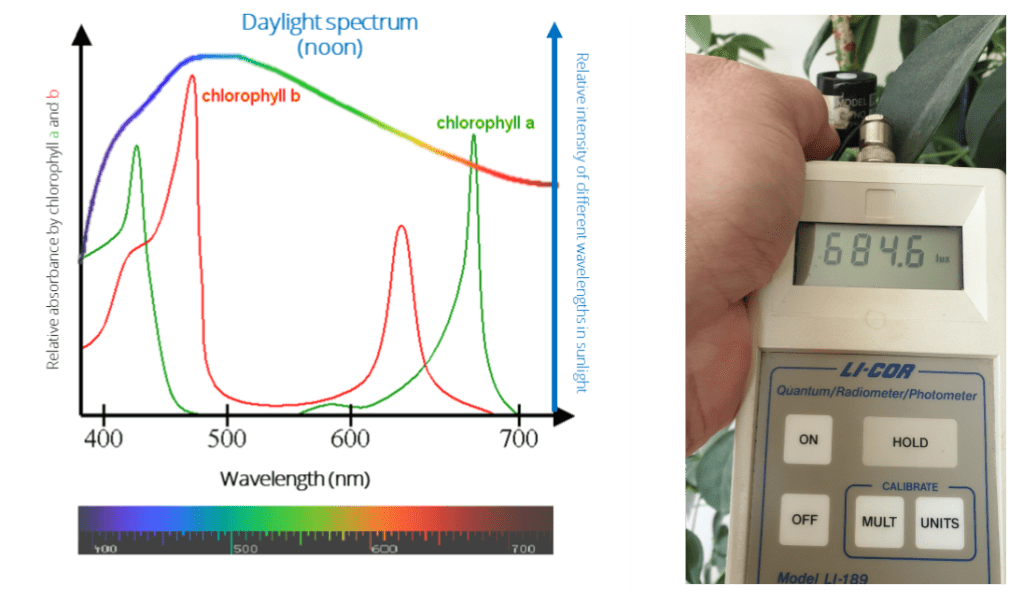
Conventionally, interior landscapers measure light using instruments that measure light intensity – measured in lux (or footcandles in North America). When interior lights were incandescent or fluorescent, then measuring light intensity was good enough. Indoor lights of this type produced wavelengths that were good for photosynthesis and there was a close enough correlation between light intensity and photosynthetically active radiation (PAR) to mean that measuring light intensity was acceptable. Indeed, for decades, interior landscapers have relied on data sheets for indoor plants giving a range of light levels in lux (or footcandles) to aid specification.

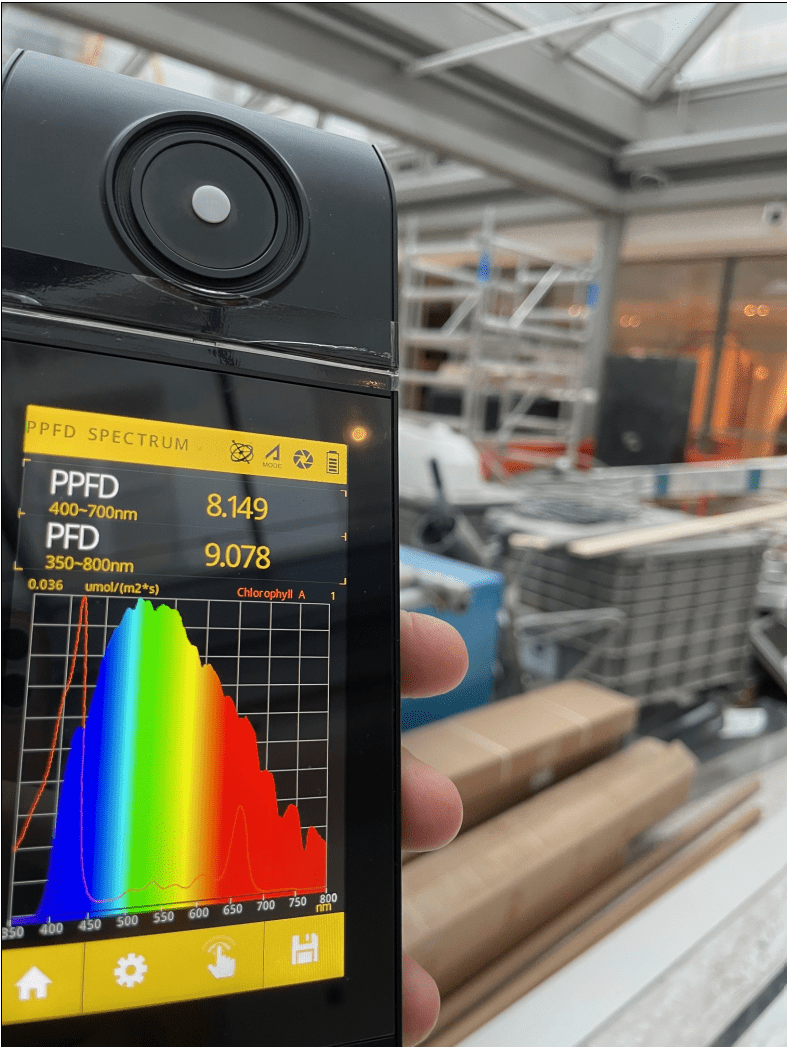
PAR is a more accurate measure of useful light, and is measured as photosynthetic photon flux density – PPFD. With changes to lighting technology, PAR measurement might be the only way to understand what light is available to plants.

a PAR meter showing the light spectrum inside a building

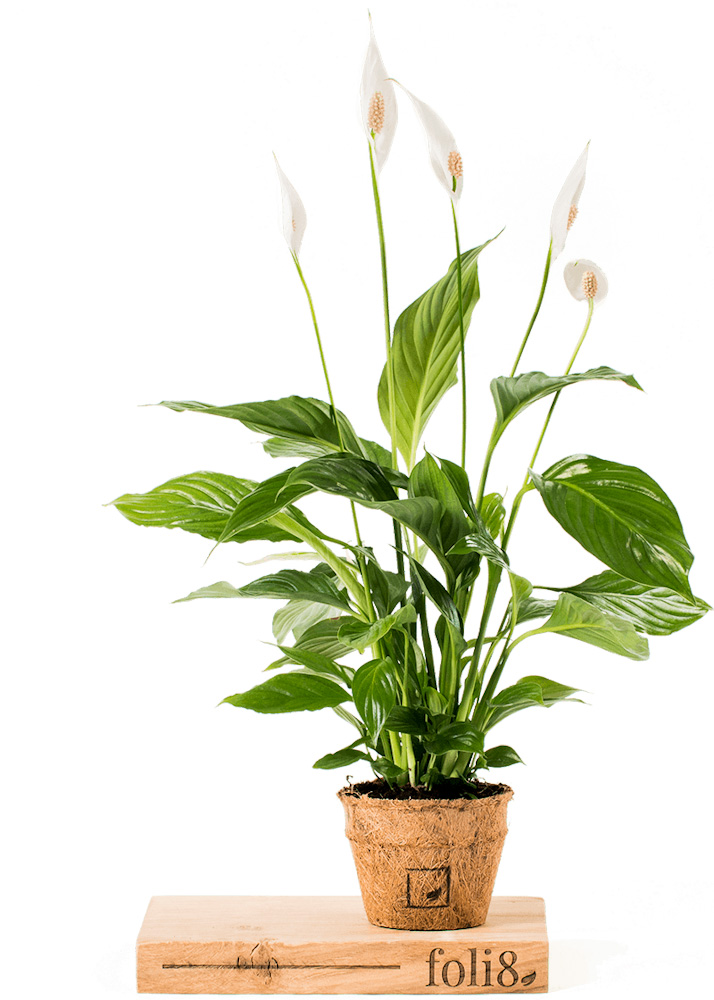
PAR is measured using much more expensive instruments than light intensity meters (shown above). Unfortunately, no readily-available data exists for the PAR requirements of interior ornamental plants (although it does for salad crops, herbs and other plants grown in indoor farms). So even though the cost of PAR light meters is falling, without a reference point, interior landscapers don’t really know if the lighting in an office is going to be correct. Who knows how many micromoles of photosynthetically active photons per square metre of leaf surface, per second, are need for the optimal growth of a peace lily? I don’t, and I’m supposed to be an expert!

The second problem we face is akin to the human health angle.

Phytochromes

Just as humans need near infrared light for health, so do plants. Plants, like animals and fungi, have mitochondria. But they also rely on changes in the proportion of red and far red wavelengths to drive physiological processes that are not part of photosynthesis. These are the phytochrome reactions. The phytochrome system controls several growth and structural responses in plants, which govern the plant’s architecture and life cycle.

The phytochrome system functions as a molecular switch that allows the plant to perceive its light environment, particularly whether it is exposed to direct sun or under the shade of a competing canopy. This perception controls critical developmental processes.

Phytochromes are a family of chromoproteins that primarily absorb light in the 600–750 nm range. There are two interconvertible forms, distinguished by their maximum absorption peaks. The biologically inactive state, Pr (which stands for red-light absorbing form) is the default form synthesized in the dark. The biologically active state, Pfr, (which stands for Far-red light absorbing) is typically required to initiate developmental responses like germination or to inhibit stem elongation.

Red light (approximately 660 nm) is the activating signal. Exposure to red light quickly converts the inactive Pr form to the active Pfr form. A high proportion of Pfr signals full sunlight, triggering responses such as:

  • the promotion of seed germination (in light-requiring seeds),
  • inhibition of stem elongation (to maintain a compact, high-light-adapted form), and
  • induction of flowering in some plant species.

Far-Red Light is the deactivating signal. Exposure to far-red light quickly converts the active Pfr form back to the inactive Pr form

The Red:Far-Red (R:FR) ratio and interior landscaping

As the sun tracks across the sky, and as seasons change, the ratio of red and far red light in the spectrum also changes. For optimal non-photosynthetic, light-driven processes, the wavelengths are not just about intensity, but about the ratio between the two main absorption peaks.

The Red:Far-Red (R:FR) ratio is the environmental parameter the phytochrome system is primarily able to sense, providing a crucial mechanism for shade avoidance. Direct Sunlight (High R:FR ratio of approximately 1.1–1.2) is natural, unfiltered light, which is rich in red light, leading to a high proportion of the active Pfr form. The plant perceives this as optimal growth conditions.

Canopy Shade (Low R:FR ratio of approximately 0.2–0.7) is found when light passes through a plant canopy. Chlorophyll strongly absorbs the red wavelengths (used for photosynthesis) but transmits or reflects the far-red wavelengths (which are less useful for energy fixation, but good for mitochondrial health in animals, such as humans). This skews the light spectrum toward far-red, rapidly converting Pfr back to Pr.

When the R:FR ratio drops (due to shade), the plant registers an urgent need to escape competition. This shift to the inactive Pr form triggers the shade avoidance syndrome, resulting in rapid stem elongation (etiolation), petiole extension, and suppression of branching. This isn’t an adaptation to low light, but an emergency response to get into brighter light.

The built environment challenge

As explained earlier, modern, high-efficiency LED lighting often lacks or is deficient in far-red and NIR wavelengths compared to older light sources. For indoor plants, a lack of the far-red signal (730 nm) can prevent the proper establishment of the shade-avoidance mechanism. If the R:FR ratio is skewed too high by narrow-spectrum red LEDs (a common energy-saving configuration), the plant may struggle because it loses the far-red component. This is critical for growth and development processes tied to phytochrome A, which is the primary photoreceptor for FR responses. Even though the plant is photosynthesizing, its morphological development is regulated by a spectral signal that does not fully mimic the complexity of the natural sun/shade environment. This leads to suboptimal plant architecture and poor acclimation.
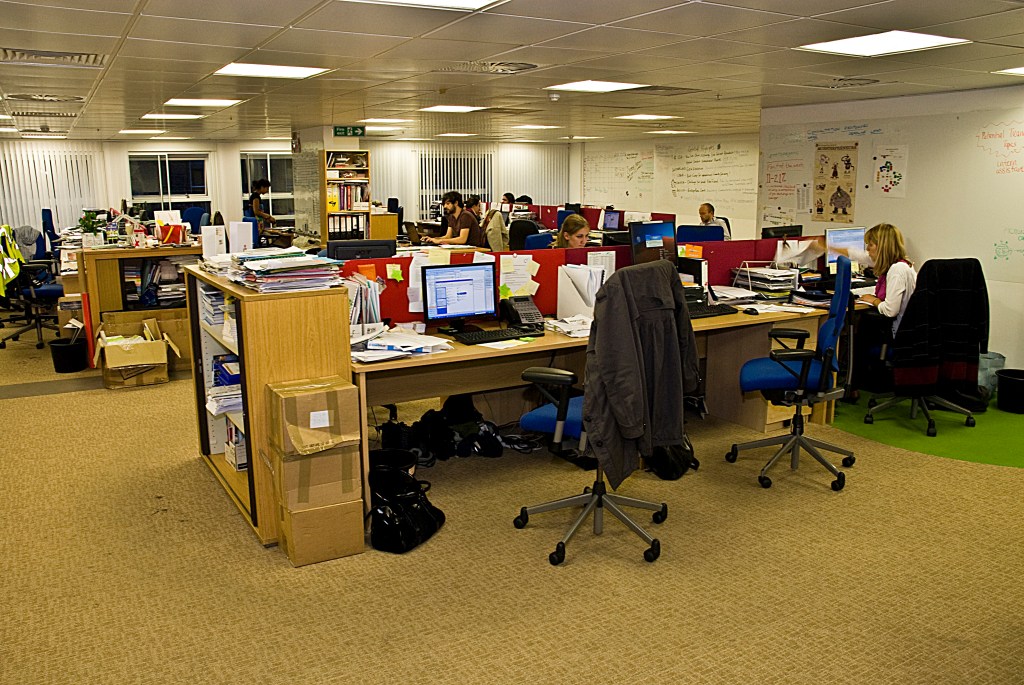
Office buildings are dark places compared with the outside world. Even on a cloudy, winter day, daylight is several orders of magnitude brighter than that which is found indoors in even the most brightly-lit office. Our eyes adapt quickly to low light levels, but plants can’t.

The plant’s phytochrome system primarily detects the R:FR ratio to determine if it is under a competing canopy, not the overall photon density. In an indoor environment dominated by typical lighting (high in blue/green wavelengths, but little FR), if the light source is a standard LED or fluorescent lamp that has some red peaks but very little Far-Red, the R:FR ratio will be high (similar to direct sunlight). This results in a response suppression. The plant maintains a high level of the active Pfr form of phytochrome, signalling “full light.” This suppresses the shade avoidance syndrome (etiolation).

However, there is another problem.

Far-red light is not just a signalling mechanism. It is also an efficiency booster for photosynthesis itself. This is called the The Emerson Enhancement Effect. Essentially for indoor plants, by completely removing FR from the indoor light spectrum, modern LEDs seem to be reducing the overall efficiency of photosynthesis. This makes the plants less efficient at utilizing the even the low light quantities they do receive. This further exacerbates their struggle. Therefore, while the lack of FR prevents undesirable etiolation, it forces the plant into a compromise that prevents true low-light adaptation and limits the efficiency of its remaining photosynthetic processes.

The plant structurally maintains a compact, short-stemmed, sun-adapted form, but the actual photosynthetically active radiation (PAR) remains too low. The plant is tricked into behaving as if it is in high light when it is actually in low light. True, long-term low-light adaptation (shade adaptation) involves changes to the photosynthetic machinery, such as

  • Increased chlorophyll density (producing more chlorophyll per unit area to maximize the capture of scarce photons),
  • Thinner, larger Leaves that maximize the surface area for light interception and reducing the energy spent on thick, robust leaves.

This shade adaptation is a slow process and starts on a grower’s nursery and has meant, in the past, that indoor plants can cope with office lighting conditions.

However, a high R:FR ratio (due to lack of FR) actively inhibits these true shade-adaptation responses. The plant remains stunted but not acclimated. It is physiologically light-starved because its genetic programming, signalled by the high R:FR ratio, is telling it to stay structurally compact and save energy, making it struggle even more over time.

When incandescent and some fluorescent lights were used, the low light levels – which the plants could adapt to – they had the right R:FR ratio. Now, they don’t and indoor plants, which are well acclimated to low overall light levels, are struggling and not living as long.

More greenery isn’t the same as more biophilic

The interior landscaping industry is doing very well at the moment. This is a good thing as it keeps me and my colleagues in work.

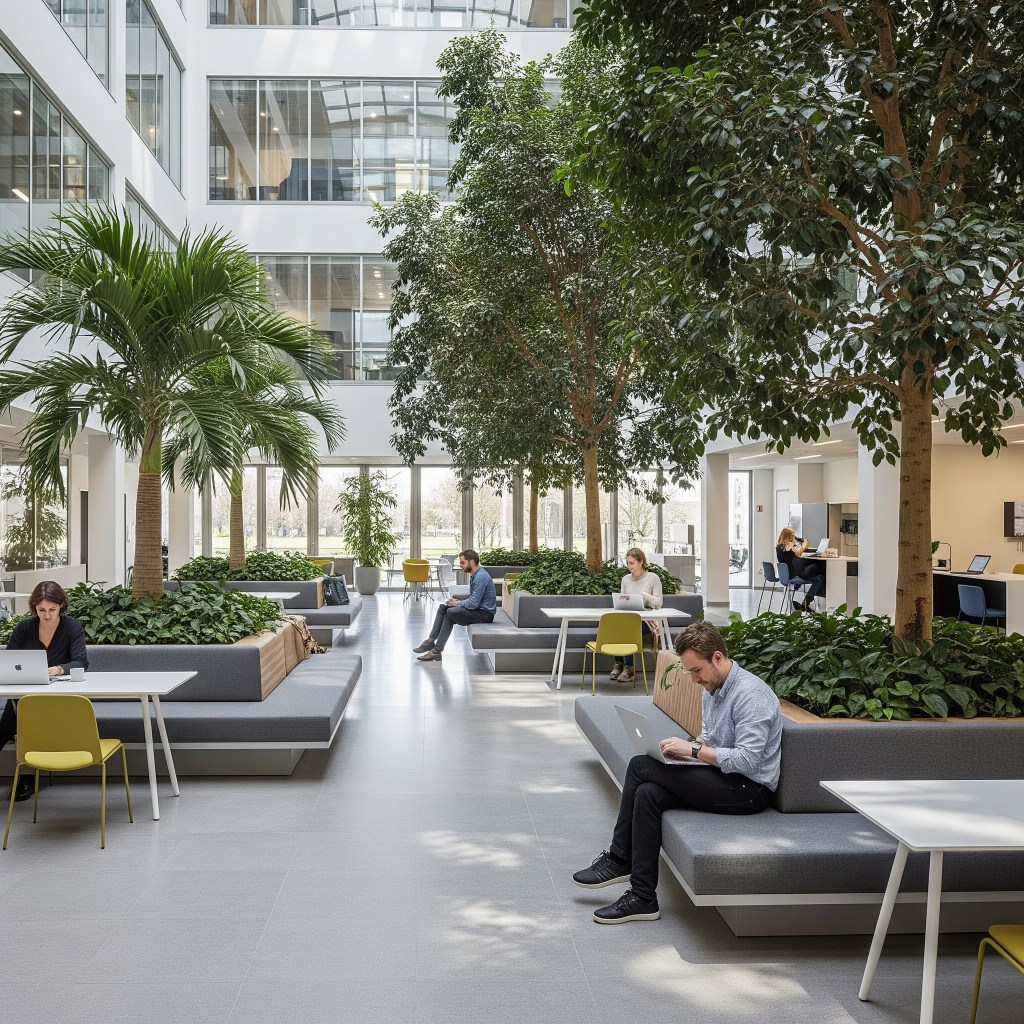
The demand for greenery in, on and around buildings remains strong. Architects, designers and facilities managers are planning their spaces to fully integrate plants into their designs.

The justification for all of this very welcome plant life is to improve wellbeing and make the office more welcoming. Employers are keen to attract and retain staff (those Glassdoor ratings aren’t going to write themselves). Commercial real estate firms need to get people through the doors in order to justify the existence of their cathedrals of capitalism. It doesn’t take too long before ‘biophilic design’ is mentioned.

I have written before about why just putting plants in buildings is not the same as biophilic design. I am increasingly worried that the phrase has gone beyond being a synonym for office plants and are now weasel words that are losing all meaning. However, that is not the purpose of this article.

Sense of connection

Biophilic design should be about creating a sense of reconnecting with our natural environment. Zoos design their animal enclosures to be as much like the natural environment of the animals as possible. This helps them to live as well as possible given their captive state. The human animal also thrives in naturalistic environments, but the modern office is nowhere near getting there.

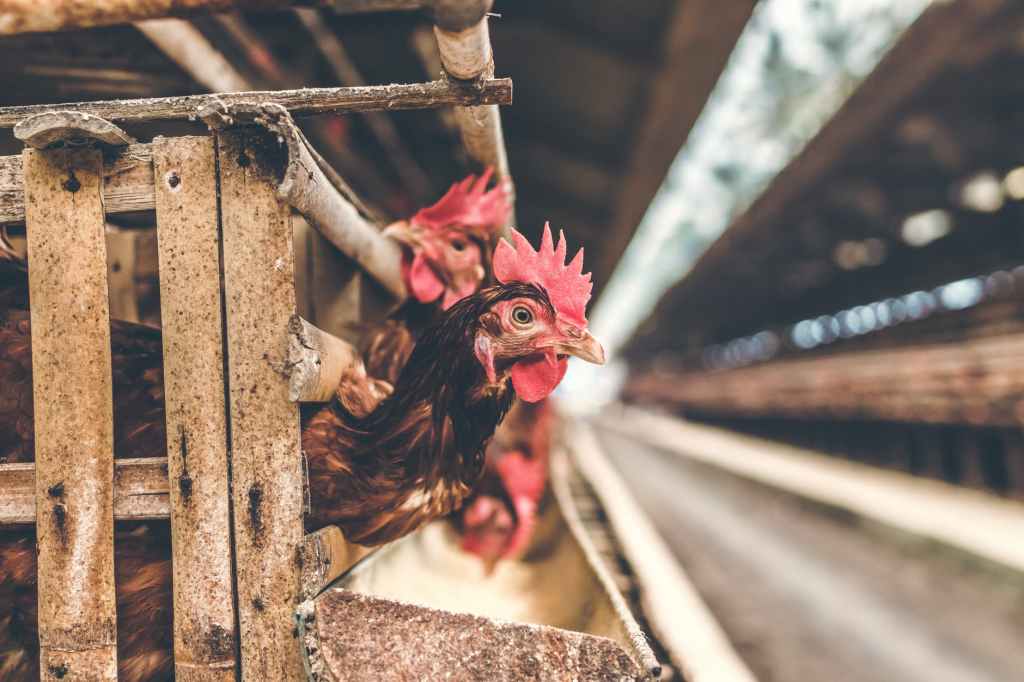
Photo by Artem Beliaikin on Pexels.com

I understand that buildings are easier to construct with lots of straight lines and right angles – and that’s fine. But the spaces inside don’t have to be like that.

The trend of the moment is cabinet-top (furniture-based) planting. I have written about the practical issues of this style of planting, so won’t go over those again. You can read about my gripes here and here.

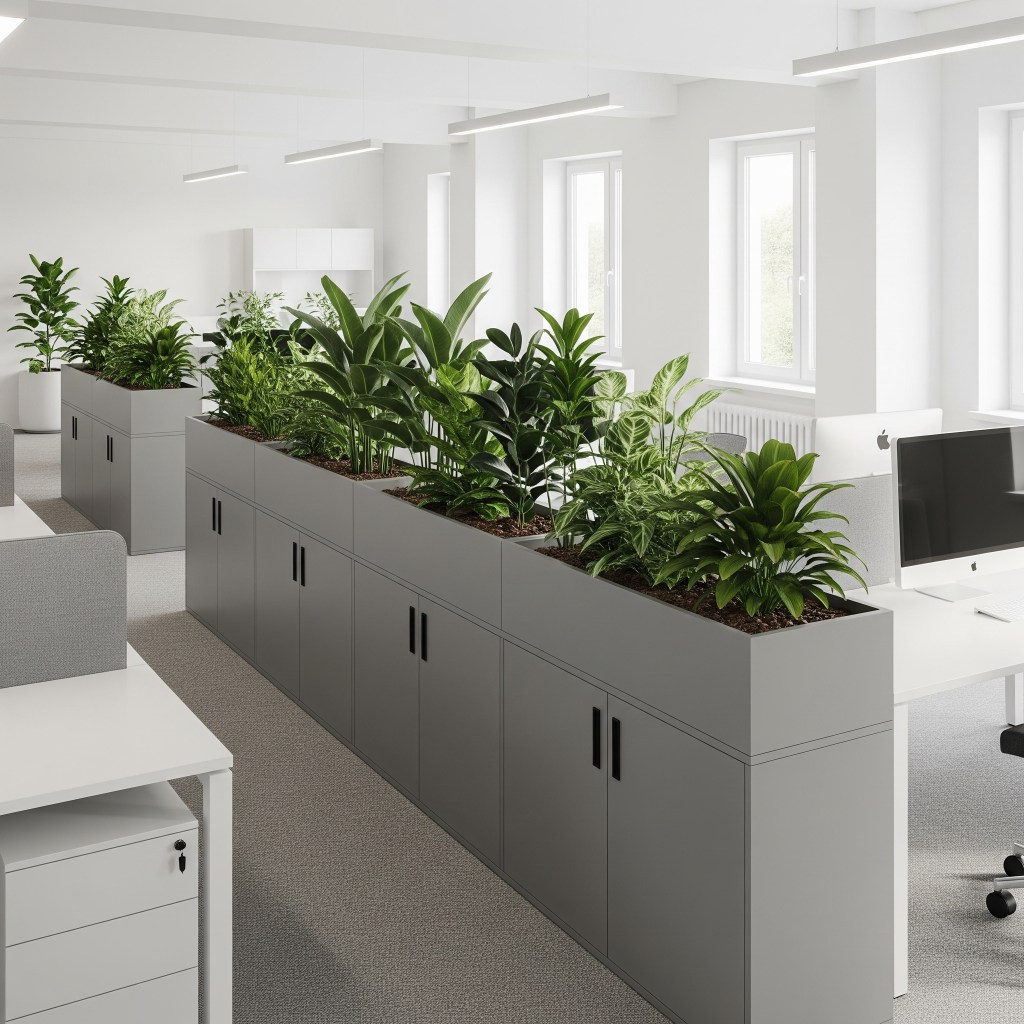
No, the problem I wish to address here is how such planting reinforces straight lines and right angles, making the spaces even more artificial.

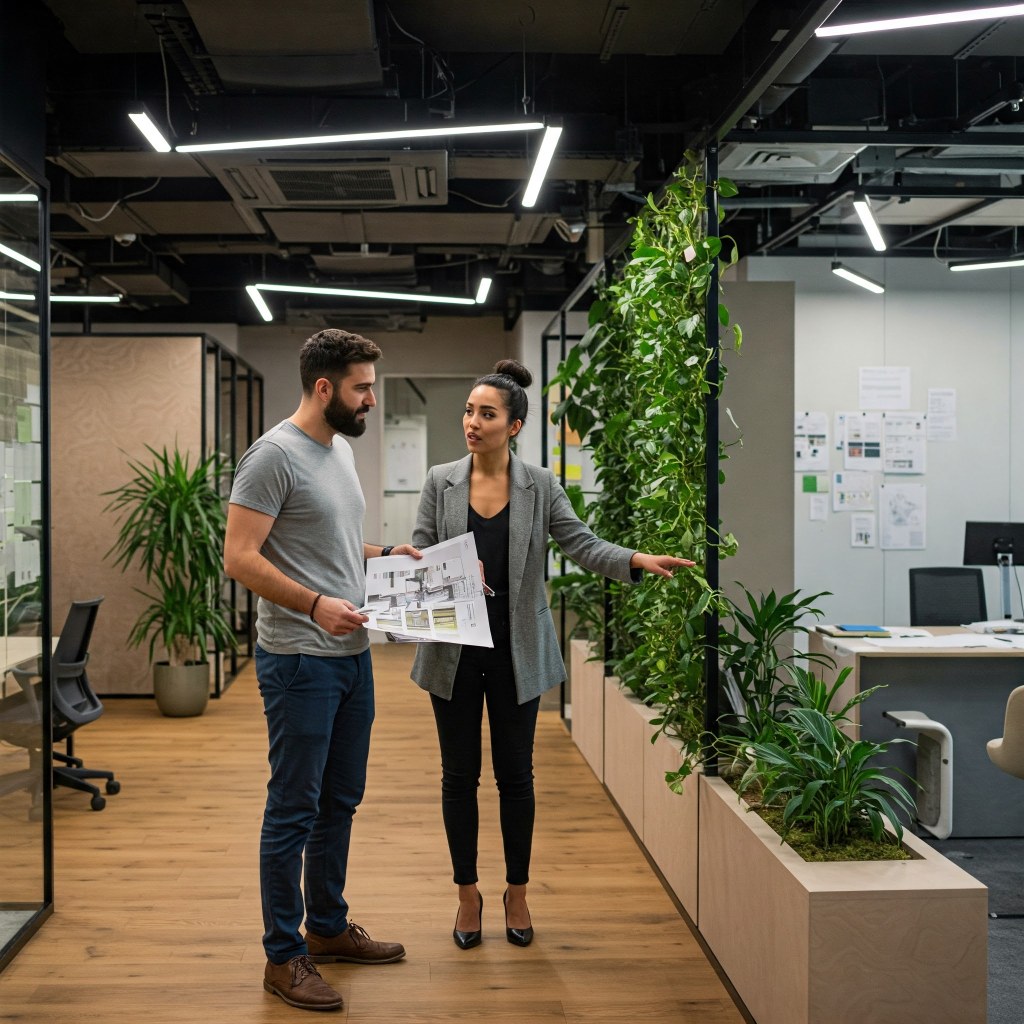
ai-generated images of a modern office with cabinet-top planting

Nature is pretty random. There are curves and undulations. Vegetation is clustered, scattered and varied. Sometimes you can see over long distances, other times, there are mysteries to explore. There are wide-open spaces as well as sheltered spots. All of this can be alluded to in an office, but so rarely is.

Ticking boxes

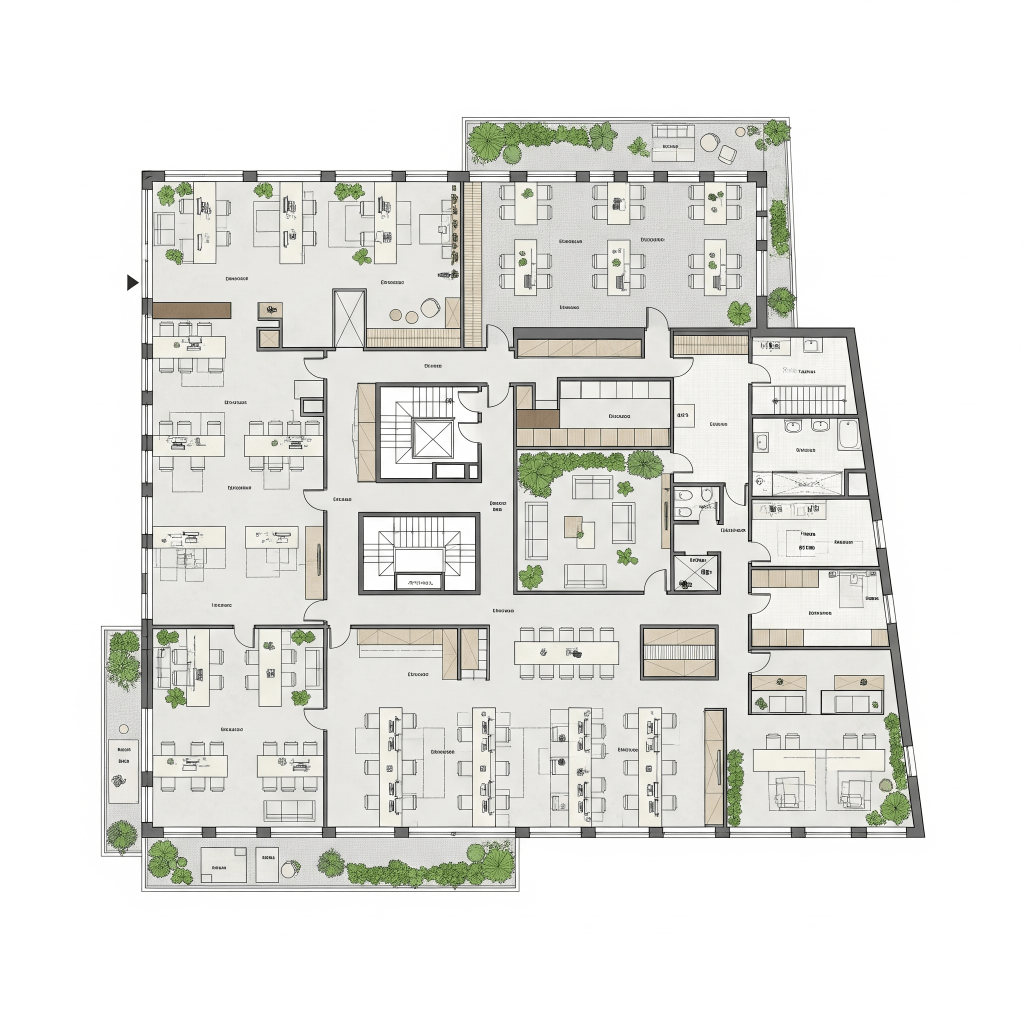
Interior landscapers are often presented with a set of floor plans with the furniture already specified. These frequently include cabinet-top planters (which are often far too shallow, but that’s a different issue). The layout is fixed. The interior landscaper’s creativity has been hobbled and the inevitable consequences are hedgerows and plantations.

These hedges and plantations allow boxes to be ticked. Vegetation is visible from the majority of workstations, even though it is uniform. Surfaces are free from clutter and circulation routes are well defined. You might even get a certificate to show how healthy your building is.

But, without the variation that could be introduced, that would bring a sense of connection with the outside world, that could draw the eye away from the screen – even if only for a few seconds – are these spaces really biophilic?

Be braver

Embrace the irregularity of nature. If even it isn’t as space-efficient, you might find that the benefits, in terms of wellbeing and performance, more than outweigh the cost of the odd curve here and there. If you need some help with that – take a look at my services page and get in touch.

Houseplants and interior landscaping plants – what’s the difference?

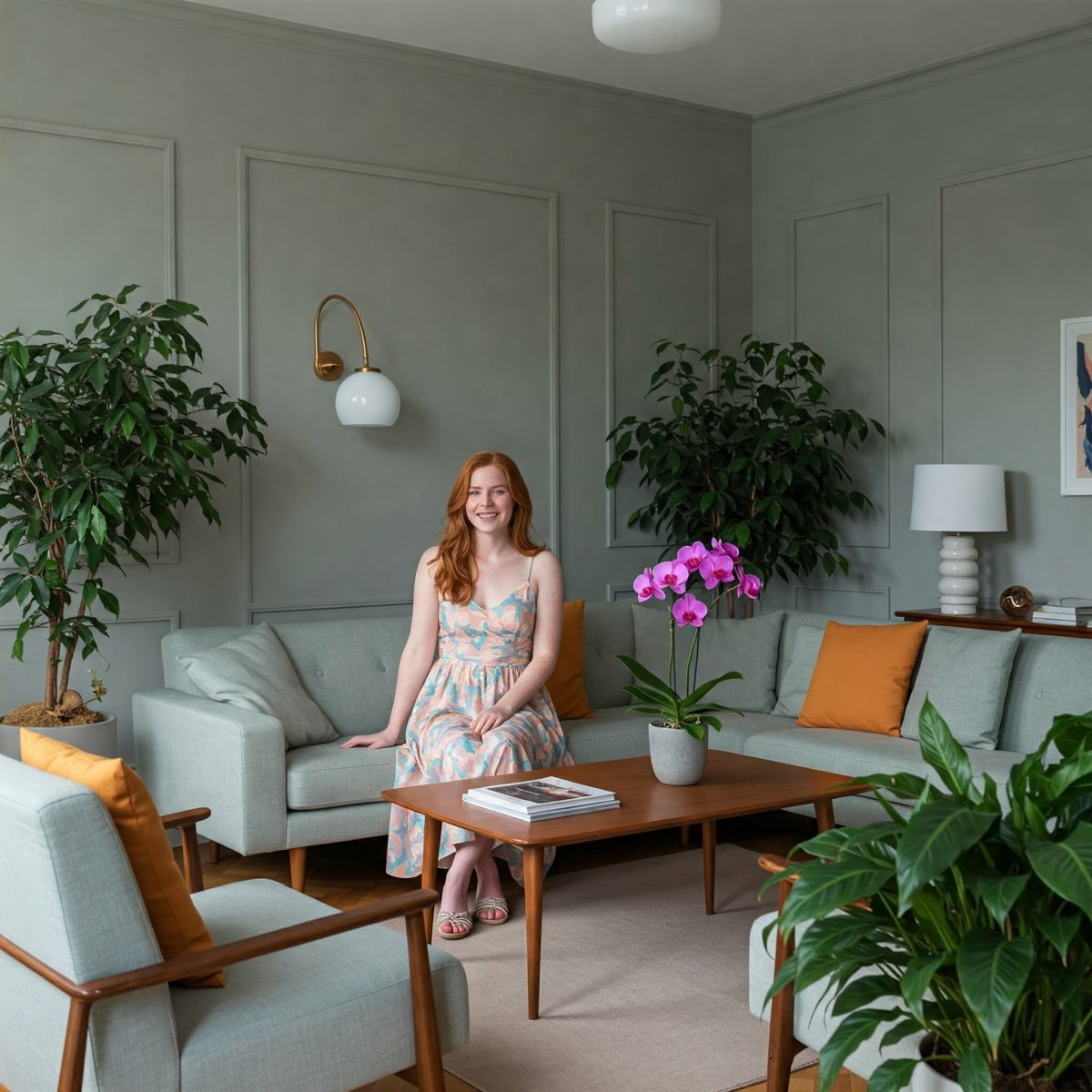
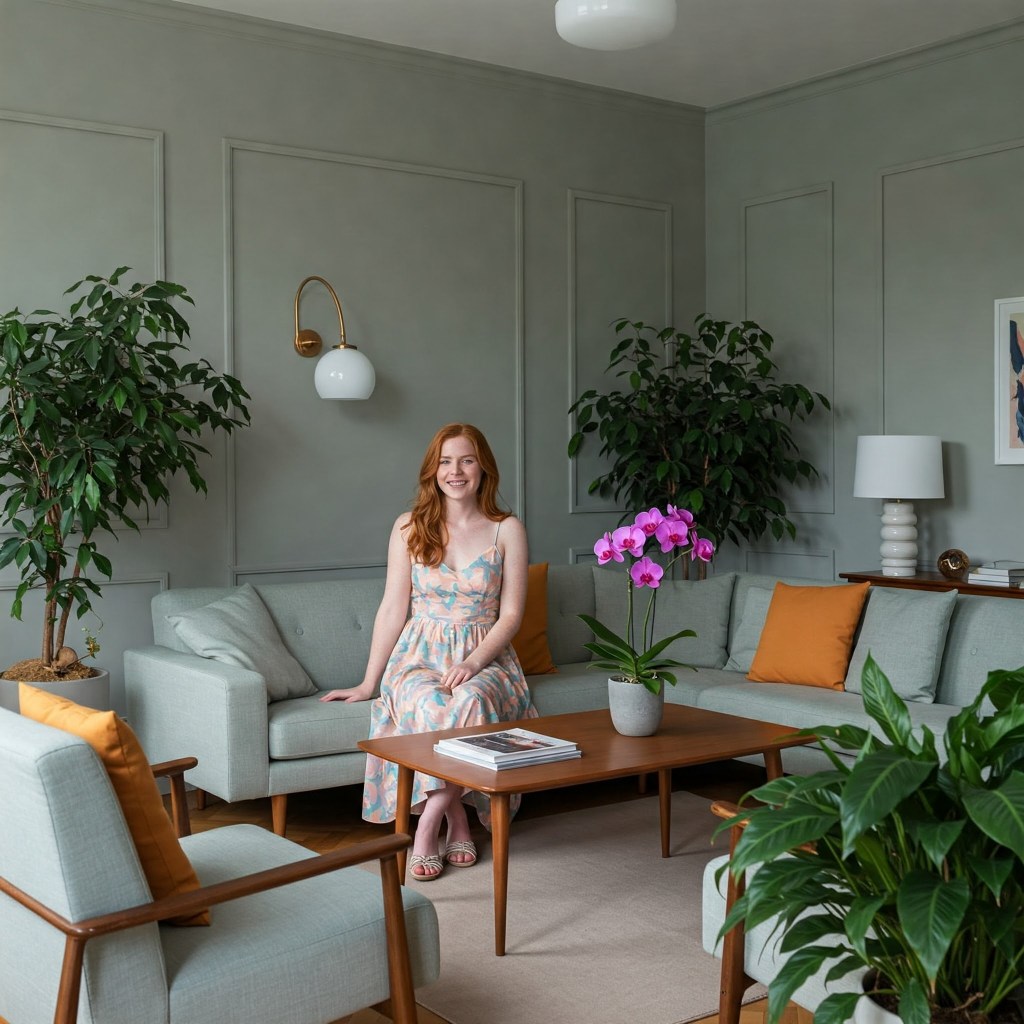
Image of a young woman in a contemporary domestic living room surrounded by houseplants.  Image generated by Bard Imagen ai

Are you a new or aspiring interior landscaping designer? Have you been inspired by the multitude of houseplant influencers that have been promoting the benefits of indoor greenery? Perhaps you are a houseplant enthusiast or influencer and you fancy a new career in commercial interior landscaping. Well, there are some fantastic career opportunities (and I’d be happy to put you in touch with good companies – get in touch). Maybe you run one of the new mail order houseplant companies that has dipped its toes into corporate horticulture. Are you wondering how to do it profitably?

If any of those apply to you, read on. Be prepared for some preconceptions to be challenged.

Read on even they don’t apply – I think you will find the rest of the article interesting anyway.

What has changed?

Over the last few years (pretty much since the end of the pandemic and the drive to get people back into offices), the interior landscaping industry has experienced something of a boom. A lot of interior designers are specifying plants and other elements of biophilic design, which is very welcome. However, many of these designs are clearly inspired by domestic interior design trends and Pinterest boards.

Last week (and not for the first time), I was asked whether the plants suggested by an interior architect would be suitable for an office. I’m afraid the answer was no.

Despite the drive for making offices more welcoming and home-like, using fashionable houseplants in the workplace can pose challenges for the interior landscaper.

Interior designer working on an office design that features plants.  AI-generated image by Bard Imagen 3

All indoor plants have to be adaptable to low light and lack of seasonal variation. Interior landscape plants also have to cope with being in a more hostile environment. Office plants often have to contend with a dry atmosphere, irregular lighting (due to motion sensors), care on a three-weekly service cycle and possible abuse (usually accidental, occasionally malicious) by the users of a building.

On the other hand, houseplants – even if not watered or fed very often – are usually checked quite frequently. Houseplants can be moved around to take advantage of changing environments, treated for pests as soon as they appear, and are looked after as valued members of the household.

All interior landscaping plants will make good houseplants (assuming you have the space and the right environmental conditions). Not all houseplants are suitable for a commercial interior.

Why is that?

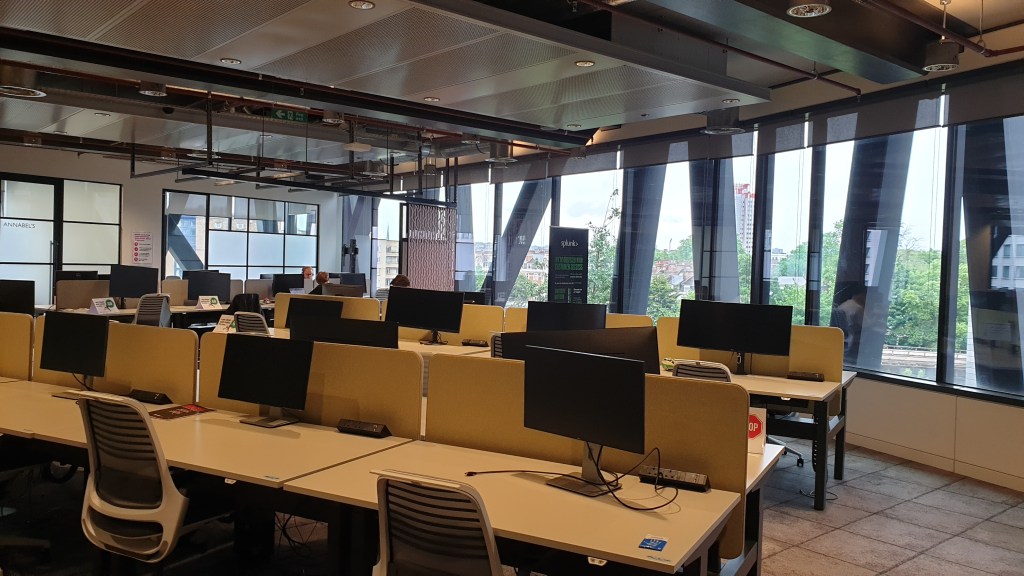
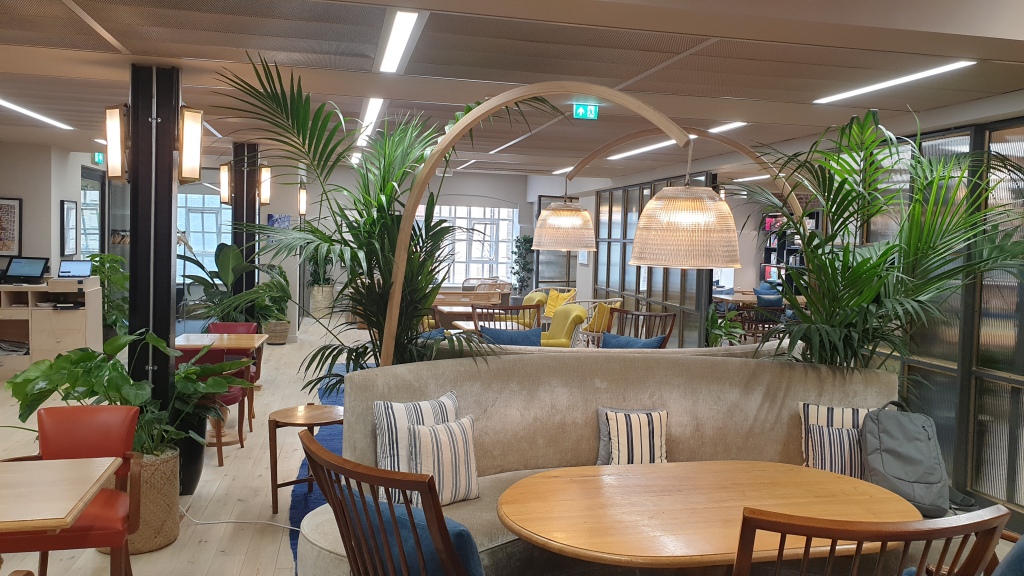
Inside of a modern office building in London.  Image taken by the author.
This is not a house!

Offices and rainforests have a lot in common. The natural origins of indoor plants

There are over a quarter of a million species of flowering plants alive on Earth. About 500 or so will live as houseplants, but interior landscapers tend to use only a fraction of that number.

Understanding something about the natural origins of interior plants will help with the design and specification of successful and resilient planting schemes. It is important for a designer to know about plants’ environmental needs and how they interact with the indoor environment.

The range of plants interior landscapers use comes, broadly, from three distinct climate types. these are the:

  • Rainforests (tropical and subtropical). About 75% of interior plant species have their natural origins there,
  • Semi-arid areas (deserts and semi-deserts), which account for about 20% of interior plant species (including succulents and spiky plants), and
  • Mediterranean climate zones. These include not just the area around the Mediterranean Sea, but also areas with a similar environment, such as California, South Africa (The Cape) and parts of Japan, Taiwan, Chile, Australia and New Zealand (generally at altitude).

The rainforests and semi-arid regions are characterized by very little seasonal variation. This means that plants from these areas are well adapted to interior conditions. Most workplaces have pretty constant conditions all the year round – just like a jungle. The only difference is that instead of lots of rain, the plants are watered by experienced horticultural technicians.

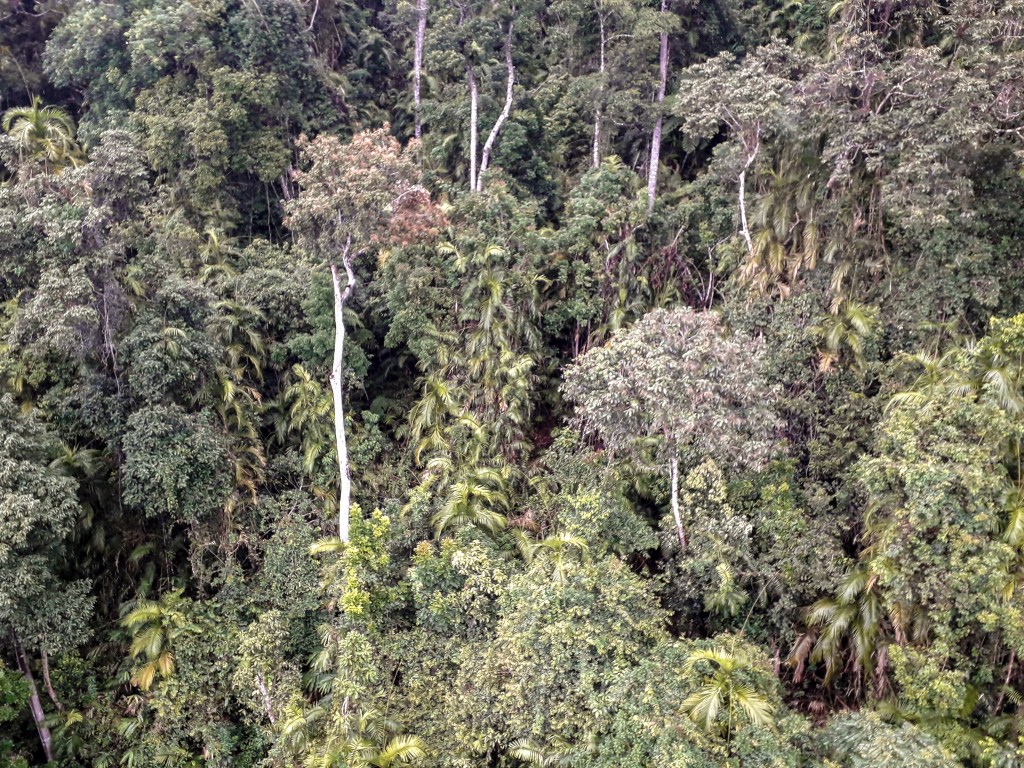
Northern Queensland rainforest, Australia. Image taken by the author
Tropical rainforest in Northern Queensland, Australia
(image by the author)

The differences between a houseplant and an interior landscape plant

A lot of popular houseplants are easy to care for, as long as you don’t mind checking them every few days. They are often quite fast growing and also quite short-lived – although you can often take cuttings. Several species benefit from being moved around the house according to the season and availability of light. They are often quite happy on a windowsill (especially if the house is unoccupied during the day and window light is all they get). Furthermore, dealing with an occasional pest is quite easy – especially if you catch them quickly and can take the necessary time to nurture your plant back to health.

Houseplants are often grown to a different quality standard to those destined for the interior landscaping market. Root systems are often weaker and they have been grown on a nursery to promote lots of lush foliage. This makes them very appealing in a garden centre or DIY store. The retailer isn’t fussed if the plant doesn’t live too long. Most people assume that their dying houseplant is down to their own lack of green fingers. Houseplants are often quite small too, but if you are green fingered, they can be allowed to grow quite big.

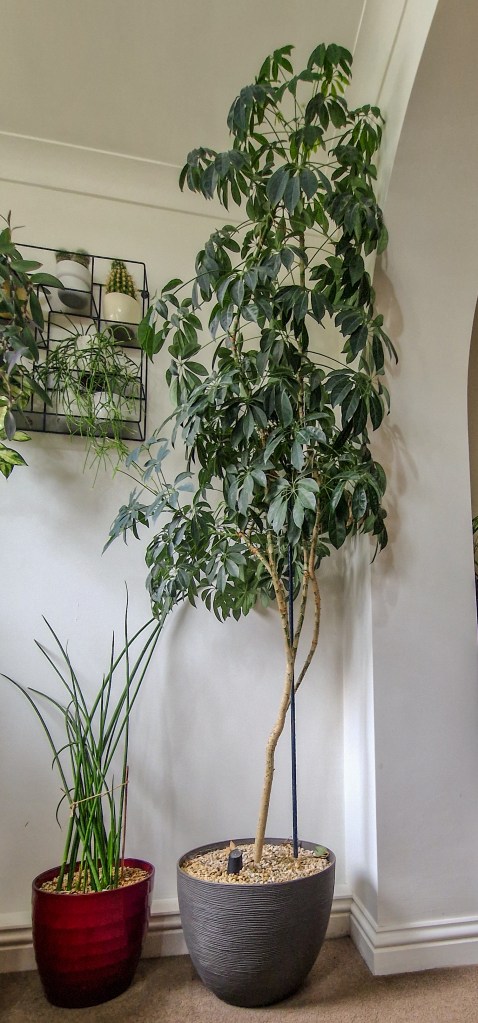
Schefflera arboricola.  13 years ago, this was a cheap plant from a DIY store in a 15cm pot.  Image by the author.
13 years ago, this was a cheap plant in a 15cm pot, which I bought from a DIY store. Now it is well over 2m in height and still growing.

However, if you are a commercial interior landscaper, you need proven, resilient plants. These must be capable of surviving for several years in the hostile environment of an office. They have to be resistant to pests, they shouldn’t grow too quickly and they should be long lived. You also need them to thrive between service visits – and these could be three weeks apart (or more). You also need to use a different set of horticultural techniques, substrates and a different way of setting up the plant displays.

Where to learn more

If you would like more information about indoor plants, have a rummage around this blog. There are lots of posts, and more to come, about indoor greenery.

If you would like advice or training on interior landscaping, get in touch or join my mailing list (see below). You can also find out more about my services and training courses here.

Processing…
Success! You're on the list.

Cabinet-top planters: think of them as horizontal green walls

Cabinet-top planting
Shallow planter mounted on the top of office furniture

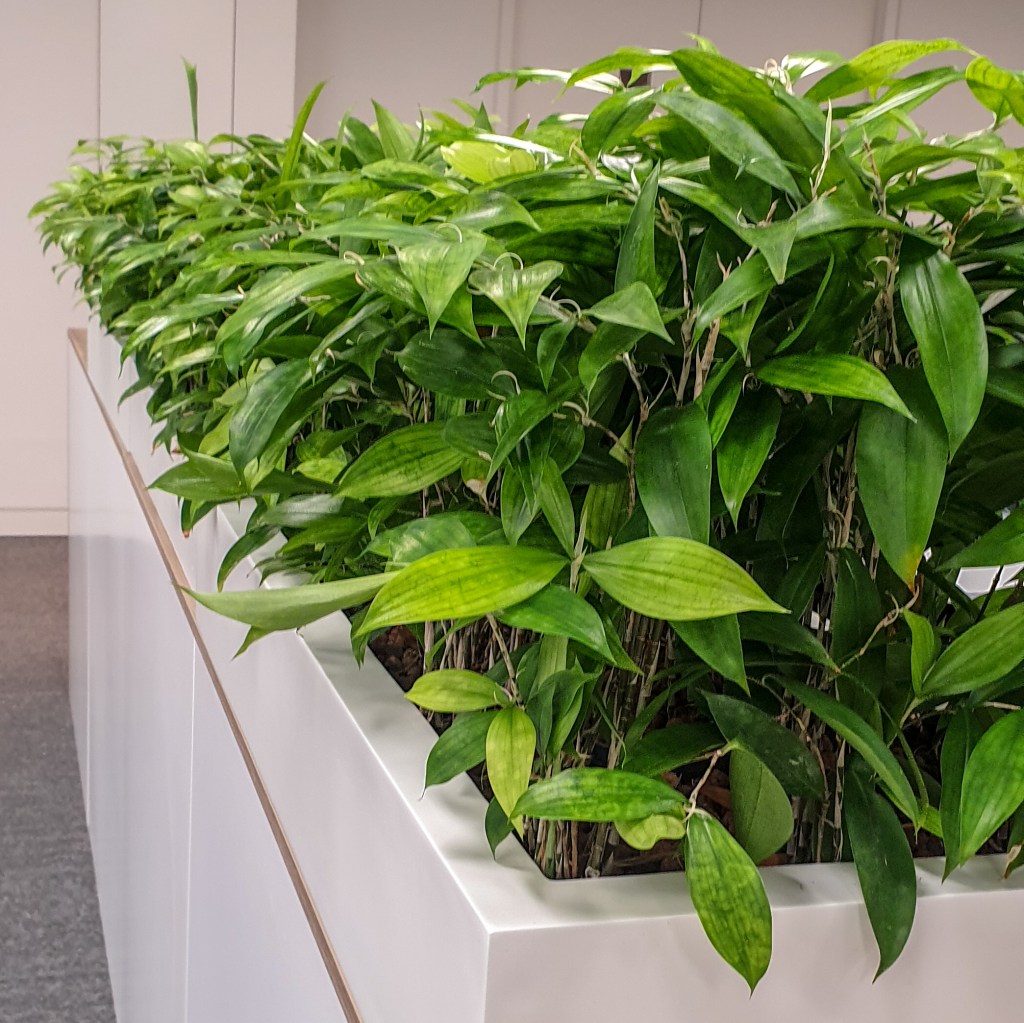
Over the last few years, office designers have specified cabinet-top planters (sometimes called furniture-based planters). They are rectangular troughs that are designed to hold several small plants – often a mixture of species.

These planters are often, they are rather shallow: 150mm to 200mm depth is quite common. They can look great, but they can also have some issues – especially if you have to maintain the plants in them.

I have seen increasing numbers of this type of planting not looking their best after a relatively short time. Sometimes, this is down to having a mix of plants that are incompatible with each other. (I have a training course about that, by the way – please get in touch). However, more often, it seems to be because the planters are very shallow. Office furniture designers – get in touch with a horticulturist (me, for example) before you design your planters. Some of your work is very sub-optimal. Why do you think 150mm depth is adequate?

Most of these planters take large numbers of small plants in a relatively small volume of growing medium. As a result, they tend get through water quite quickly. Because they are quite high (often above shoulder height), they are also tricky to water and groom.

Vulcaponics can work very well with furniture-based planters, but even they can struggle when the planter is especially shallow.

Most commercial interior landscaping companies have a service cycle of two weeks or more (three weeks is common in Europe). This is fine for larger, solo plants displayed in decent-sized planters. Three or even four week watering intervals are no problem, but this is a stretch for such small plants.

It strikes me that the best way to think of these planters is as a horizontal green wall. Green walls have large volumes of small plants in a relatively small space. They work because the watering element of plant care is managed by having an irrigation system, or hydroponic set-up.

Shallow cabinet-top planter with hydro-culture plants
Shallow cabinet-top planter set up with hydro-culture plants
Image by the author

Interior landscapers: you have options

First, you can shorten your service cycles. This will work, but will be costly. It might make planning of service schedules quite difficult if you have a mix of 2-week and 3-week cycles.

Second, try using more succulents and other low-water plants. This will also work, but you will need to check to make sure the light levels are high enough.

Next, do nothing but make sure you price in much higher plant replacement costs.

Finally, consider using hydro-culture for this type of plant display. This will enable you to stretch your service intervals back to three weeks. You will also solve many of the plant incompatibility issues that would arise from the species having different water requirements when grown in compost. This is the closest to a green wall in terms of care and maintenance.

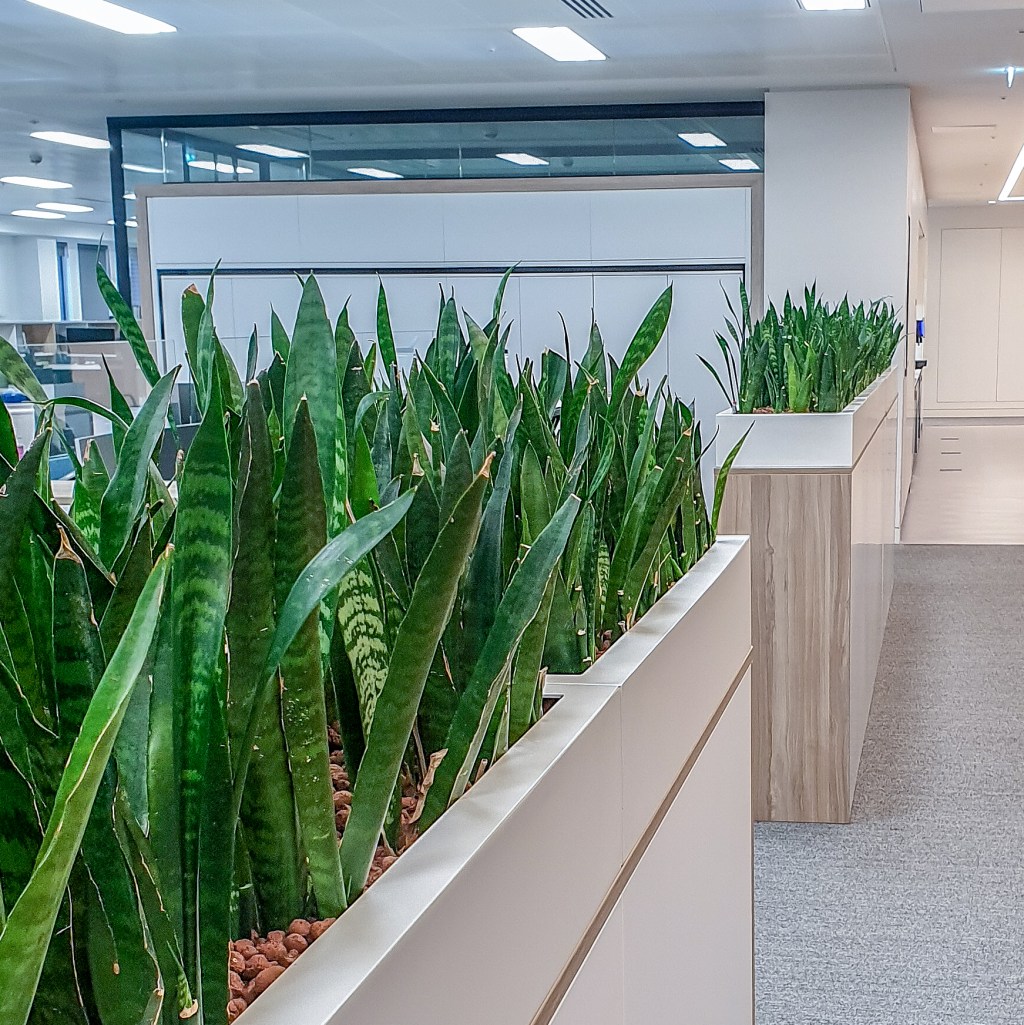
Sansevieria plants in shallow troughs

Get in touch for advice, training or consultancy, whether you are an interior landscaper, designer or furniture supplier – I can help you get it right. Please also sign up to get my emails about my services and training programmes.

Processing…
Success! You're on the list.

Easy exotica: how to get the best out of your orchids

Thirty years ago, the idea that an orchid could be anywhere other than in a hot house would have been considered as horticultural heresy.  Now they are sold in supermarkets for the price of a bottle of wine.  Formerly the preserve of specialists with expensive hot houses and specialized composts, advances in tissue culture have made the propagation and care of orchids an inexpensive way of getting exotic blooms into any building.

About orchids

The orchid family is one of the largest plant families, with approximately 28,000 species growing in almost every habitat – including a few wild species in the UK.  To illustrate how big a family of plants that is, more than 10% of flowering plant species are orchids. 

European interest in orchids started in the late 16th Century, when explorers collected plants from their native habitats and brought them back to Europe.  By the late 19th Century, their cultivation had become something of an obsession with wealthy collectors, who paid high prices for new varieties and built special glasshouses to keep them. 

Most of the orchids grown indoors have their natural origins in the tropics and subtropics, where they grow as epiphytes (meaning that they cling onto the trunks and branches of trees) or lithophytes (growing on rocks and cliff faces). 

Many orchid species and hybrids are commercially available, and can be grown as house-plants.  The mystique that used to surround their cultivation has all but disappeared, and expensive hot-houses are no longer required except for the most exotic and rare plants.

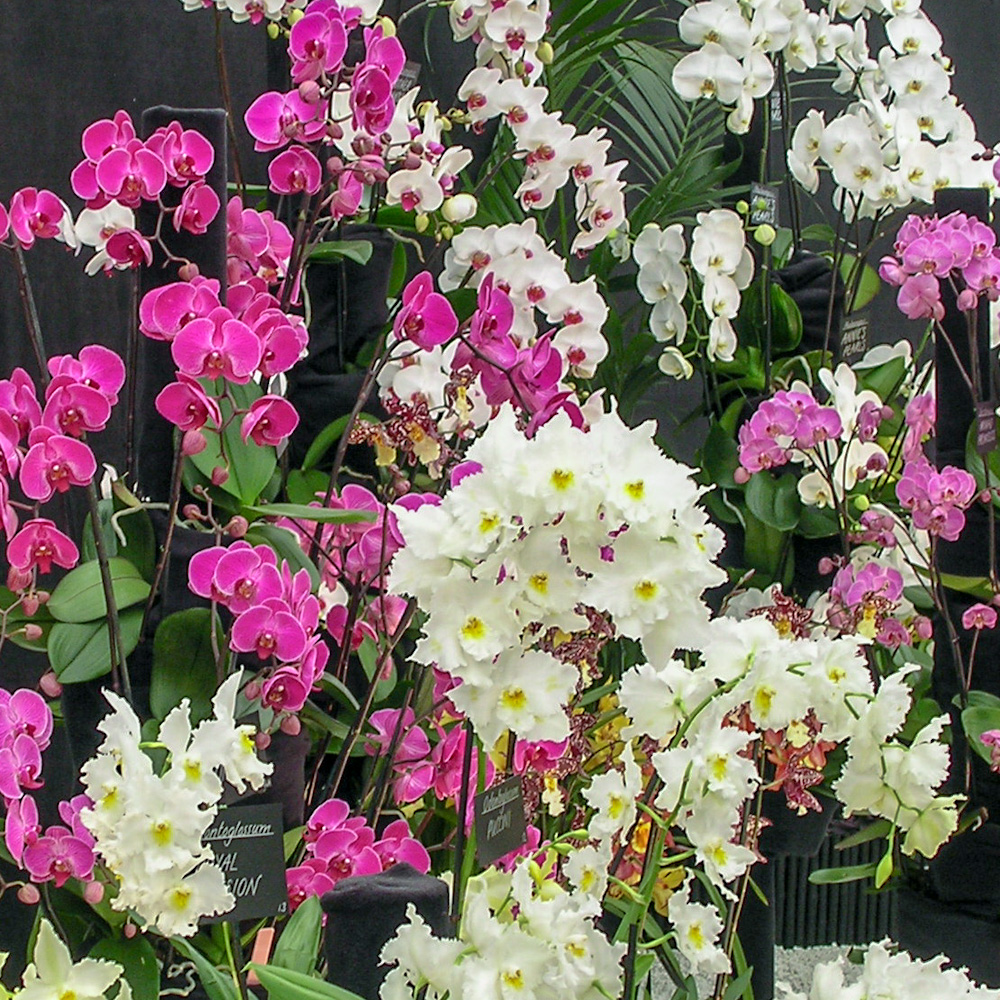
Orchid display at the RHS Chelsea Flower Show

Amongst the most popular indoor species are:

  • Dendrobium, from China, the Himalayas, Southeast Asia and Tropical parts of Australia (the name literally means ‘living on a tree’, which describes its epiphytic habit rather well).
  • Miltonia, a native of Central America named after the Englishman, Lord Fitzwilliam Milton, and which are often known as Pansy Orchids, for the shape of their large flowers.
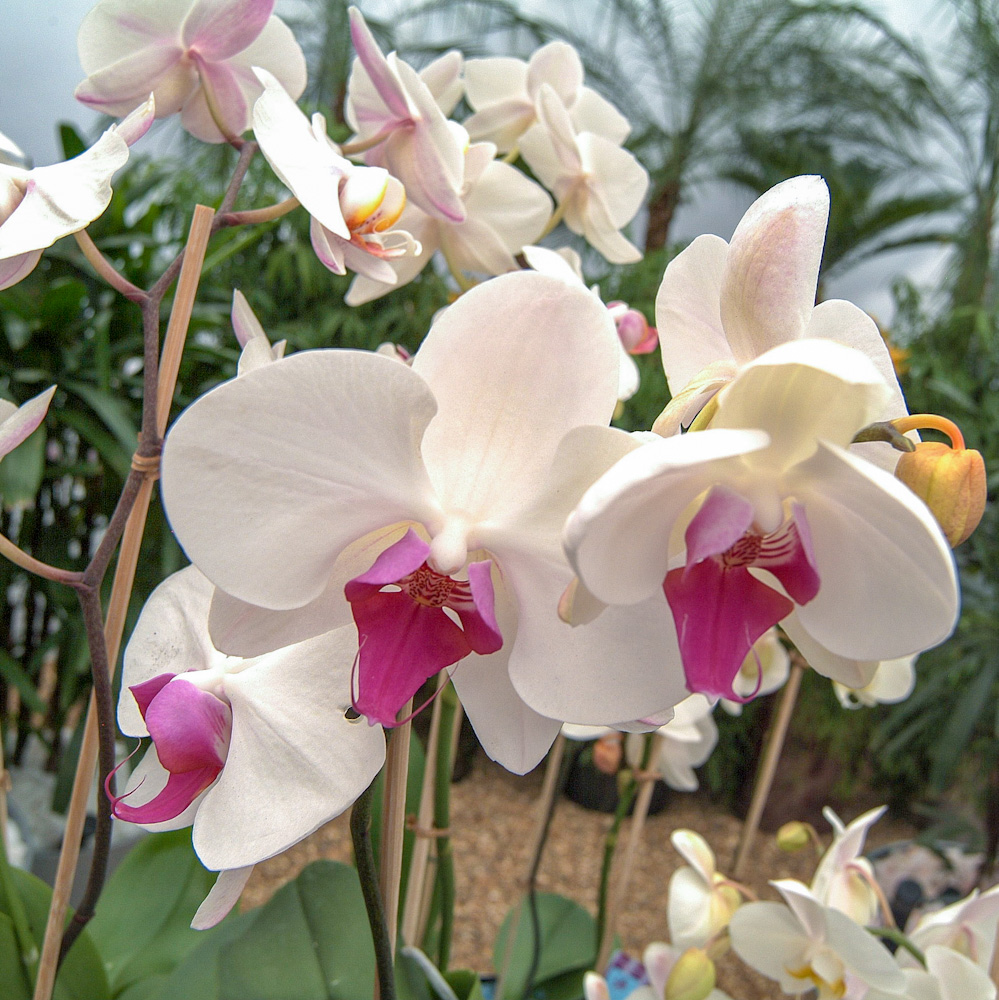
  • Phalaenopsis, the moth orchids, are found growing wild on the Pacific Islands of Borneo, Java and the Philippines.  The name Phalaenopsis means ‘moth-like’.  They are the easiest orchids of all to keep as houseplants, and we will concentrate on them in this article.

Dendrobium nobile often produces large numbers of highly scented blooms on long canes called pseudobulbs.  Spectacular these may be, but the blooms are very short-lived, and when not in flower, they are not especially attractive to look at.

Phalaenopsis and Miltonia hybrids are similar in many respects.  The flowers, whilst appearing very delicate, are surprisingly long-lasting (due to the scarcity of pollinators in the wild), and the plants are very robust when grown as house-plants.

Phalaenopsis orchids (pronounced fa-leh-NOP-siss) are especially recommended for their visual appeal, and comparative ease of care.  In good conditions, Phalaenopsis will flower for several weeks.  Miltonia, though similar, produces very large flowers that really need some space to display them to their best advantage.

How to care for Phalaenopsis orchids

Displaying in a decorative pot

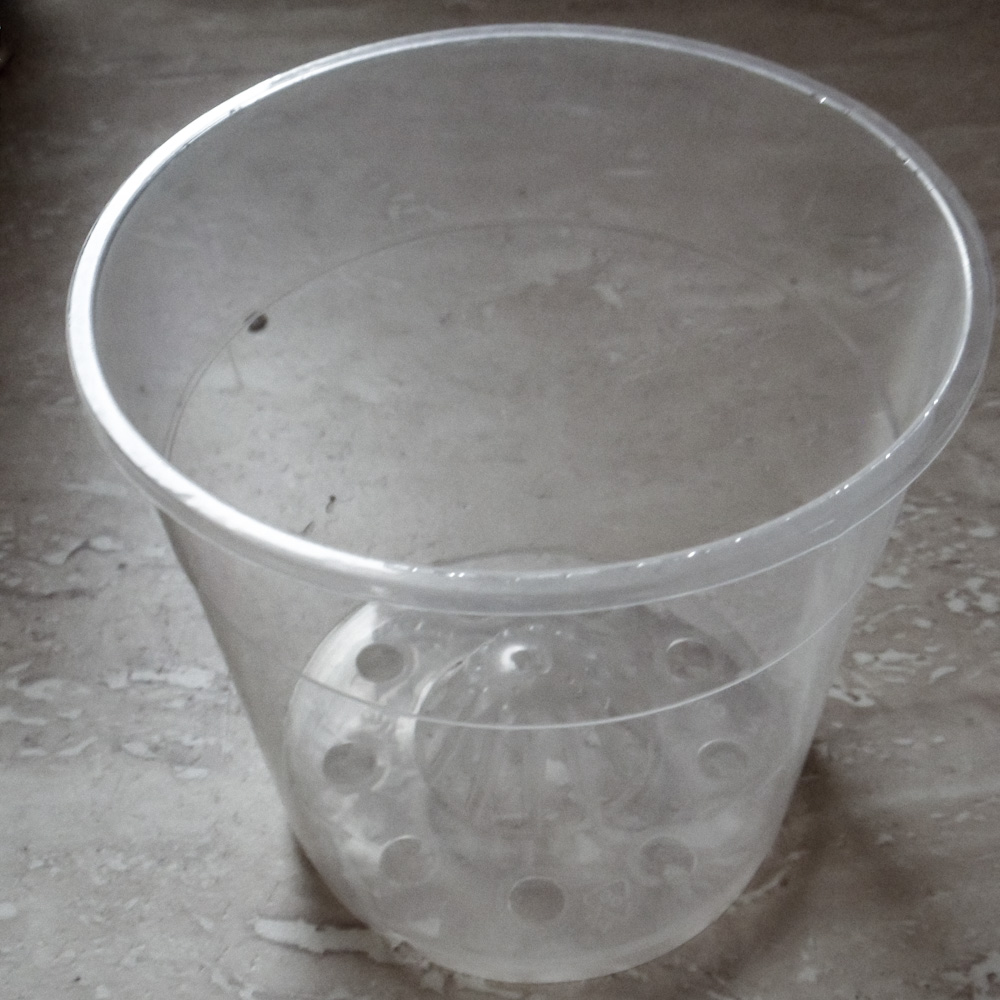
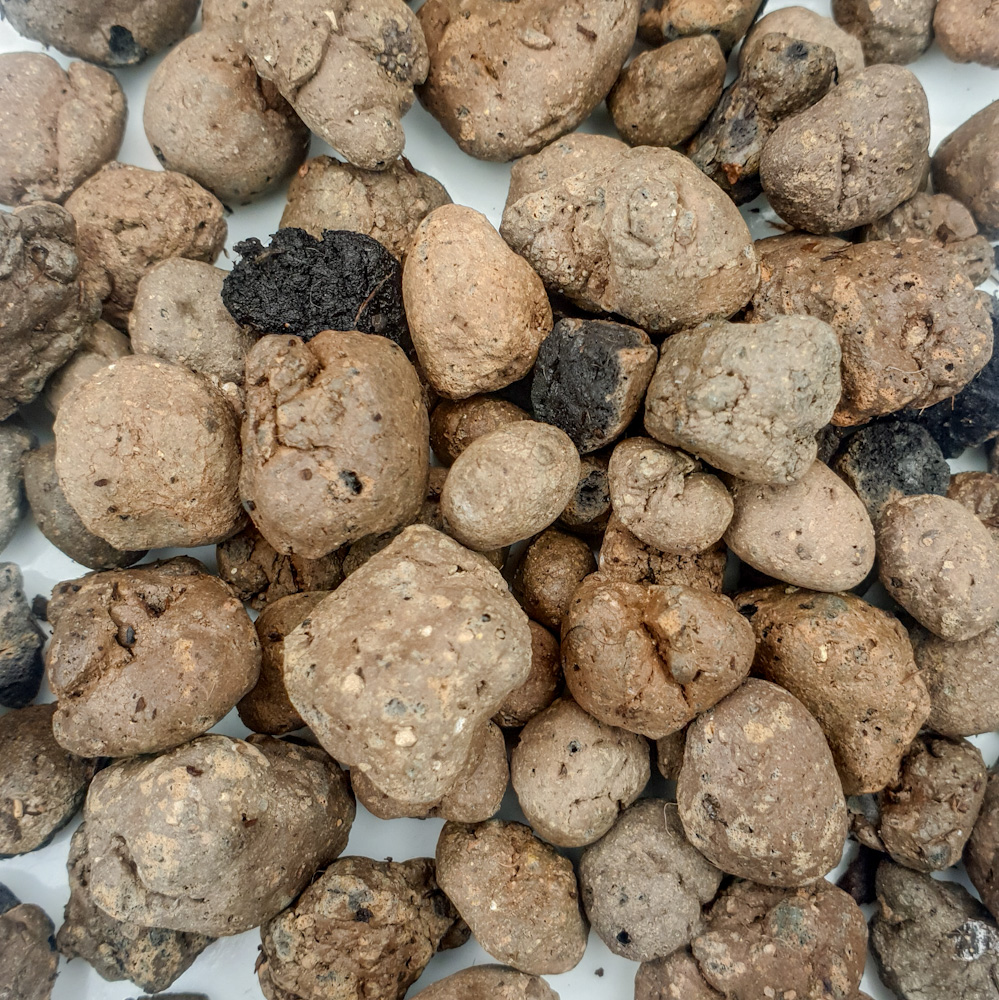
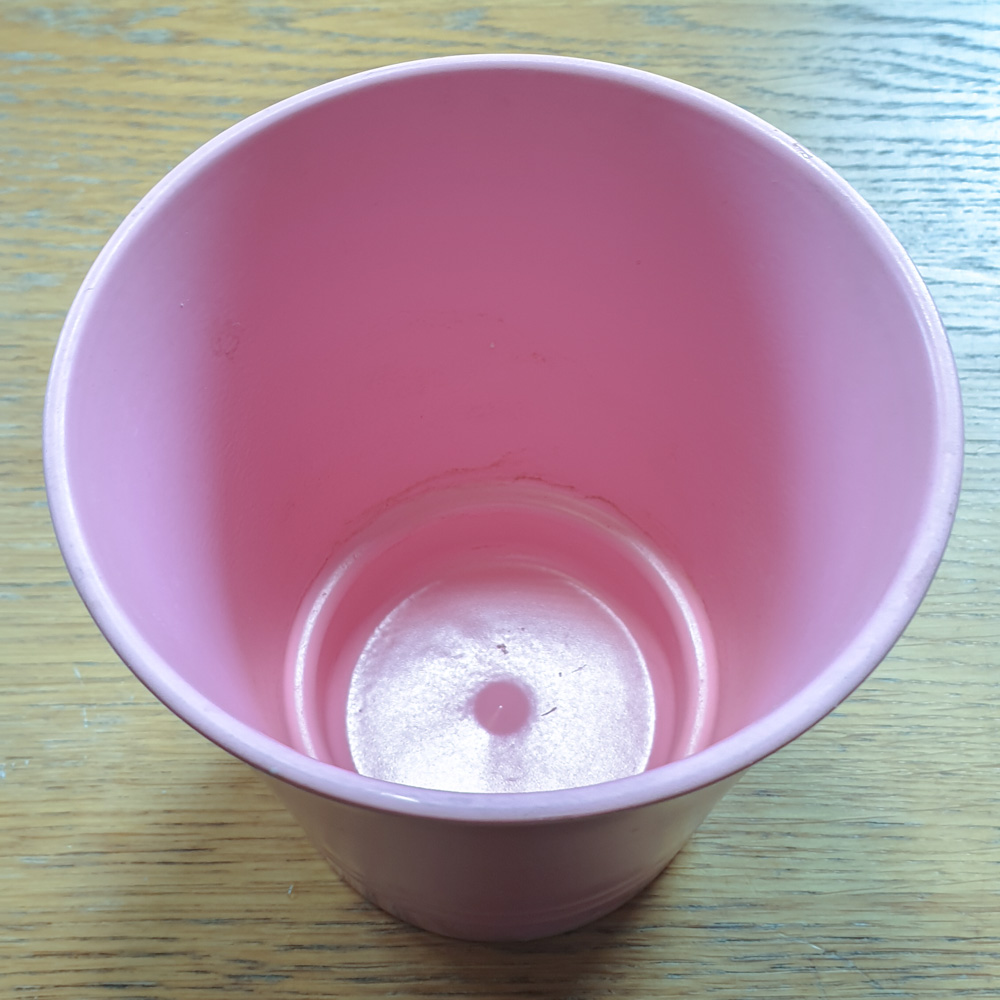
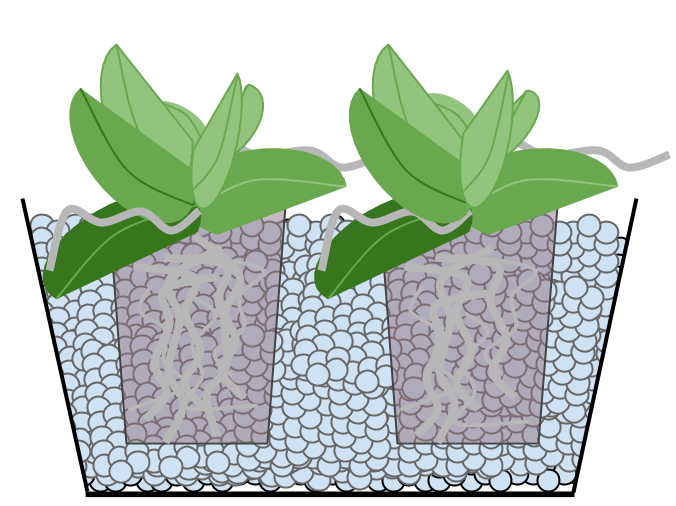
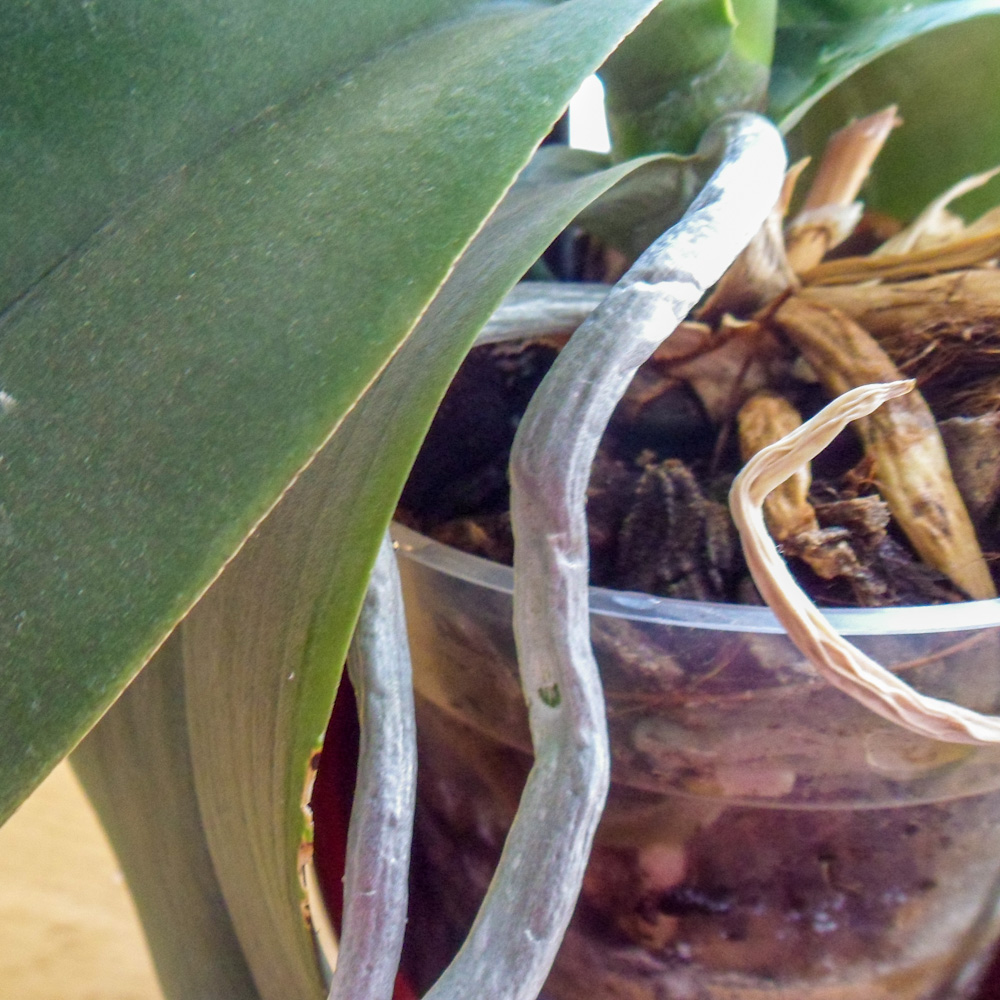
Orchids are supplied growing in a special free-draining compost.  They should not be removed from their original pots, which you will notice are made of a clear or translucent plastic.  (You should keep the orchids in their original grow pots: orchids benefit from a little light at the roots, which is why they are sold in such pots.)  Instead, a layer of LECA (light expanded clay aggregate – small pellets of absorbent clay, which you can buy from most garden centres) or vulcaponic substrate should be spread in the bottom of the decorative pot, and the orchid pot placed upon it.  

Transparent orchid nursery pot
LECA – light expanded clay aggregate

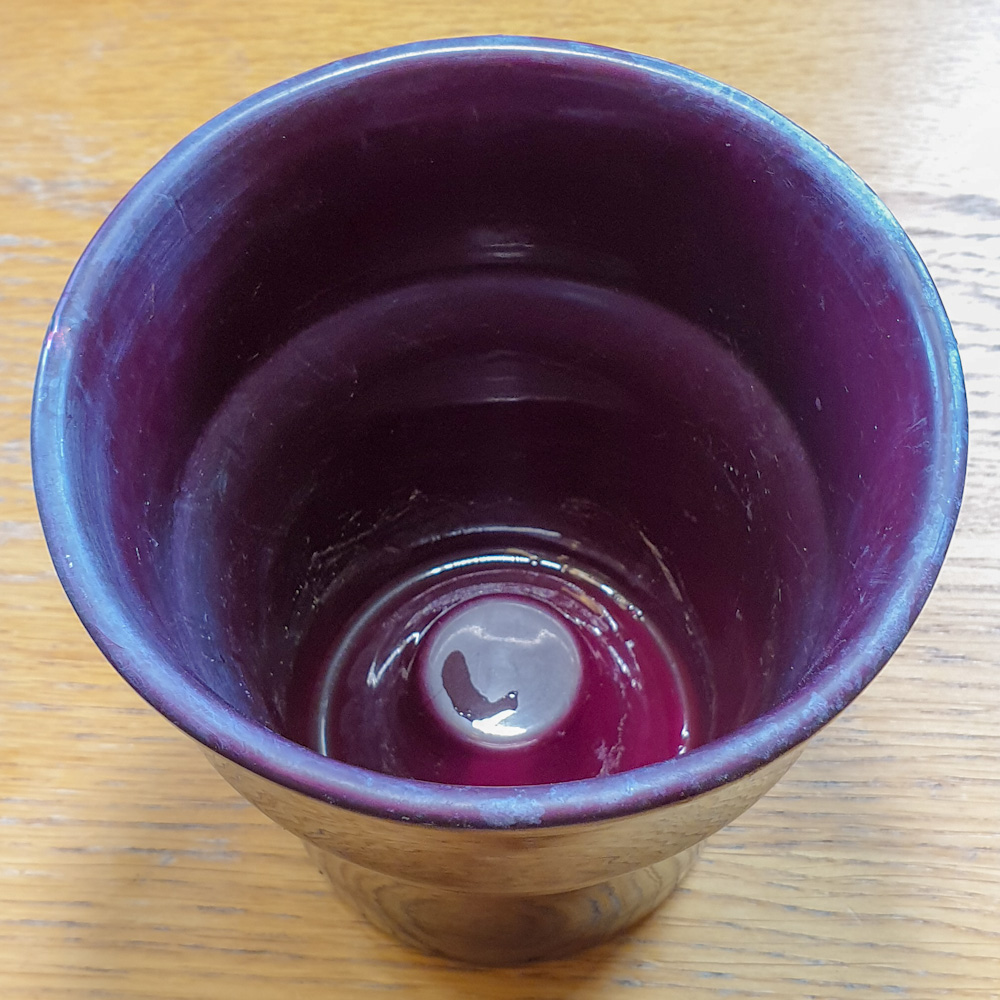
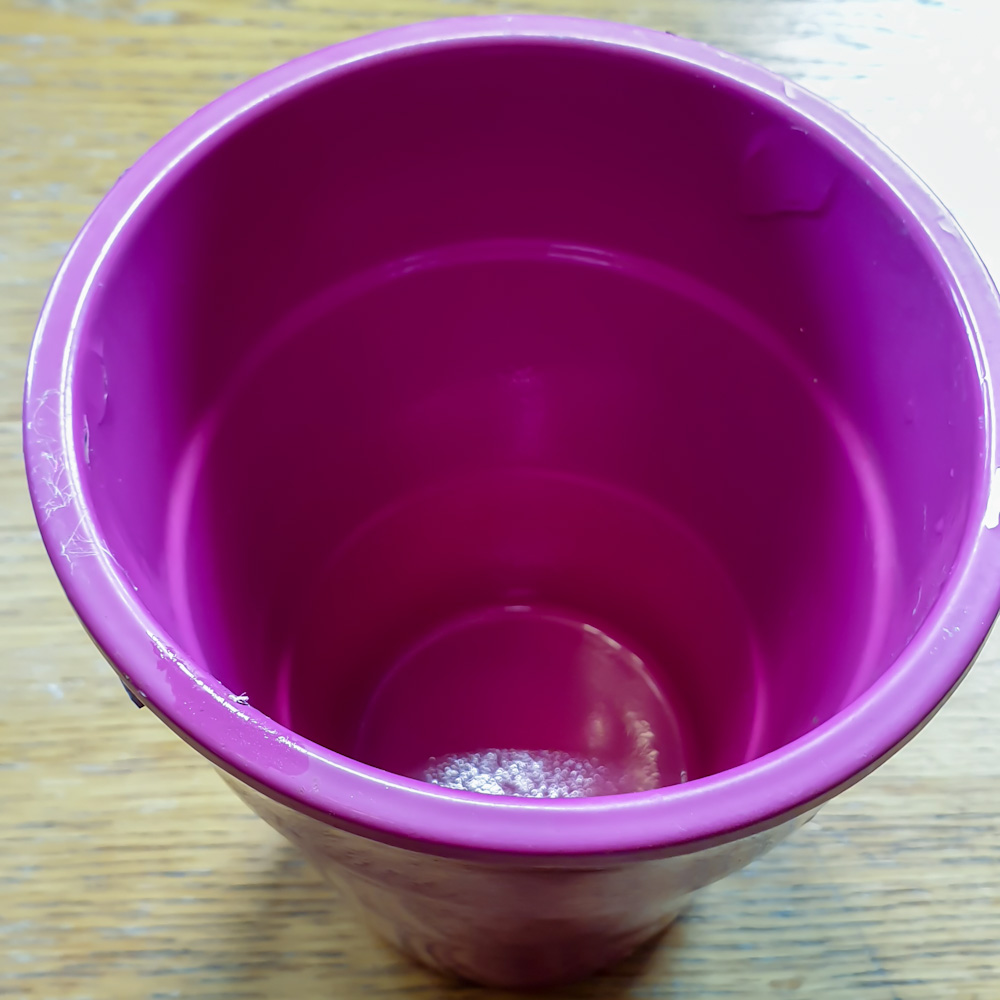
Alternatively, you can buy special orchid pots, which are often taller than conventional decorative pots.  These are designed so that you can keep a moist layer, or even just water, at the bottom, without the orchid sitting in it.

A selection of orchid pots showing supports for the grow pot so that a humid area can be provided underneath

If the decorative pot is large, you may wish to surround the nursery pot with more LECA, coarse vulcaponic substrate or even something like glass beads to hold it in place (and let some light in).  Phalaenopsis benefits from a humid environment around the roots, which can be achieved by standing the grow pot on a layer of something like lava rock or LECA in the decorative pot to support the pot, and keep that material moist.

Do not plant the orchid directly into soil or potting compost.

Ensure that the fleshy, grey aerial roots are able to sit above the surface and not get buried.  Let the grey aerial roots sit above the surface of the lava rock or LECA.  They are covered in a material called velamen, which acts like a sponge to absorb moisture from the air.

Heat and light

Orchids benefit from good light, but should not be placed in direct sunlight, draughts or near direct heat.  A minimum of 15°C is needed, ideally a little warmer once the flower stem starts to grow.  Large fluctuations in temperature between night and day will also shorten the lifespan of the flowers.

Orchids do really well in humid situations and make for fantastic bathroom plants.

Water

Orchids require regular watering, but must not be allowed to stand in water. My own research has shown that rainwater, or deionized (or distilled) water, with a little fertilizer (see below) is ideal, but tap water is acceptable in most circumstances (although it can vary, and often contains dissolved salts that can damage the roots).  One thing to bear in mind, however, is that cold water can be damaging – tap water or rainwater is best if allowed to get to room temperature before using.

To water an orchid, lift its grow pot out of the decorative planter and take it to a sink.  Pour plenty of water into the orchid pot and allow it to drain, then replace into the decorative pot. If you keep the orchid on a layer of LECA, or similar, moisten that as well.  You probably won’t need to water more than once a week, or occasionally less frequently.  (If you are going to be away, give the plant a good watering before you leave and make sure there is some humidity at the base of the pot).  Standing water near the leaf bases will lead to rot and leaf loss.

Fertilizer

In their natural environment, orchids such as Phalaenopsis, gain their nutrition from the poor soil they grow in, or from water washed off the leaves of the trees that they live in (such leaf washings might include nutrients derived from dirt and even the droppings of birds, small mammals, tree frogs and insects).  In some species, bacteria or fungi live in the aerial roots and they are able to fix nutrients direct from the atmosphere.

Cultivated orchids require very little fertilizer, but some micronutrients are needed, especially when the plant is flowering.  Specially prepared orchid fertilizers are available from garden centres and orchid specialists, and whilst they may be beneficial, they are expensive and not absolutely necessary.  A weak (10% of standard rate) solution of a general purpose houseplant fertilizer (containing trace elements) mixed in deionized water is ideal.

Keeping orchids clean and pest free

Orchids are generally pest free, but mealybugs, scale insects, thrips and two-spotted (red) spider mites can attack them.  Remove any signs of webbing and mealybug egg masses as soon as you see them.  Aphids seldom attack the plant, but they may gather on the flowers, making them unsightly.

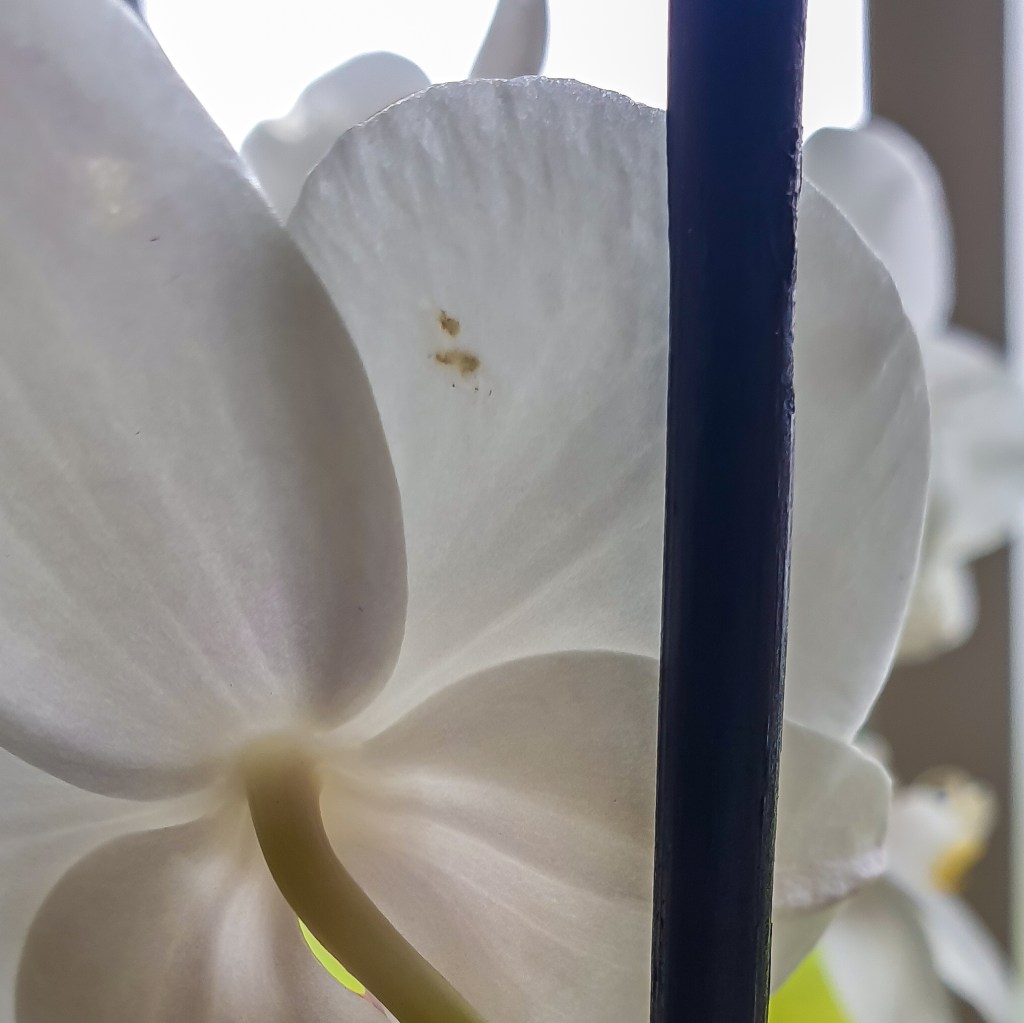
Thrips damage on an orchid flower

Orchids have robust leaves and surprisingly strong flowers.  However, that does not mean you can be rough with them.  The most important thing to do is to remove any dust that has accumulated on the leaves – a damp cloth is often the best way.

Caring for the flowers

Phalaenopsis produces flowers on a long stem.  The buds develop at the tip of the stem and can be quite fragile.  It is important not to damage them.  Sometimes, the buds may not fully develop.  In this case, they will shrivel and should be carefully removed.  

Old flowers will start to shrivel, and these can be removed by gently rubbing the flower stalk from the stem.  Once all the flowers on a stem have finished, the stem should be cut back.  

If the plant is healthy and vigorous, it may be possible to encourage a second growth of flowers by cutting the stem back to just above the fourth or fifth bud where a new flowering stem can sometimes grow.  If the plant is lacking in vigour, the original stem should be cut right back to the base, and the plant allowed to recover.  

Flowering is triggered by a reduction in daytime temperature, so to get your plants to reflower, place them in a cooler (not cold, though) room in the house for several weeks before bringing them back to a warmer place.

As you can see, orchids really are pretty easy to look after, and they reward you with the most fabulous exotic blooms.  Once you have mastered Phalaenopsis orchids, why not try your hand at some of the more exotic types, some of which have the most enticing perfumes and even more glorious flowers.

(image credits: all images from author’s own collection)

Autumn challenges for your houseplants

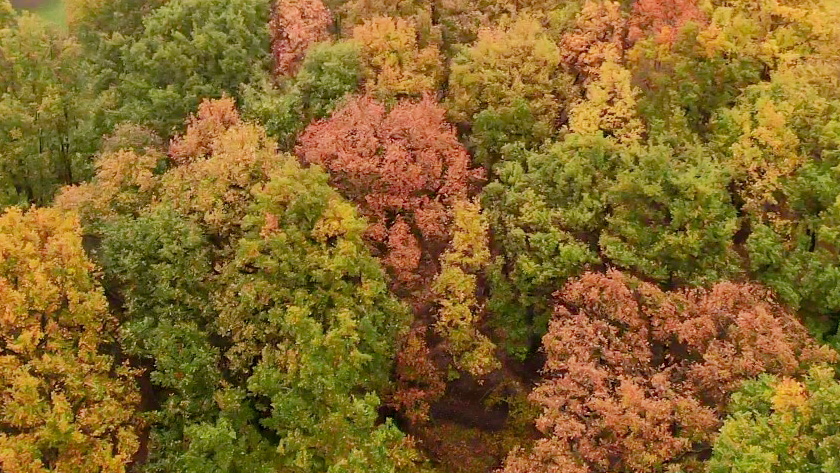
woodland in autumn, showing shades of green, red, orange and brown

Last week, we passed the autumn equinox. The day when we enter a period of more night time than daylight. More people are also working away from home as employers are trying hard to encourage their staff back to the office. With this in mind, please spare a thought for your houseplants.

Lights on in the home

Offices are getting busier and more people are spending their working hours away from home.
We are also entering autumn. This means a lot less daylight, as a result of shorter days, less intense sunlight and far fewer hours of daylight.

It also means that the lights at home are off. On a dull day in an unlit house, light levels may be very low only a short distance from the windows. For houseplants, this can be tricky – they need light to photosynthesize, so prolonged darkness can cause problems. However, there are ways to minimize those potential issues.

By the windows

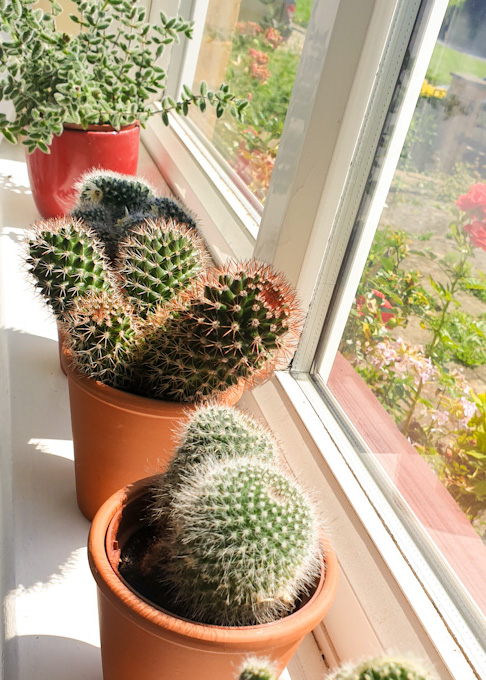
cacti on a windowsill
Cacti on a windowsill

If you haven’t already filled every available gap on your window sills with plants, now is the time to move some of your smaller plants a bit closer. Those that are sensitive to direct light (even at this time of year) such as Calatheas and Alocasias can go on north-facing window sills.

If you have a conservatory, and some room, some of your other plants might welcome a change of scene. Again, be aware that some species might not appreciate direct light, and watch out for cooler nighttime temperatures.

Many species, especially those with their natural origins in the undergrowth of a tropical rainforest, will be able to cope with the lower light levels quite easily without needing to be moved and without the need for additional lighting.

Plant by a window
Plant by a window

Be smart with your lighting

A lot of people have embraced smart technology and can control much of their home through an app or smart speaker (such as an Amazon Alexa or Google Home device). Smart lighting is one way of giving your houseplants a light boost, and as many lights use very little energy, they won’t add too much to your energy bills (and may save the cost of replacing some plants). A few extra hours of lighting whilst you are away from the home can easily be programmed, and you can also programme your lights to be on when you get home. Having your lights turn on and off throughout the day can also be a useful security benefit.

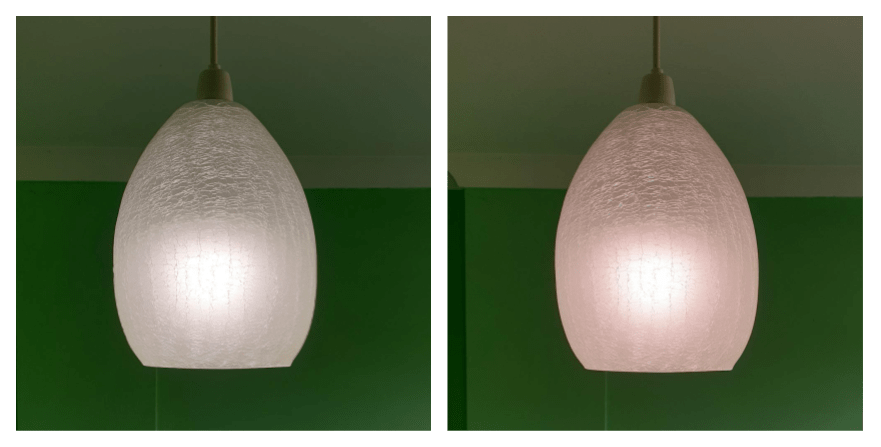
If your smart bulbs have different light quality settings, use daylight (sometimes called cool white) at the highest brightness during the day, and then change to a more comfortable warm white when you get home. You probably won’t need the lights to be on all of the time, but some species that do best in higher light conditions might benefit.

Comparison between daylight (l) and warm white (r) light from a programmable smart bulb

Cut back on water and feed

If you are spending more time away from the home, the chances are that as well as light being diminished, your home might be a little cooler as well: there is no need for the central heating if no-one is home.

If that is the case, your plants will be metabolizing a little slower, so they won’t be needing as much fertilizer and water as usual.

Always be guided by your plant – water according to the plant’s needs, not to a timetable. You can probably do without fertilizer until the spring as well.

If you have your houseplants potted in coir pots or set up with vulcaponics, that will certainly help regulate the water given to the plant. Adding water to the decorative pot and allowing it to soak gradually through the coir pot is an ideal way of managing the amount of water in the soil, reducing the risk of the roots becoming saturated.

Don’t worry

Most houseplants have their natural origins in the tropics and sub-tropics, where there isn’t much in the way of seasonal variation, much like inside a building. This is the main reason why native species of plants cannot cope with the indoor environment – they need seasonal variation to trigger different processes, such as flowering time or leaf drop.

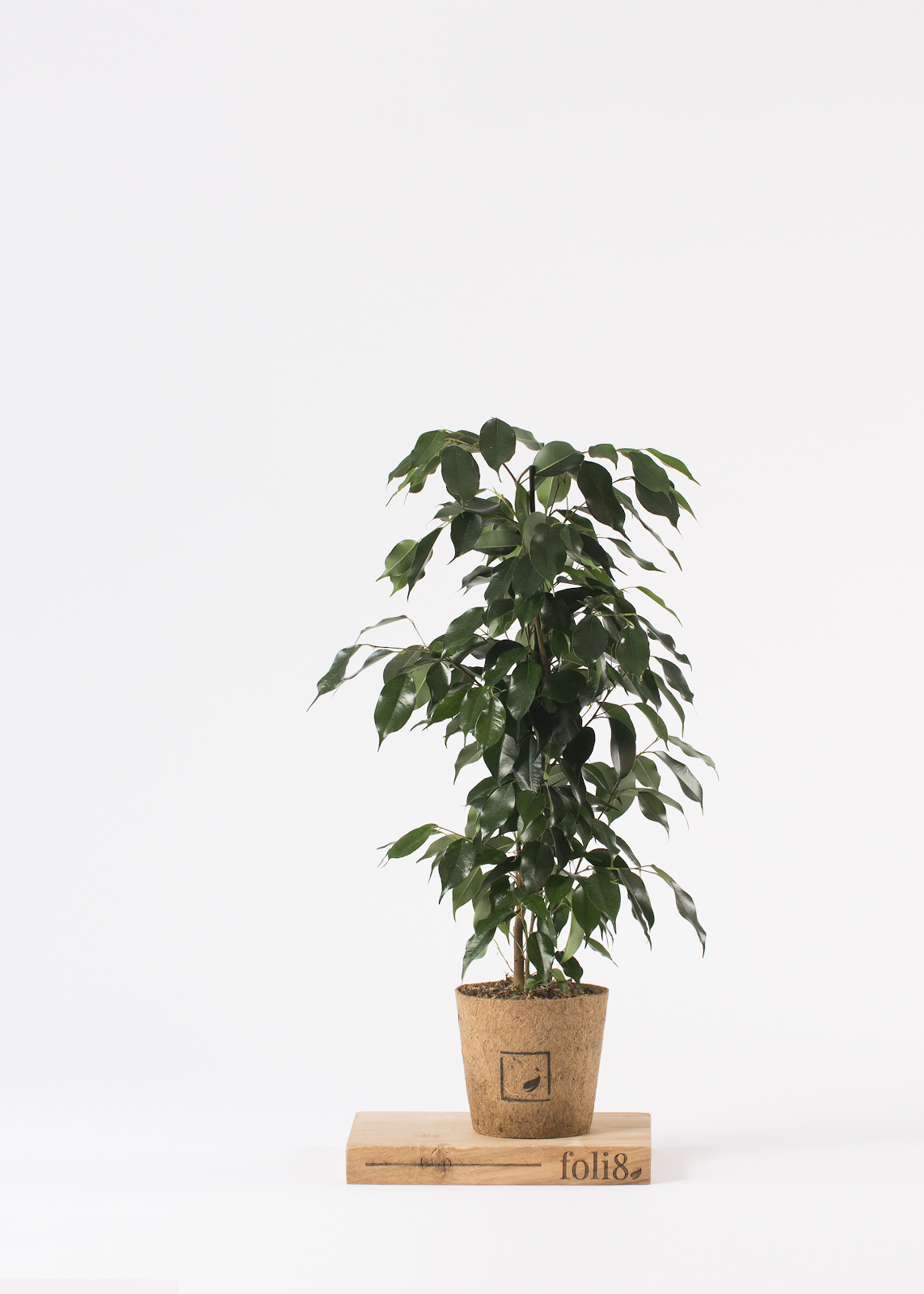
However, when there is a seasonal change, some tropical houseplants will respond and you might notice more in the way of leaf drop than usual, especially on plants such as Ficus benjamina and other small-leaved tree species. Unlike temperate trees that tend to drop their leaves in the autumn, tropical species drop leaves continuously as they grow old, but you might find that if light and temperature levels do fall, they might drop more leaves as a result.

If this happens, don’t be alarmed (unless they drop all of their leaves). They will start producing a lot more foliage in the spring.

Ficus ‘Green Kinky’

Houseplants are pretty resilient. Breeders and growers have selected species and varieties over time to ensure that they can cope with the indoor environment. Working from home has probably given many houseplants a bit of a boost, but they will adapt to emptier, darker homes quite quickly.

Vulcaponics: is this the future for interior landscaping?

Interior landscape where all the plants are set up using a vulcaponic growing system

Vulcaponics is the latest evolutionary step in interior landscaping and is becoming increasingly popular. If you are not familiar with the term, it is a growing system that combines the advantages of hydroculture with the convenience of soil culture. The system encourages good root growth, makes water and fertilizer management easier, reduces the risk of soil pests (especially fungus gnats) and helps the interior landscaping industry reduce its reliance on peat-based substrates.

So, what is a vulcaponic growing system?

Close-up image of vulcaponic substrate

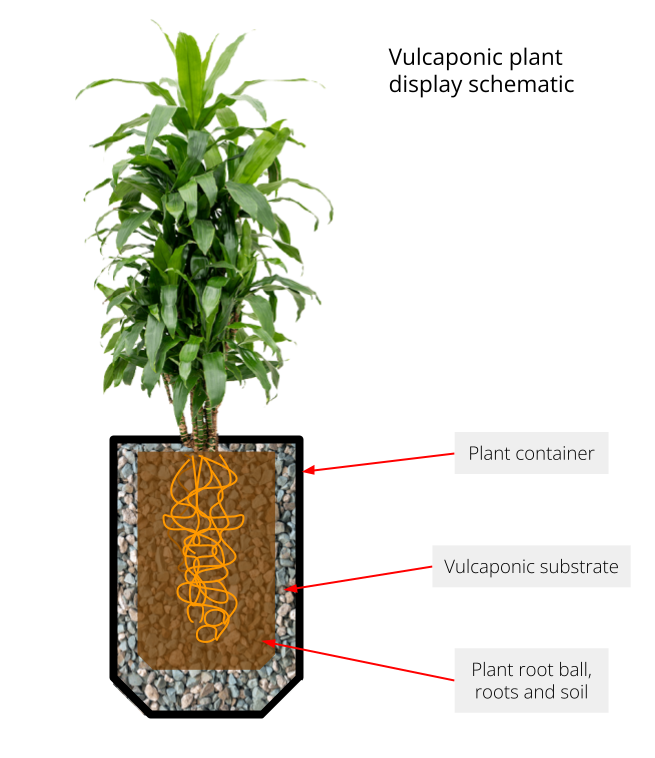
Vulcaponics is a hybrid growing system that combines the benefits of both soil and hydroculture systems. It is effectively a semi-hydro system: the plants start out as conventional soil-cultured plants growing in a lightweight compost but over the course of a few weeks, the roots grow into the vulcaponic substrate and behave more like the water roots that are found with hydroculture plants.

In many respects, the system is similar to the Seramis system that developed in the 1990s, and which encourages exceptional root growth. Seramis is composed of small granules of expanded, aerated clay (much smaller and denser than LECA, used in hydroculture plants), which are able to hold water and allow root hairs to penetrate them. If I remember correctly, the product was originally developed as a type of cat litter, but was soon found to be an exceptional substrate for indoor plants.

Vulcaponic substrate shares many of the same characteristics, but instead of being made from clay, is composed of fine granules of pumice (the result of volcanic activity – hence the name) and some other naturally-occurring minerals.

Schematic diagram of a vulcaponic plant display

What are the benefits?

Vulcaponic systems have several benefits, and most relate to better root growth and root health due to improved water management.

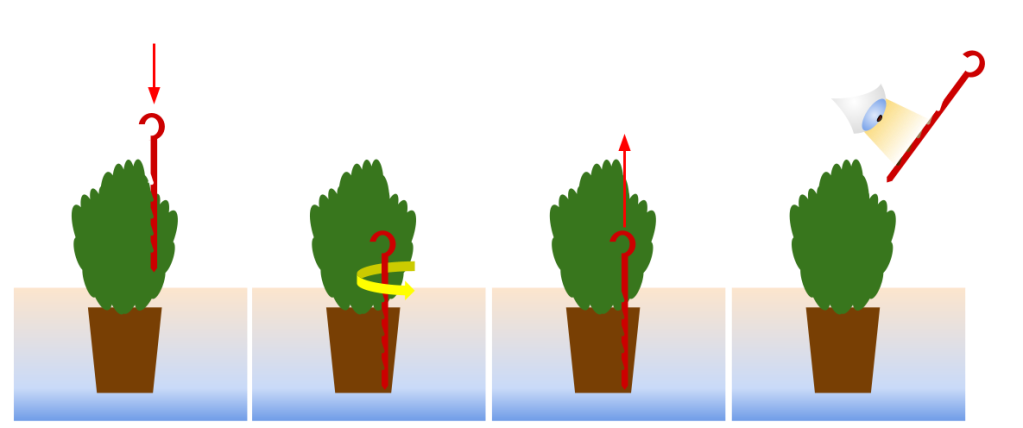
Watering a vulcaponic system is very easy – you check the soil moisture of the root ball (using a soil probe), and if it is dry, you add water. Sometimes, vulcaponic displays are fitted with a float gauge (the same as with a full hydroculture system), but it isn’t essential.

Diagram showing how to assess moisture in a rootball
Assessing moisture in the rootball of a plant when a depth gauge is not used

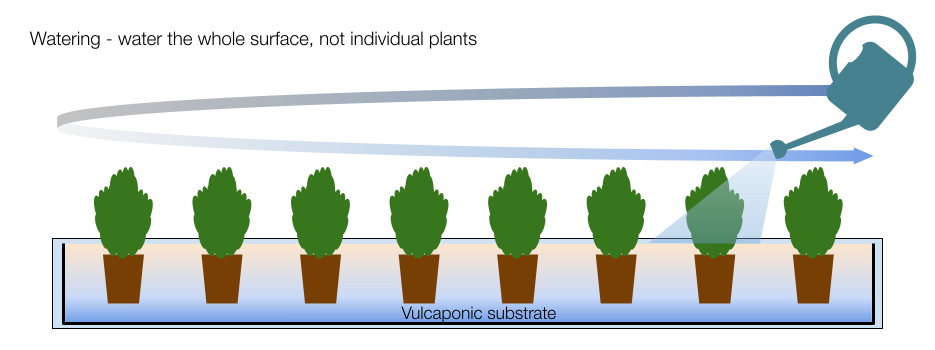
Water is added to substrate, which then percolates down the to the bottom. The water is then absorbed by the substrate, which can lift it as much as 20cm. This then creates a jacket of moisture right around the root ball which initially soaks into the soil. After a while, roots from the rootball will grow into the vulcaponic substrate and take water from there. This means that the rootball remains aerated and oxygen can get to the roots easily. It also means that the soil is not compacted as it often is when top-watered.

Diagram showing watering technique
Water the surface, not individual plants

Delivering the water to the roots this way has another benefit – the soil surface remains dry. If the soil surface is dry, then fungus gnats (sciarid flies) have a hard time getting established. Furthermore, a vulcaponic display should include a 2 – 3cm deep layer on the surface as well as around the sides and underneath the rootball. This makes it even harder for soil-dwelling pests to establish.

Watering intervals can also be extended. My own experiments have shown that it is easily possible to extend watering intervals to as much as six weeks (depending on plant species). This means that interior landscapers can spend more time cleaning, grooming, trimming and pruning their plants (the interesting part of the job) and less time lugging heavy watering cans around and just having enough time to give the plants a quick drink. The ‘splash and dash’ approach to plant maintenance can be eliminated, resulting in higher quality, longer lasting plant displays. Commercial interior landscapers will have fewer customer complaints, fewer plant replacements and improved operating margins.

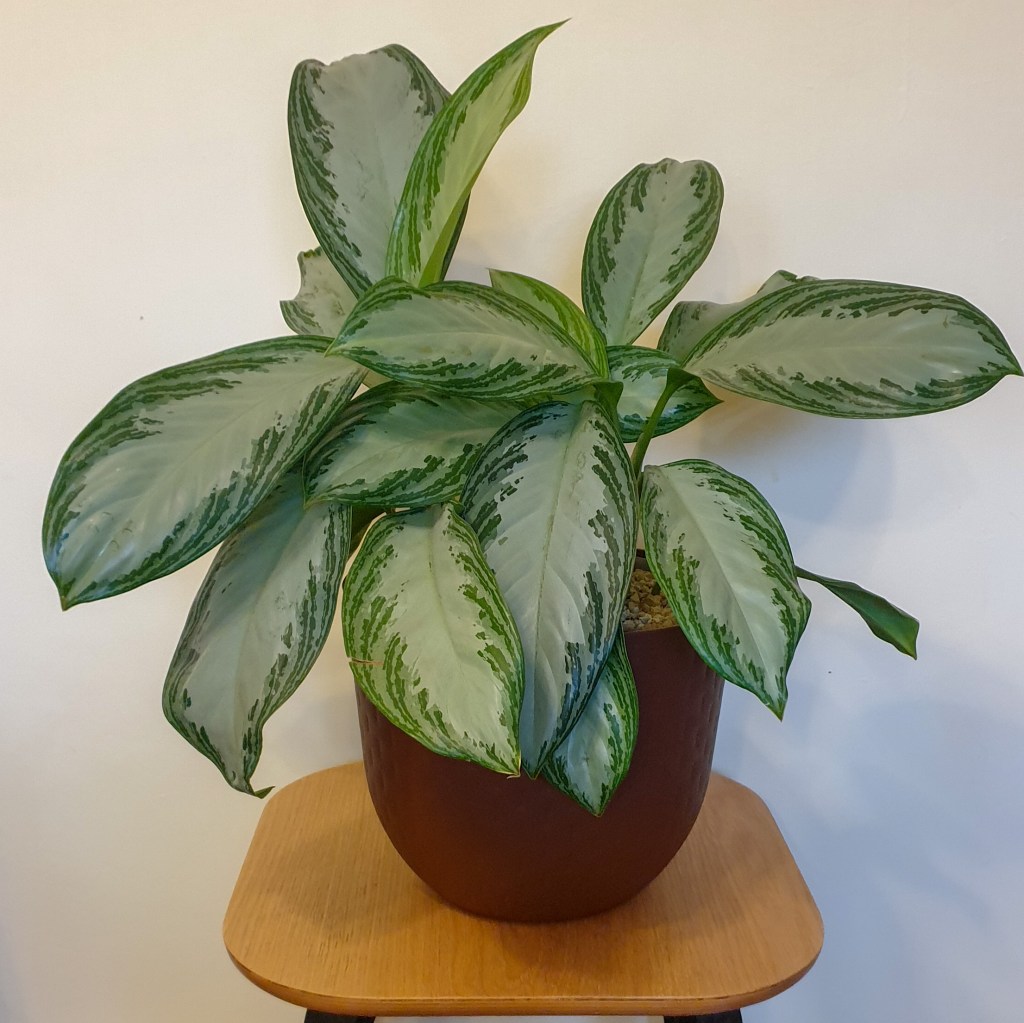
Planter containing two 17cm Aglaonema plants set up in a vulcaponic system.  These are typically watered every 5 - 6 weeks
Planter containing two 17cm Aglaonema plants set up in a vulcaponic system. These are typically watered every 5 – 6 weeks

The downsides

Vulcaponics are not a panacea, but the system is ideal for small and medium-sized plants (up to about 2m in height). Really large plants are still better off in a decent soil-based compost. The main disadvantages are:

  • Vulcaponic substrate is heavy, so you must ensure that any plant containers, or furniture that they are placed on, can take the extra weight.
  • Compared with lightweight compost media, vulcaponic substrate can be pricey. However, the benefits outweigh the initial expense quite quickly
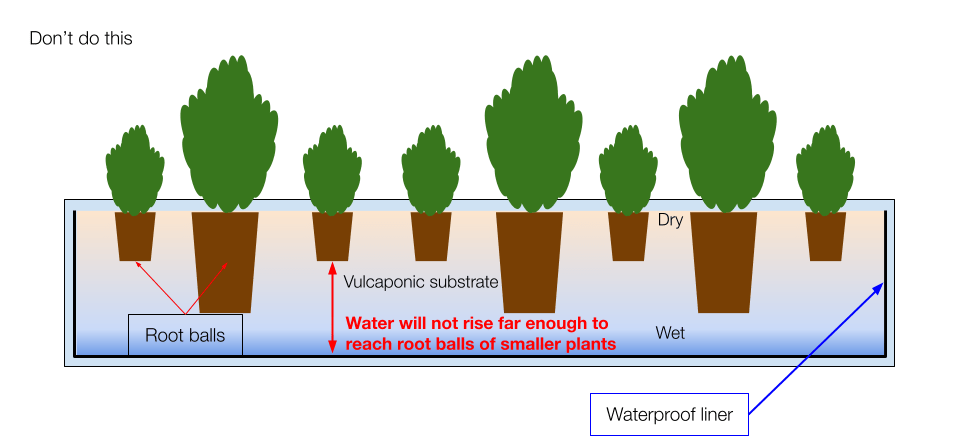
  • When planting mixtures of plants in a large container, it is important to ensure that the plants have a similar rootball depth
  • For deeper plant containers, you will have to use a liner – you don’t want more than 5 – 8cm depth of vulcaponic substrate under the rootball, otherwise the water will not rise far enough
Diagram showing The problems associated with using different-sized plants in a mixed planter when using the vulcaponic system
The problems associated with using different-sized plants in a mixed planter when using the vulcaponic system

Want to learn more?

If you are an interior landscaper interested in discovering more about vulcaponics, please get in touch. I’d be happy to discuss the system and I offer a training programme on this subject.

Go back

Your message has been sent

Warning
Warning
Warning
Warning!

Office plants when offices are empty?  How interior landscapers can adapt to a rapidly evolving workplace environment

Even before the pandemic, the nature of office work was changing.  There was an increasing shift to creating more purpose-based workspaces that accommodated different styles of activity, such as collaborative working or quiet focused work.  This also led to an increase in the use of non-allocated desks (let alone private offices), so there was no guarantee, or expectation, that an office user would be at the same desk every hour of every day.

Then, the pandemic forced huge numbers of office workers to work from home, and many of them found it preferable.  This has led to a rise in hybrid working, but has also acted as a catalyst for evolution of workplace design.  

A decade’s-worth of change seems to have happened in about 18 months and many employers have completely remodelled their office space as a result: partly to attract workers back to the office by making them more comfortable and homely, and partly to adapt them to new ways of working.  

However, with all the changes in workspace design, many offices are still less than half full for several days a week.  A recent report quoted in The Guardian suggests that the Monday to Friday office occupancy rate across the UK is 29% for the first three months of 2023, and slightly less in London, compared with typical pre-pandemic levels of 60%-80% (according to data from Remit Consulting).  

Empty open-plan office
Where is everyone?

As a result of this, it is quite likely that suppliers of business-to-business (B2B) services are going to be impacted.  Those companies selling discretionary B2B services, such as interior landscaping (my area of interest), are probably going to be especially exposed. 

B2B companies that already have a nicely diverse mix of customers in terms of sector, size, and geography are probably going to be able to absorb some of the possible shocks, for reasons I’ll discuss later. However, those that are heavily dependent on one part of the marketplace, such as  large corporate offices, might find themselves living in ‘interesting times.’  This is especially true where B2B service providers are not a directly-employed contractor, but appointed by a facilities management company.

What does this mean for interior landscapers?

The benefits of interior landscaping and workplace wellbeing are pretty much understood and accepted, so I don’t think there will be a large-scale chuck-out of plants as a cost-saving measure that we have seen in the past (such as the aftermath of the 2008 financial crisis). However, if offices are only – on average – one third full, then it stands to reason that there will be a significant reduction in the floor space needed for organizations.  Those empty floors won’t need plants, art, ambient scenting or coffee machines.

There is an upside for those businesses agile and imaginative to grasp the opportunities.  Those office workers not commuting as often will still be working somewhere – and not necessarily at home.  They will probably be spending more time working in places such as local co-working venues (several being set up in the suburbs and small satellite towns), coffee shops, or even in hotel lounges.  All of these settings (often called third spaces) would certainly benefit from some nice plants – ideally supplied and maintained by a good interior landscaper.  By offering their services to these spaces, interior landscapers can ensure that their plants continue to be seen and appreciated by workers, even if they are not based in a traditional office environment.

People working in a coffee shop
Photo by Marcus Aurelius on Pexels.com

Employers still have a duty of care

Even when the workforce is remote, employers still have a responsibility for the health, safety, and wellbeing of all their staff.  It stands to reason that some of those discretionary B2B services could be reimagined as something to enhance wellbeing in the home working environment.

Many interior plant companies, especially those that have the infrastructure in place to deliver plant displays, could adapt quite quickly – some have already by offering mail order houseplants.  Those companies could easily refine their offer by providing plants that are especially well suited to home working environments.  

A well-designed home office

These could include plants that are easy to maintain (and maybe even be set up in such a way as to make plant care especially straightforward), and be properly matched to the home worker’s office environment.  Advice and guidance on selecting the right plants for the space, together with instructions on plant care could be given, alongside tips on how to create a more effective home office space.

You can’t manage indoor air quality without measuring it first

Lots of people are selling products that are supposed to improve indoor air quality. They may be air purifiers, filter systems, complex green walls or even pot plants. Many claims are made, but how do you know whether the systems you are buying are doing what you need them to do? This is where air quality monitoring comes into its own.

(By the way – I’m not trying to sell you an indoor air quality monitor, or any form of air purifier. However, I can help your business set up an IAQ monitoring project and even help you on your way to gaining a RESET certification for your buildings, which will also help you with WELL and Fitwel certifications – please get in touch if you want to know more).

Why monitor indoor air quality?

Good indoor air quality is often thought of subjectively.  Human perception of good air quality is difficult as our senses evolved to deal with environments that were unpolluted.  As long as we could detect smoke, which suggested an immediate threat (or, conversely, the possibility of a cooked meal and convivial company), air quality was not much of a concern to our plains-dwelling ancestors.

Inside buildings, we often only notice an issue with air quality when it directly affects our comfort. We might describe the air as heavy, fusty, stale or stuffy. Stuffiness (often as a result of elevated carbon dioxide from our exhalation, combined with warm temperatures and high humidity) can be alleviated by opening a window. Carbon dioxide (and airborne viruses, such as Covid-19) inside the building is diluted by bringing outside air in, and humidity and temperature might also be made more comfortable.  This improvement to our comfort, achieved by a perceived improvement to indoor air quality, is not the whole story.

Opening the windows might risk exposure to other harms that are not readily detected by human senses.  Fine particulates, volatile organic compounds or various oxides of nitrogen or sulphur are not usually detectable by human senses, so how do we know whether they are present?

Only by using calibrated IAQ monitors that measure, record and report key parameters of air quality can you then set out to manage air quality and reassure the users of the building that their safety and comfort is being looked after.

Without data from air monitoring, any management of indoor air quality is pretty-much based on guesswork, which is inadequate for the proper management of risk in a building.

My new white paper explains how and why organizations should develop an indoor air quality monitoring and management programme, which you can download here.

Can indoor plants really improve indoor air quality?

A lot of indoor plant sellers will tell you that indoor plants will purify the air. Sometimes, they refer to experiments carried out by NASA (40-odd years ago) to prove the point.  However, careful analysis of some of these claims shows that the claims are often exaggerated, or taken out of context.

That doesn’t mean that plants have no impact on indoor air quality – they can.  So, how can you get the most of plants’ abilities to affect the indoor environment? I can’t promise miracles, however.

A brief history

In the early 1980s, NASA was investigating the ways that astronauts could maintain their environments whilst on long-term missions.  The reaction of photosynthesis is a way of producing fresh oxygen for the astronauts to breathe, and some plants are good at removing other pollutants from the air and water.

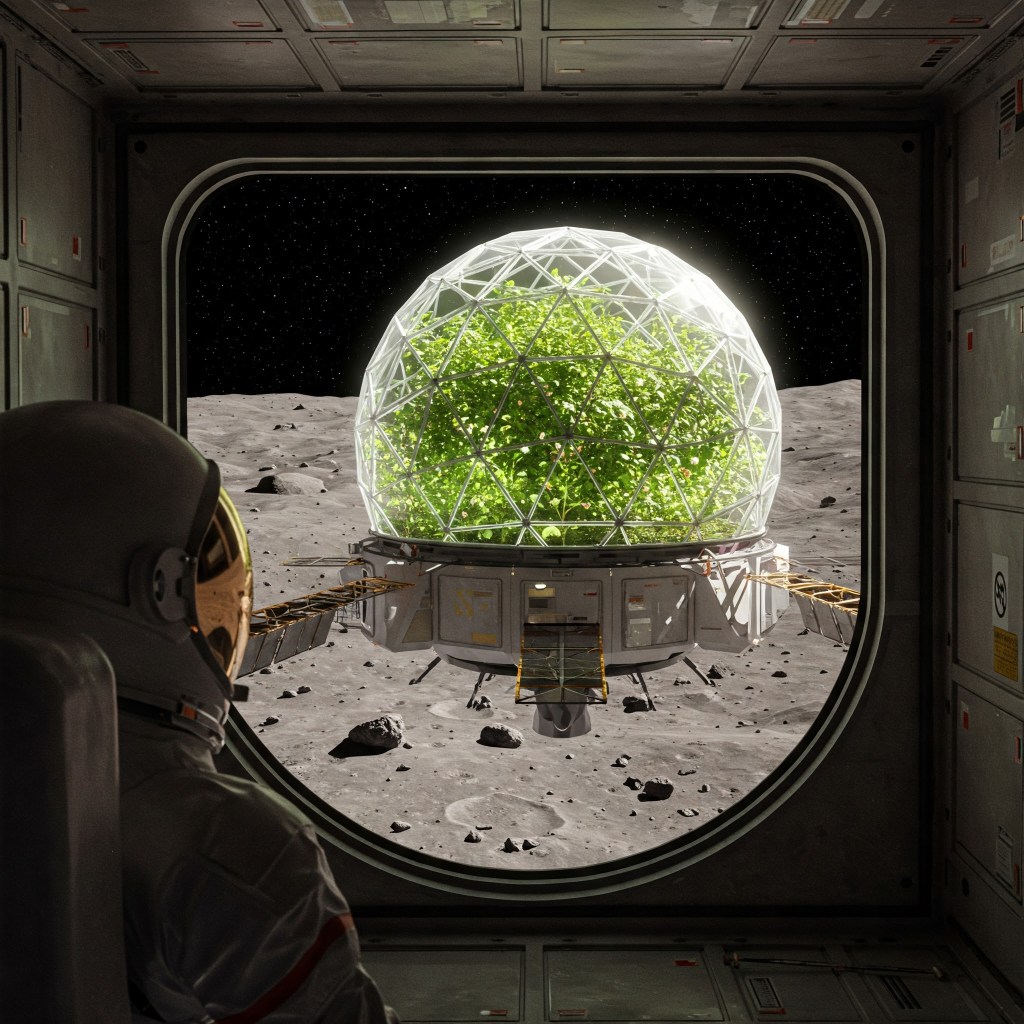
a.i.-generated image of a moon base including a planted biosphere. Image created using Bard Imagen 3

The idea was that by having completely sealed living environments, humans and plants could live in complete balance. Coupling this with optimal growing conditions for vast amounts of greenery, the resources needed for a long-term mission could be reduced.  This was only a few years after the last manned landing on the moon. Early space stations (Skylab and Mir – the forerunners of the International Space Station) had been launched and were being lived in for months at a time. This research clearly became very important.

Image of the Skylab space station
Skylab space station (image from NASA)

The results of the experiments showed that some plants were especially good at removing pollutants such as some volatile organic compounds (VOCs). Some of these are quite unpleasant and are associated with harmful indoor air quality.  These plants have become quite well known and are often referred to as the NASA list of air cleaning plants.

Sick buildings – could plants be the answer?

In 1984, the World Health Organization gave a name to a recently discovered phenomenon.  People were feeling ill in modern buildings, and analysis of the environments in some of these buildings identified a number of VOCs as being likely causes of the problem.  That problem became known as Sick Building Syndrome, and a great deal of effort was expended trying to identify the building components most responsible for the release of these chemicals into the air inside buildings.

It didn’t take long for someone to notice that a lot of the VOCs identified as being associated with sick building syndrome were those that some plants seemed to be good at removing.  Indeed, one of the scientists involved with the original NASA experiments – Bill Wolverton – has since made a career writing about how houseplants can create fresh air.

1980s style office building interior

However…

Thinking back to the original NASA experiments, you will notice that they were carried out with a specific purpose in mind. The plants were grown under conditions that made them actively grow – their metabolism was optimized by controlling the environment with high light levels, good humidity, warm temperatures and precise levels of plant nutrients.  There were also vast numbers of plants in the growth chambers.

If you ever visit the hot houses at a botanic garden, such as Kew or the Eden Project, you will experience exactly the type of environment the plants experienced in the NASA experiments.  The air inside those spaces is uplifting, fresh and life-supporting.  The difficulty lies in recreating those conditions in homes and offices.

Issues of indoor air quality

Fortunately, since the early 1980s, the use of products in buildings associated with sick building syndrome has been significantly reduced.  Most homes and offices are not full of nasty VOCs.  However, there are some pollutants that have the potential to cause harm, or at least discomfort. 

Volatile organic compounds (VOCs)

There are many sources of VOCs in houses. In fact, almost everything you can smell is a VOC of one type or another. Paints and new furnishings often release some compounds, but more mundane products are the biggest source: cleaning products, cosmetics and toiletries. Cooking, too, also produces types of VOC, as does opening a bottle of wine or mixing a cocktail. Most of these VOCs are harmless, although some can be irritating.  Other VOCs are actually the result of human physiology. When you breathe out, there will be some VOCs on your breath as well as carbon dioxide and water – these are just the products of digestion and metabolism.

More worryingly are the VOCs that can enter the house from outside. Vehicle emissions, agricultural and industrial activities all contribute to VOCs in the atmosphere that will find their way indoors.

Fine particulates

A more pernicious threat to human health comes from ultra-fine particulate matter, usually produced as a result of combustion.  These are often classified as PM10 (particles smaller than 10 μm in diameter) and PM2.5 (particles smaller than 2.5 μm in diameter).  These particles can be breathed deeply into the respiratory system, where they remain.  Fine particulates come from vehicle exhausts, inefficient combustion of gases and even cooking.

Dust

Larger particulates, such as dust, can irritate the respiratory system and contribute to asthma and allergies.  These are either produced inside buildings (and are usually composed of dead skin cells and pet dander), or can be blown indoors through doors and windows (such as fine dust from roads and fields or construction, or pollen from trees and grass).  Since most homes are not airtight (and most people wouldn’t want them to be – opening a window is a great way to refresh the air and create cooling breezes indoors), there is little that can be done to prevent dust from getting in from the outdoors.  Remember, also, that good ventilation is recommended as a way of reducing the risk of Covid.

Carbon dioxide

The atmosphere is composed of approximately 78% nitrogen, 21% oxygen, 0.9% argon and 0.1% of all other gases (including 0.04% carbon dioxide).

About 80% of the entire atmosphere is within 15km (10 miles) of the earth’s surface (which is only 0.2% of the earth’s diameter) – a fragile and wafer-thin envelope upon which all life depends.

Elevated levels of carbon dioxide are more of a problem in offices than in homes. Small meeting rooms with lots of people, will result in CO2 levels rising fast and getting to concentrations high enough to cause drowsiness and impair cognitive function – just one reason why outdoor meetings might make for better business decisions.  In the home, this is less of a problem, although in the winter, when everyone is indoors and windows remain firmly shut, CO2 levels might rise above comfortable levels.

How can plants help

Most homes cannot house enough houseplants to actively purify the air. They also cannot provide the necessary conditions for houseplants to be physiologically active. An environment that could replicate the effects found in laboratory experiments would be extremely uncomfortable for people to live in.

However, there are ways to use plants indoors to improve air quality, and some plants are better than others at doing this.  

The key is to match the plants well to their environment.  The more closely matched they are, the more physiologically active they will be, and that is when the effects will be greatest.

When you search for indoor plants online (whether for home or office), you will often see that retailers often include details about the conditions that they do best under.  If you choose plants that suit the different conditions found in the various spaces in your home or office, then you are more likely to notice an effect.

Plants affect the indoor environment in three main ways

Volatile organic compounds

First, the bacteria in the soil that live amongst the roots are able to break down some VOCs, and convert them into substances useful to the plants.  This is an entirely natural phenomenon, although only relatively recently properly understood in horticulture.  Plants with healthy roots and good soil will have the biggest impact, and those that are the fastest growing will also be the most effective.

Carbon dioxide removal

Second, plants that are actively photosynthesizing will be removing some carbon dioxide from the air. Plants that originate in dark tropical conditions (such as rainforest floors) are able to photosynthesize extremely efficiently – they have evolved ways of making photosynthesis work even in very low light conditions, so that means more carbon dioxide is used by the plants.

It must be emphasized that the benefits to air quality are due to carbon dioxide removal, not increasing oxygen. Why?

The simple equation for photosynthesis shows that for every molecule of carbon dioxide removed from the atmosphere, a molecule of oxygen is added. So, in an office where the concentration of carbon dioxide might be, say, 600ppm, removing 100ppm is a massive reduction (about 17%) and will have quite an impact on the way you feel. However, at best, you will only be adding 100 ppm to the oxygen in the same space. As there is already roughly 210,000 ppm of oxygen in the atmosphere, adding an extra 100ppm to that is an increase of less than 0.05% – not noticeable at all. Actually, you get even that much back as the plants also need some of that oxygen for aspects of their metabolism.

Fine particulates

Third, plants with hairy or slightly sticky leaves are able to trap particulates on the leaf surfaces, including fine particulates.  In fact, plants such as ivy and Cotoneaster are used outdoors to mitigate the effects of pollution in urban areas.  Some indoor plants can do that too (although they will need to be cleaned – there is no rain indoors to wash that pollution away).  In fact, research carried out at Washington State University some years back showed that many different types of foliage plant attracted dust to their leaf surfaces – possibly as a result of an electrostatic effect – so almost any leafy plant will be useful.

Which plants work best

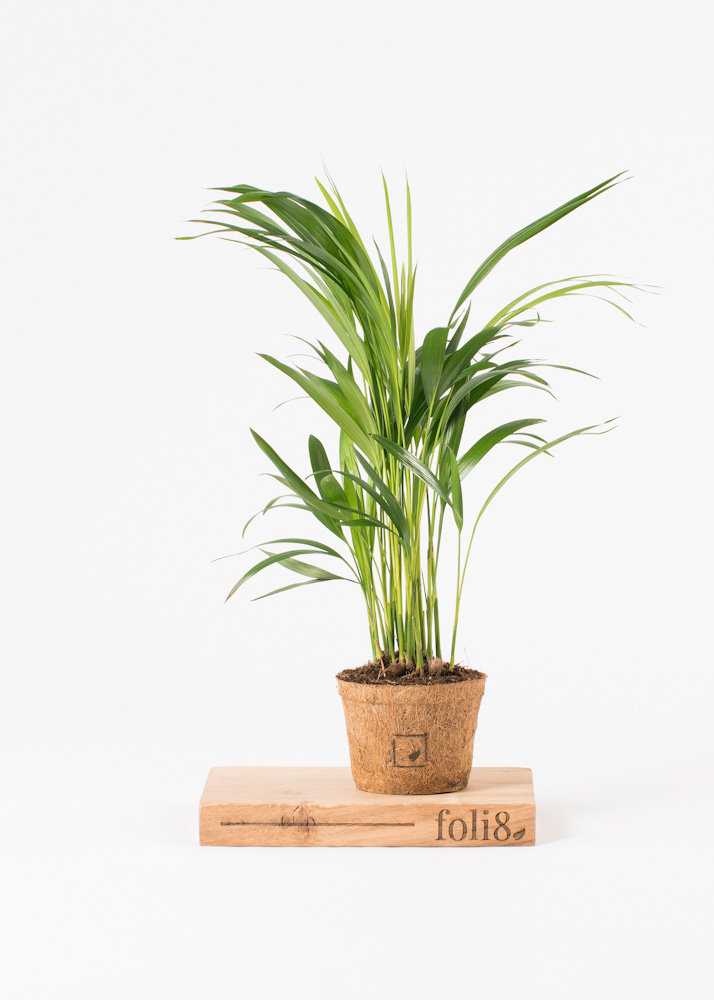
Plants that are adapted to low light conditions will be the best to improve indoor air quality. They are especially effective in reducing VOCs and carbon dioxide.  Plants in the aroid family, such as Spathiphyllum, Philodendron species, Aglaonema species or Monstera species will be good, as will other jungle-floor plants such as Calathea species, Ctenanthe and even small palms, such as Dypsis lutescens.

If light levels are slightly higher, Dracaena species have been shown to be effective at reducing levels of carbon dioxide. Experiments carried out in Australia by Margaret Burchett, Fraser Torpy and colleagues, in real office conditions, have shown that relatively few plants are needed to have a measurable effect).

Plants such as Ficus benjamina and varieties of ivy (Hedera helix) and some ferns that do well indoors are good at removing particulates.

Technological solutions

Over recent years, the plant/microbe interactions in the soil have led to a number of innovations that use plants to actively clean the air.  These systems were originally designed for large commercial spaces, but domestic-scale systems are becoming available.

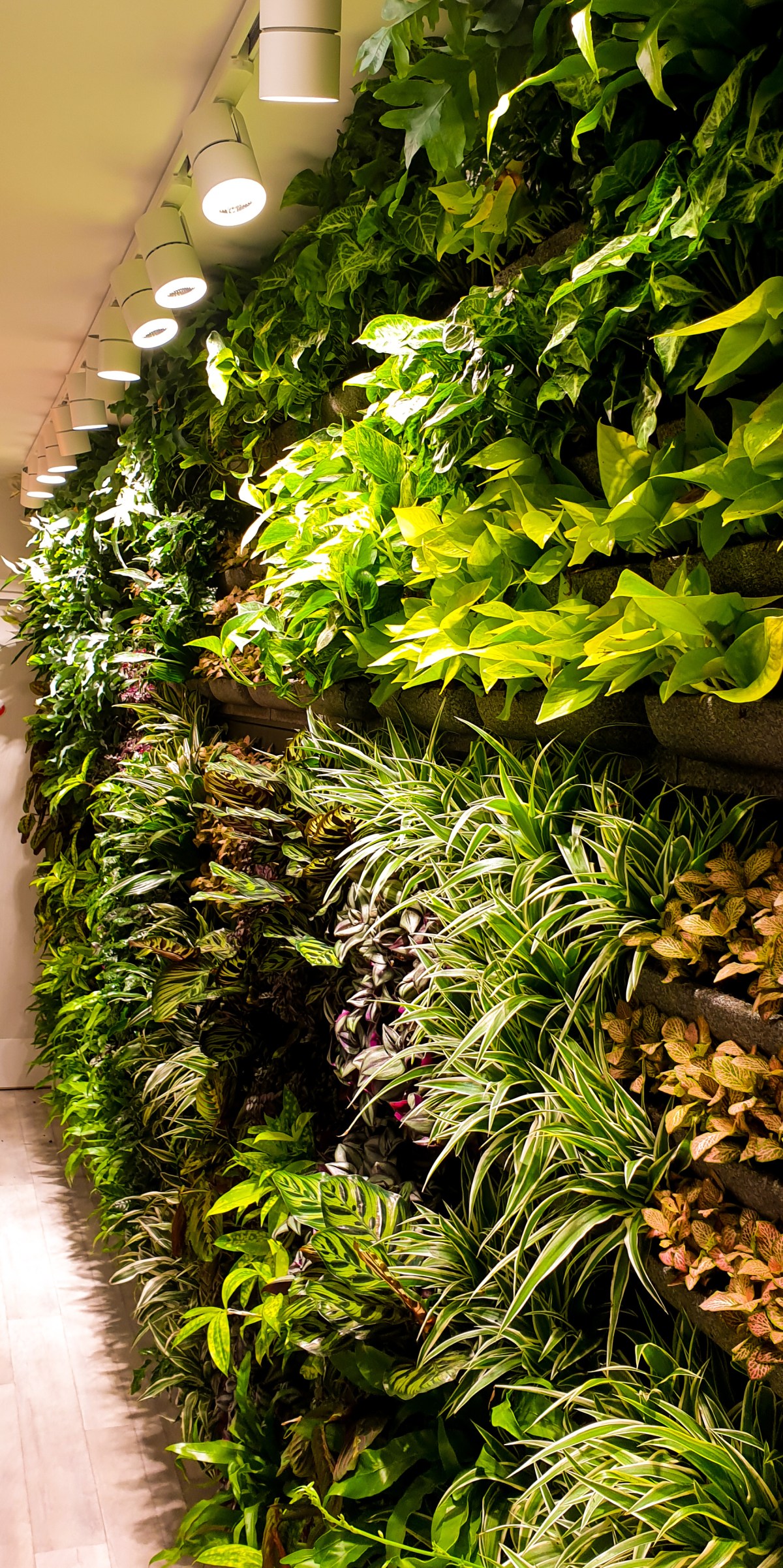
In commercial buildings, green walls can have a dramatic effect on indoor air quality – especially when set up with good lighting systems.  This is because green walls are set up with lighting systems, proper irrigation and, of course, hundreds of plants – all of which are physiologically active.

In the home, small green walls can now be purchased for relatively low cost, and can be installed by a competent DIYer.  Not only do they take up little in the way of floor space, the large volume of compact plants in a good root environment means that they are going to be very effective – especially if you invest in some plant lights to illuminate them (and these are also getting much cheaper).

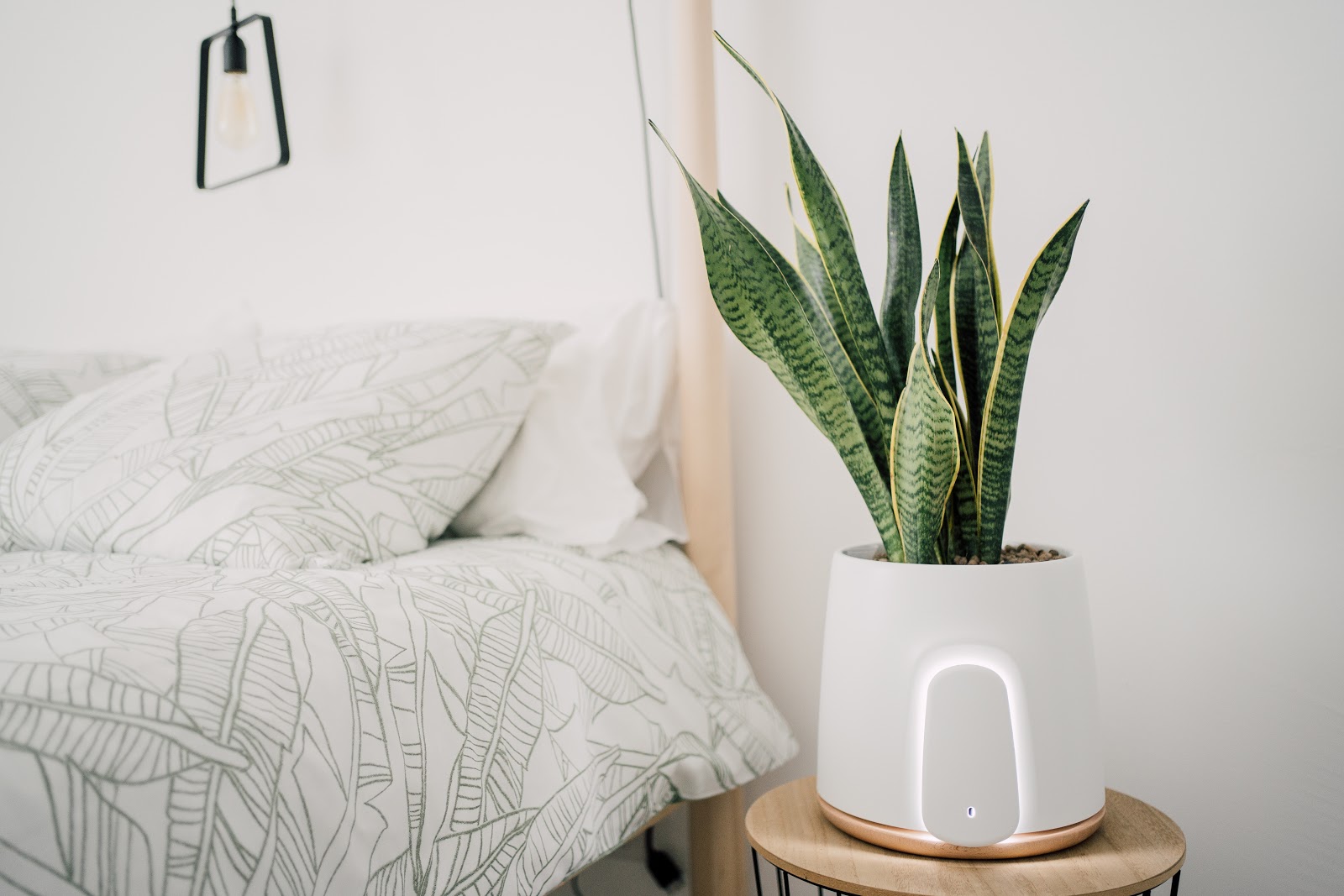
More recently, active air systems have been developed that use fans to pass air through the foliage and the roots to increase the size of the effect.  Domestic-scale active air green walls are being developed and table-top systems, such as Vitesy’s Natede planter, are now already on the market.

Vitesy Natede active air planter system

Disclosure note: the author has commercial relationships with both foli8 and Vitesy. The author acknowledges their ownership of the copyright of their images in this article. The author is happy to recommend both companies. Their products and services are genuinely excellent.

The biophilic home office

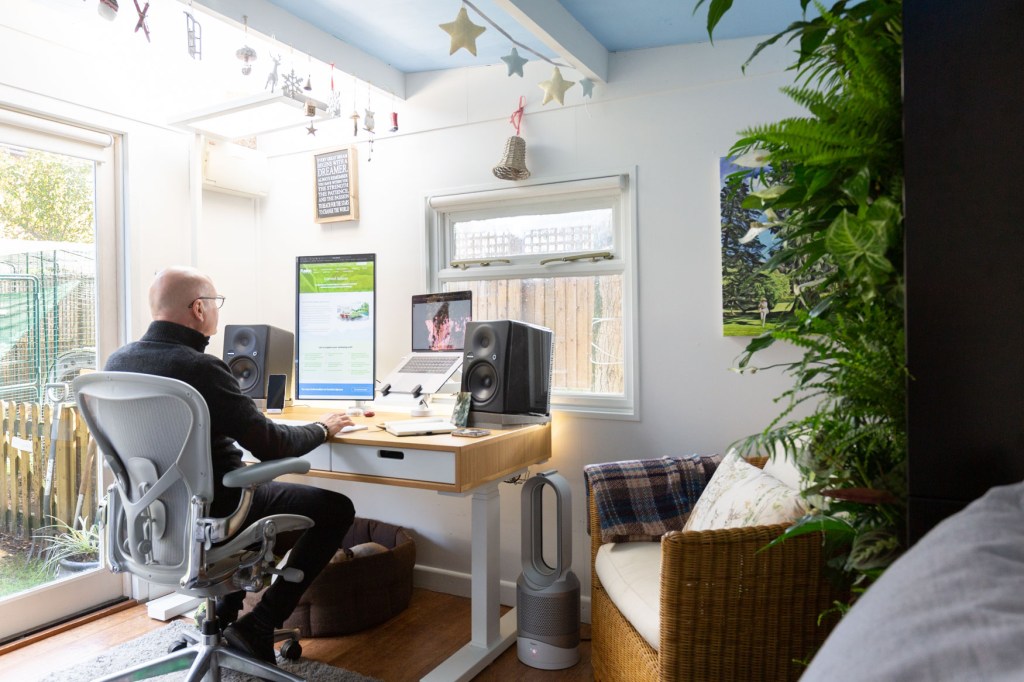
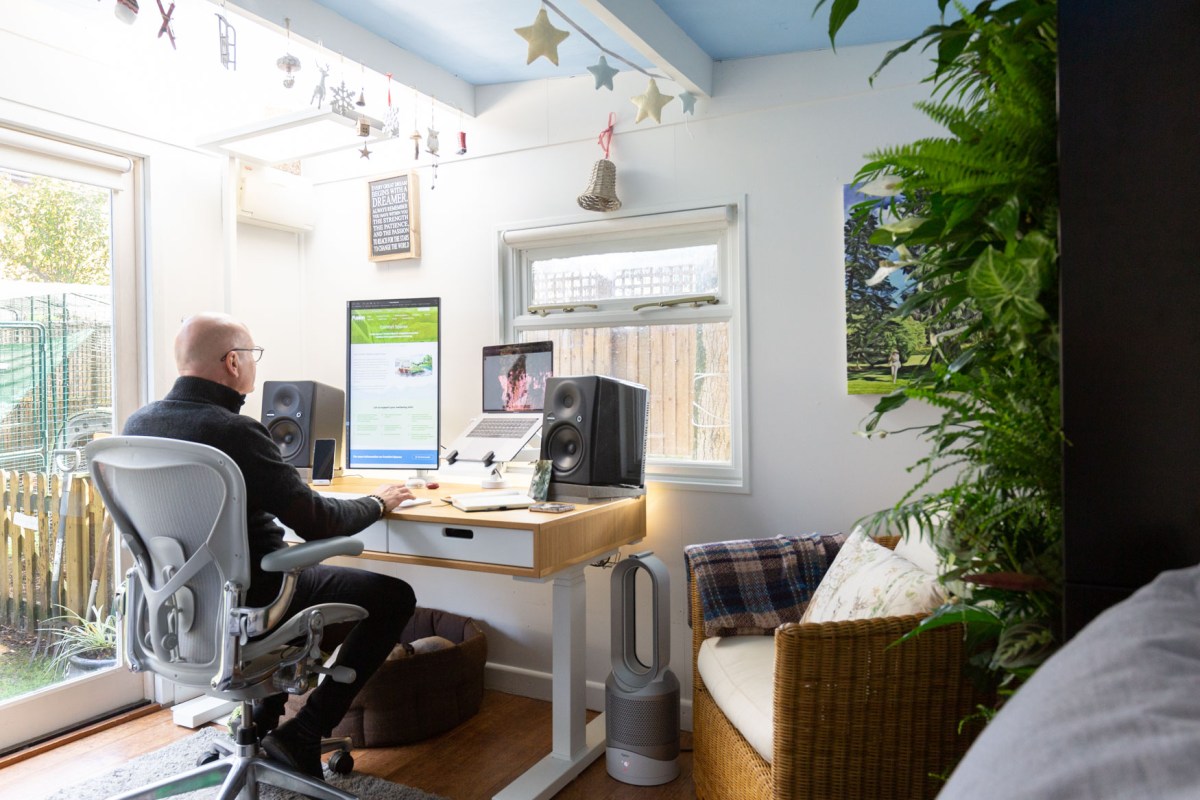
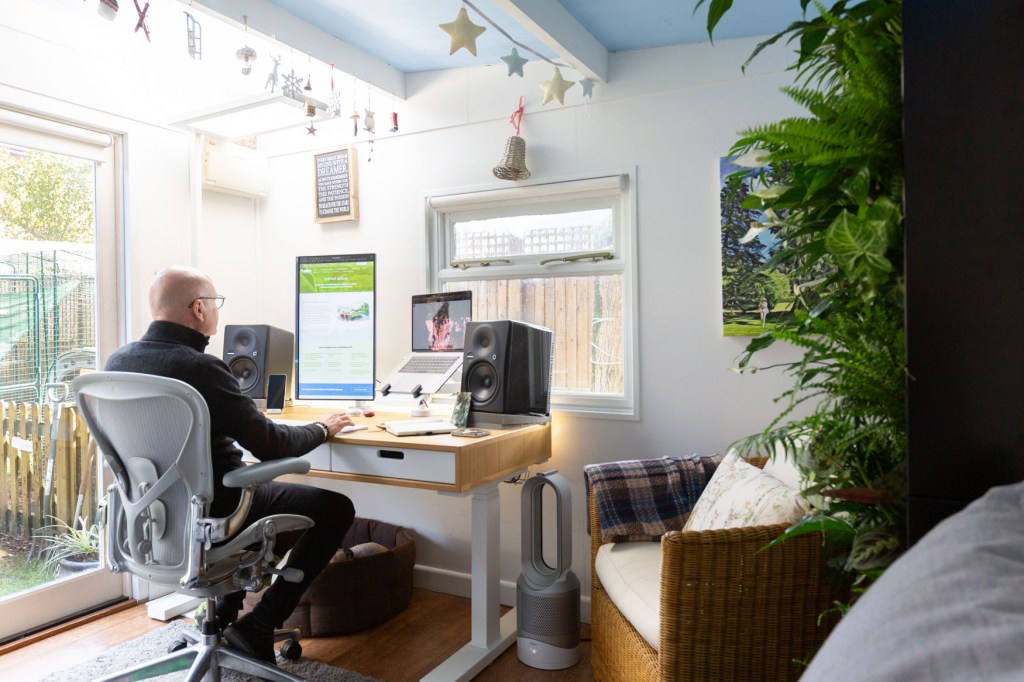
Image of a home-working set up that is ergonomic and has elements of biophilic design
Image by Simply-C-Photography for Fusion Spaces

Biophilic design need not be confined to office buildings and other commercial spaces. The benefits of biophilic design can be obtained in the home office too, and without having to spend a fortune. This post explores the benefits of biophilic design and gives some very simple and cost-effective tips to help you thrive in your home working setting.

What is biophilic design?

Biophilic design is a design process that brings the theory of biophilia into the built environment. Biophilia is a theory rooted in evolutionary biology and genetics, and was first popularized by Edward O Wilson in his classic book, Biophilia, published in 1984. Essentially, the theory reminds us that we are animals that have spent over 99% of our evolutionary history living in environments, such as the open plains of Africa. During that time, our survival as a species depended our senses being fine-tuned to that environment, and our reliance on various species of plant, animal and fungus for food, shelter and fuel.

image of the book cover of EO Wilson's booked entitles Biophilia

It is only a few short centuries since we ceased being hunter-gatherers and domesticated ourselves to live in artificial environments, such as cities. In less than a thousand generations, we divorced ourselves from our natural environment and the sensory stimuli that we need to thrive.

Biophilic design is a way of creating environments that rebuild some of those sensory and biological connections, which reduce stress and increase wellbeing and happiness. Consider the domestic chicken. As a wild animal, the jungle fowl is a forest-dwelling bird that thrives by scrabbling around on the ground, picking up a varied diet of seeds, leaves, insects and other invertebrates. When domesticated and placed in conditions of intense population density and cramped conditions, they fail to thrive. However, the free-range hen, even though far from its jungle home, has an environment much closer to its natural conditions, and can lead a less stressful life, often living longer and requiring fewer veterinary interventions.

Image of battery hens
Photo by Artem Beliaikin on Pexels.com

The battery human, also once released into a free-range environment (even though we are still constrained by our physical environment and societal expectations – hunting and gathering in the streets of our cities will be frowned upon) will thrive, and biophilic design is one way of creating such an environment.

The home office environment

The office worker has, in many instances, been let loose from the constraints of the office. During the pandemic, the cathedrals of capitalism were deserted and the shiny factories of data processing and document production went quiet. Even now, offices are significantly less occupied than they were before Covid-19 and, despite the frantic calls from the owners and managers of underused and expensive property assets, it looks likely that working from home, at least part time, will remain a normal part of working life.

Image of an unoccupied modern open-plan office

As a result, the newly liberated office worker was forced to create a new working environment in their homes.

For some, this has been easy – there may be a spare room that can be used, or space at a large dining table, or even a garden building that can be used. However, for many, especially younger people living in expensive shared accommodation, creating a usable space has proved a challenge.

Good weather in the spring and summer gives opportunities to take breaks outdoors, whether in a garden, a public spark, or even a walk around the local streets. However, wet and cold autumn and winter weather means that the outdoors is a little less appealing. We need to consider how to create a working environment that maintains some of those connections with the outside world. So how do we do it?

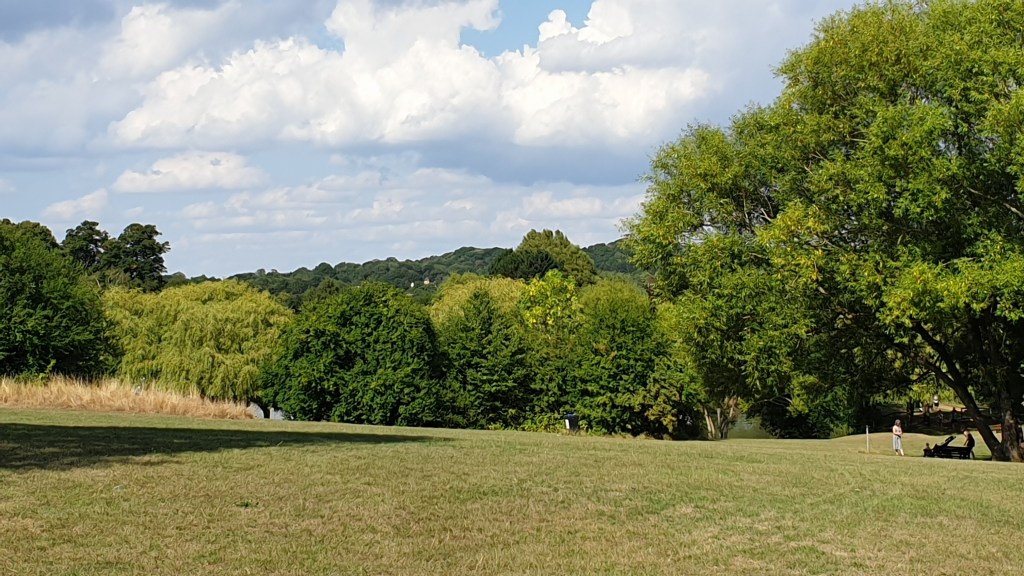
Image of a park in summertime

Some simple tips for a biophilic home office

Give yourself a view

If possible, arrange your workspace so that when you look up from the keyboard or screen you can see out of a window. Even if the view is of another building, it will be something distant to focus on, and that will ease eye strain and bring give you a sense of what is going on outside – it might hello you decide whether to venture out on a break, or hunker down in the warm, but whatever the weather, you will connect to the world outside.

Open a window

An open window will refresh the air and flush out excess carbon dioxide and other pollutants generated from within the home. It will also bring the sounds of the outside world in – you may hear voices or birdsong or the sound of the wind. It might also be traffic noise, but even that can sometimes be a relief from silence.

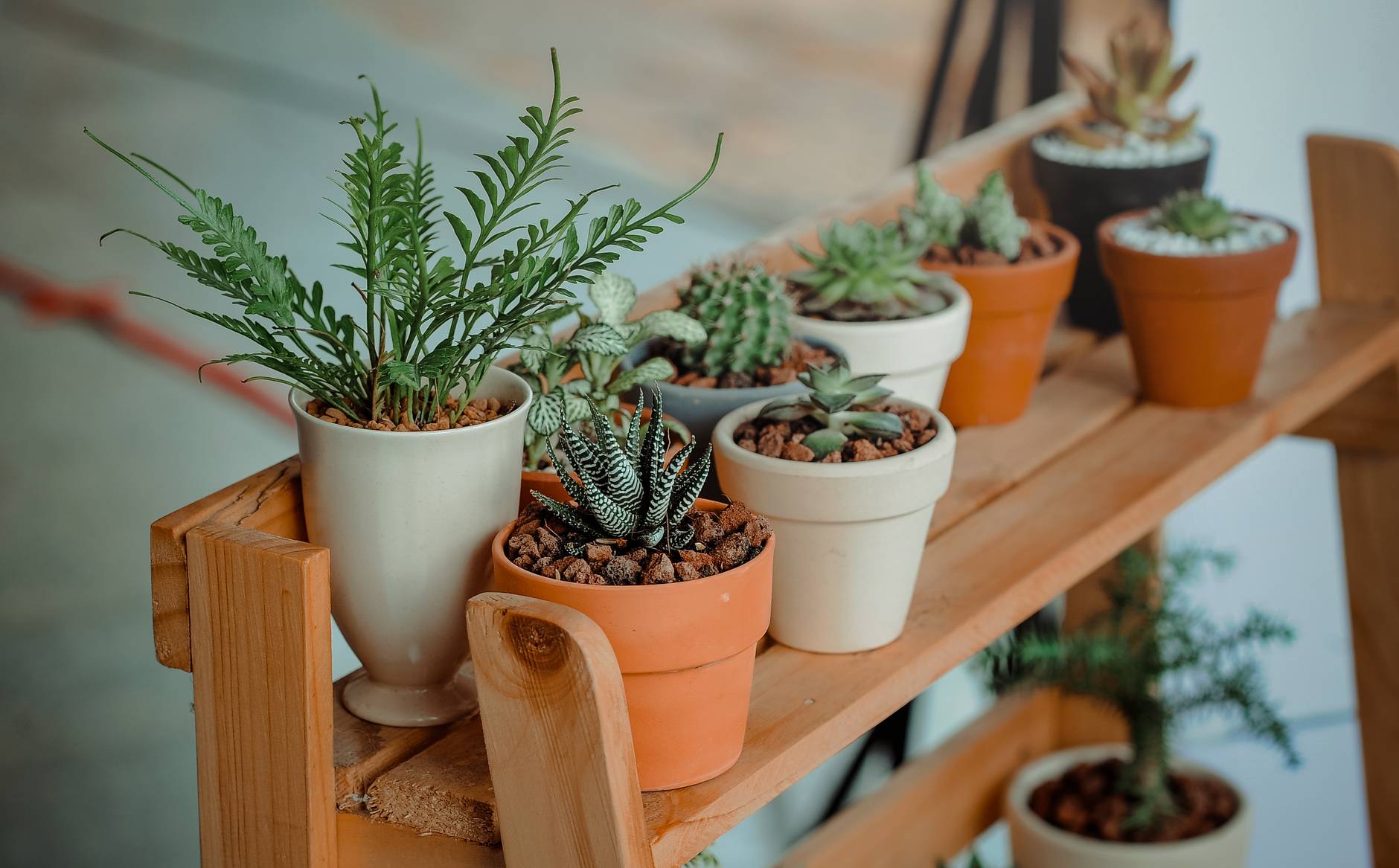
Buy some houseplants

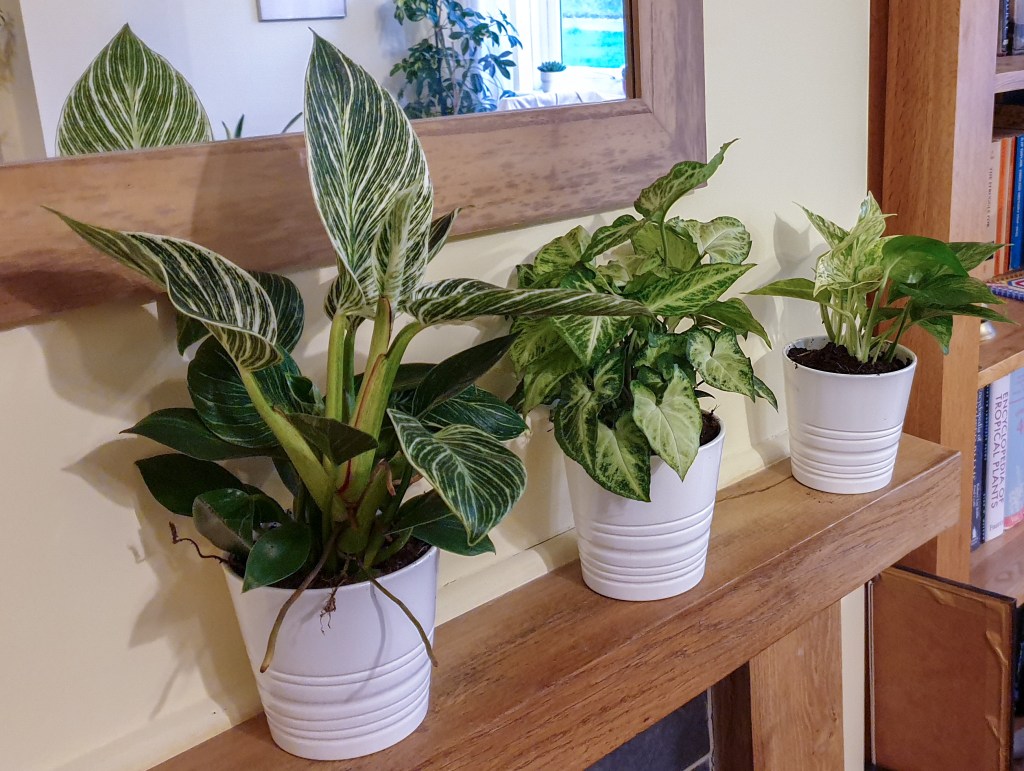
Image of a group of houseplants on a ledge

This is the eye-catching, Instagram-friendly intervention that will illustrate the pages of the colour supplements and lifestyle websites. However, it is an effective way of bringing some life indoors.
Houseplants need not be expensive or huge. Ikea, for example, has some terrific plants and pots at very good prices (and I am an expert on indoor plants, so you can trust my judgement on this). They add green interest to the indoor environment and also demand some care. Watering (not too much), cleaning and trimming and arranging plants can be very therapeutic.

Follow your nose

Our sense of smell is our most primitive – detecting chemicals in the environment (which is what the sense of smell is all about) was the first sense to evolve in the animal kingdom. We often react to scents instinctively and before we are consciously aware of them, so we can use fragrances to create a multi-dimensional sensory environment very easily. The range and quality of home fragrances is more comprehensive than ever before, so there is bound to be something appealing.
I’m not going to go down the road of recommending particular scents for particular settings or tasks – we risk straying into pseudoscience – just choose something that you, and your housemates, like.

Water

We use our sense of hearing and smell to detect the presence of water, often before we see it – this is a survival mechanism. As wild animals, we needed to be able to find safe water – not just to drink, but to find prey that also needed a drink.

The sound of rainfall or babbling streams can be found easily just by asking Alexa (or other smart speaker system). A fish tank or small indoor water feature can also be soothing.

Take care of your skin

The skin is your largest sense organ, but often the least stimulated in the working environment. As well as stopping your insides from falling out, your skin is home to sensors that detect temperature, pressure, movement and resistance, shape and texture and even changes in humidity and static electricity.

Don’t starve it of sensation. Use different textures around your workstation and allow your skin to be stimulated. Create a breeze (not a draught), experience some sunlight, walk barefoot, wear less if the temperature (or your need to be on a webcam) allows it or even take a shower for pleasure rather than utility.

Image of skin on a hand

Comfort is the key

Biophilic design isn’t just about plants. It isn’t about bringing nature indoors. It is about being comfortable – physically and mentally. Comfort brings happiness and happiness is the key to both life satisfaction and also job satisfaction. A little investment in comfort can pay huge dividends for the individual and employers relying on home-based workers.

Where we work now

Here in the UK, it is the last day of National Plants at Work Week, organized by the interior landscaping trade association, Plants at Work. Usually, this is a celebration of the benefits of greenery in the office.

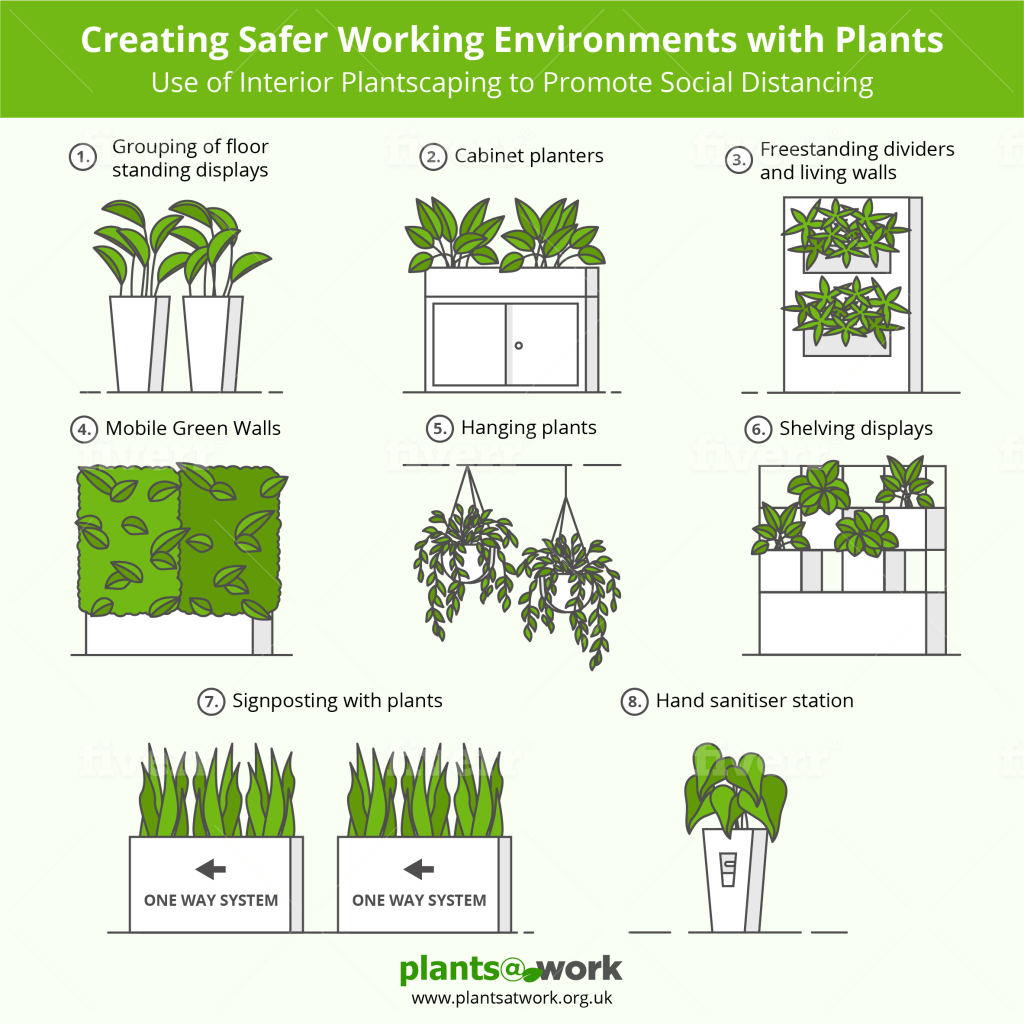
This year, however, our workplaces are very different, and may continue to be for a while yet, and Plants at Work have been discussing the ways by which we can all use plants wherever we work – the home office, kitchen table, spare room or even in the garden.

Where we work is not just a room, with a desk and computer. For many, the place where we really work often isn’t physical at all, but inside our heads. The office and the laptop are just tools to communicate the outputs of work. For many, work can’t be measured by keystrokes or attentiveness to a camera or attendance at virtual meetings. At best, that is just a measure of activity.

Certainly, for some jobs, activity measures are the only practical proxy of work outputs, but those for whom the office is primarily the place to transfer ideas to a document or communicate them to a colleague, then the place where those ideas are formed is the real workplace. That means being in environments that forge creativity.

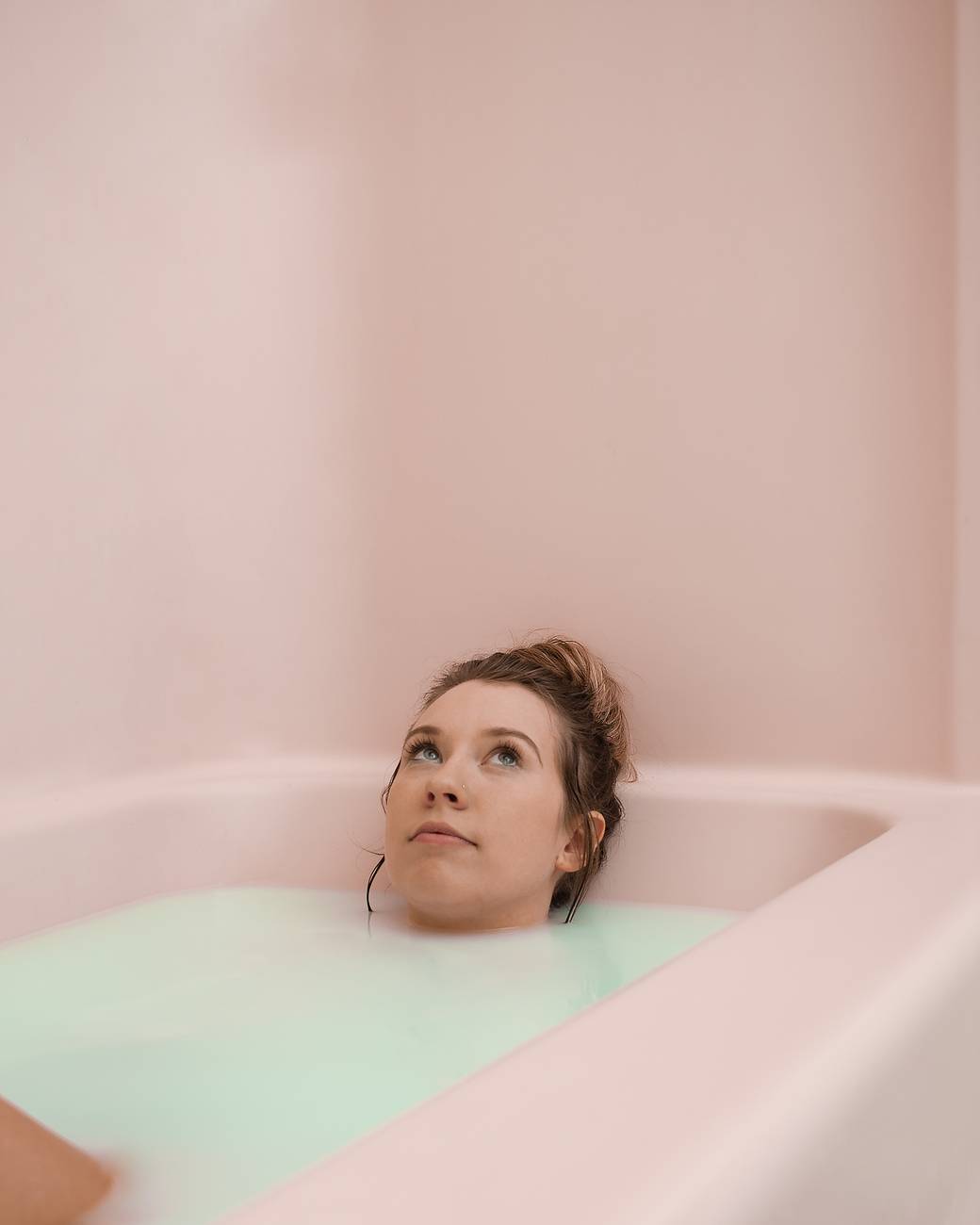
That could be a warm bath, or a walk in the woods. It could be the laptop on the dining table, but it may also be somewhere else entirely. Inspiration can happen anywhere and at any time – not just between 9 and 5 in an office block.

As good a place to be creative as anywhere. Photo by Tanner Vote on Pexels.com

For many years, those that have worked from home as a matter of course were often viewed with suspicion by employers and colleagues alike. Were they really working, or were they slacking off? (Were those employers incapable of actually measuring outputs?)

Some employers did insist on monitoring remote staff using technology, but now that even those managers are forced to working at home, maybe there is a little more understanding that people can be trusted to do good work without the need for a desk in the corporate office.

Evolution

It may be that as we contemplate the future of work, there will be a more rapid evolution of the home working environment. Already, employers, faced with a future when more and more people will be working away from the corporate office for extended periods, are examining their responsibilities for creating safe and healthy working environments.

This certainly includes getting technology right, and ergonomics. Good chairs and lighting are going to be vital, along with legal obligations such as complying with display screen regulations.

As well as the bare minimum, enlightened employers might be considering providing some of the things that make office life more bearable – perhaps some professionally prepared plant displays (e.g. this service from a London firm, Indoor Garden Design through their new venture https://www.intrayplants.com/ ).

Photo by Min An on Pexels.com

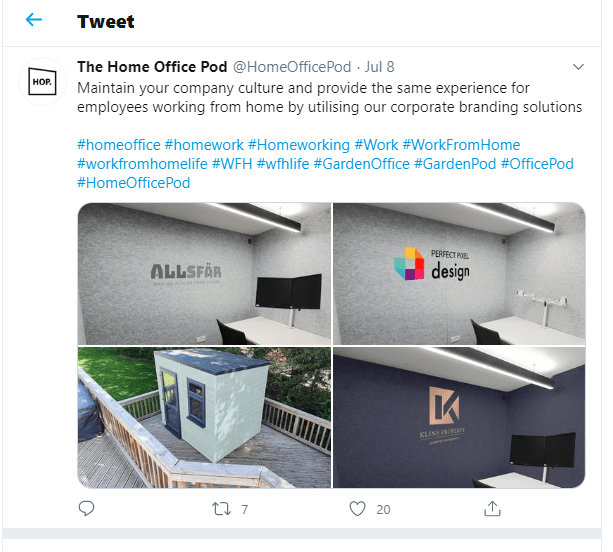
Some are even offering the delivery of home office buildings, although that raises many questions.

I wonder about how insecure a company must feel that it needs to remind its employees who they work for with a branded pod placed, presumably rent-free, in the back garden with the desk facing away from the window – recreating the environment of the office battery cage. If company culture has to be reinforced by having a massive logo, rather than by decent management, then I would be very worried. And what might be the consequence of hanging a poster over the logo?

The pod itself looks really well designed – good acoustics, modern lighting and all pre-cabled, but is this where you will be expected to be creative and imaginative? Maybe a few pot plants would help.

The nature of work is changing, and it is changing in ways not even imagined at the beginning of the year. Many office workers have had nightmares of trying to juggle space, homes schooling and caring along with work, but many have also experienced the benefits of being able to manage their work with more freedom, and have found themselves more productive, more creative and more engaged.

By being forced to loosen the leash on staff, employers should be seeing the benefits of empowerment and trust. The benefits to employers and employees of being liberated from the constraints of the workplace battery farm need to be preserved.

Post pandemic plantscaping

The workplace is no-longer the traditional office for many.  Many organizations are challenged by the need to embrace new ways of physically working: planning space, maintaining higher standards of hygiene, enabling teams to work effectively together and recognizing that home working is going to be needed (and even wanted) for the foreseeable future.  All of those challenges are overlaid with the absolute need to ensure the physical and mental wellbeing of staff.

As we move through summer, many offices and other workplaces are re-opening and businesses are trying to imagine how on Earth they are going to be able to ensure effective working.  This uncertainty and the requirements for correct physical distancing and enhanced hygiene standards is going to place a strain on employers and employees alike. 

We’re beginning to get some hints about the way things might look in the period immediately after lockdown ends. One thing is for sure, the world of work (especially the office) is going to have to adapt very quickly. Even when buildings reopen, it seems likely that some degree of physical distancing and enhanced hygiene will be necessary.

After the second world war, a great leader found himself ruthlessly put out of power.  Churchill led the country through a crisis and might have expected a reward in the subsequent general election.  However, to his surprise, and that of the press and the establishment, he fell victim to the closest thing the UK ever had to a revolution.

Comparing the horrors of global warfare to the enforced changes to office life is a bit extreme, although it is worth drawing a few parallels.

Wartime highlighted the faultlines in society.  The old order had to be abandoned in order to fight the war and the idea that society would willingly return to the established ways of doing things was rejected.  Now, organizations are going to have to face up to the facts that the established ways of managing people and workspaces are also going to have to change.

We may even have to reconsider what we mean by workspaces.  

It is going to be a long time before this is normal again, if ever
Photo by fauxels on Pexels.com

Do we mean just the one (or more) physical spaces to carry out work – the realm of the designer – or does it include the headspace too?

Opportunities

Workplace managers are going to have to consider whole new interactions of disciplines in the very near future: space, furniture, technology, connectivity, restoration and recuperation, and new approaches to managing people.  All will need repackaging to create work environments that people want to use, and we must learn from our experiences over the last few months to create those new working environments.

What does that mean for the commercial interior and exterior plantscaping industry?

There are certainly going to be challenges, but also opportunities for those firms imaginative and agile enough to change.

Let’s first look at some of the challenges. These include adapting to new ways of working, such as maintaining physical distancing in clients’ offices whilst carrying out plant care, ensuring that plant displays are kept clean and disinfected and adapting to new office layouts that might be less accommodating for plants if desks and workstations have to be spread out.

One thing seems certain: high density offices are going to have to change. If physical distancing is going to be successful, then either desks are going to have to be spread out, or there are going to have to be screens between workstations, or fewer people are going to be allowed in the office at any one time. Pedestrian routes will also have to be altered. It will be no good if desks are isolated only for colleagues to have to squeeze behind the back of your chair or walk within a few inches of you as they go and get their coffee.

Graphic by Plants@Work – the UK trade association for interior landscapers

Already, interior designers and architects are producing their visions of the new normal office. Many solutions seem to revolve around an adaptation of conventional open plan spaces with designated empty desks and plastic screens to facilitate physical isolation. Some designers are a little more imaginative than others and have started investigating how people can be safely separated with items such as plant displays and green dividers comprising of moss, live plants or even replica foliage. These are, on the face of it, attractive options.

The most imaginative of all are re-thinking the way that offices are going to work. After months of homeworking, most people have found that they can do their work pretty well from home, or at least can manage without missing the office too much. Work habits have changed and people are finding ways to adapt to remote working. The traditional corporate office environment has been shown, by and large, to be unnecessary.

Those organizations with the imagination to grasp the opportunity to create better office environments, rather than rush to adapting what already exists, may look to the types of environment typified by co-working spaces and serviced offices. Such places often resemble hotel lobbies and coffee shops, but also with a wide variety of working spaces to accommodate any type of activity. Such places are designed to get specific types of work done, rather than be a place to go to work.

The new office might be fitted out with better furniture, art and plants. They won’t be designed for dense occupation, but will enable physical distancing, and they will be adaptable to a time when such extreme distancing is no-longer needed.

In part two of this article, I’m going to look at some practical considerations for plantscapers. But if you can’t wait, do get in touch and we can talk about some ideas.