I had the great pleasure of being interviewed by Dr Vanessa Champion, editor of the Journal of Biophilic Design last week. We discussed biophilic design in the new workplace and also biophilic design in the home working environment (which is, for many, going to be the workplace for a significant portion of the working week).
Personalisation of space is a key message in this podcast. There are tips on how Biophilic Design supports and benefits the whole person and how it enhances a whole sensory environment. Some designers might separate off those elements from Biophilic Design, but they are all an integral part, including views, improved acoustics, lighting, ergonomics and when used together provides us with an holistic solution. It’s all about comfort.
As a horticulturalist, I also discuss the benefits of plants, and we also talk about new styles of workplace and ways of working. People are talking about new hybrid ways of working, where some are working from home, some are in the office, and some half and half. Creating collaborative spaces, being able to break up big expanses of open plan offices with planting is an excellent idea. It also will give the feeling of comfort, improved acoustics, privacy.
Recently, someone asked me whether I thought leather had a place in biophilic designs. It’s an interesting question, which I answered with a few off the cuff ideas, with the promise to think about it in more detail.
My initial response to the question is “it depends”. As someone that eats animals, and has no religious belief, I have no ethical problem with using animal skins and animal fibres, as long as it is not gratuitous or involves endangered wild species. I wear leather shoes, and have, in the past had leather sofas and leather upholstery in a car.
Everyone’s ethics have their boundaries, though, and there may be no logical reason for those limits. For example, I’m not a fan of fur farming (but what is the real moral difference between eating and wearing an animal?), and I am certainly very interested in seeing how lab-grown meat develops.
As mentioned above, I have no religious beliefs, but many do. The ethics of the religious are guided by the teachings of their religion, and there may be taboos about which animals may, or may not, be exploited for food, fibre or hides.
It could be argued that leather is a good use of a waste product. If we, as a society, are content with farming animals, then surely it is right that we use as much of that animal as possible. That might make leather a useful (and arguably a more sustainable) product, but not necessarily biophilic.
Moving back to the main question: does leather have a place in biophilic designs, assuming no ethical objection? From my own, possibly narrow, perspective, I’m not sure that leather is, per se, a biophilic material, even if it is a natural(ish) product. It is highly processed – rarely resembling an animal skin by the time it is tanned, coloured, stretched and made into a product.
For me, biophilic design is first and foremost about comfort – physical and psychological. We are most comfortable when we are in environments that stimulate our senses in a way that reflects our evolutionary history as plains-dwelling animals, using well-adapted and highly evolved senses to find food, fuel, water and shelter. This is something I have covered in previous posts, so won’t go into great depth here.
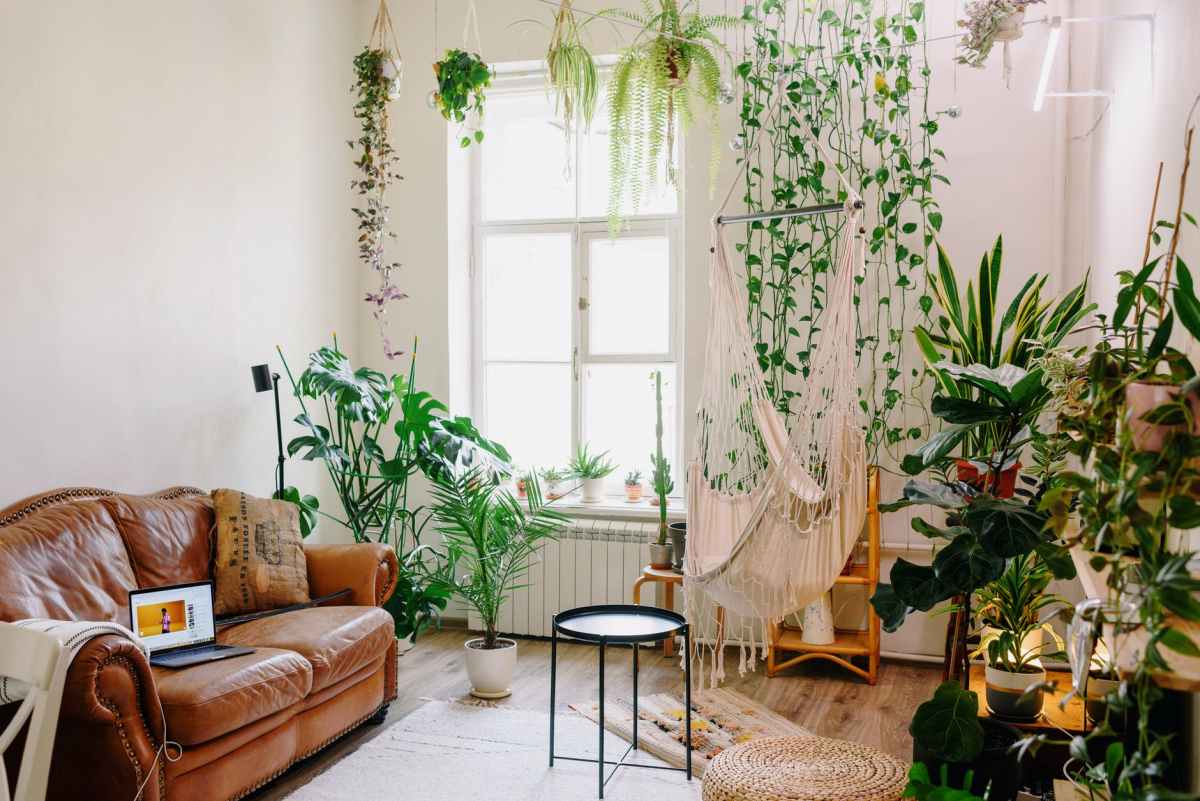
This might be a biophilic space, but does the sofa have to be leather to make it so? Photo by Ksenia Chernaya on Pexels.com
In artificial environments, like cities, we can recreate concordant sensory stimuli through design, and that might (and often does) mean the use of artificial materials. In fact, in urban environments, it is only possible to create biophilic environments by using a wide range of synthetic materials and manufactured products.
Floor coverings are an excellent example of where synthetic products can be used in a biophilic design (good examples from Interface, who are pioneers in biophilic design and sustainability), and wall coverings too. Consider also lighting and acoustics. Modern biodynamic lighting and AI-generated soundscapes that recreate natural stimuli are only possible with advanced technology.
One final point. Good designers make sure that they are aware of the users of the environments they design. In commercial spaces, it is likely that vegans, or followers of some religions, will find the use of some animal skins or animal fibres offensive or taboo. In that case, why risk unnecessary hurt when there are alternative materials available?
So, in conclusion – I think that it is possible to create fantastic biophilic spaces without using leather or other animal products. On the other hand, if a designer (and all the users of the space that designer is creating) have no ethical issues with using animal products in design, then they can be used as part of a biophilic design.
The interior landscaping industry is having to adapt very quickly to changing market conditions, and it has been fascinating to watch how that is happening.
After the initial shocks of Lockdown 1, followed by the gradual reopening of offices and hospitality over the summer, many in the industry looked to adapting conventional ways of doing business to adapt to the physical changes in the workplace. A lot of effort was put into using vegetation to enable or encourage physical distancing – screens, barrier planters, plants used to enforce pedestrian traffic flow around a building, etc. These all had some short-term impact and kept many interior landscapers busy (and in business).
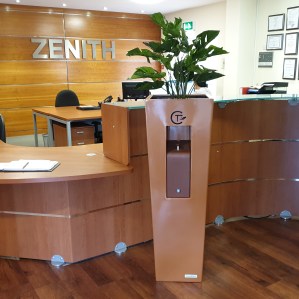
Clean Team Florence sanitizer planter from Livingreen Design
Others looked to diversify their offering. Innovative planter manufacturer, Livingreen Design, developed a range of planters that incorporate a hand sanitizer dispenser, which, along with other hygiene and disinfection services has allowed some plant companies to offer additional valuable services to their clients – although keeping plants extra clean is also a challenge.
It’s going to be relatively easy to wipe down desks and screens once or twice a day with a disinfectant wipe, but we don’t know how well, or for how long, viruses can survive on the surfaces of leaves, flowers or moss. We also don’t know the effects of using surface disinfectants or fogging on plants: many plants are not going to thrive with a daily dose of Dettol spray. With those considerations, it may be that companies decide that plants in offices are going to be too much trouble.
Great for desks and hard surfaces, but what about plants?
Lockdowns 2, 3 and beyond: What can plantscapers do?
Hoping that everything is going to return to the way they were, and planning on carrying on as before, is probably not going to work. The landscape of the workplace (as well as hospitality and retail) is going to be very different – for months, if not years to come. How can the interior landscaping industry adapt?
Doing nothing and hoping for a return to the pre-Covid ways of doing things is likely to lead to bankruptcy. Even with the promise of a vaccine being realised, too many businesses have noticed the benefits of home working and other hybrid set ups. Office costs will be lower, and office buildings will be reimagined. Employees will see many benefits from more home working (time and money saved on commuting, being one advantage) and the towns and suburbs might be revitalized as city centre business districts get quieter.
That means conventional interior landscaping will be less appropriate than it was before. Offices that do remain are likely to resemble co-working spaces and have more in common with hospitality venues than conventional open-plan offices.
Indeed, the trend to such design styles was made evident recently when Plants At Work, the UK trade association for the interior landscaping industry, held its annual awards ceremony. Case studies of some award winners, e.g. SLG Cheltenham, Farfetch or Uncommon, Liverpool Street really show how such a design style is becoming more common.
These new ways of designing interior landscapes may present some challenges. Individual spaces in buildings may be used irregularly, which may mean inconsistent lighting and heating, which may affect the choice of plants used, or their maintenance schedules.
Other interior landscapers are looking towards putting their expertise in designing plant displays, using high quality plants and planters, to use to supply the growing number of houseplant enthusiasts as well as homeworkers missing their office greenery (good examples are In-tray Plants from Indoor Garden Design, or Foli8 from Planteria).
Technology and flexibility
Adapting to customers moving away from their traditional locations in city centres brings a number of logistical challenges. With customer density changing, service operations have to become more efficient. This is where technology offers some interesting opportunities.
Nurtio Technologies has developed an innovative system that combines a sensor (that measures soil moisture, temperature, light and nutrient levels) and a clever artificial intelligence algorithm that can help plan service schedules and alert the interior landscaper if there are sudden changes to the environment.
By learning the behaviours of individual plants (and groups of plants at the same location), the algorithm can predict when, and how much, water should be added and enable some flexibility in service schedules. One interesting opportunity that might arise, especially if access to buildings is tricky, or if plant displays are more dispersed as a result of a move to remote working, is that the business of watering plants can be delegated, leaving more time, or capacity, for skilled horticultural technicians to do the more complex parts of the job: pruning, grooming, pest/disease management and carrying out changes and re-designs.
UK interior landscapers needing more information about the benefits of the Nurtio system should get in touch with me.
I recently started a contract for a couple of days a week with a UK interior landscaper to help with the launch of a new line of business. Most of my work is carried out from home, at my less than perfect home office set up (OK, it’s the dining table), but last week I needed to visit their premises.
It has been a while since I was last in an interior landscaper’s premises. Despite each company’s differences in set up and size, there is something quite special about walking into the plant storage and preparation area. All the plants stored and being prepared for new installations. Everything labelled and assigned to each plant technician for their weekly routes and racks of containers and sundries ready to be assembled into displays that bring life to commercial spaces.
There is also the atmosphere. There is no doubt that a space with thousands of healthy plants has a special feeling. There is the smell of compost and freshly-watered foliage. It is quiet – even when people are working, there is a sense of calm, and there is a sea of green. I have written before about the human eye’s ability to discern hundreds of different shades of green, and in locations like this, you will certainly many of them.
I spend most of my working life at a desk: writing about workspaces, writing about interior landscaping, joining video calls and meetings (that was my work pattern for years, even before the pandemic), so this trip out was a welcome chance to refocus.
Today is the 22nd of December, 2020. Here, in tier 4 Kent, it is quiet. Schools have broken up for the Christmas holidays and, thanks to a new strain of the Covid-19 virus, we are experiencing a near lockdown. This means the roads, and the skies, are nearly empty.
Oddly, it is also 14 degrees Celsius, the rain has stopped (for a while at any rate), and it is warm enough to sit in the garden with a cup of coffee and contemplate life. As I sat, looking at the garden (and thinking about the jobs that need to be done there, as well as those indoor chores, and for work), I tuned into the sounds. A robin was singing, pigeons and doves were making their less tuneful noises, and sparrows were chirping.
Around here, we also have small flocks of parakeets, which add an exotic touch to the area. Whilst they don’t have a pretty song, they do look stunning as they flash by.
That fifteen minute break cleared the mind in a way that a fifteen minute break on the sofa, or at the desk, couldn’t do. It allowed my eyes to focus on distant object (trying to find the tuneful robin in a holly tree), my sense of smell was treated to fresh coffee (which somehow smells better outside) mingled with the evergreen mossy smells of a damp garden and my ears tuned in to that bird. The sensory stimulation was congruent – there were no clashes.
It turns out that it isn’t very much. The authors sifted through over a thousand papers and carried out a detailed review of 14 of them. The key finding of the review was:
These studies show that, when contrasted with equal durations spent in urbanized settings, as little as 10 min of sitting or walking in a diverse array of natural settings significantly and positively impacted defined psychological and physiological markers of mental well-being for college-aged individuals.
Making yourself aware
One of the questions in the WorkFree assessment tool asks “When did you last hear birdsong?” It is not a trick question, it is there to make you think consciously about the last time you were aware of the sounds of nature. It is there to remind you to take as break from your desk once in a while and go outside and just be in the moment. Tune in to your surroundings and let your senses be stimulated from every direction.
This is even more important in the winter. It is too tempting to just stay indoors. For home workers, it could mean that you don’t even get a daily walk from your front door to the car or station (which office-based workers have to do, regardless of the weather), and that means your world shrinks to a few square metres.
Being in nature does not necessarily mean being in the countryside
The study mentioned above refers to how much time in nature is needed to benefit mental health. The studies excluded long excursions into deep wilderness (which is just as well, given the scarcity of real wilderness in Southeast England) and concentrated on easily accessible nature. That means public parks and gardens as well as walks in the countryside, and almost everyone in the UK is within a few minutes walk of a public open green space, whether it is a pocket park, canal towpath or some woodland.
The benefits of being in nature, for even a brief period, are now well understood.
“The future belongs to the nature-smart – those individuals, families, businesses and political leaders who develop a deeper understanding of the transformative power of the natural world and who balance the virtual with the real. The more high-tech we become, the more nature we need” Richard Louv
Richard Louv, in his book The Nature Principle, explains it really well. The whole book is very readable and I highly recommend it, but the chapters in the section called “Creating Everyday Eden” are especially relevant to the world of work, especially chapter 15, Nature Neurons go to Work. The book was written just as the benefits of biophilic workplace design were becoming understood – references to office design and indoor greenery abound, but the message is just as relevant now in times of home-based and hybrid working.
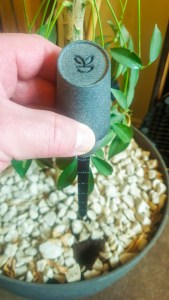
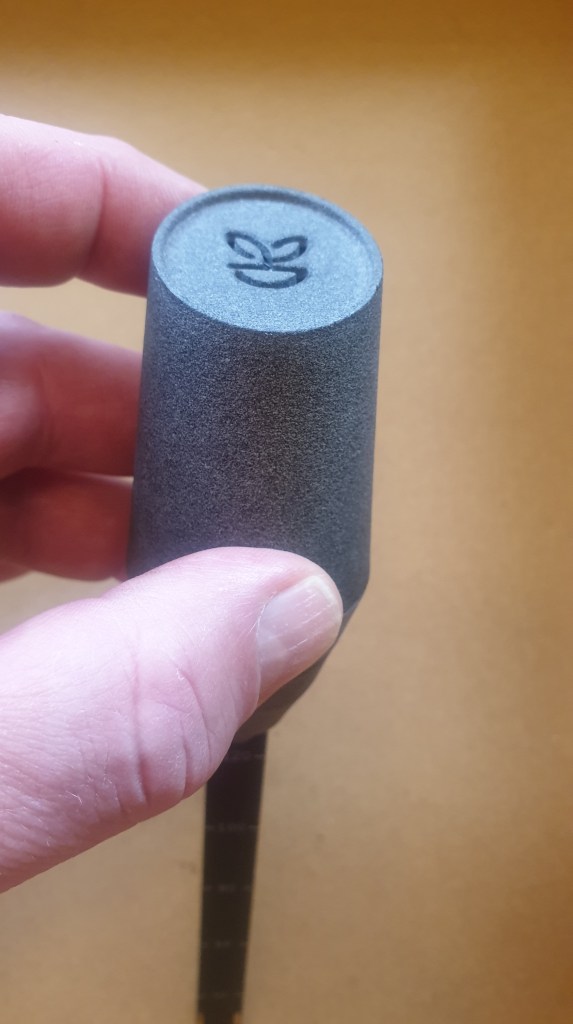
Pre-production samples of Nurtio Technologies sensors have arrived for testing. Three different soil probe lengths and a sensor for hydro plants – all fit into a common power unit that connects to a gateway, and which also houses the light and air temperature sensors.
Everything fits together really well and is a breeze to install – here into a 12 yr old semi-hydro Schefflera arboricola. Data being fed back to Nurtio and will be displayed on a dashboard and app.
This is a really well designed system and will bring great benefits to interior landscapers for service planning, training, assurance and customer care. These are ideal for high value displays, such as expensive indoor trees or green walls when you need to know quickly when the environment changes. The system is also have great value for standard container plants too – it will learn about the needs of the plants and help plan service schedules.
If you are an interior landscaper and would like to know more about this system, please get in touch – this could make your service operations in 2021 much more efficient, especially if your plants are more spread out than before in the new world of dispersed workplaces.
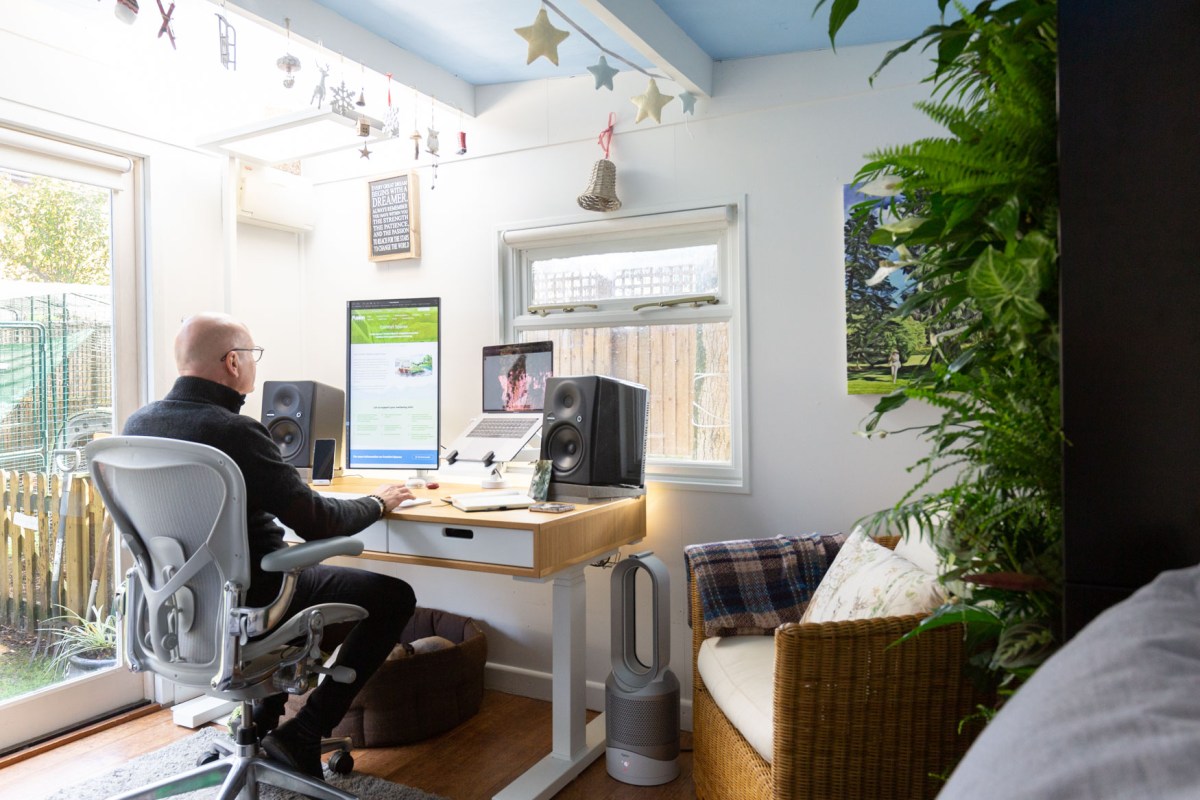
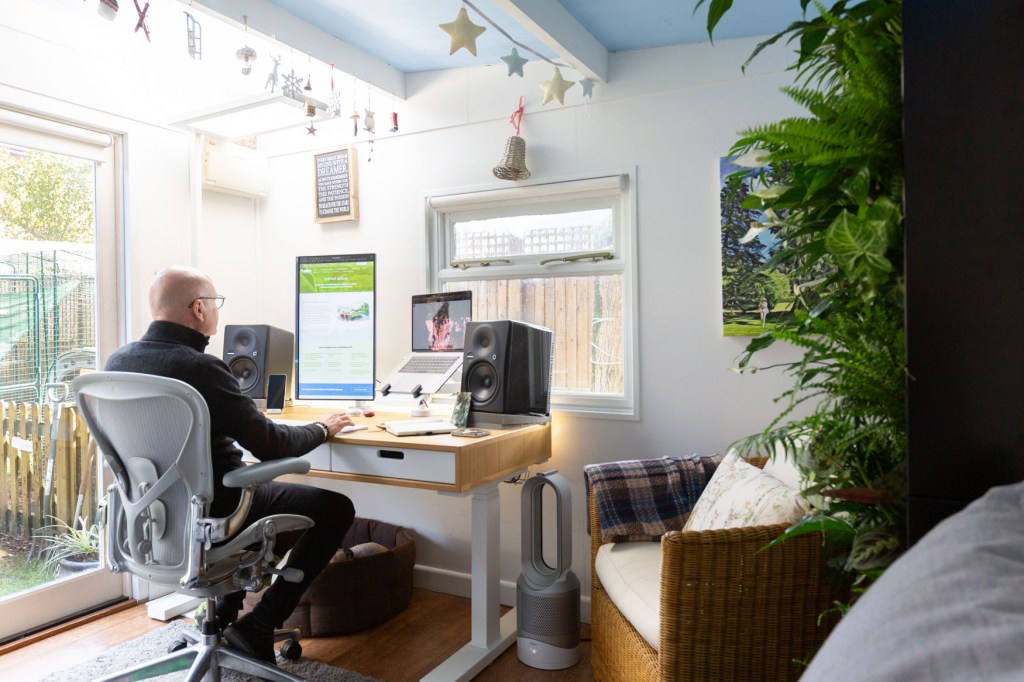
Biophilic design need not be confined to office buildings and other commercial spaces. The benefits of biophilic design can be obtained in the home office too, and without having to spend a fortune. This post explores the benefits of biophilic design and gives some very simple and cost-effective tips to help you thrive in your home working setting.
What is biophilic design?
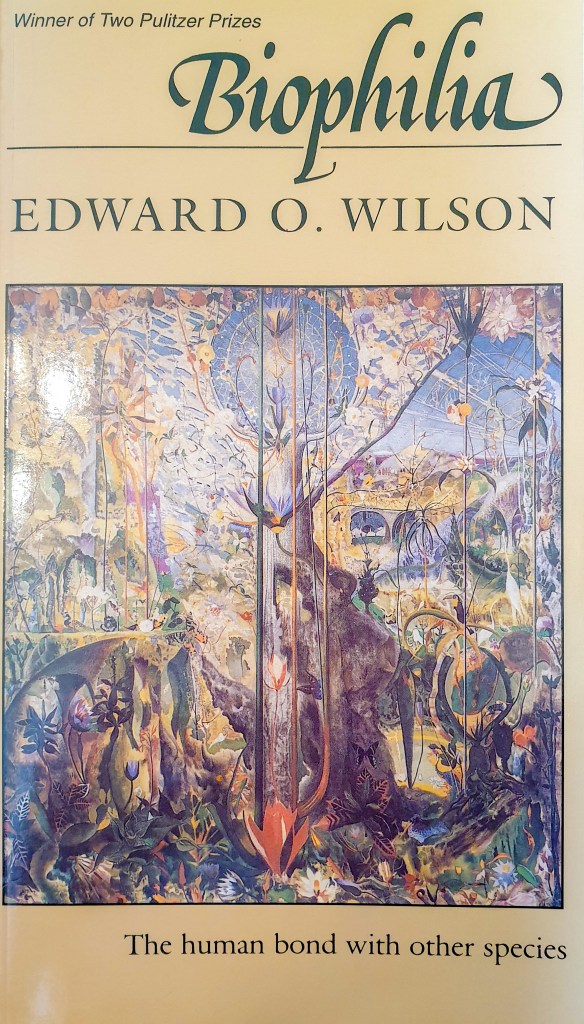
Biophilic design is a design process that brings the theory of biophilia into the built environment. Biophilia is a theory rooted in evolutionary biology and genetics, and was first popularized by Edward O Wilson in his classic book, Biophilia, published in 1984. Essentially, the theory reminds us that we are animals that have spent over 99% of our evolutionary history living in environments, such as the open plains of Africa. During that time, our survival as a species depended our senses being fine-tuned to that environment, and our reliance on various species of plant, animal and fungus for food, shelter and fuel.
It is only a few short centuries since we ceased being hunter-gatherers and domesticated ourselves to live in artificial environments, such as cities. In less than a thousand generations, we divorced ourselves from our natural environment and the sensory stimuli that we need to thrive.
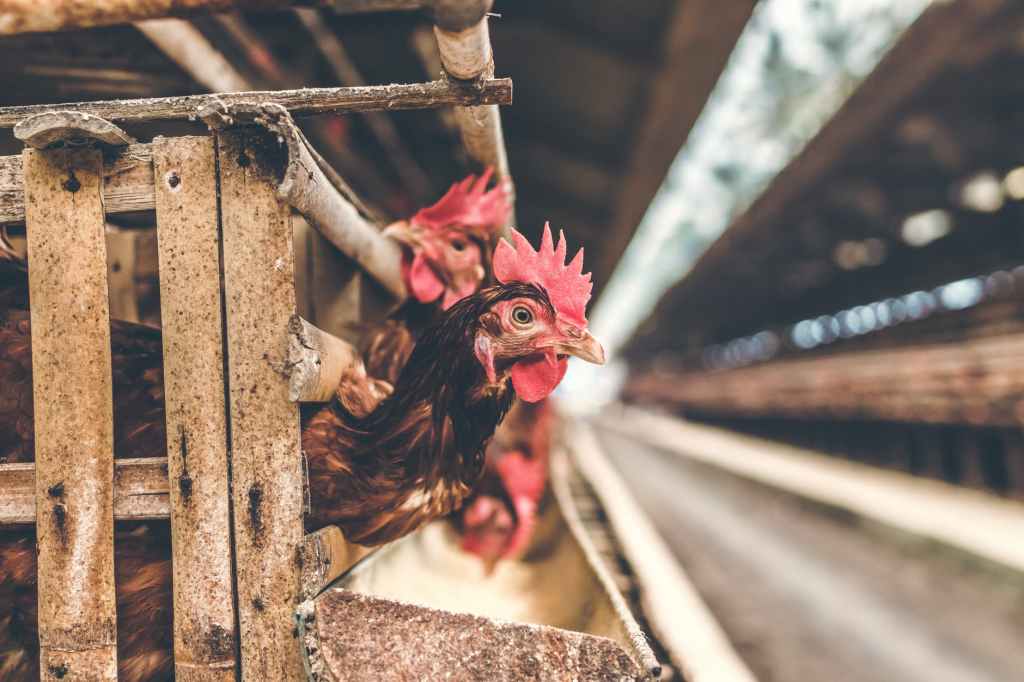
Biophilic design is a way of creating environments that rebuild some of those sensory and biological connections, which reduce stress and increase wellbeing and happiness. Consider the domestic chicken. As a wild animal, the jungle fowl is a forest-dwelling bird that thrives by scrabbling around on the ground, picking up a varied diet of seeds, leaves, insects and other invertebrates. When domesticated and placed in conditions of intense population density and cramped conditions, they fail to thrive. However, the free-range hen, even though far from its jungle home, has an environment much closer to its natural conditions, and can lead a less stressful life, often living longer and requiring fewer veterinary interventions.
The battery human, also once released into a free-range environment (even though we are still constrained by our physical environment and societal expectations – hunting and gathering in the streets of our cities will be frowned upon) will thrive, and biophilic design is one way of creating such an environment.
The home office environment
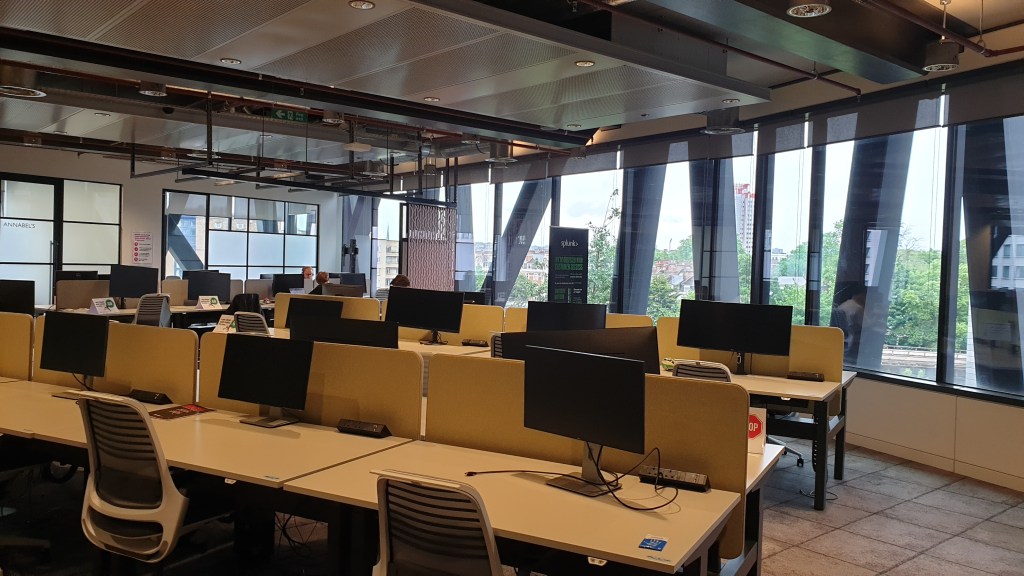
The office worker has, in many instances, been let loose from the constraints of the office. During the pandemic, the cathedrals of capitalism were deserted and the shiny factories of data processing and document production went quiet. Even now, offices are significantly less occupied than they were before Covid-19 and, despite the frantic calls from the owners and managers of underused and expensive property assets, it looks likely that working from home, at least part time, will remain a normal part of working life.
As a result, the newly liberated office worker was forced to create a new working environment in their homes.
For some, this has been easy – there may be a spare room that can be used, or space at a large dining table, or even a garden building that can be used. However, for many, especially younger people living in expensive shared accommodation, creating a usable space has proved a challenge.
Good weather in the spring and summer gives opportunities to take breaks outdoors, whether in a garden, a public spark, or even a walk around the local streets. However, wet and cold autumn and winter weather means that the outdoors is a little less appealing. We need to consider how to create a working environment that maintains some of those connections with the outside world. So how do we do it?
Some simple tips for a biophilic home office
Give yourself a view
If possible, arrange your workspace so that when you look up from the keyboard or screen you can see out of a window. Even if the view is of another building, it will be something distant to focus on, and that will ease eye strain and bring give you a sense of what is going on outside – it might hello you decide whether to venture out on a break, or hunker down in the warm, but whatever the weather, you will connect to the world outside.
Open a window
An open window will refresh the air and flush out excess carbon dioxide and other pollutants generated from within the home. It will also bring the sounds of the outside world in – you may hear voices or birdsong or the sound of the wind. It might also be traffic noise, but even that can sometimes be a relief from silence.
Buy some houseplants
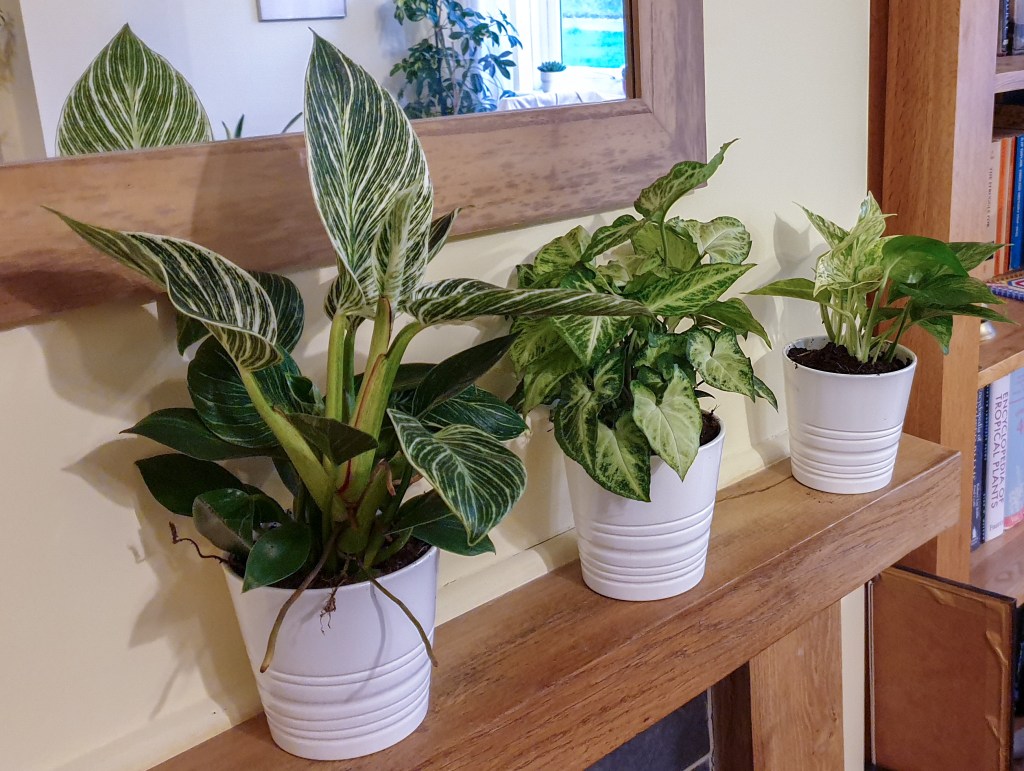
This is the eye-catching, Instagram-friendly intervention that will illustrate the pages of the colour supplements and lifestyle websites. However, it is an effective way of bringing some life indoors. Houseplants need not be expensive or huge. Ikea, for example, has some terrific plants and pots at very good prices (and I am an expert on indoor plants, so you can trust my judgement on this). They add green interest to the indoor environment and also demand some care. Watering (not too much), cleaning and trimming and arranging plants can be very therapeutic.
Follow your nose
Our sense of smell is our most primitive – detecting chemicals in the environment (which is what the sense of smell is all about) was the first sense to evolve in the animal kingdom. We often react to scents instinctively and before we are consciously aware of them, so we can use fragrances to create a multi-dimensional sensory environment very easily. The range and quality of home fragrances is more comprehensive than ever before, so there is bound to be something appealing. I’m not going to go down the road of recommending particular scents for particular settings or tasks – we risk straying into pseudoscience – just choose something that you, and your housemates, like.
Water
We use our sense of hearing and smell to detect the presence of water, often before we see it – this is a survival mechanism. As wild animals, we needed to be able to find safe water – not just to drink, but to find prey that also needed a drink.
The sound of rainfall or babbling streams can be found easily just by asking Alexa (or other smart speaker system). A fish tank or small indoor water feature can also be soothing.
Take care of your skin
The skin is your largest sense organ, but often the least stimulated in the working environment. As well as stopping your insides from falling out, your skin is home to sensors that detect temperature, pressure, movement and resistance, shape and texture and even changes in humidity and static electricity.
Don’t starve it of sensation. Use different textures around your workstation and allow your skin to be stimulated. Create a breeze (not a draught), experience some sunlight, walk barefoot, wear less if the temperature (or your need to be on a webcam) allows it or even take a shower for pleasure rather than utility.
Comfort is the key
Biophilic design isn’t just about plants. It isn’t about bringing nature indoors. It is about being comfortable – physically and mentally. Comfort brings happiness and happiness is the key to both life satisfaction and also job satisfaction. A little investment in comfort can pay huge dividends for the individual and employers relying on home-based workers.
It might be a tempting shorthand, but too many interior designers and interior landscapers talk about biophilic design in terms of bringing nature indoors. This is simply not true. The last thing you should be doing is to bring nature indoors – at the moment it is wet, windy, cold, muddy and the trees are shedding leaves by the ton. I don’t want foxes and crows gallivanting on my desk or slugs climbing my walls. If I want to be surrounded by nature – which I often do – I go for a walk in the fields or woods nearby.
Biophilic design is about improving wellbeing by using some of the cues of nature. As animals, we are as prone to being stressed in unnatural environments as any other species, which is why enclosures in zoos are designed to be as close to the animal’s natural surroundings as possible (and safe).
As a species, we have spent less than a 1% of our history as a domesticated animal (Professor Alice Roberts’ book, ‘Tamed‘, explains rather brilliantly why humans are the ultimate domesticated species – we domesticated ourselves). With that in mind, we need to create our enclosures to be as stimulating and stress free as possible.
We can do that by recreating natural stimuli in buildings – physical and mental – and that does include bringing some natural, or naturalistic elements into our buildings, but it doesn’t mean bringing nature indoors, because that is a bit messy.
For any advice on biophilic design, or if you are working on a project where biophilic design is an important element (and perhaps you are thinking only of plants), please get in touch.
As we move deeper into autumn and, with the knowledge that for very many people, working from home will be commonplace for the foreseeable future, the issue of air quality becomes more important.
‘Good’ indoor air quality is very hard to define, and very subjective. There are some pollutants that must be considered as potentially damaging to health, such as fine particulates (PM10, PM2.5), various oxides of Nitrogen (often written as NOx), a cocktail of volatile organic compounds (VOCs) and ozone. These are often generated outside of the home, especially as combustion products or from vehicle emissions, although some are also produced by domestic activities, such as cooking and cleaning.
Local air quality is affected by a whole host of factors, such as proximity to roads or industry, and also the weather. In the autumn and winter we experience storing winds, which are good for dispersing and diluting pollution, but also very still days when pollutants can be trapped in the lower atmosphere where they build up to risky levels. This air also finds its way inside our homes – more so than in offices, which are often quite air tight and fitted with sophisticated air management systems (usually referred to as HVAC systems: heating, ventilation and air conditioning)
Something else to consider is the amount of pollution created in the home, especially in the kitchen. Cooking produces a whole host of volatile organic compounds. Particulates and combustion products are also produced – especially if you are prone to burning food.
Now, of course, we have an additional factor to consider. Airborne infections spread on aerosols (the fine droplets created when coughing or sneezing), whether as a result of Covid-19, or the common cold, will have to be factored into the way that homes are heated and ventilated.
Health advice recommends high levels of ventilation to reduce the risk from aerosol infections, but in a house, that means opening doors and windows (rather than adjusting a complex HVAC system), and that might mean letting expensively heated air out and polluted cold air in.
On the other hand, it also means letting cooking fumes and carbon dioxide out, so it might be possible to maintain a healthy balance. But how would you know?
Air quality data
There is an old saw that says that you can’t manage what you can’t measure. With air quality, that is especially true. Pollution is pretty-much undetectable by the senses (you might smell fumes, but you couldn’t possibly estimate the concentration), so the only way to know for sure is to have access to data.
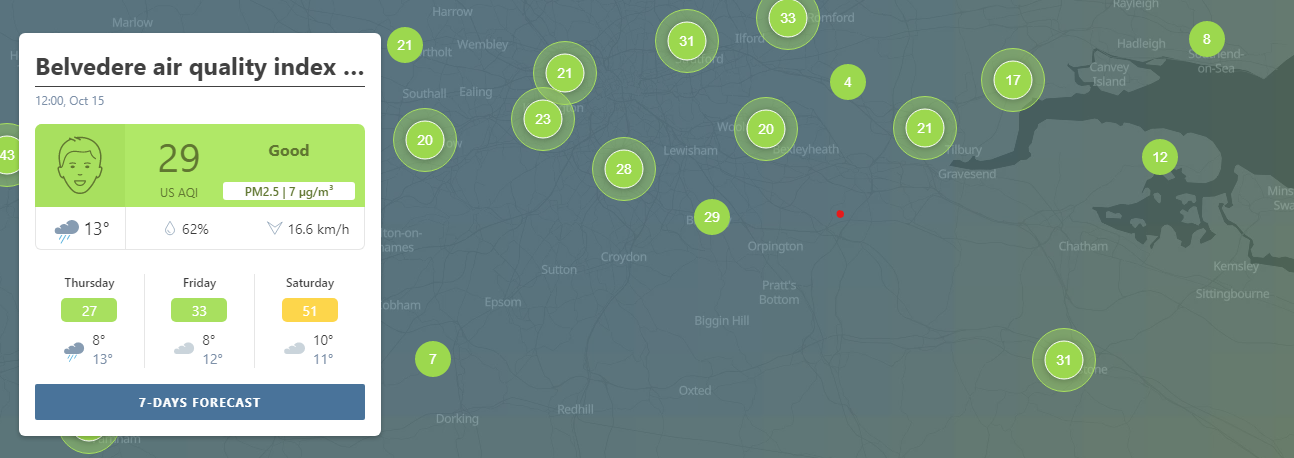
Local outdoor air quality data can be found on various web sites, and these are pretty accurate within a few miles (but generally not down to street level). A good example is https://www.iqair.com
This screenshot shows the air quality around my location (marked by a red dot), with my closest monitoring station shown in the box. However, local knowledge tells me that the air quality in Belvedere – an urban area – is likely to be a little different from my semi-rural location (although on the occasion of this reading, the whole area looks to have very similar air, and pretty good, air quality.)
Indoor air quality is a different matter, however, and the only way to know what is in the air inside your house is to measure it.
There are very many indoor air quality (IAQ) monitors on the market for domestic use. Some resemble toys and others look a bit like medical devices. Others are a little more subtle.
With IAQ monitors, the quality of the data depends very much on the quality of the sensors, and that can vary. There is some truth that you get what you pay for and if you can afford it, spending a little more will get you a better monitor.
Some IAQ monitors connect via WiFi and will send data to an app on your phone, and some can even be connected to smart home devices, so if a certain threshold is breached, it can switch on a fan, or an air purifier or dehumidifier, for example.
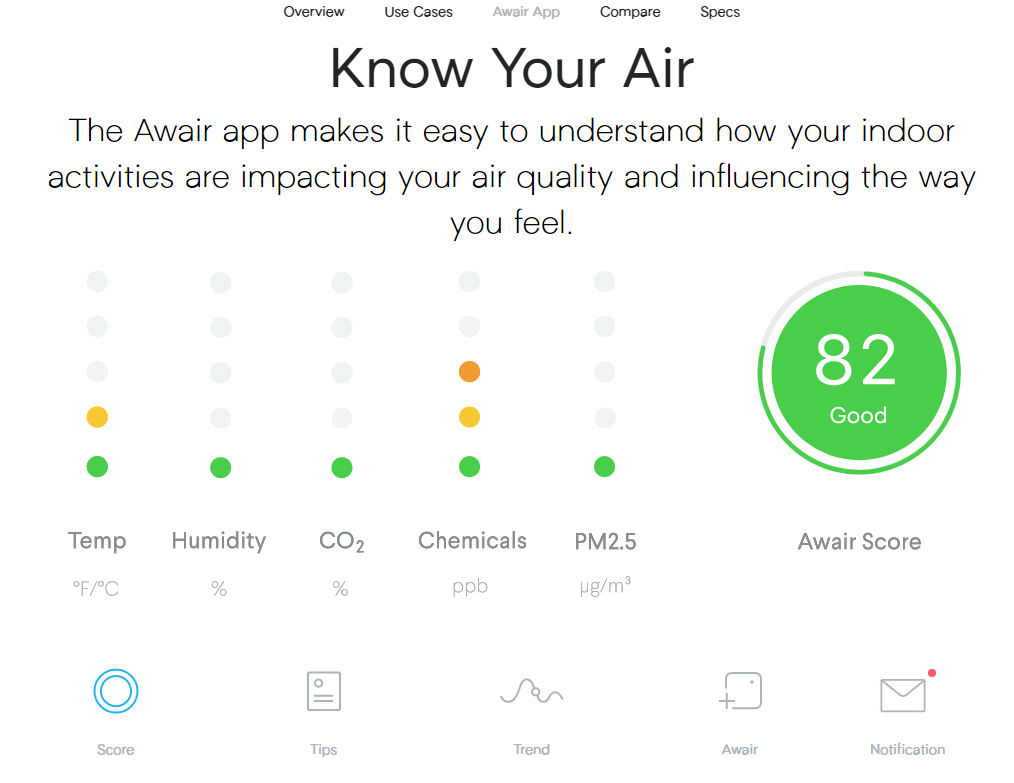
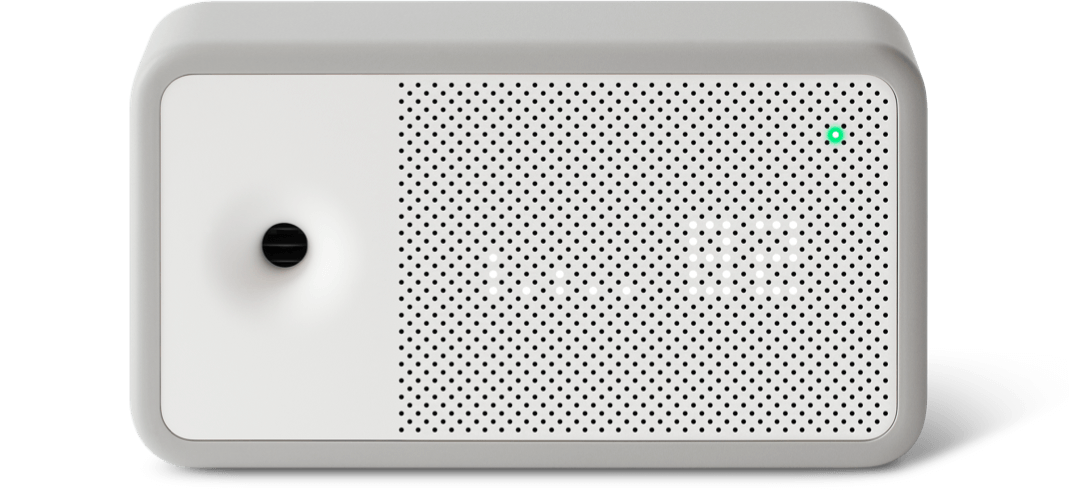
This is an example of a domestic IAQ monitor (the Awair Element) that displays IAQ data on the front of the monitor and on an app.
What should be measured
As a minimum, a domestic IAQ monitor should be able to measure total VOCs, fine particulates, temperature and humidity. Carbon dioxide measurement is also useful. The monitors should also be able to display an overall air quality score as well as the individual parameters, and that can help the user to decide what to do (e.g. open or close a window).
VOCs and fine particulates (PM2.5) can be quite dangerous. Carbon dioxide less so, unless at extreme concentrations. However, carbon dioxide is worth keeping an eye on, as at concentrations well below harmful levels, it can make you feel drowsy, have an effect on the ability to concentrate and can impair cognitive functions. The source of carbon dioxide is mainly people, and it doesn’t take long for levels to increase in a well sealed building with a few people in it.
Using data to help you make decisions
There may be times when you see the various IAQ parameters on your monitor telling you different things about the overall IAQ. For example, you may notice that particulates and VOCs are quite low, but carbon dioxide is increasing. Opening a window will certainly reduce the concentrations of carbon dioxide, but may result in the other pollutants increasing as outside air is let in. However, unless outdoor air quality is really bad, it is unlikely that in the short time a window is opened to flush out the carbon dioxide that concentrations of the other pollutants will rise to concerning levels.
Knowing about IAQ will help you make informed decisions about how to manage your indoor environment, such as heating, ventilation, use of plants or avoidance of certain chemicals or activities – will you work in the kitchen while someone else is frying bacon or burning toast, for example? Without the data, you wouldn’t know.
IAQ monitoring as part of the home-workers office kit
If you are used to working in an office, there is a good chance that IAQ is already monitored – it will be used to help manage HVAC systems. If your office has a wellbeing certification, such as WELL or RESET, you should find that IAQ data is shared with all the users of the building.
Knowing about IAQ in an office can be empowering and be useful to help building managers understand local issues (i.e. your immediate surroundings), as well as what is going on in the whole building.
As a home worker, this information is also very useful, as it will help you manage your working environment and keep it as healthy as possible.
Working with my colleagues at Fusion Spaces, we are developing the WorkFreeTM home workspace assessment method to look further into managing home office space to be as healthy, safe, comfortable and empowering as it can be.
For further information about WorkFree ™, please contact us by email or take a look at the web site.
As a child, growing up in the 1970s in a village in the Lincolnshire fens, I was always very aware of the changes in the seasons – not just as the landscape went from black to green to gold and back again, but also because our village community, in common with thousands of others, maintained seasonal rituals that were rooted in farming practices, especially those in summer and autumn.
There was ploughing (with lapwings and gulls following the plough), and ploughing matches – yes, farmers competed (and still do) against each other to see who can plough the straightest furrow and they have special competition ploughs to do it.
The sugar beet harvest marked winter, with the rivers of mud on the roads and the stench of the local sugar factories (even from ten miles away, if the wind was bad, you could smell them).
Spring brought emerging crops and, a few miles to the East, the bulb fields and the annual Tulip festival in Spalding. At that time, coach tours from all over the country would visit the Lincolnshire bulb fields, which rivalled those in the Netherlands.
Midsummer was the time of village fetes, always held in a farm yard. Late summer brought the cereal harvest (followed, in those days, by stubble fires) and then, in the autumn came my favourite – the harvest festival.
Even as someone who has never been remotely religious, there was always something special about seeing the mountains of fresh produce and specially-baked loaves (made to look like wheat sheaves) adorning the village church. Harvest festivals with their optimistic hymns and harvest suppers were a very obvious reminder that the food we ate came, almost miraculously, from the land around us, grown with real expertise.
I studied Agricultural Botany at university, and worked in agricultural research for several years – that certainly kept me in touch with natural cycles. Then, I changed track and entered the world of workplace design and interior landscaping. After a quarter of a century embedded in offices, the seasons were almost obliterated from day-to-day thought (apart from the odd day of snow disruption).
In fact, as an interior landscaper, putting plants into buildings makes one acutely aware that the insides of buildings don’t have seasons – it is the lack of seasonal variation that determines the types of plants that can thrive indoors – those that are adapted to near constant light and heat (and that will be the subject of another post).
However, things have changed.
This year, with all the disruption caused by the Covid-19 pandemic, many of us have been working from home. I don’t think that I was alone in spending more time noticing and appreciating the world around. Many of us were treated to an especially long spell of good weather, starting almost as soon as lockdown began – it was if it was a small compensation for the chaos going on around.
Regular walks around the fields near where I live have been a bit of a revelation. From equinox to equinox I’ve noticed the growth and ripening of crops, the blossoming of wild flowers, more butterflies than I can remember seeing in years and the changes in birdsong as the summer progressed. As we enter autumn, the hedgerows are heavy with berries and the fields have already been seeded with next year’s crops.
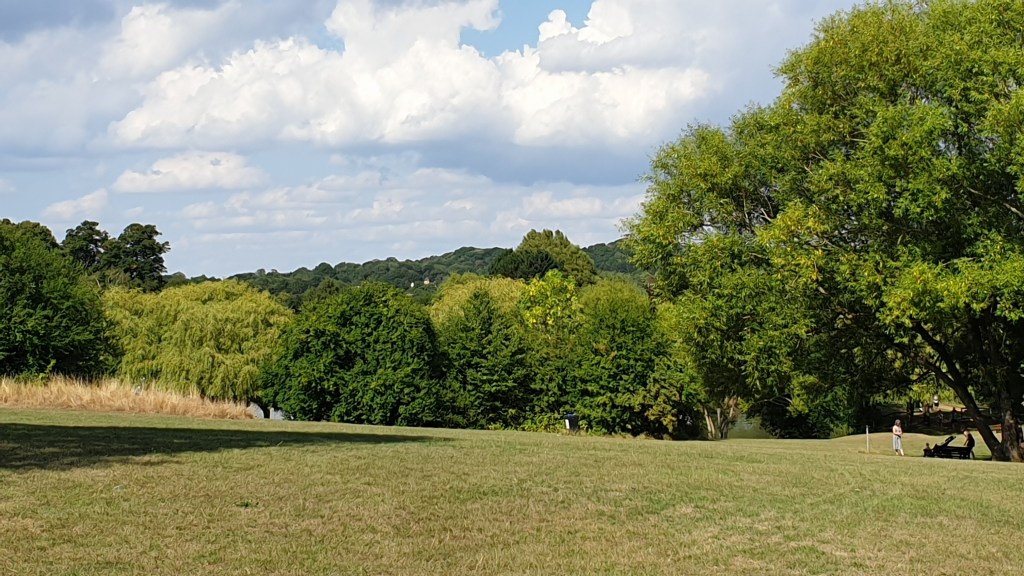
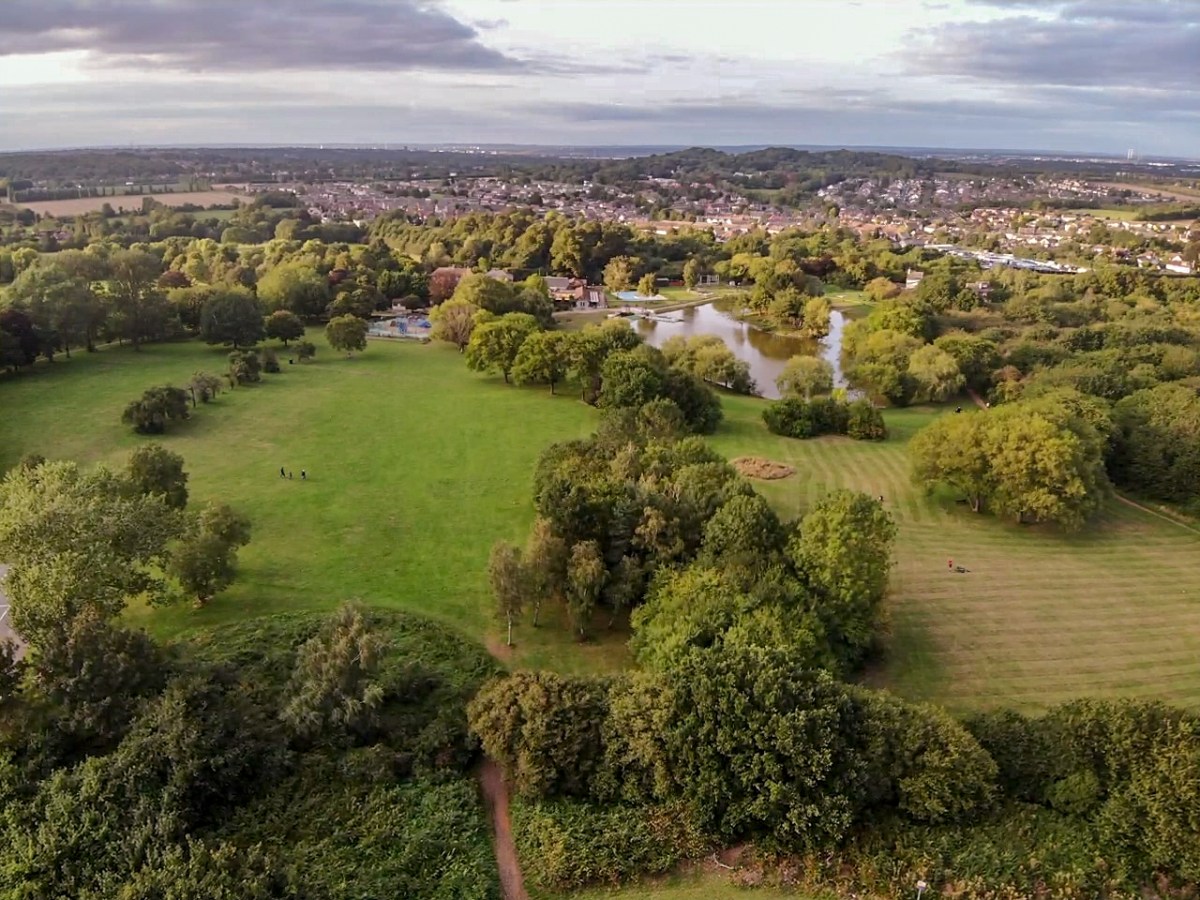
The pulse of nature is not only noticeable from the countryside. In the UK, we are very lucky that our urban areas are generally well provided with public parks and gardens, and these provide very necessary spaces for people to gain the benefits of fresh air and sunshine, as well as to appreciate nature. Indeed, many of our parks are richer in wildlife than the countryside.
Public park. Photograph by George Freeman
The forced pauses in our routines give us time to reflect and gather our thoughts. Noticing the changes in seasons – the result of the inevitable progress of the Earth orbiting around the sun as it has done for over four billion years – has provided me with a very necessary reconnection with nature and the passage of time.
Without a purpose behind a design, and the intent to make an environment better for the people that use it, we cannot describe a space as biophilic.
Over the next few paragraphs (which are based on my presentation to Cultivate ’20 Virtual in July 2020), I am going to discuss what I think it means to build a biophilic design brand for interior landscapers and designers.
It doesn’t mean what logo to use, or what name to give your business. It is more about the philosophy behind your business – your vision and your values.
Why am I banging on about biophilic design – isn’t it what everyone is doing right now anyway?
Biophilic design is the design trend of the moment. It is associated with greater wellbeing. However, many of its proponents think mainly, or only, in terms of the emotional, almost spiritual, need to connect with nature.
This can be an effective approach, is easily understood and has a lot of merit.
Let’s did a little deeper
Research has consistently shown, for almost 50 years (maybe longer) that when we put plants in buildings, things get better.
People feel happier
Symptoms associated with sick building syndrome disappear
Stress can be reduced
People become more productive
Various mechanisms for the benefits have been suggested – physical and psychological – but for years, all we had was a catalogue of discrete research projects without a compelling narrative to tie them all together.
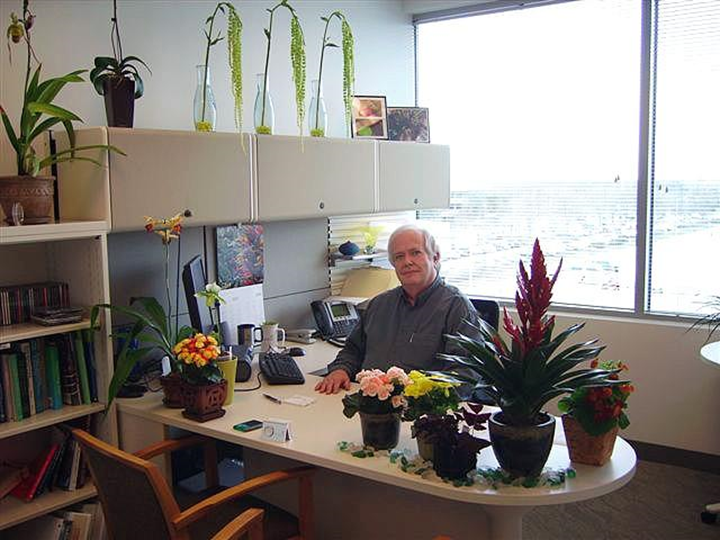
This is Ken Brewer. He was with Ambius (my former employer), and its predecessor companies for over 30 years and was the North America Technical Director. As well as being a much missed colleague and friend, he is the man who first told me about biophilia – some time in the early 2000’s.
When he told me about it, the research that I (and many others) were doing suddenly made a lot more sense.
The concept of Biophilia is not new
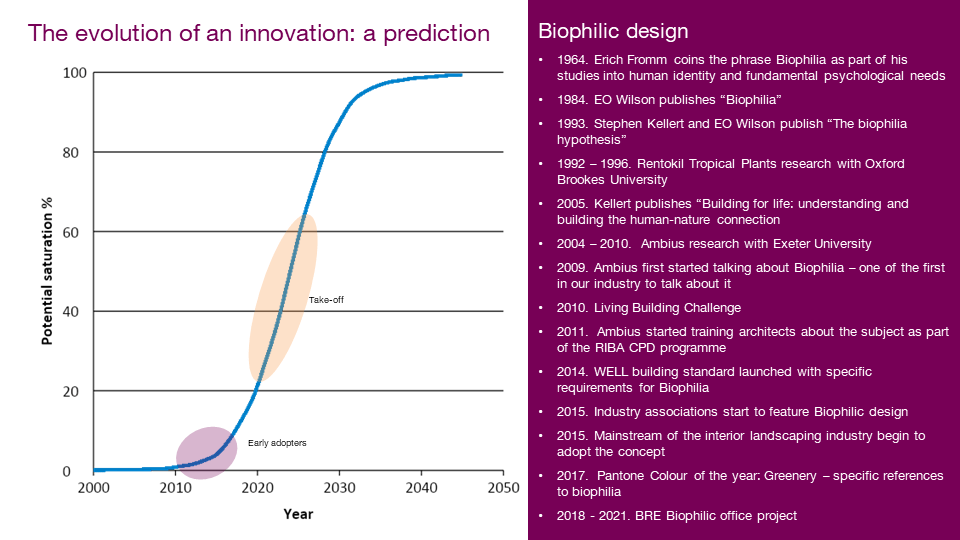
However, it has been the work of Edward Wilson since 1984 (incidentally, the same year that the WHO first recognized Sick Building Syndrome), and more latterly Stephen Kellert, that has brought the concept of biophilic design to a much wider audience.
Biophilia theory is rooted in evolutionary biology and genetics. It contends that we, as a species, have an inherent need to be in an environment that relates to our basic needs as a species.
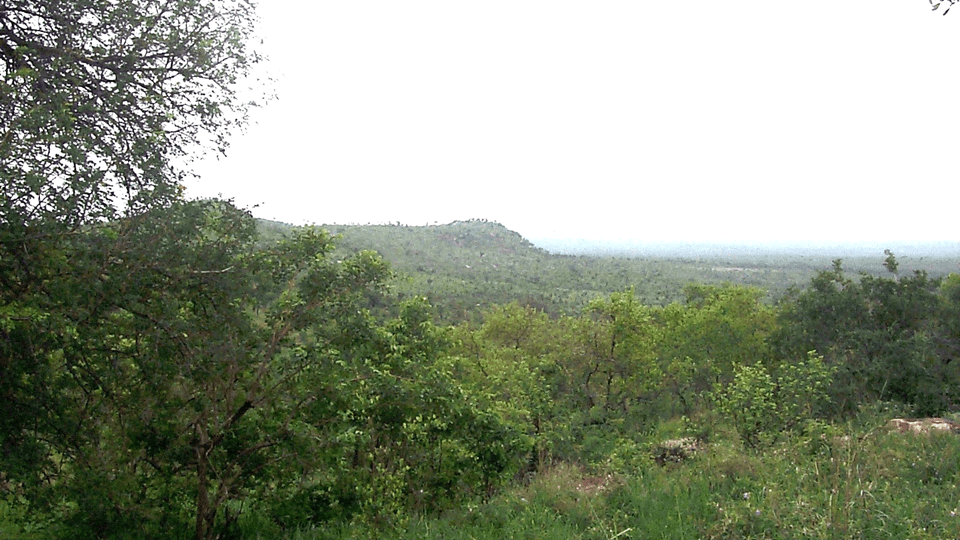
We evolved, and spent over 99% of our species’ history, in an environment resembling the savannah, and that is the environment that we instinctively feel most comfortable in: open, undulating landscapes with scattered and clustered vegetation and good access to water and shelter.
Our senses evolved to work at their best in such an environment, and so it makes sense to create our artificial environments to stimulate our senses is much the same way as in our wild setting. This is where biophilic design differs from conventional interior design – it combines multiple design elements in a holistic way to stimulate our senses.
The difference between a space full of pretty plants and biophilic design
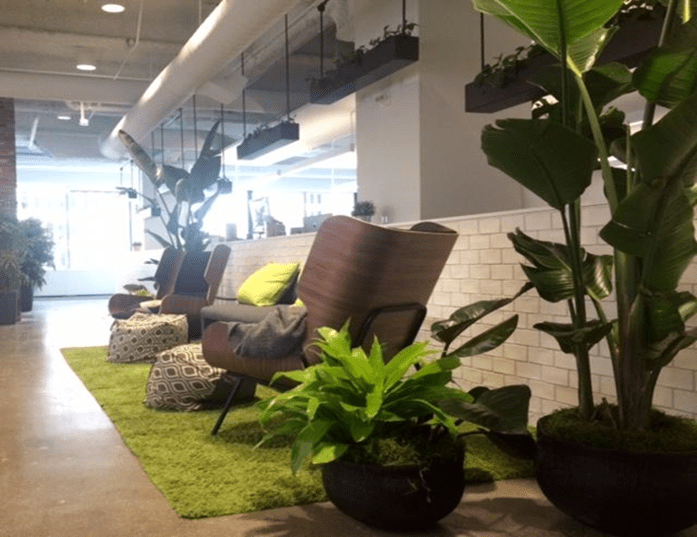
The offices of Segment in California (image by Ambius North America) incorporating many elements that might be considered biophilic
At its core, biophilic design is a design philosophy that is based on biophilia, which incorporates natural elements and natural analogues in such a way as to create an environment that is stimulating, engaging and provides sensory stimuli that work together to minimize stress and discomfort.
It triggers an emotional connection with the space as a result of an appropriate sensory balance and sense of psychological and physical comfort.
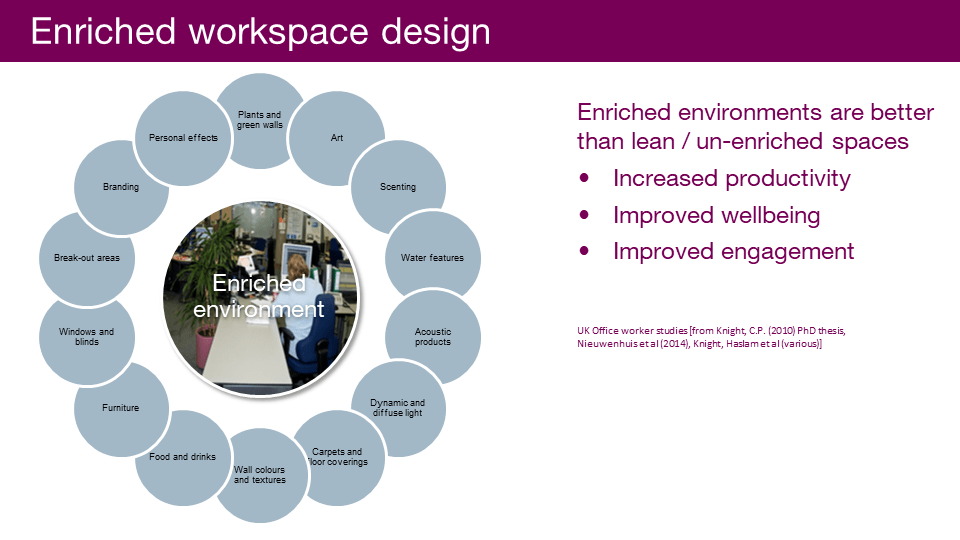
There is a huge benefit to putting plants into buildings – the very act of enriching a space can have some profound effects in terms of wellbeing and productivity.
The difference, however, between doing interior landscaping and biophilic design isn’t what you put in a building, but how what you put in a building speaks to the people that use the building. In other words, it isn’t about the products.
It is also about why.
Why has your client asked you to put plants in their building? What is the intent?
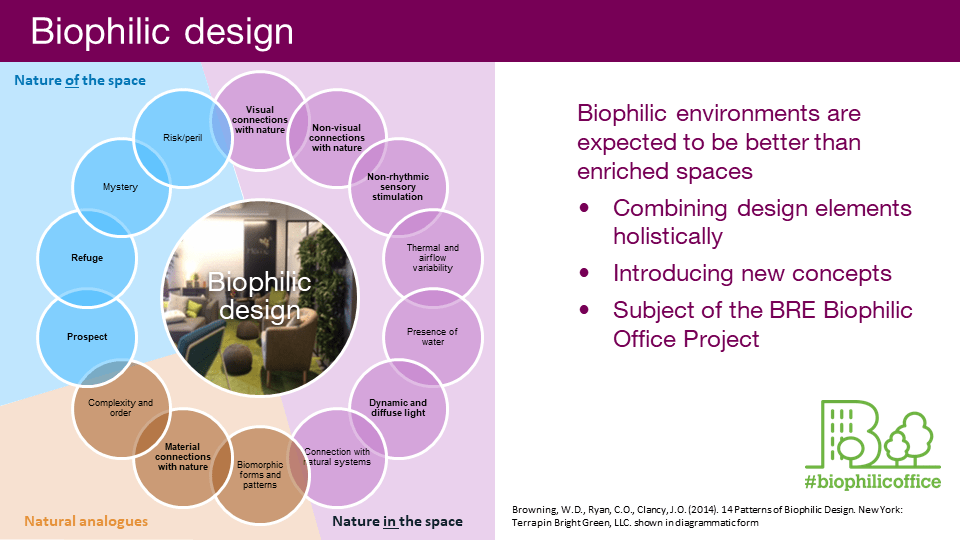
Biophilic design has many definitions. Terrapin, for example, propose a number of characteristics that make up biophilic design in three broad categories, as we can see here.
Nature in the space
Nature of the space
Natural analogues
The first and last of these are areas are what interior designers and interior landscapers are really good at. With a bit of imagination, they can be pretty good at the other as well.
When combined well, these elements create a sensory environment that is harmonious. The sensory inputs we experience are congruent. They complement each other and allow us to understand our environment.
When our senses are stimulated discordantly, when we can’t make sense of what we are seeing, feeling, hearing and smelling, then we become stressed. If we hear a threat, but can’t see it, or if we smell the ocean but see the grey walls of an office, it takes mental effort to come to terms with those stimuli.
The importance of good organizational culture
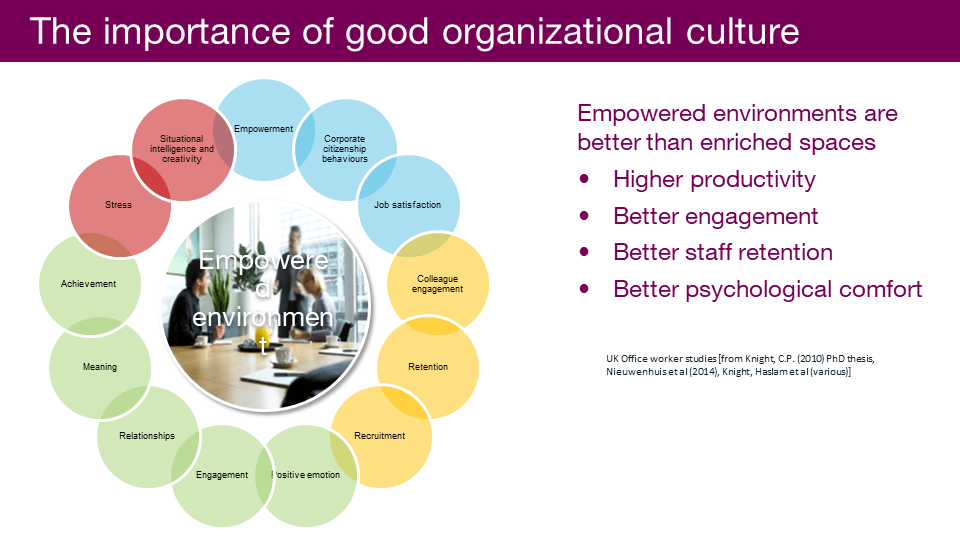
Craig Knight’s research, and that of others, has shown that the biggest impact on performance and wellbeing isn’t plants, art, smells, and everything else that we do, but it is organizational culture.
The more people are empowered to manage their work and their work space, the better things are. Such empowerment can, and should for our industry, extend to engaging as far as possible with the end users of buildings – e.g. office workers – and giving them some agency over the plants and other enrichments.
Get empowerment right, everything else follows
And this doesn’t just mean with the clients. If designers get it right within their own organizations, they too will reap the benefits.
In fact, I think that designers need to live the values that are sold to clients in order to sell those ideas credibly, and for employees to sell and service those ideas with conviction
That’s how you build a biophilic brand identity: human-centric companies providing human-centric services.
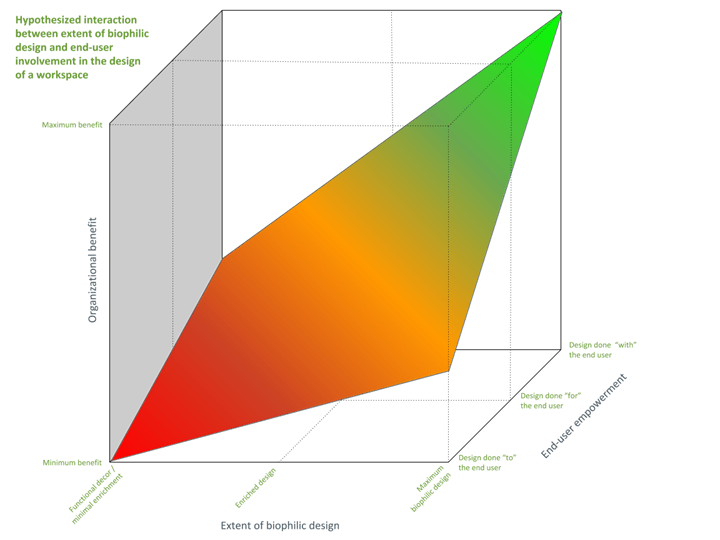
It seems to me that it is likely that there is quite a strong interaction between design and organizational culture (although more evidence is needed to determine the strength of the effect), and that there are some synergies to be exploited.
This can be represented simply as a diagram. This is merely an untested hypothesis at present, but based on current evidence, an interaction between the extent of biophilic design and end-user empowerment might reasonably be expected to look something like this.
The more you enrich a space, and make it interesting and biophilic, the better.
Likewise, the more the end user is considered, the better – moving from design being done to the user, through being done for them, ultimately to being done with them.
And this is where the principle of intent comes in.
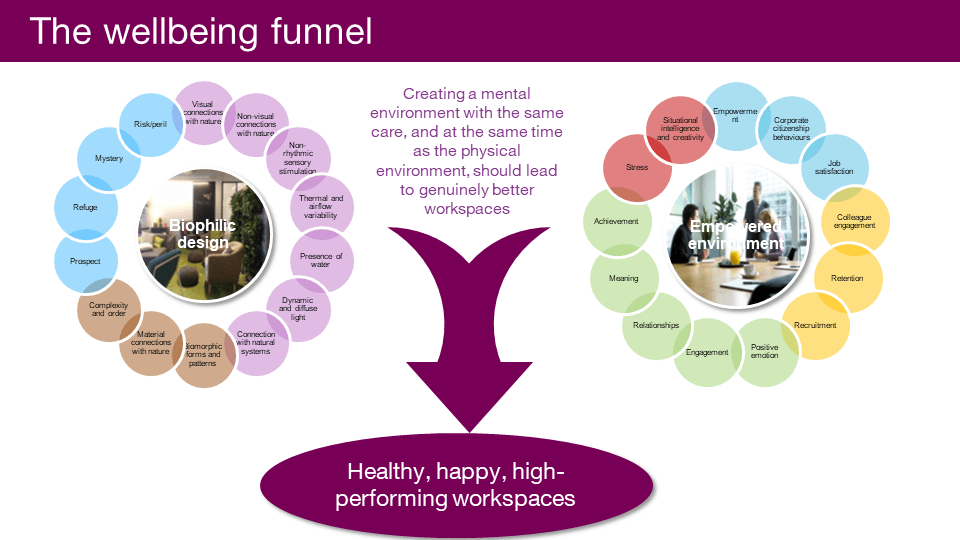
If an organization is willing to invest large sums to enrich a space with wellbeing in mind, then it may be reasonable to assume that the culture behind such a decision looks beyond physical comfort and considers issues such as empowerment, engagement, corporate citizenship behaviours, identity, and monitoring.
And, unless organizations make efforts to address the mental space in their organizations as well as the physical space, then they, and their workers are unlikely to fully realise their potential.
For me, the ultimate goal of biophilic design is combining the best in design – all the plants and other elements – with the intent to make life better for the users of the space.
If the intent for creating wellbeing isn’t there, then all you are doing is making spaces pretty.
That’s better than nothing, but it’s not what I think is truly biophilic – genuine, human-centred spaces created with the wellbeing of the user in mind, with our senses stimulated harmoniously and designed by someone who really gets it.
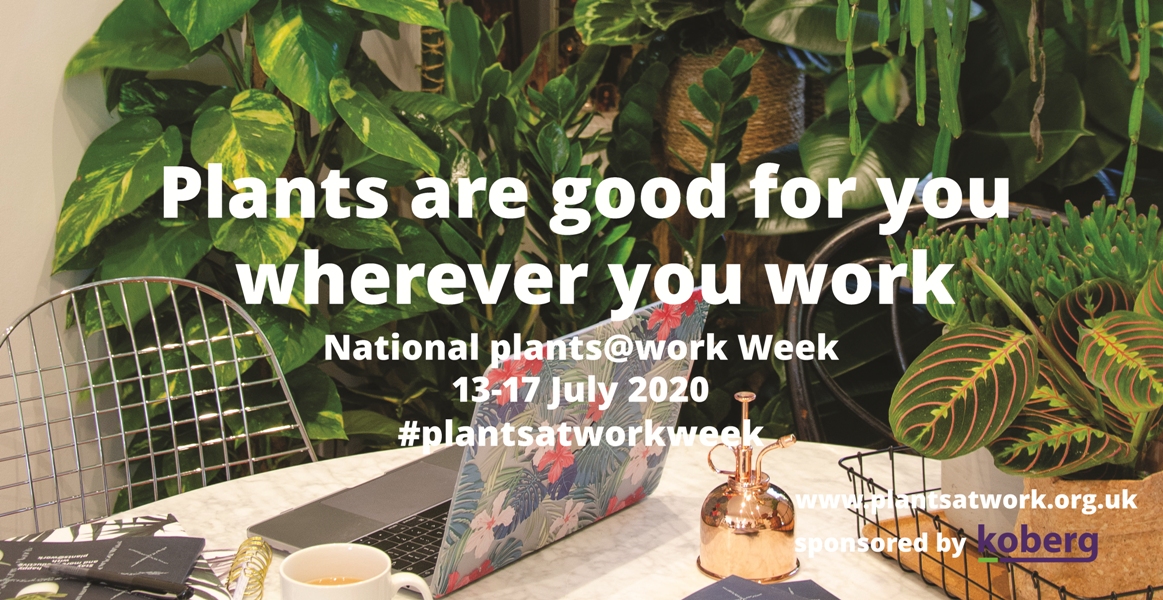
Here in the UK, it is the last day of National Plants at Work Week, organized by the interior landscaping trade association, Plants at Work. Usually, this is a celebration of the benefits of greenery in the office.
This year, however, our workplaces are very different, and may continue to be for a while yet, and Plants at Work have been discussing the ways by which we can all use plants wherever we work – the home office, kitchen table, spare room or even in the garden.
Where we work is not just a room, with a desk and computer. For many, the place where we really work often isn’t physical at all, but inside our heads. The office and the laptop are just tools to communicate the outputs of work. For many, work can’t be measured by keystrokes or attentiveness to a camera or attendance at virtual meetings. At best, that is just a measure of activity.
Certainly, for some jobs, activity measures are the only practical proxy of work outputs, but those for whom the office is primarily the place to transfer ideas to a document or communicate them to a colleague, then the place where those ideas are formed is the real workplace. That means being in environments that forge creativity.
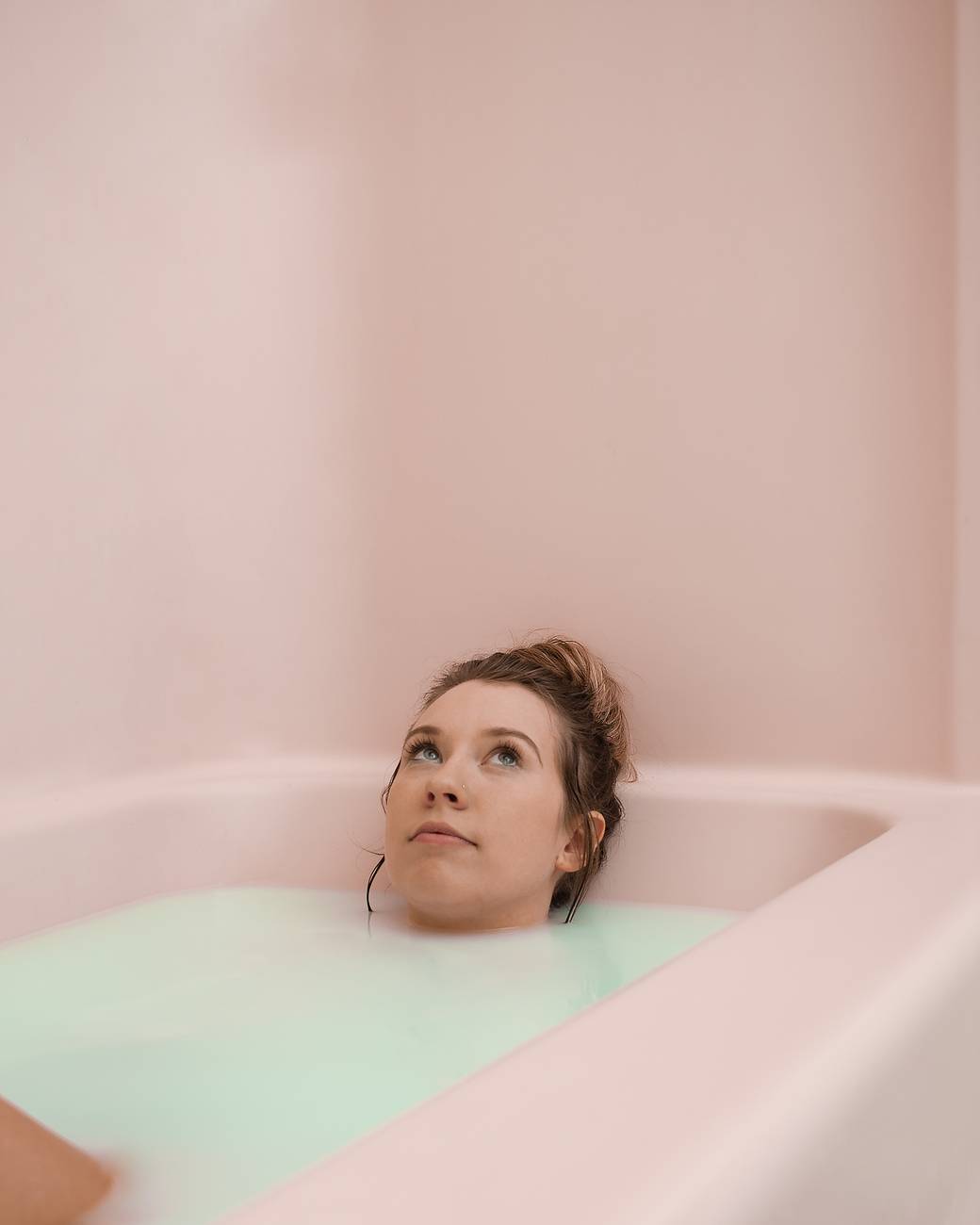
That could be a warm bath, or a walk in the woods. It could be the laptop on the dining table, but it may also be somewhere else entirely. Inspiration can happen anywhere and at any time – not just between 9 and 5 in an office block.
As good a place to be creative as anywhere. Photo by Tanner Vote on Pexels.com
For many years, those that have worked from home as a matter of course were often viewed with suspicion by employers and colleagues alike. Were they really working, or were they slacking off? (Were those employers incapable of actually measuring outputs?)
Some employers did insist on monitoring remote staff using technology, but now that even those managers are forced to working at home, maybe there is a little more understanding that people can be trusted to do good work without the need for a desk in the corporate office.
Evolution
It may be that as we contemplate the future of work, there will be a more rapid evolution of the home working environment. Already, employers, faced with a future when more and more people will be working away from the corporate office for extended periods, are examining their responsibilities for creating safe and healthy working environments.
This certainly includes getting technology right, and ergonomics. Good chairs and lighting are going to be vital, along with legal obligations such as complying with display screen regulations.
As well as the bare minimum, enlightened employers might be considering providing some of the things that make office life more bearable – perhaps some professionally prepared plant displays (e.g. this service from a London firm, Indoor Garden Design through their new venture https://www.intrayplants.com/ ).
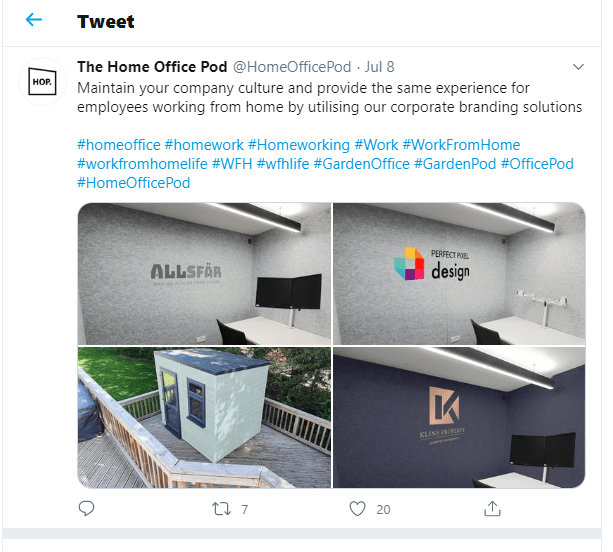
Some are even offering the delivery of home office buildings, although that raises many questions.
I wonder about how insecure a company must feel that it needs to remind its employees who they work for with a branded pod placed, presumably rent-free, in the back garden with the desk facing away from the window – recreating the environment of the office battery cage. If company culture has to be reinforced by having a massive logo, rather than by decent management, then I would be very worried. And what might be the consequence of hanging a poster over the logo?
The pod itself looks really well designed – good acoustics, modern lighting and all pre-cabled, but is this where you will be expected to be creative and imaginative? Maybe a few pot plants would help.
The nature of work is changing, and it is changing in ways not even imagined at the beginning of the year. Many office workers have had nightmares of trying to juggle space, homes schooling and caring along with work, but many have also experienced the benefits of being able to manage their work with more freedom, and have found themselves more productive, more creative and more engaged.
By being forced to loosen the leash on staff, employers should be seeing the benefits of empowerment and trust. The benefits to employers and employees of being liberated from the constraints of the workplace battery farm need to be preserved.
Just a quick plug for my session at AmericanHort’s Cultivate’20 Virtual conference and trade show. which is on Sunday at 6.30pm UK time (1.30pm Eastern Time), and then available on demand from 13th July
I’ll post a summary of its content after the conference, but please do register online at CultivateVirtual.org
Over the last three months, as spring has turned to summer, and the weather in my corner of England has been spectacular, I have been acutely aware of how the landscape has been transformed by the colour green. The green things in the landscape have also changed, from the vibrant fresh shades of new foliage, to darker greens as leaves mature, or from the deep greens of cereal crops as they begin to ripen towards yellower shades and ultimately to golden brown.
Sensitivity
The human eye is especially sensitive to green. The shades that we name as green fall right in the middle of the visible spectrum and extend from the citrusy yellow greens to minerally blue greens. I have been told that humans can distinguish as many as 350 shades of green (although that may be an artefact of language – how do we really define green, especially at the extremes of what might reasonably be described as green?)
How many shades of green?
Symbolism
Green is a hugely symbolic colour too. Pagan religions from all over the world have symbols, such as the Green Man of North European folklore. These often represent both the power of nature and its sustenance. Green is sometimes related to magic and the presence of spirits too.
There was even a time – within living memory – that green cars were regarded as unlucky (at least that is what my grandmother told me. She was aghast when my father bought a mint green car in the 1970s, but that might just have been a comment on his taste).
Rosslyn Chapel Green Man – photo by Johanne McInnes. (licence CC by 3.0)
More positively, green represents sustainability and environmental responsibility. Green also means progress. Green for go is the universal convention for traffic management and for a safe state of affairs.
All of this symbolism can be directly linked to the colour’s ubiquity, and that is also directly related to the life giving quality of a green pigment called chlorophyll, without which, no complex life on Earth would be possible. You can almost feel the force of life coursing through green spaces in nature.
Green workspaces
Workplaces have been given the green light to re-open as the worst of the pandemic eases. Some have taken the opportunity to go green: plants screens and moss walls are being specified to ensure physical distancing and aid with pedestrian traffic flow.
Other workplaces are embracing the environmental opportunities that are afforded by allowing more people to be home based (for part, or even all of the time), reducing commuting time, emissions and energy bills and being available for those that cannot work anywhere else, or for when face-to-face collaboration is unavoidable. This might even lead to a significant reduction in office space occupancy, as this article in the Guardian recently explained.
Some are looking to a more human-centred future. Instead of offices being a place to go for all work, they might be hubs for collaborative effort: occasional places that are both sociable and productive.
Workplace managers are going to have to consider whole new interactions of disciplines in the very near future: space, furniture, technology, connectivity, restoration and recuperation, and new approaches to managing people. All will need repackaging to create work environments that people want to use.
Unfortunately, a large number of workplaces are doing their best to recreate the pre-pandemic state, but with perspex and cubicles. A look at some of the FM web sites and magazines shows just how uninspiring some of these places can be. High screens, often in shades of grey, blocking not just the view of a colleague, but preventing views of the broader interior landscape or even through a window. Such spaces are, no doubt, hygienic, but they are also emotionally sterile too.
Maybe, our new-found appreciation of nature and a greater understanding of how we, as animals, respond to the rhythms of the seasons can help us create better working environments as a result.
In a fragile economy, those organizations willing to invest in creating more humane working cultures will be in the best place to attract and retain eager and talented people. Fortunately, those investments need not be huge in terms of cash and capital, but instead may require taking a little time to learn and reflect on what has been learned.
If you would like more detailed advice on creating workspaces that are humane and effective, please get in touch.
The workplace is no-longer the traditional office for many. Many organizations are challenged by the need to embrace new ways of physically working: planning space, maintaining higher standards of hygiene, enabling teams to work effectively together and recognizing that home working is going to be needed (and even wanted) for the foreseeable future. All of those challenges are overlaid with the absolute need to ensure the physical and mental wellbeing of staff.
As we move through summer, many offices and other workplaces are re-opening and businesses are trying to imagine how on Earth they are going to be able to ensure effective working. This uncertainty and the requirements for correct physical distancing and enhanced hygiene standards is going to place a strain on employers and employees alike.
We’re beginning to get some hints about the way things might look in the period immediately after lockdown ends. One thing is for sure, the world of work (especially the office) is going to have to adapt very quickly. Even when buildings reopen, it seems likely that some degree of physical distancing and enhanced hygiene will be necessary.
After the second world war, a great leader found himself ruthlessly put out of power. Churchill led the country through a crisis and might have expected a reward in the subsequent general election. However, to his surprise, and that of the press and the establishment, he fell victim to the closest thing the UK ever had to a revolution.
Comparing the horrors of global warfare to the enforced changes to office life is a bit extreme, although it is worth drawing a few parallels.
Wartime highlighted the faultlines in society. The old order had to be abandoned in order to fight the war and the idea that society would willingly return to the established ways of doing things was rejected. Now, organizations are going to have to face up to the facts that the established ways of managing people and workspaces are also going to have to change.
We may even have to reconsider what we mean by workspaces.
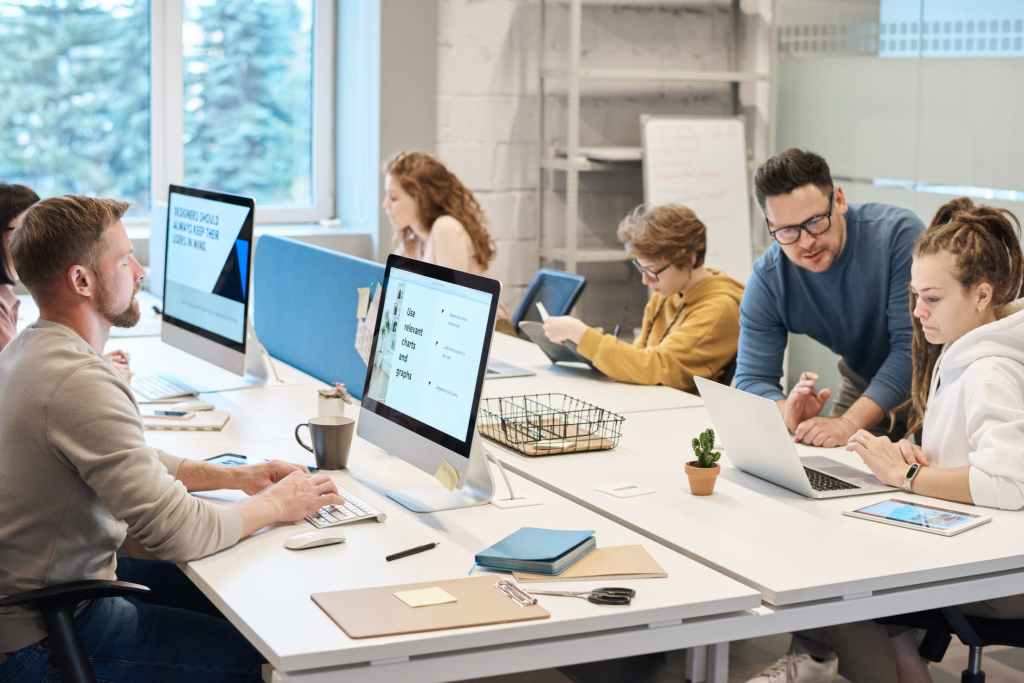
It is going to be a long time before this is normal again, if ever Photo by fauxels on Pexels.com
Do we mean just the one (or more) physical spaces to carry out work – the realm of the designer – or does it include the headspace too?
Opportunities
Workplace managers are going to have to consider whole new interactions of disciplines in the very near future: space, furniture, technology, connectivity, restoration and recuperation, and new approaches to managing people. All will need repackaging to create work environments that people want to use, and we must learn from our experiences over the last few months to create those new working environments.
What does that mean for the commercial interior and exterior plantscaping industry?
There are certainly going to be challenges, but also opportunities for those firms imaginative and agile enough to change.
Let’s first look at some of the challenges. These include adapting to new ways of working, such as maintaining physical distancing in clients’ offices whilst carrying out plant care, ensuring that plant displays are kept clean and disinfected and adapting to new office layouts that might be less accommodating for plants if desks and workstations have to be spread out.
One thing seems certain: high density offices are going to have to change. If physical distancing is going to be successful, then either desks are going to have to be spread out, or there are going to have to be screens between workstations, or fewer people are going to be allowed in the office at any one time. Pedestrian routes will also have to be altered. It will be no good if desks are isolated only for colleagues to have to squeeze behind the back of your chair or walk within a few inches of you as they go and get their coffee.
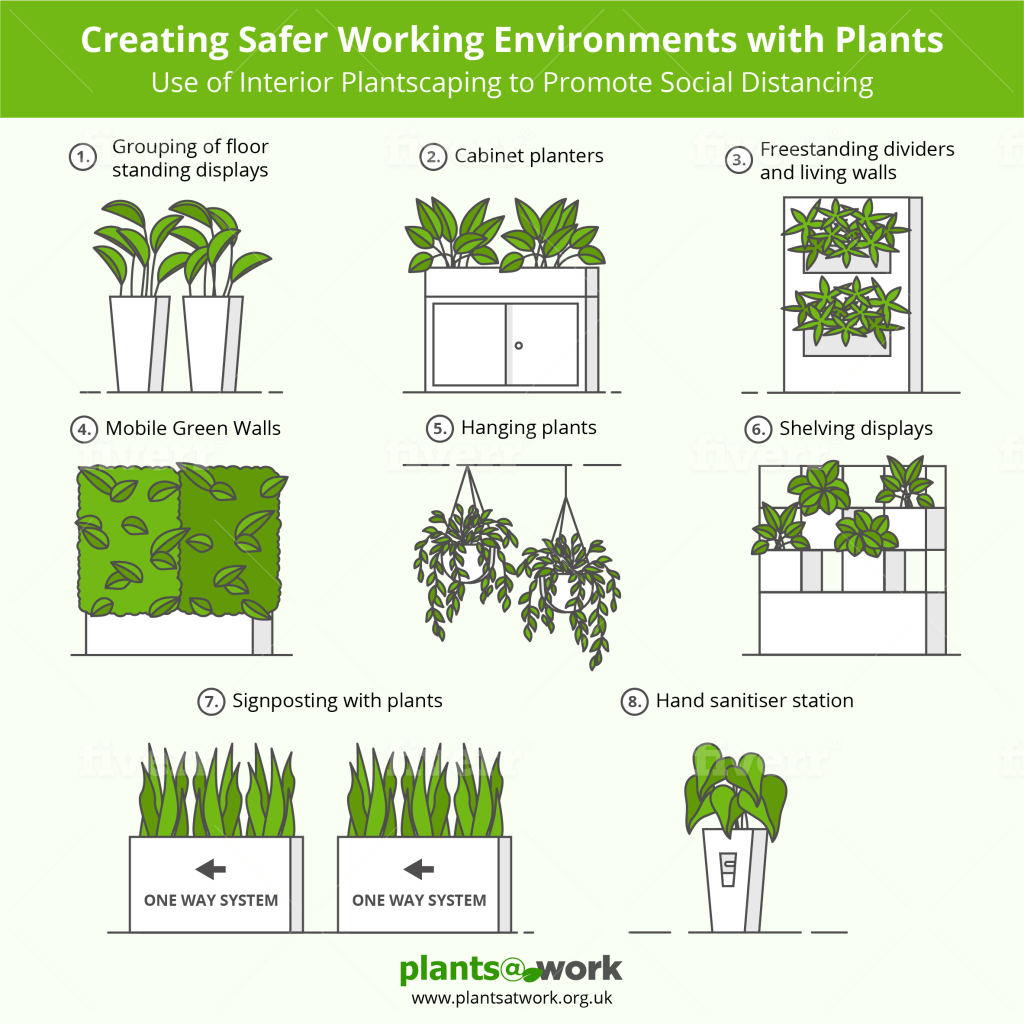
Graphic by Plants@Work – the UK trade association for interior landscapers
Already, interior designers and architects are producing their visions of the new normal office. Many solutions seem to revolve around an adaptation of conventional open plan spaces with designated empty desks and plastic screens to facilitate physical isolation. Some designers are a little more imaginative than others and have started investigating how people can be safely separated with items such as plant displays and green dividers comprising of moss, live plants or even replica foliage. These are, on the face of it, attractive options.
The most imaginative of all are re-thinking the way that offices are going to work. After months of homeworking, most people have found that they can do their work pretty well from home, or at least can manage without missing the office too much. Work habits have changed and people are finding ways to adapt to remote working. The traditional corporate office environment has been shown, by and large, to be unnecessary.
Those organizations with the imagination to grasp the opportunity to create better office environments, rather than rush to adapting what already exists, may look to the types of environment typified by co-working spaces and serviced offices. Such places often resemble hotel lobbies and coffee shops, but also with a wide variety of working spaces to accommodate any type of activity. Such places are designed to get specific types of work done, rather than be a place to go to work.
The new office might be fitted out with better furniture, art and plants. They won’t be designed for dense occupation, but will enable physical distancing, and they will be adaptable to a time when such extreme distancing is no-longer needed.
In part two of this article, I’m going to look at some practical considerations for plantscapers. But if you can’t wait, do get in touch and we can talk about some ideas.





















 Kenneth Freeman | Purposeful Places