Houseplants and interior landscaping plants – what’s the difference?

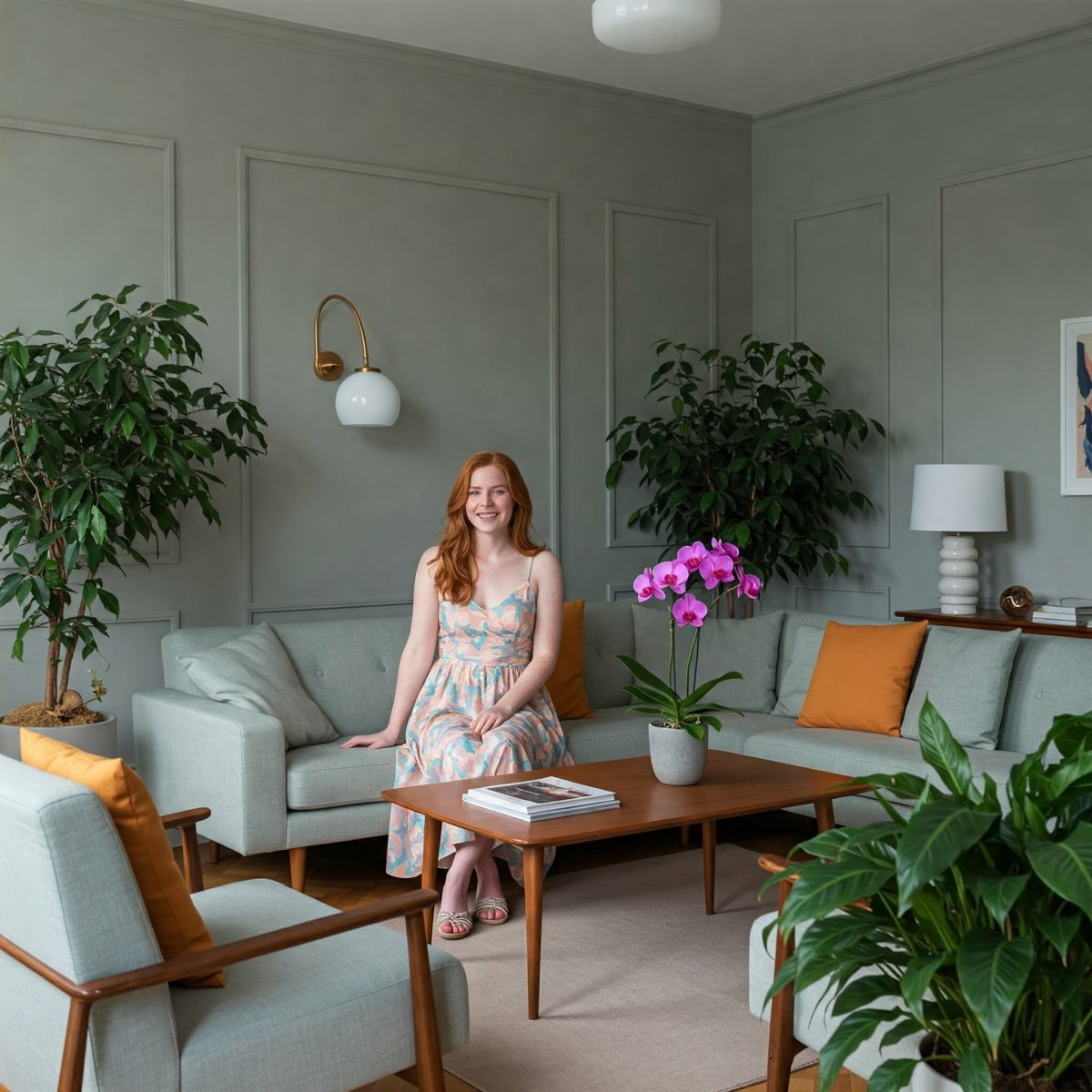
Image of a young woman in a contemporary domestic living room surrounded by houseplants.  Image generated by Bard Imagen ai

Are you a new or aspiring interior landscaping designer? Have you been inspired by the multitude of houseplant influencers that have been promoting the benefits of indoor greenery? Perhaps you are a houseplant enthusiast or influencer and you fancy a new career in commercial interior landscaping. Well, there are some fantastic career opportunities (and I’d be happy to put you in touch with good companies – get in touch). Maybe you run one of the new mail order houseplant companies that has dipped its toes into corporate horticulture. Are you wondering how to do it profitably?

If any of those apply to you, read on. Be prepared for some preconceptions to be challenged.

Read on even they don’t apply – I think you will find the rest of the article interesting anyway.

What has changed?

Over the last few years (pretty much since the end of the pandemic and the drive to get people back into offices), the interior landscaping industry has experienced something of a boom. A lot of interior designers are specifying plants and other elements of biophilic design, which is very welcome. However, many of these designs are clearly inspired by domestic interior design trends and Pinterest boards.

Last week (and not for the first time), I was asked whether the plants suggested by an interior architect would be suitable for an office. I’m afraid the answer was no.

Despite the drive for making offices more welcoming and home-like, using fashionable houseplants in the workplace can pose challenges for the interior landscaper.

Interior designer working on an office design that features plants.  AI-generated image by Bard Imagen 3

All indoor plants have to be adaptable to low light and lack of seasonal variation. Interior landscape plants also have to cope with being in a more hostile environment. Office plants often have to contend with a dry atmosphere, irregular lighting (due to motion sensors), care on a three-weekly service cycle and possible abuse (usually accidental, occasionally malicious) by the users of a building.

On the other hand, houseplants – even if not watered or fed very often – are usually checked quite frequently. Houseplants can be moved around to take advantage of changing environments, treated for pests as soon as they appear, and are looked after as valued members of the household.

All interior landscaping plants will make good houseplants (assuming you have the space and the right environmental conditions). Not all houseplants are suitable for a commercial interior.

Why is that?
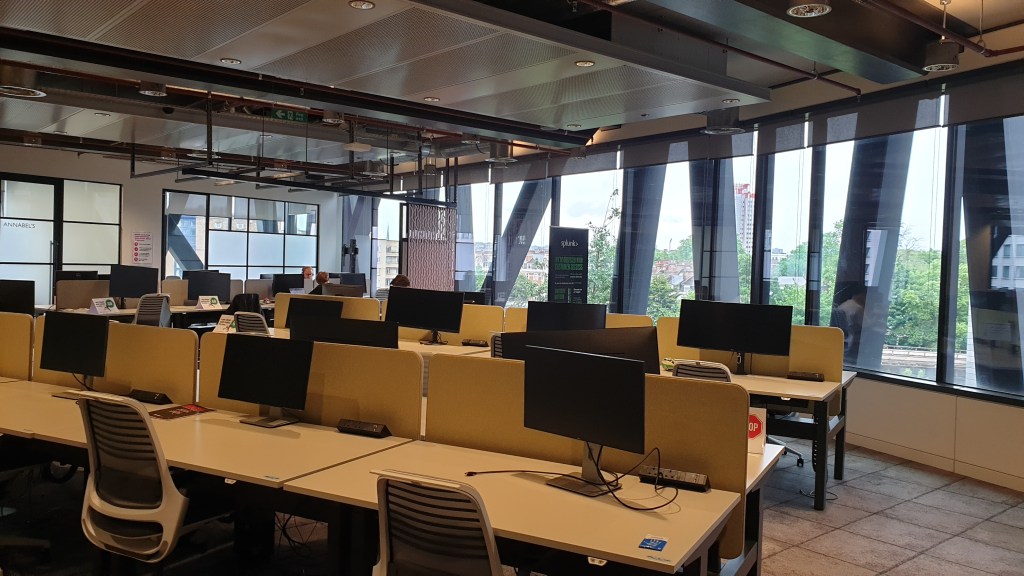
Inside of a modern office building in London.  Image taken by the author.
This is not a house!

Offices and rainforests have a lot in common. The natural origins of indoor plants

There are over a quarter of a million species of flowering plants alive on Earth. About 500 or so will live as houseplants, but interior landscapers tend to use only a fraction of that number.

Understanding something about the natural origins of interior plants will help with the design and specification of successful and resilient planting schemes. It is important for a designer to know about plants’ environmental needs and how they interact with the indoor environment.

The range of plants interior landscapers use comes, broadly, from three distinct climate types. these are the:

  • Rainforests (tropical and subtropical). About 75% of interior plant species have their natural origins there,
  • Semi-arid areas (deserts and semi-deserts), which account for about 20% of interior plant species (including succulents and spiky plants), and
  • Mediterranean climate zones. These include not just the area around the Mediterranean Sea, but also areas with a similar environment, such as California, South Africa (The Cape) and parts of Japan, Taiwan, Chile, Australia and New Zealand (generally at altitude).

The rainforests and semi-arid regions are characterized by very little seasonal variation. This means that plants from these areas are well adapted to interior conditions. Most workplaces have pretty constant conditions all the year round – just like a jungle. The only difference is that instead of lots of rain, the plants are watered by experienced horticultural technicians.

Northern Queensland rainforest, Australia. Image taken by the author
Tropical rainforest in Northern Queensland, Australia
(image by the author)

The differences between a houseplant and an interior landscape plant

A lot of popular houseplants are easy to care for, as long as you don’t mind checking them every few days. They are often quite fast growing and also quite short-lived – although you can often take cuttings. Several species benefit from being moved around the house according to the season and availability of light. They are often quite happy on a windowsill (especially if the house is unoccupied during the day and window light is all they get). Furthermore, dealing with an occasional pest is quite easy – especially if you catch them quickly and can take the necessary time to nurture your plant back to health.

Houseplants are often grown to a different quality standard to those destined for the interior landscaping market. Root systems are often weaker and they have been grown on a nursery to promote lots of lush foliage. This makes them very appealing in a garden centre or DIY store. The retailer isn’t fussed if the plant doesn’t live too long. Most people assume that their dying houseplant is down to their own lack of green fingers. Houseplants are often quite small too, but if you are green fingered, they can be allowed to grow quite big.
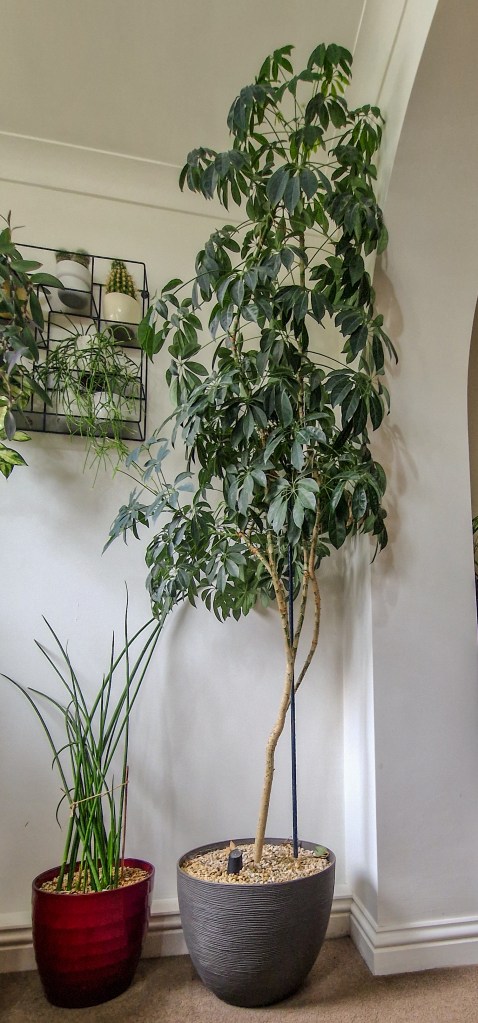
Schefflera arboricola.  13 years ago, this was a cheap plant from a DIY store in a 15cm pot.  Image by the author.
13 years ago, this was a cheap plant in a 15cm pot, which I bought from a DIY store. Now it is well over 2m in height and still growing.

However, if you are a commercial interior landscaper, you need proven, resilient plants. These must be capable of surviving for several years in the hostile environment of an office. They have to be resistant to pests, they shouldn’t grow too quickly and they should be long lived. You also need them to thrive between service visits – and these could be three weeks apart (or more). You also need to use a different set of horticultural techniques, substrates and a different way of setting up the plant displays.

Where to learn more

If you would like more information about indoor plants, have a rummage around this blog. There are lots of posts, and more to come, about indoor greenery.

If you would like advice or training on interior landscaping, get in touch or join my mailing list (see below). You can also find out more about my services and training courses here.

Processing…
Success! You're on the list.

Cabinet-top planters: think of them as horizontal green walls

Cabinet-top planting
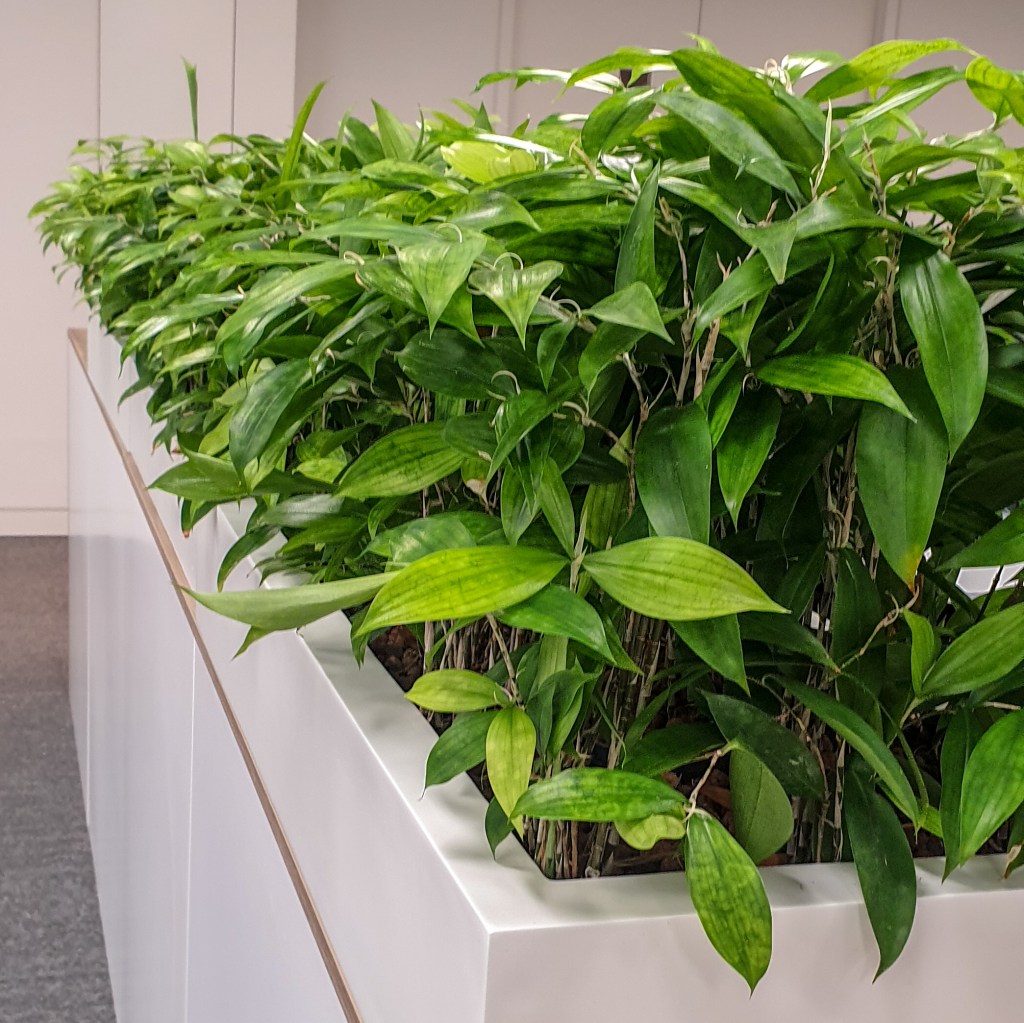
Shallow planter mounted on the top of office furniture

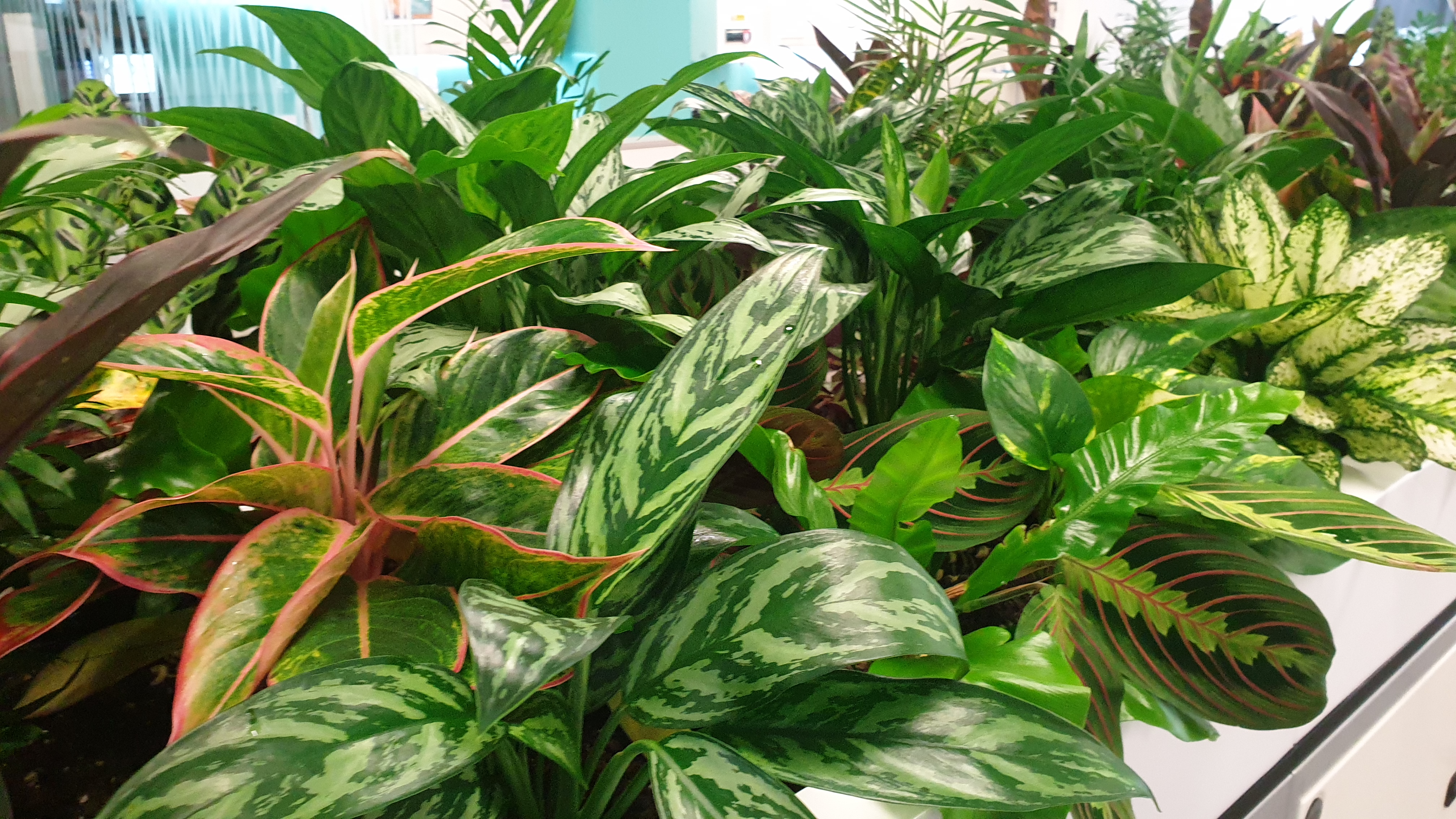
Over the last few years, office designers have specified cabinet-top planters (sometimes called furniture-based planters). They are rectangular troughs that are designed to hold several small plants – often a mixture of species.

These planters are often, they are rather shallow: 150mm to 200mm depth is quite common. They can look great, but they can also have some issues – especially if you have to maintain the plants in them.

I have seen increasing numbers of this type of planting not looking their best after a relatively short time. Sometimes, this is down to having a mix of plants that are incompatible with each other. (I have a training course about that, by the way – please get in touch). However, more often, it seems to be because the planters are very shallow. Office furniture designers – get in touch with a horticulturist (me, for example) before you design your planters. Some of your work is very sub-optimal. Why do you think 150mm depth is adequate?

Most of these planters take large numbers of small plants in a relatively small volume of growing medium. As a result, they tend get through water quite quickly. Because they are quite high (often above shoulder height), they are also tricky to water and groom.

Vulcaponics can work very well with furniture-based planters, but even they can struggle when the planter is especially shallow.

Most commercial interior landscaping companies have a service cycle of two weeks or more (three weeks is common in Europe). This is fine for larger, solo plants displayed in decent-sized planters. Three or even four week watering intervals are no problem, but this is a stretch for such small plants.

It strikes me that the best way to think of these planters is as a horizontal green wall. Green walls have large volumes of small plants in a relatively small space. They work because the watering element of plant care is managed by having an irrigation system, or hydroponic set-up.

Shallow cabinet-top planter with hydro-culture plants
Shallow cabinet-top planter set up with hydro-culture plants
Image by the author

Interior landscapers: you have options

First, you can shorten your service cycles. This will work, but will be costly. It might make planning of service schedules quite difficult if you have a mix of 2-week and 3-week cycles.

Second, try using more succulents and other low-water plants. This will also work, but you will need to check to make sure the light levels are high enough.

Next, do nothing but make sure you price in much higher plant replacement costs.

Finally, consider using hydro-culture for this type of plant display. This will enable you to stretch your service intervals back to three weeks. You will also solve many of the plant incompatibility issues that would arise from the species having different water requirements when grown in compost. This is the closest to a green wall in terms of care and maintenance.

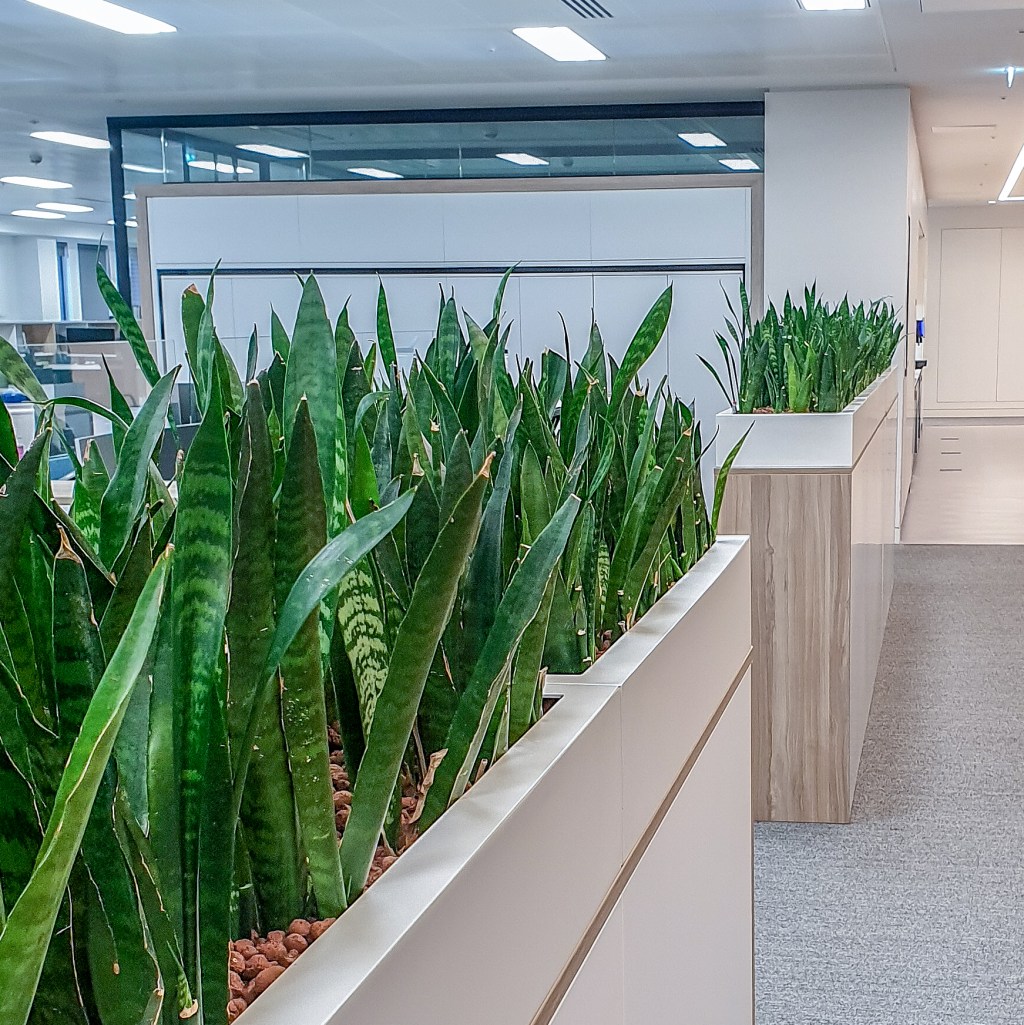
Sansevieria plants in shallow troughs

Get in touch for advice, training or consultancy, whether you are an interior landscaper, designer or furniture supplier – I can help you get it right. Please also sign up to get my emails about my services and training programmes.

Processing…
Success! You're on the list.

Autumn challenges for your houseplants

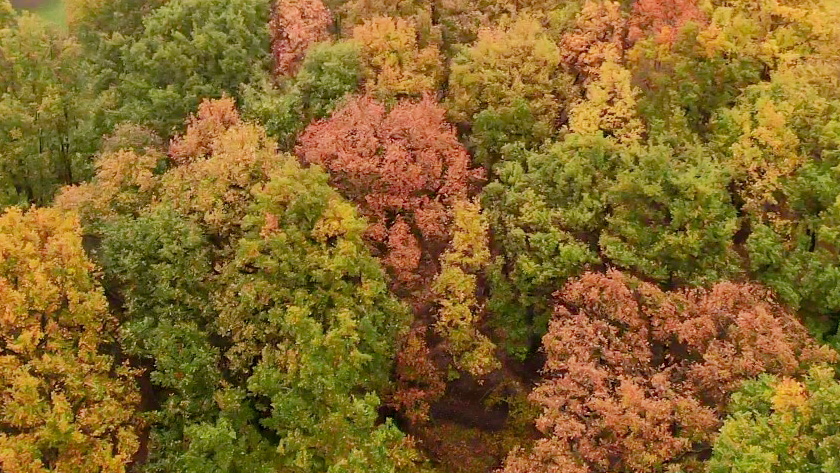
woodland in autumn, showing shades of green, red, orange and brown

Last week, we passed the autumn equinox. The day when we enter a period of more night time than daylight. More people are also working away from home as employers are trying hard to encourage their staff back to the office. With this in mind, please spare a thought for your houseplants.

Lights on in the home

Offices are getting busier and more people are spending their working hours away from home.
We are also entering autumn. This means a lot less daylight, as a result of shorter days, less intense sunlight and far fewer hours of daylight.

It also means that the lights at home are off. On a dull day in an unlit house, light levels may be very low only a short distance from the windows. For houseplants, this can be tricky – they need light to photosynthesize, so prolonged darkness can cause problems. However, there are ways to minimize those potential issues.

By the windows

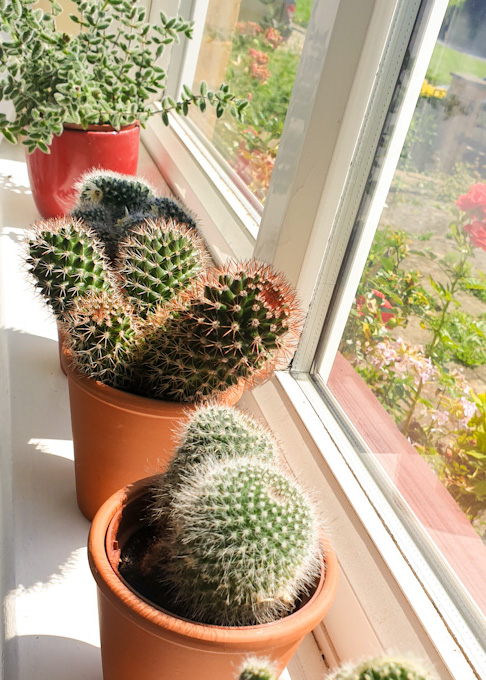
cacti on a windowsill
Cacti on a windowsill

If you haven’t already filled every available gap on your window sills with plants, now is the time to move some of your smaller plants a bit closer. Those that are sensitive to direct light (even at this time of year) such as Calatheas and Alocasias can go on north-facing window sills.

If you have a conservatory, and some room, some of your other plants might welcome a change of scene. Again, be aware that some species might not appreciate direct light, and watch out for cooler nighttime temperatures.

Many species, especially those with their natural origins in the undergrowth of a tropical rainforest, will be able to cope with the lower light levels quite easily without needing to be moved and without the need for additional lighting.

Plant by a window
Plant by a window

Be smart with your lighting

A lot of people have embraced smart technology and can control much of their home through an app or smart speaker (such as an Amazon Alexa or Google Home device). Smart lighting is one way of giving your houseplants a light boost, and as many lights use very little energy, they won’t add too much to your energy bills (and may save the cost of replacing some plants). A few extra hours of lighting whilst you are away from the home can easily be programmed, and you can also programme your lights to be on when you get home. Having your lights turn on and off throughout the day can also be a useful security benefit.

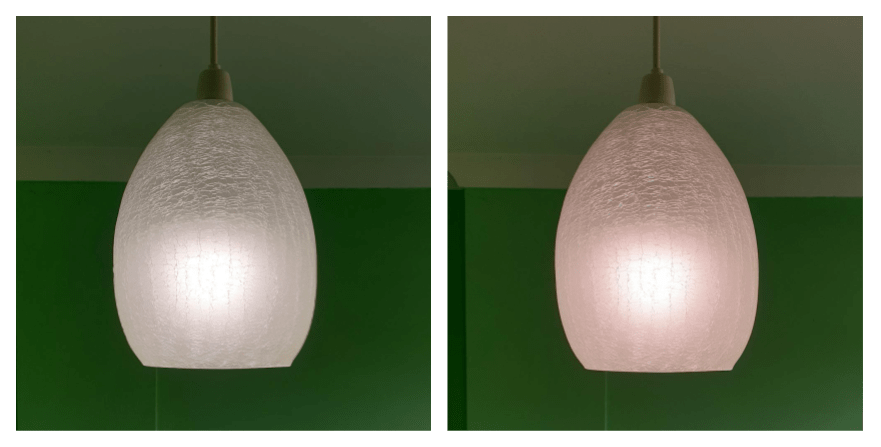
If your smart bulbs have different light quality settings, use daylight (sometimes called cool white) at the highest brightness during the day, and then change to a more comfortable warm white when you get home. You probably won’t need the lights to be on all of the time, but some species that do best in higher light conditions might benefit.

Comparison between daylight (l) and warm white (r) light from a programmable smart bulb

Cut back on water and feed

If you are spending more time away from the home, the chances are that as well as light being diminished, your home might be a little cooler as well: there is no need for the central heating if no-one is home.

If that is the case, your plants will be metabolizing a little slower, so they won’t be needing as much fertilizer and water as usual.

Always be guided by your plant – water according to the plant’s needs, not to a timetable. You can probably do without fertilizer until the spring as well.

If you have your houseplants potted in coir pots or set up with vulcaponics, that will certainly help regulate the water given to the plant. Adding water to the decorative pot and allowing it to soak gradually through the coir pot is an ideal way of managing the amount of water in the soil, reducing the risk of the roots becoming saturated.

Don’t worry

Most houseplants have their natural origins in the tropics and sub-tropics, where there isn’t much in the way of seasonal variation, much like inside a building. This is the main reason why native species of plants cannot cope with the indoor environment – they need seasonal variation to trigger different processes, such as flowering time or leaf drop.

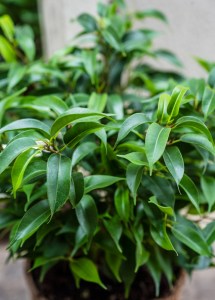
However, when there is a seasonal change, some tropical houseplants will respond and you might notice more in the way of leaf drop than usual, especially on plants such as Ficus benjamina and other small-leaved tree species. Unlike temperate trees that tend to drop their leaves in the autumn, tropical species drop leaves continuously as they grow old, but you might find that if light and temperature levels do fall, they might drop more leaves as a result.

If this happens, don’t be alarmed (unless they drop all of their leaves). They will start producing a lot more foliage in the spring.

Ficus ‘Green Kinky’

Houseplants are pretty resilient. Breeders and growers have selected species and varieties over time to ensure that they can cope with the indoor environment. Working from home has probably given many houseplants a bit of a boost, but they will adapt to emptier, darker homes quite quickly.