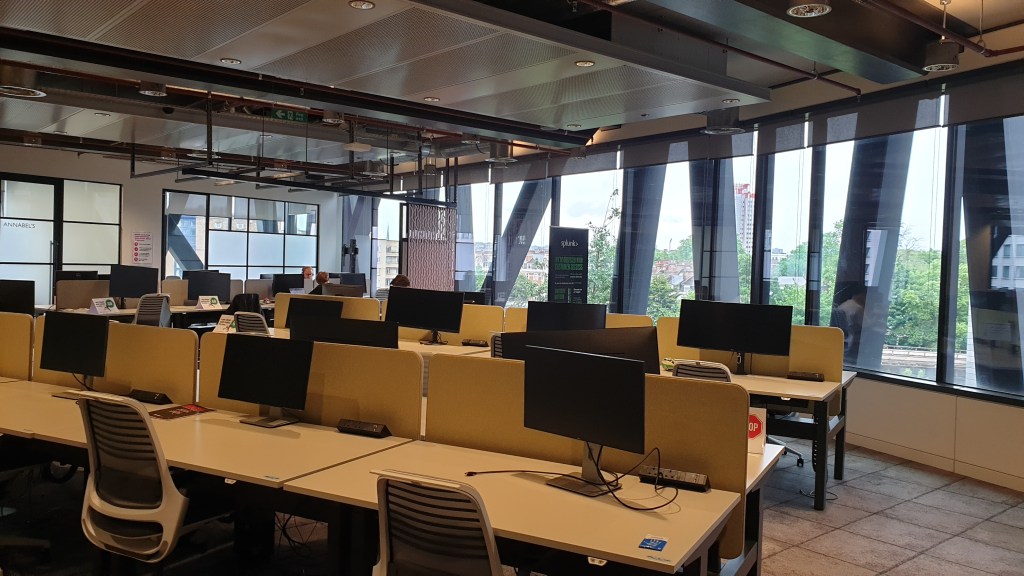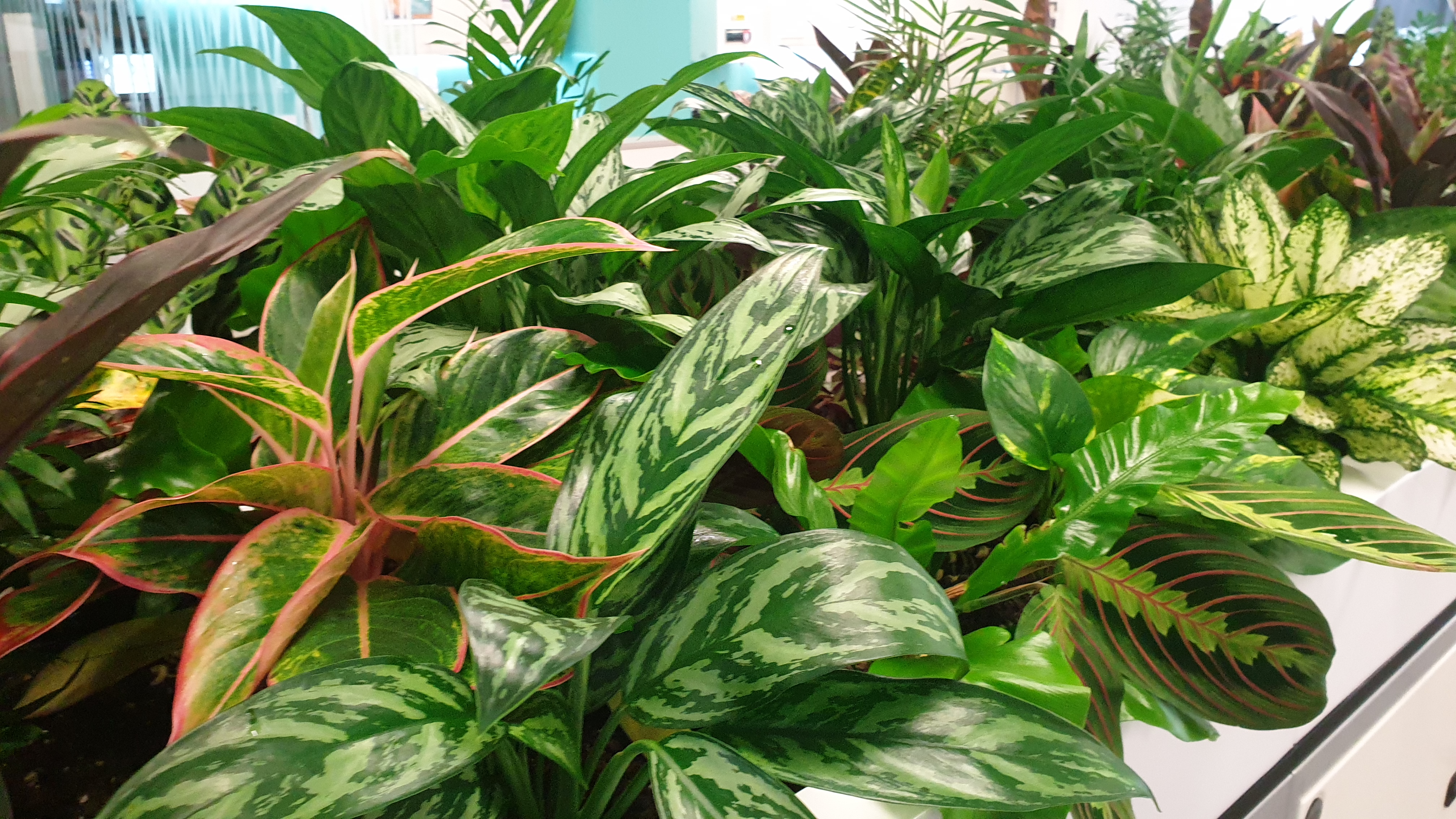
The interior landscaping industry is doing very well at the moment. This is a good thing as it keeps me and my colleagues in work.
The demand for greenery in, on and around buildings remains strong. Architects, designers and facilities managers are planning their spaces to fully integrate plants into their designs.
The justification for all of this very welcome plant life is to improve wellbeing and make the office more welcoming. Employers are keen to attract and retain staff (those Glassdoor ratings aren’t going to write themselves). Commercial real estate firms need to get people through the doors in order to justify the existence of their cathedrals of capitalism. It doesn’t take too long before ‘biophilic design’ is mentioned.
I have written before about why just putting plants in buildings is not the same as biophilic design. I am increasingly worried that the phrase has gone beyond being a synonym for office plants and are now weasel words that are losing all meaning. However, that is not the purpose of this article.
Sense of connection
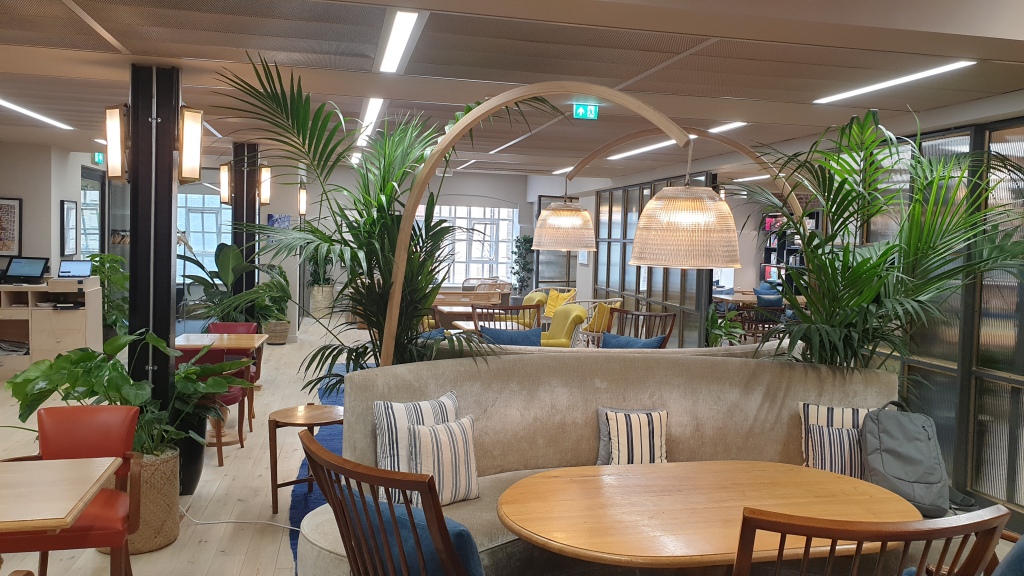
Biophilic design should be about creating a sense of reconnecting with our natural environment. Zoos design their animal enclosures to be as much like the natural environment of the animals as possible. This helps them to live as well as possible given their captive state. The human animal also thrives in naturalistic environments, but the modern office is nowhere near getting there.
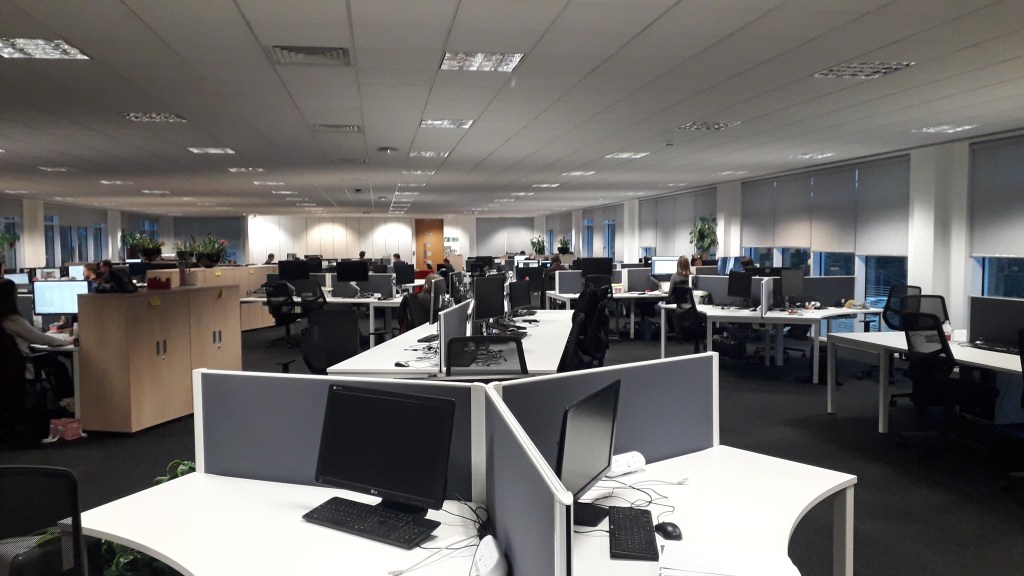
I understand that buildings are easier to construct with lots of straight lines and right angles – and that’s fine. But the spaces inside don’t have to be like that.
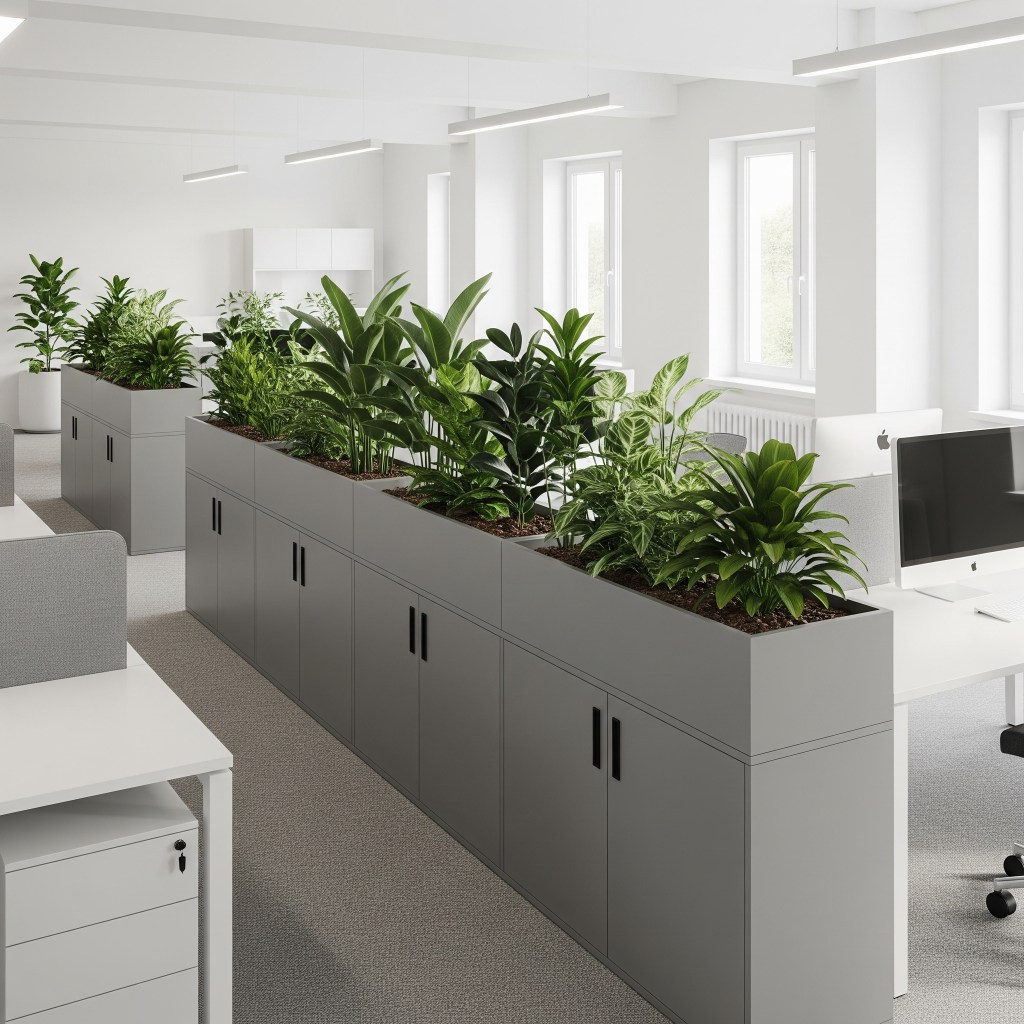
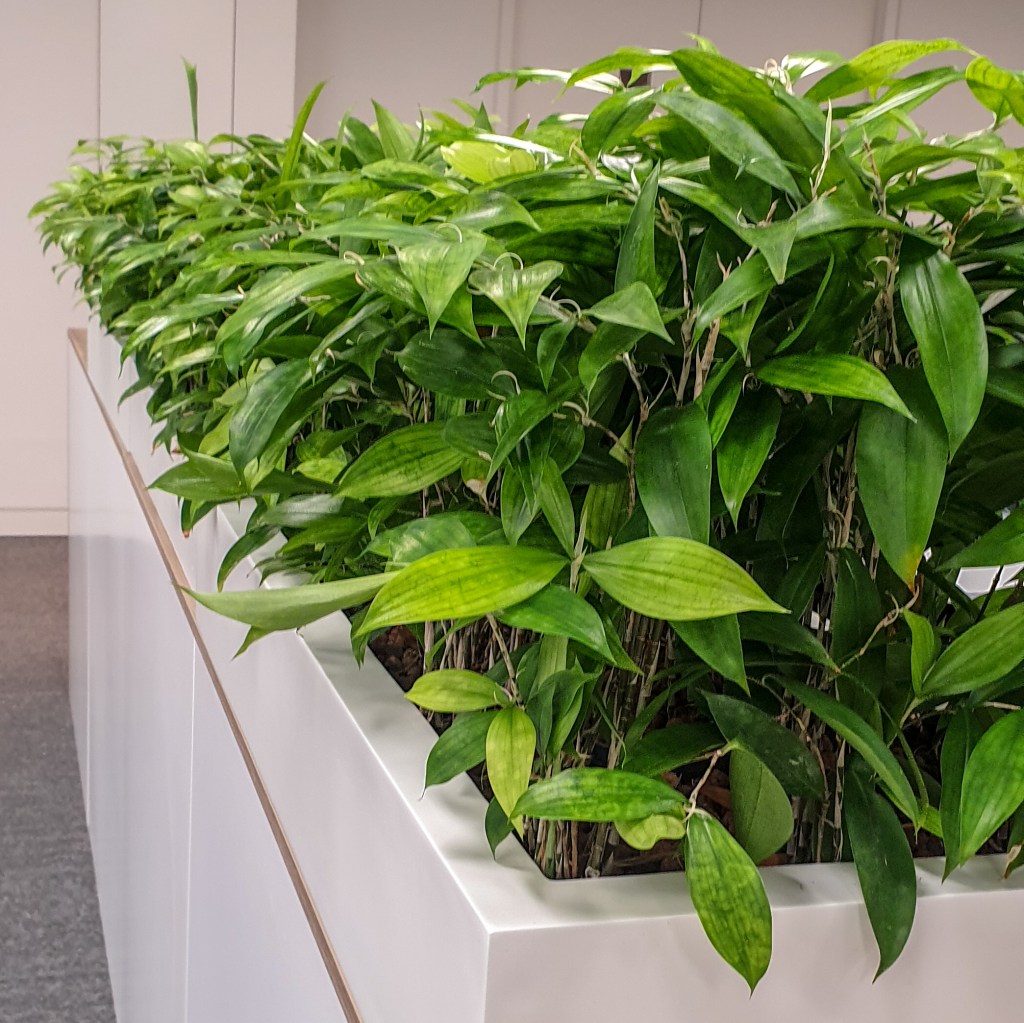
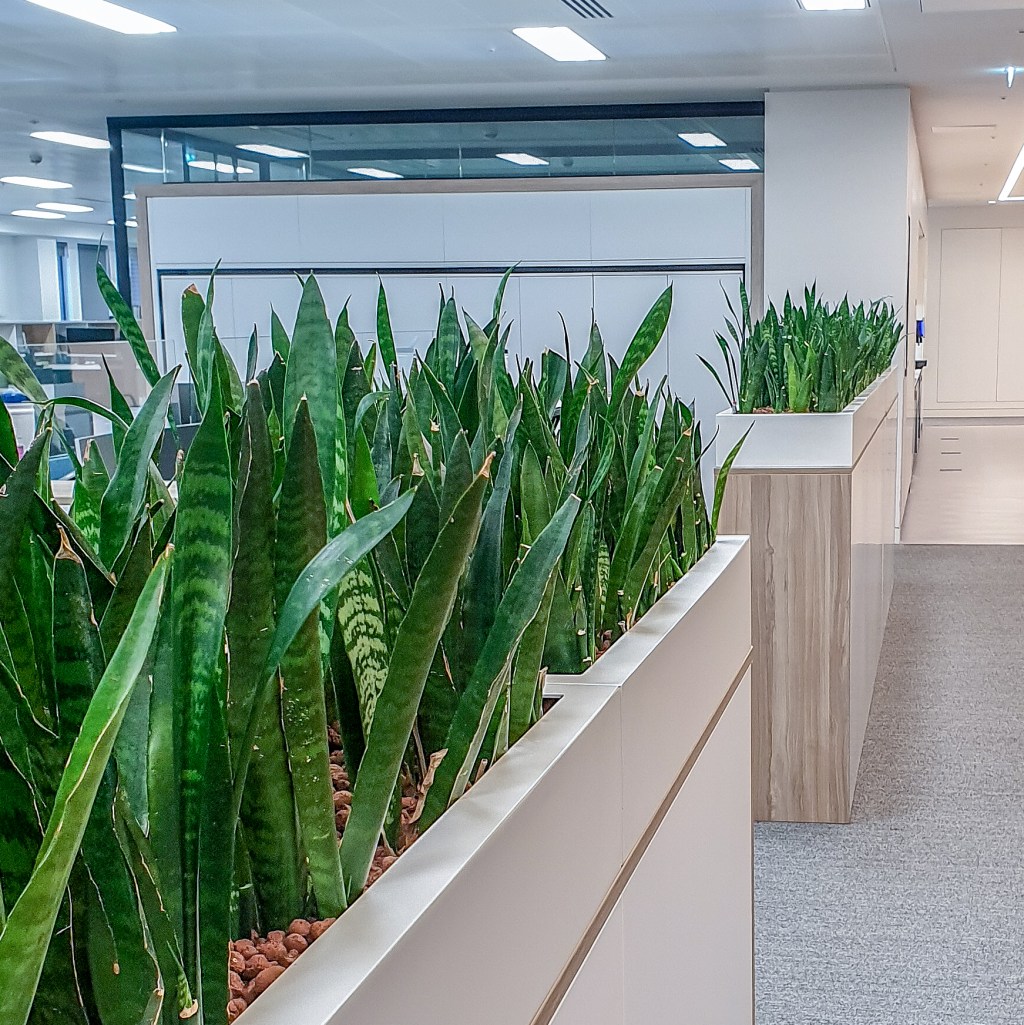
The trend of the moment is cabinet-top (furniture-based) planting. I have written about the practical issues of this style of planting, so won’t go over those again. You can read about my gripes here and here.
No, the problem I wish to address here is how such planting reinforces straight lines and right angles, making the spaces even more artificial.
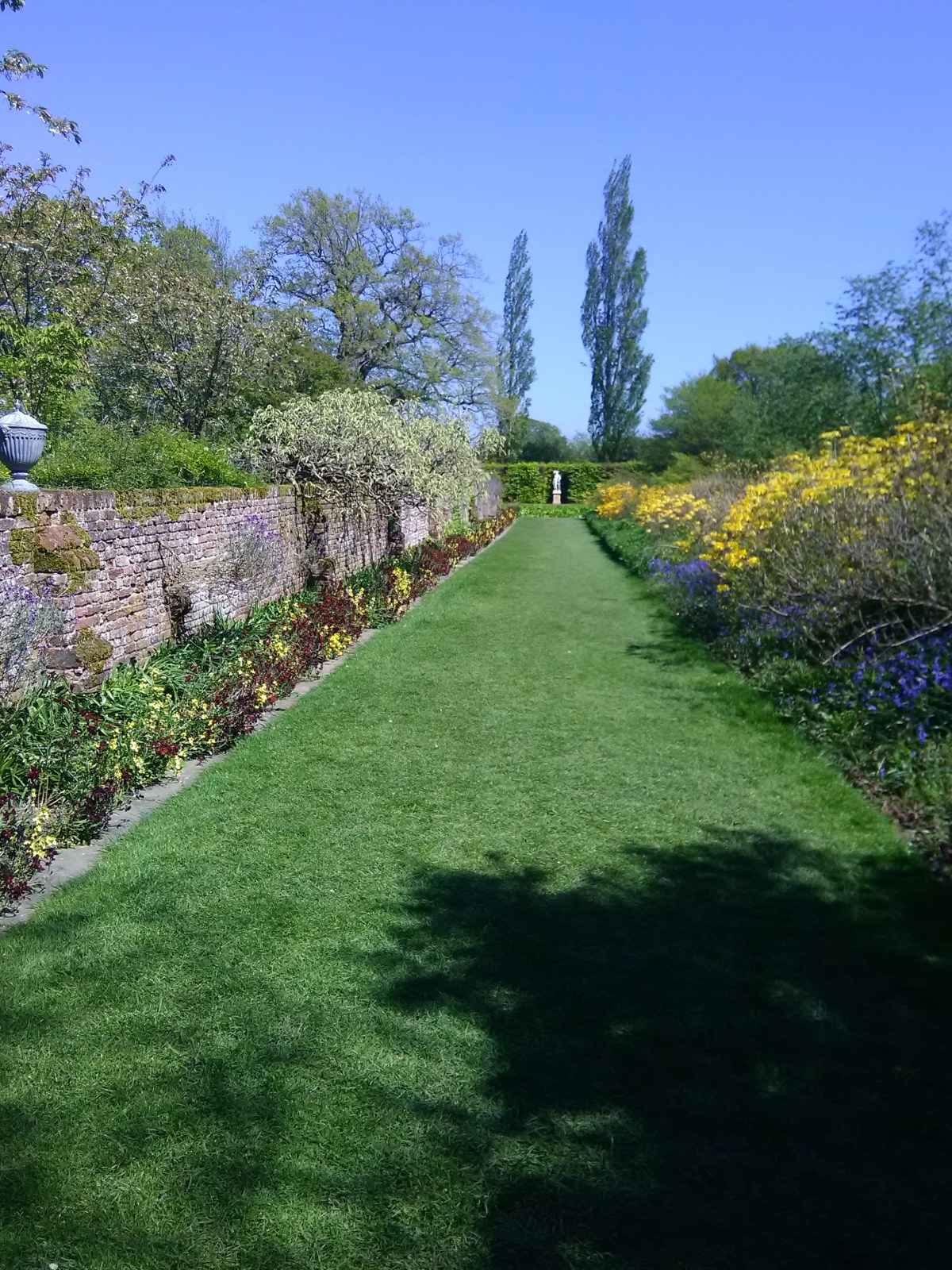
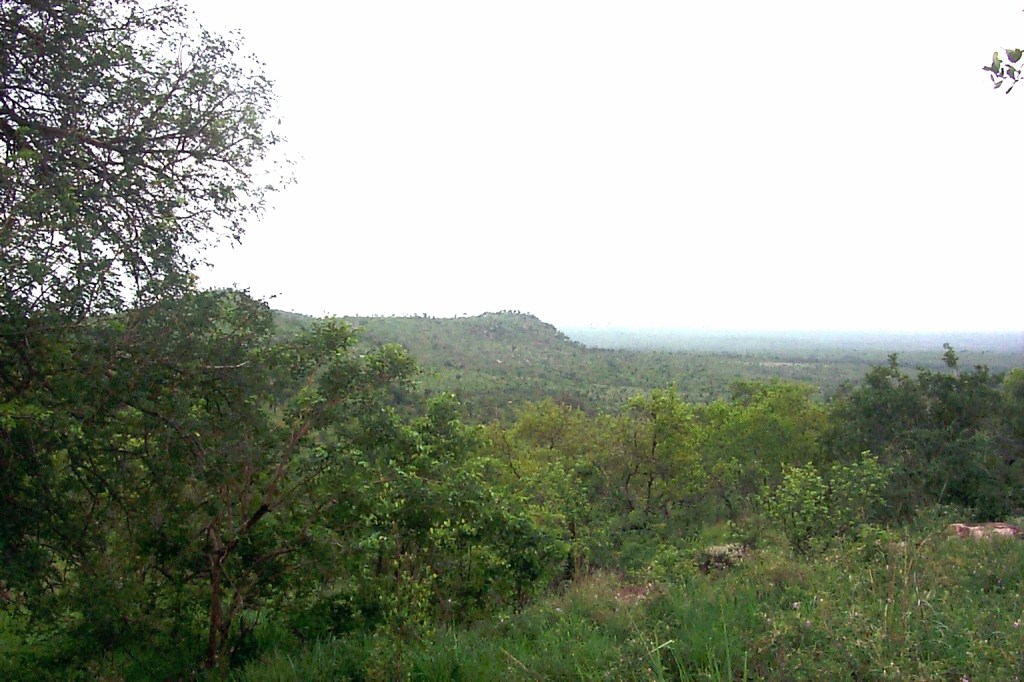
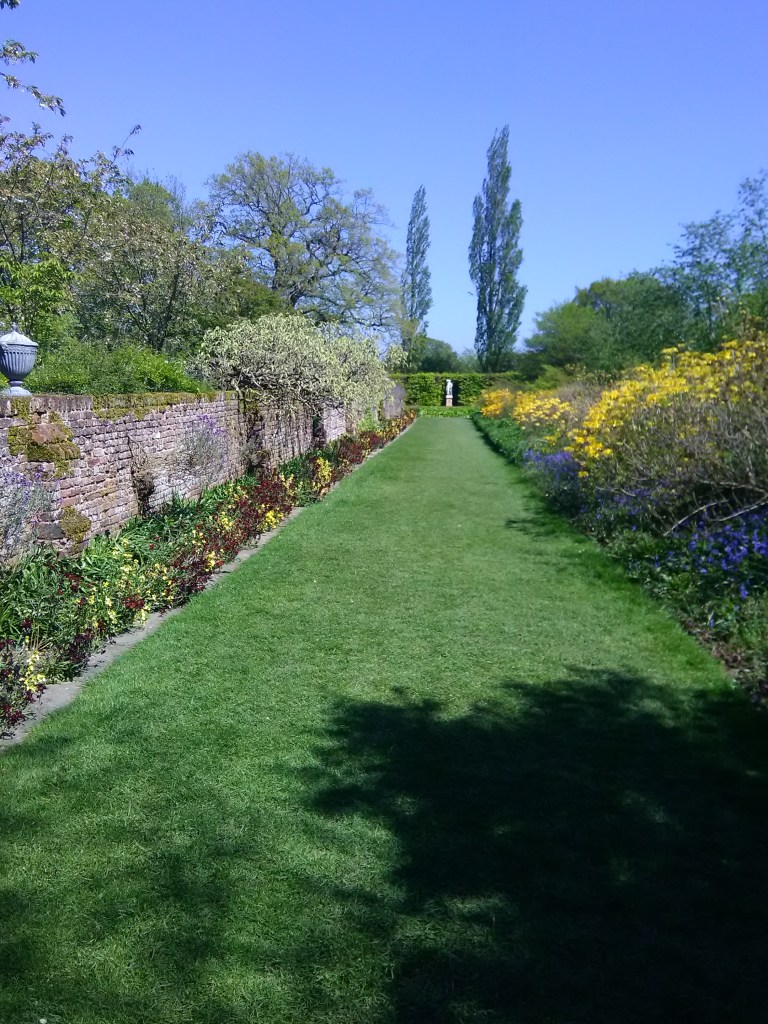
Nature is pretty random. There are curves and undulations. Vegetation is clustered, scattered and varied. Sometimes you can see over long distances, other times, there are mysteries to explore. There are wide-open spaces as well as sheltered spots. All of this can be alluded to in an office, but so rarely is.
Ticking boxes
Interior landscapers are often presented with a set of floor plans with the furniture already specified. These frequently include cabinet-top planters (which are often far too shallow, but that’s a different issue). The layout is fixed. The interior landscaper’s creativity has been hobbled and the inevitable consequences are hedgerows and plantations.
These hedges and plantations allow boxes to be ticked. Vegetation is visible from the majority of workstations, even though it is uniform. Surfaces are free from clutter and circulation routes are well defined. You might even get a certificate to show how healthy your building is.
But, without the variation that could be introduced, that would bring a sense of connection with the outside world, that could draw the eye away from the screen – even if only for a few seconds – are these spaces really biophilic?
Be braver
Embrace the irregularity of nature. If even it isn’t as space-efficient, you might find that the benefits, in terms of wellbeing and performance, more than outweigh the cost of the odd curve here and there. If you need some help with that – take a look at my services page and get in touch.
Are you a new or aspiring interior landscaping designer? Have you been inspired by the multitude of houseplant influencers that have been promoting the benefits of indoor greenery? Perhaps you are a houseplant enthusiast or influencer and you fancy a new career in commercial interior landscaping. Well, there are some fantastic career opportunities (and I’d be happy to put you in touch with good companies – get in touch). Maybe you run one of the new mail order houseplant companies that has dipped its toes into corporate horticulture. Are you wondering how to do it profitably?
If any of those apply to you, read on. Be prepared for some preconceptions to be challenged.
Read on even they don’t apply – I think you will find the rest of the article interesting anyway.
What has changed?
Over the last few years (pretty much since the end of the pandemic and the drive to get people back into offices), the interior landscaping industry has experienced something of a boom. A lot of interior designers are specifying plants and other elements of biophilic design, which is very welcome. However, many of these designs are clearly inspired by domestic interior design trends and Pinterest boards.
Last week (and not for the first time), I was asked whether the plants suggested by an interior architect would be suitable for an office. I’m afraid the answer was no.
Despite the drive for making offices more welcoming and home-like, using fashionable houseplants in the workplace can pose challenges for the interior landscaper.
All indoor plants have to be adaptable to low light and lack of seasonal variation. Interior landscape plants also have to cope with being in a more hostile environment. Office plants often have to contend with a dry atmosphere, irregular lighting (due to motion sensors), care on a three-weekly service cycle and possible abuse (usually accidental, occasionally malicious) by the users of a building.
On the other hand, houseplants – even if not watered or fed very often – are usually checked quite frequently. Houseplants can be moved around to take advantage of changing environments, treated for pests as soon as they appear, and are looked after as valued members of the household.
All interior landscaping plants will make good houseplants (assuming you have the space and the right environmental conditions). Not all houseplants are suitable for a commercial interior.
Why is that?
This is not a house!
Offices and rainforests have a lot in common. The natural origins of indoor plants
There are over a quarter of a million species of flowering plants alive on Earth. About 500 or so will live as houseplants, but interior landscapers tend to use only a fraction of that number.
Understanding something about the natural origins of interior plants will help with the design and specification of successful and resilient planting schemes. It is important for a designer to know about plants’ environmental needs and how they interact with the indoor environment.
The range of plants interior landscapers use comes, broadly, from three distinct climate types. these are the:
Rainforests (tropical and subtropical). About 75% of interior plant species have their natural origins there,
Semi-arid areas (deserts and semi-deserts), which account for about 20% of interior plant species (including succulents and spiky plants), and
Mediterranean climate zones. These include not just the area around the Mediterranean Sea, but also areas with a similar environment, such as California, South Africa (The Cape) and parts of Japan, Taiwan, Chile, Australia and New Zealand (generally at altitude).
The rainforests and semi-arid regions are characterized by very little seasonal variation. This means that plants from these areas are well adapted to interior conditions. Most workplaces have pretty constant conditions all the year round – just like a jungle. The only difference is that instead of lots of rain, the plants are watered by experienced horticultural technicians.
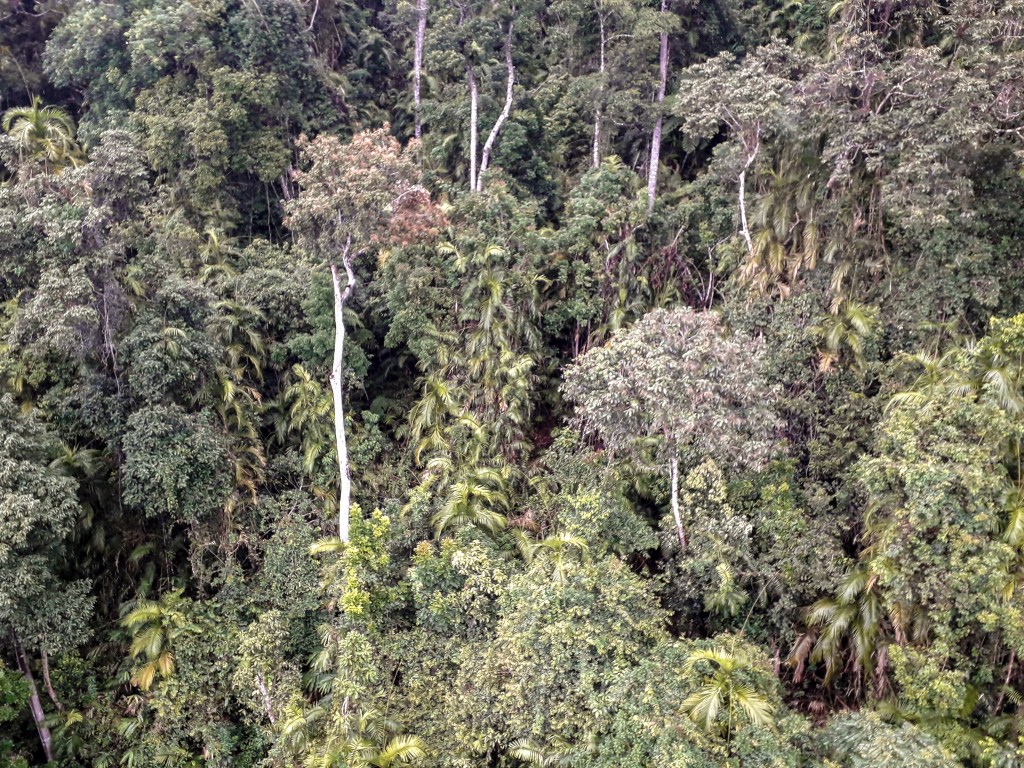
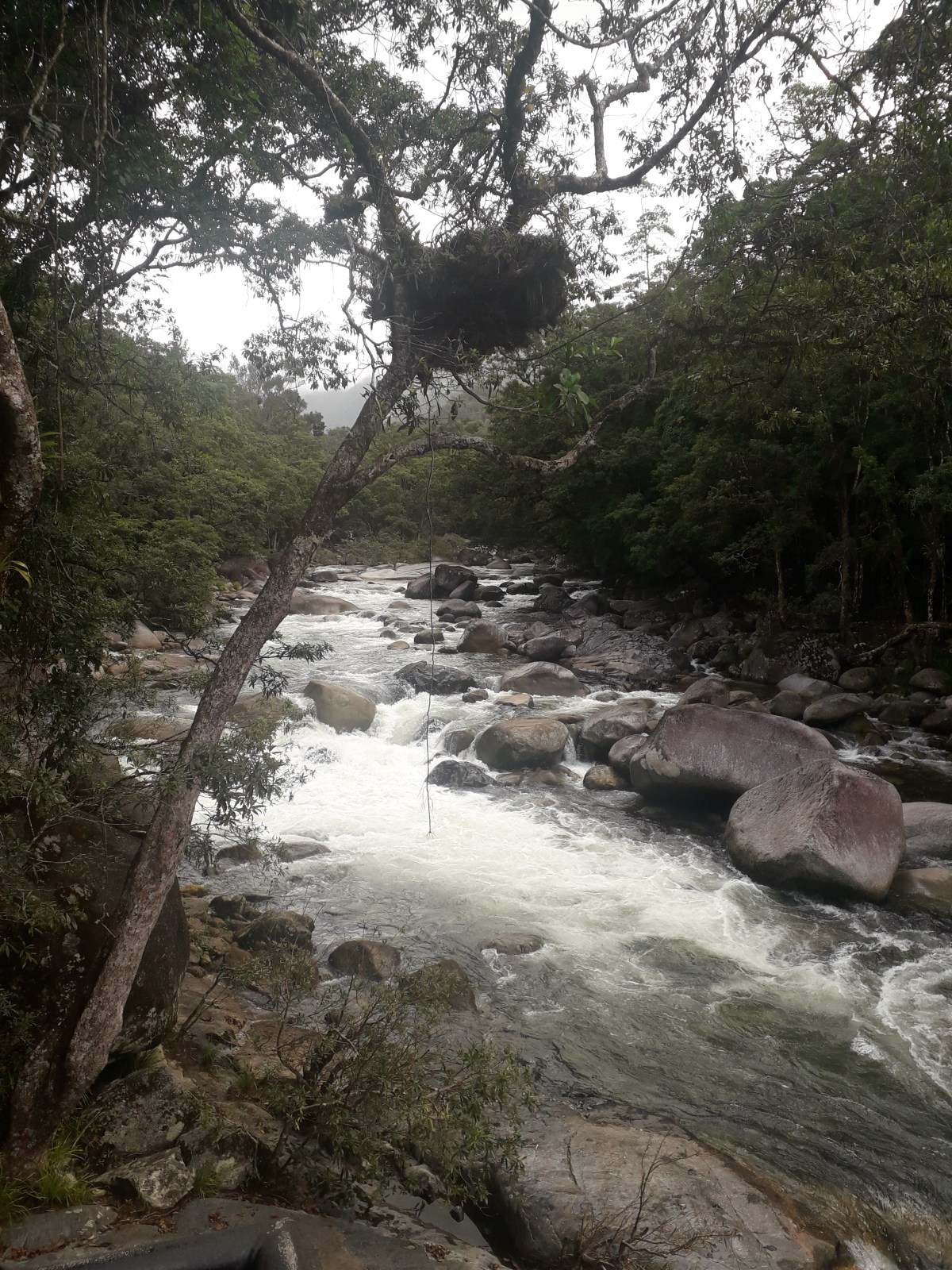
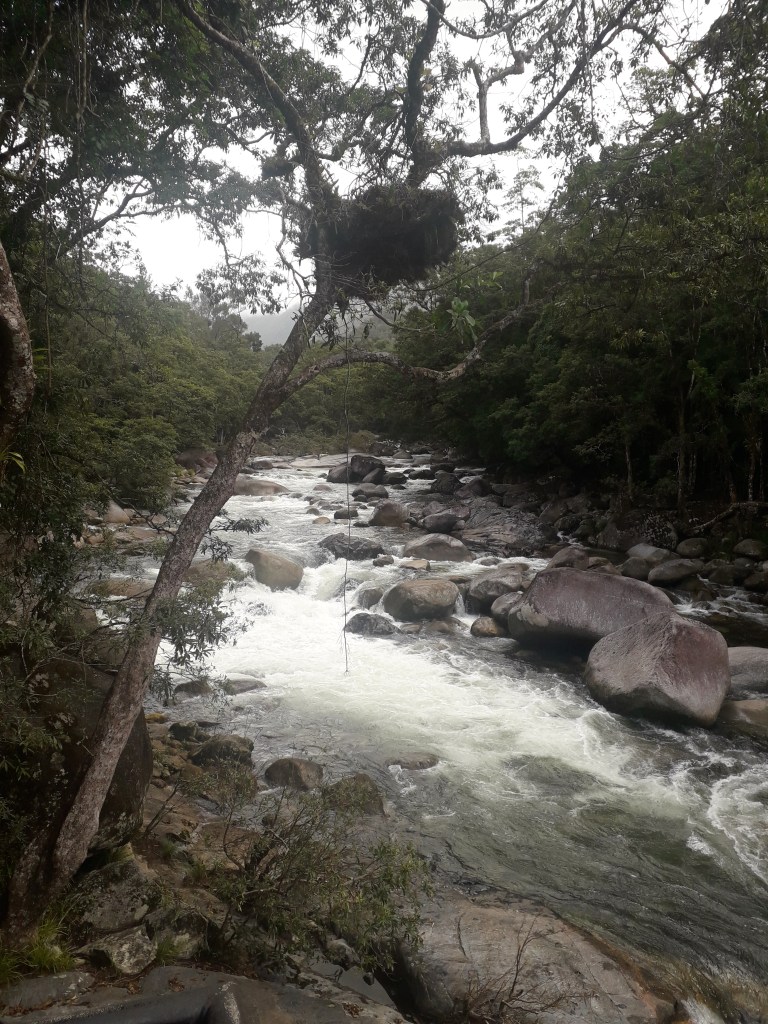
Tropical rainforest in Northern Queensland, Australia (image by the author)
The differences between a houseplant and an interior landscape plant
A lot of popular houseplants are easy to care for, as long as you don’t mind checking them every few days. They are often quite fast growing and also quite short-lived – although you can often take cuttings. Several species benefit from being moved around the house according to the season and availability of light. They are often quite happy on a windowsill (especially if the house is unoccupied during the day and window light is all they get). Furthermore, dealing with an occasional pest is quite easy – especially if you catch them quickly and can take the necessary time to nurture your plant back to health.
Houseplants are often grown to a different quality standard to those destined for the interior landscaping market. Root systems are often weaker and they have been grown on a nursery to promote lots of lush foliage. This makes them very appealing in a garden centre or DIY store. The retailer isn’t fussed if the plant doesn’t live too long. Most people assume that their dying houseplant is down to their own lack of green fingers. Houseplants are often quite small too, but if you are green fingered, they can be allowed to grow quite big.
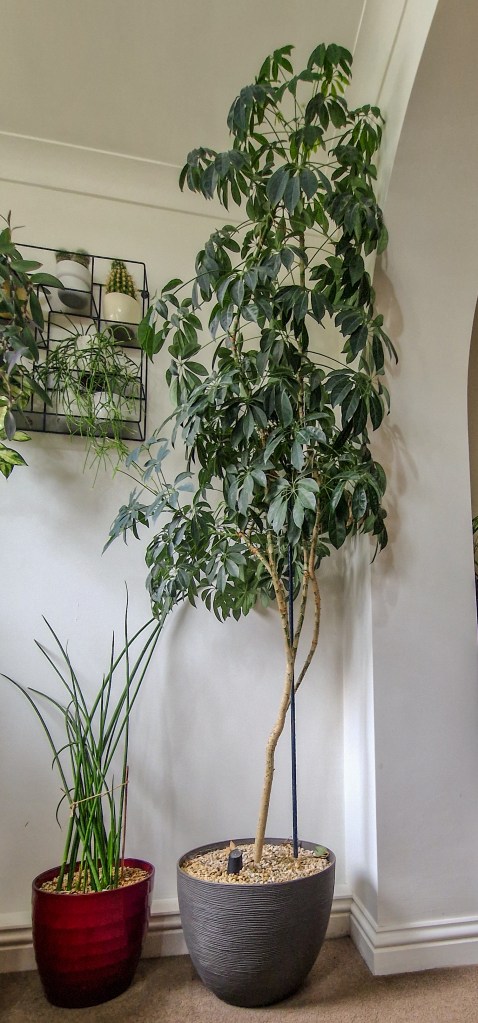
13 years ago, this was a cheap plant in a 15cm pot, which I bought from a DIY store. Now it is well over 2m in height and still growing.
However, if you are a commercial interior landscaper, you need proven, resilient plants. These must be capable of surviving for several years in the hostile environment of an office. They have to be resistant to pests, they shouldn’t grow too quickly and they should be long lived. You also need them to thrive between service visits – and these could be three weeks apart (or more). You also need to use a different set of horticultural techniques, substrates and a different way of setting up the plant displays.
Where to learn more
If you would like more information about indoor plants, have a rummage around this blog. There are lots of posts, and more to come, about indoor greenery.
If you would like advice or training on interior landscaping, get in touch or join my mailing list (see below). You can also find out more about my services and training courses here.
Processing…
Success! You're on the list.
Whoops! There was an error and we couldn't process your subscription. Please reload the page and try again.
Over the last few years, office designers have specified cabinet-top planters (sometimes called furniture-based planters). They are rectangular troughs that are designed to hold several small plants – often a mixture of species.
These planters are often, they are rather shallow: 150mm to 200mm depth is quite common. They can look great, but they can also have some issues – especially if you have to maintain the plants in them.
I have seen increasing numbers of this type of planting not looking their best after a relatively short time. Sometimes, this is down to having a mix of plants that are incompatible with each other. (I have a training course about that, by the way – please get in touch). However, more often, it seems to be because the planters are very shallow. Office furniture designers – get in touch with a horticulturist (me, for example) before you design your planters. Some of your work is very sub-optimal. Why do you think 150mm depth is adequate?
Most of these planters take large numbers of small plants in a relatively small volume of growing medium. As a result, they tend get through water quite quickly. Because they are quite high (often above shoulder height), they are also tricky to water and groom.
Vulcaponics can work very well with furniture-based planters, but even they can struggle when the planter is especially shallow.
Most commercial interior landscaping companies have a service cycle of two weeks or more (three weeks is common in Europe). This is fine for larger, solo plants displayed in decent-sized planters. Three or even four week watering intervals are no problem, but this is a stretch for such small plants.
It strikes me that the best way to think of these planters is as a horizontal green wall. Green walls have large volumes of small plants in a relatively small space. They work because the watering element of plant care is managed by having an irrigation system, or hydroponic set-up.
Shallow cabinet-top planter set up with hydro-culture plants Image by the author
Interior landscapers: you have options
First, you can shorten your service cycles. This will work, but will be costly. It might make planning of service schedules quite difficult if you have a mix of 2-week and 3-week cycles.
Second, try using more succulents and other low-water plants. This will also work, but you will need to check to make sure the light levels are high enough.
Next, do nothing but make sure you price in much higher plant replacement costs.
Finally, consider using hydro-culture for this type of plant display. This will enable you to stretch your service intervals back to three weeks. You will also solve many of the plant incompatibility issues that would arise from the species having different water requirements when grown in compost. This is the closest to a green wall in terms of care and maintenance.
Get in touch for advice, training or consultancy, whether you are an interior landscaper, designer or furniture supplier – I can help you get it right. Please also sign up to get my emails about my services and training programmes.
Processing…
Success! You're on the list.
Whoops! There was an error and we couldn't process your subscription. Please reload the page and try again.
Fast running water cascading over rocks. Picture by the author
Biophilic design has gained significant traction over the last decade or so as a way to support well-being, improve quality of life in built environments and even improve productivity. For some designers – especially people in my own industry of interior landscaping – this starts and finishes with plants. However, there is much more to it than just greenery.
I have written before about the need to stimulate all of our senses to be truly biophilic. One way to achieve this is by incorporating non-rhythmic sensory stimuli. These include elements such as the sound of running water, the sight of flickering flames, rustling leaves, or the sensation of a gentle breeze. Ambient scenting may also be considered a non-rhythmic sensory stimulus, although this is a much more complicated issue and worthy of a separate article.
The incorporation of non-rhythmic sensory experiences into the built environment can offer additional ways to enhance well-being, productivity, and overall quality of life by making the biophilic experience more rounded. This is one of the 14+ patterns of biophilic design recognised in the iconic report by Terrapin Bright Green (which has been recently updated in its 10th anniversary edition, and which is very much worth a read).
The science behind non-rhythmic sensory stimuli
Non-rhythmic sensory stimuli are characterized by their variability and unpredictability, which is in contrast to the often monotonous and repetitive patterns found in the artificial settings of the built environment. These stimuli are common in natural settings. Research suggests that such patterns engage our senses in a way that promotes relaxation, reduces stress and may even enhance our cognitive abilities.
One study Joye et al. (2013) suggested that non-visual sensory stimuli, such as the sound of water or wind, can significantly reduce stress and improve mood. The study found that these stimuli activate the parasympathetic nervous system, which is responsible for the body’s “rest and digest” response. It has been suggested that this could counteract the effects of chronic stress. Similarly, the visual unpredictability of natural elements, such as the movement of flames or shifting shadows as the sun shines through vegetation blowing in the breeze, might capture attention in a non-intrusive way, fostering a sense of calm.
One of the most significant benefits of non-rhythmic sensory experiences is their ability to reduce stress and anxiety. In a world dominated by structured routines and artificial environments, the introduction of natural, irregular patterns can provide some form of mental escape back to nature. For instance, the sound of running water, whether from a fountain, an indoor waterfall or even from an electronic soundscaping system has been shown to reduce stress, as measured by skin conductance (Alvarsson et al., 2010), something that could be valuable in high-stress environments such as some offices, hospitals, and schools.
Moreover, non-rhythmic stimuli can evoke positive emotional responses. The sight of dancing flames in a fireplace or the gentle movement of curtains in a breeze can create a sense of warmth, comfort, and nostalgia. These experiences tap into our evolutionary connection to nature, fostering feelings of safety and well-being. Over 30 years ago, Roger Ulrich (1993) wrote that exposure to natural elements can elicit positive emotions and reduce feelings of anger, fear, and sadness, which are often exacerbated by sterile, artificial environments.
Cognitive and productivity benefits
Incorporating non-rhythmic sensory experiences into indoor spaces can also enhance cognitive performance and productivity. Research by Kaplan and Kaplan (1989) on Attention Restoration Theory (ART) suggests that natural environments, with their innate variability, provide a restorative effect on mental fatigue. Non-rhythmic stimuli, such as the sound of a breeze or the sight of moving water, can serve as “soft fascinations” that allow the brain to recover from the demands of focused attention.
In the workplace, it has been suggested that the introduction of non-rhythmic elements might be linked to improved concentration, creativity, and problem-solving abilities. Anecdotal reports suggest that people working in environments with natural sounds, such as flowing water or bird songs, experienced higher levels of satisfaction and productivity compared to those in traditional office settings.
Similarly, the use of dynamic lighting systems that mimic the shifting patterns of natural light can help regulate circadian rhythms, improving alertness and reducing fatigue. Research carried out at the BRE and presented at the Wellness and Biophilia Symposium in 2019 showed a relationship (in some scales) between dynamic lighting and improved self-reported wellbeing.
Practical applications in the built environment
The use of non-rhythmic sensory experiences into indoor spaces is now being incorporated in some workplaces, and can be achieved through a variety of design strategies. Water features, such as indoor fountains or aquariums, can provide both auditory and visual stimulation. . Similarly, the use of natural materials, such as moss, foliage, wood and stone, can enhance tactile experiences and evoke a sense of warmth and authenticity.
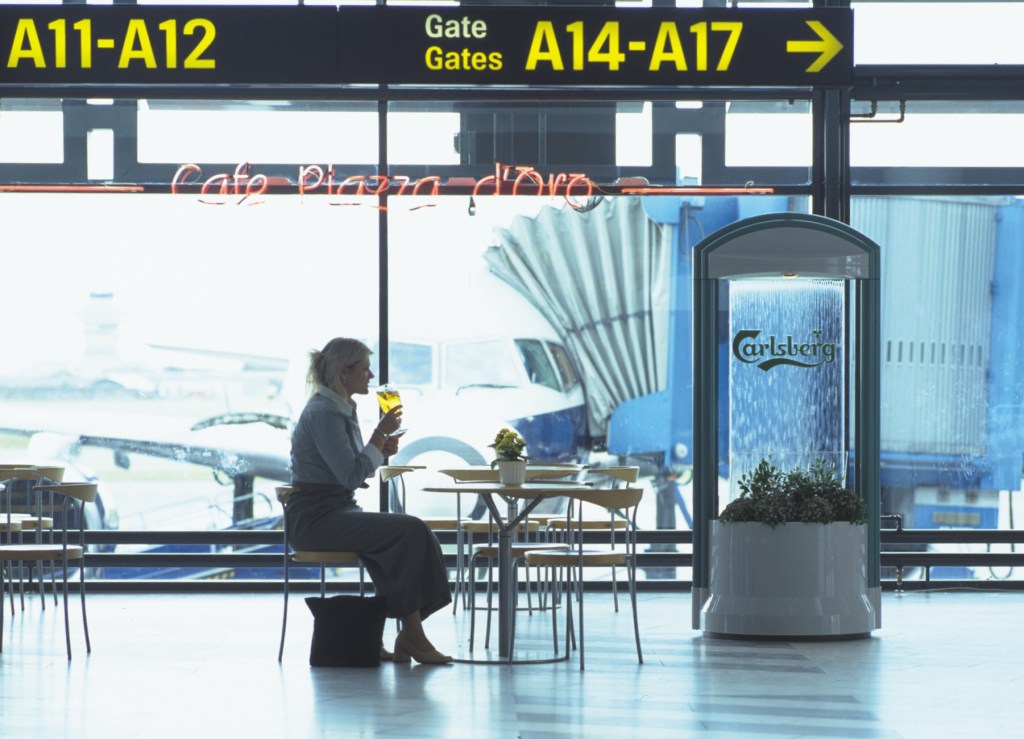
An indoor water feature in an airport
In addition to these physical elements, technology can play a role in bringing non-rhythmic experiences indoors. For example, dynamic lighting systems that mimic the changing patterns of natural light can stimulate the brain not unlike being outdoors throughout the day and soundscapes that replicate natural environments, such as forests or beaches, can be used to create a calming atmosphere in offices, schools, and healthcare facilities.
Virtual reality systems that simulate natural settings can also provide immersive sensory experiences, particularly in environments where access to nature is limited. I once visited a place where there were no windows in one part of the building, so screens were set up linked to cameras mounted on the external walls so the view from outside could be brought in.
I can help you with your biophilic designs
If you are a designer or are planning some biophilic interventions in your building and would like some advice on how to incorporate non-rhythmic stimuli, please get in touch. I know lots about plants, a fair bit about water and scenting and I can put you in touch with plenty of people that are experts in some of the other patterns.
Processing…
Success! You're on the list.
Whoops! There was an error and we couldn't process your subscription. Please reload the page and try again.
I see dozens of posts on LinkedIn every day of interior landscapers, from all around the world, showing some of the fantastic projects that they are doing. The desire for office greenery isn’t subsiding and organizations are seeing the benefits of putting plants into the workplace.
This makes me happy.
I also see dozens of posts every day where such greenery is in cabinet-top planters. This too has its positives: the plants are elevated and visible from a distance. The density of foliage is good and it looks a whole lot nicer than piles of paper and other office junk that would otherwise find its way to any available horizontal surface.
This too is a cause for celebration.
But. And there is a but…
Interior designers and interior landscapers, please have a thought for the technicians that have to look after these plant displays. The plants are often at, or above, shoulder height and if you are constantly lifting 10kg – 15kg of water from the floor to that height, and twisting to make sure that the water goes where it is supposed to, you are putting quite a strain on your body. Do that 150 – 200 times a day and you are really going to feel it.
Please make sure your manual handling risk assessments are up-to-date, your manual handling training reflects this type of plant maintenance, and please look for alternatives to watering cans when planning work like this – small watering machines would be a good choice where practicable.
Processing…
Success! You're on the list.
Whoops! There was an error and we couldn't process your subscription. Please reload the page and try again.
Evidence-based design (EBD) is the design of spaces based on evidence, not simple ‘rules of thumb’ (also referred to as heuristics). The discipline of EBD was first developed in the healthcare industry, and its principles are increasingly being applied across the built environment.
An important part of the design process has to be a real understanding of what the client is really trying to achieve and then develop some metrics and indicators to determine whether those objectives have been achieved.
What is important for the customer? What is the starting point? What is the end point? How do we know that we’ve got there?
For example, is the client concerned about health and wellbeing, colleague engagement or productivity? These can all be measured, to an extent.
Some measurements may be physical or observational, e.g. how space is used. Other measurements might be associated with HR indicators such as absenteeism or complaints about the indoor air quality.
Maybe, the client is mainly interested in achieving a building certification (such as WELL) or a high Glassdoor rating in order to attract and retain staff (or to gain a “great place to work” recognition). These may require a different set of metrics and, in some cases, might be achieved by ticking boxes and completing spreadsheets without needing to engage with the end-users of the space at all.
Having said that, such a workplace, whilst meeting the specified end point of getting a certification, may not be especially effective. It is now well known that empowered, involved and engaged workers tend to be happier, healthier, more satisfied and more productive than those for whom a change was imposed.
However, without defining terms at the beginning of a project, the designer cannot really justify claims for its subsequent success. Objectives and KPIs must be clearly defined. If not, the wrong metrics may be used. Without good evidence, knowing what tweaks might be needed is impossible. This is especially true once a new workplace design has been commissioned to keep it working effectively.
If EBD is applied without direct involvement from the end-users, the designer limits the amount and quality of evidence available.
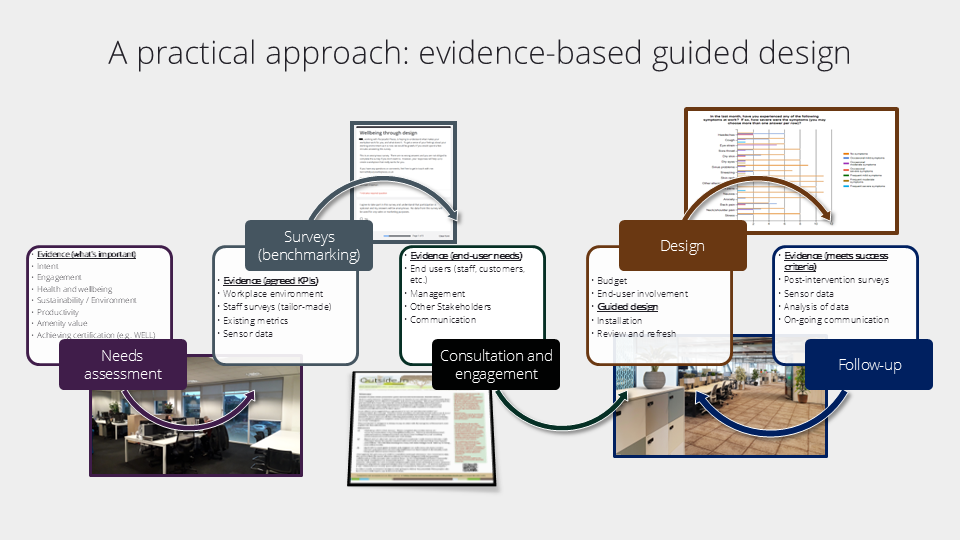
Five-step approach to evidence-based guided design
I will illustrate the process using an example of creating an new interior landscape scheme in an office-based workplace, although the principles would apply to almost any types of design project. Get in touch to discuss your specific needs.
Step 1: setting the intent and identifying needs
Here, we state the intent of the exercise. We seek to discover the needs of the client and identify any issues or areas that are important to the organization. These may relate to health and well being, productivity / financial indicators, staff engagement or even sustainability. Initial discussions would probably be with the client’s management team. It would be wise to also engage informally with the premises users at this time. This helps see if the management’s concerns align with those of their staff.
Outputs: KPIs agreed, scope and boundaries of surveys agreed, communications plan, workshops and end-user communications (e.g. newsletters)
Step 2: surveys and initial data
The next step would be to carry out a detailed set of surveys. This will include an assessment of the physical space (light, noise, layout, air quality, etc.) and a tailor-made staff survey, which will identify and quantify areas of concern. I can design these surveys for you so you get the information you really need.
The designer would also ensure that we have some objective baseline data from the client (if required) that could be compared against the designer’s own findings.
Outputs: initial surveys and data analysis, second staff communications, scope and boundaries of design agreed, design budget agreed.
Step 3: consultation and engagement
Before any intervention is made (for example, a redesign of the office space), the office staff should be kept engaged.
Research has demonstrated that giving office workers a genuine stake in the project (hearing their views and giving them real choices) results in better, and more durable, outcomes.
Throughout the process, the designer would ensure that all stakeholders in the project are kept informed of the progress of the project. This will be achieved using newsletters, social media and face-to-face discussions. At this point, the designer would have a fair idea of options available.
Outputs: ideas and requests collected from client’s staff, third staff communications
Step 4: design
At this point, an experienced design team would be brought in to discuss design options with all the stakeholders. The designer will have an idea of what might work after reviewing all the initial survey information. The designer will then present some outline options to the client.
The designer would then take their collected ideas forward for discussion and engage all users of the office space in the final decision. Once this has been agreed, the design team would make arrangements for the space to be redesigned accordingly.
Throughout this process, it is important to keep all stakeholders informed. There is often a few weeks lead time for a design to be installed. The designer and the client need to keep everyone’s enthusiasm alive. They should build up to the day when their ideas are realized in their newly-designed work space.
Outputs: first design proposals for discussion by staff and management. Revisions and final design choices. Design specification and order. Fourth (and possibly fifth) staff newsletter. Design installation.
Step 5: Follow-up and continuous review
The client will need to know whether the interventions carried out in the offices have been successful. Therefore, a series of follow-up surveys could be carried out shortly after the new designs have been installed. These surveys could include staff questionnaires, analysis of the client’s data, and physical measurements of the environment.
Such surveys might be repeated every 2 months or so for at least 9 months to confirm that the interventions have had a durable effect. If necessary, designs could be reviewed and adjusted as needed to satisfy the customer or end-users. Their experience may highlight unforeseen needs.
Again, the designer would continue to communicate and engage with all stakeholders to let them know what is going on, and to get some qualitative evidence as well as quantitative data.
Outputs: follow-up surveys, data analysis, continuing staff newsletters
How will you know whether an environment is successful?
At each step of the process, data will be gathered to determine whether process is working. Data for evidence-based design can come from direct, indirect or proxy sources.
Pre-intervention
At installation
Post intervention
Direct measures (examples)
End-user surveys End-user focus groups Sentiment / satisfaction measures Customer interviews Observational data Sensors and monitors
Discussions with end users – confirm needs have been met Discussions with customer – confirm needs have been met Sentiment / satisfaction measures
Ongoing Post intervention surveys (every few months for at least one year) Ongoing sentiment / satisfaction measures Interviews and focus groups Observational data Sensors and monitors
Indirect measures (examples)
WELL scorecard Fitwel scorecard RESET scorecard Sustainability scorecard Leesman index Revenue / person Revenue / square foot Absenteeism records Staff retention rates Review sites (e.g. Glassdoor, Trustpilot, etc.)
Proxy measures (examples)
Tests and quizzes Simulations Comparison with similar organizations (impact seen with them probably similar to impact on us) Case studies References
Tests and quizzes Simulations Designer feedback
Tests and quizzes Simulations Comparison with similar organizations (impact seen with them probably similar to impact on us)
Big Brother is watching you
Direct sources of data may be from automated systems and sensors. Sensors are increasingly being used to give building managers and space planners real-time data on how space is used and the environmental conditions in different parts of a building. This is becoming increasingly important now that hybrid ways of working are becoming more common and workplace usage patterns are changing rapidly.
Data collected on environmental and space utilization parameters allows for rapid changes in layout or environmental management. This ensures that users get as comfortable and as useful a workspace as possible.
Mapping survey data to culture, demographics and location: unveiling the nuances
Understanding the collective preferences of the end users of the workplace – the office workers – is crucial. However, digging deeper into the data is essential. Attempting to map these preferences onto the cultural, demographic, and locational peculiarities of the organization can give invaluable insights. This reveals patterns and nuances that can be easily overlooked in broader surveys.
The benefits of longitudinal studies
Collecting survey data immediately before and after the installation of a new interior design is not especially valuable. People notice the immediate impact of change. However, tracking individual responses over time (whilst meticulously maintaining privacy) is very beneficial. It includes collecting data for an extended period post-intervention. This allows the designer to distinguish the subtle effects of design interventions from the larger waves of, say, a new CEO or a major business shift.
Granular analysis of data over time, ideally with the aid of a statistician, can offer a clear picture. It will reduce the risk of misinterpretations and helps to ensure that design decisions are informed by the most accurate trends.
Longitudinal studies, with frequent data analysis, also allow for post-design tweaks. Whilst easy-to-digest broad data can be appealing, the detail is where hidden gems of insight can be found.
Hidden gems
Demographic studies can hold surprising potential, as long as you know what to look for. For example, a seemingly innocuous study (carried out in the late 1990s) into the plant preferences of staff in a local government office revealed a hidden layer of cultural influence. The headline findings clearly showed a relationship between plant preference and the seniority of the office worker. Closer examination unearthed a deeper connection to gender, rooted in the organization’s history and norms. Men occupied the bulk of the senior positions, whilst there were far more women occupying more junior roles. This highlights the importance of not solely relying on surface-level observations and instead delving into the details woven into the data.
Another small study challenged preconceived notions by demonstrating that job role, regardless of age, could be a stronger reflector of plant preferences than previously thought. Stereotypes, both reinforced and shattered, illustrate the power of data to illuminate the complexities of human behaviour within a specific context.
Ultimately, mapping data to culture, demographics, and location is not about finding definitive answers, but rather about uncovering the rich tapestry of influences that shape how people interact with their environment. By exploring the nuances found in data, evidence-based design transcends mere aesthetics and can be a tool that transforms workplaces into spaces that truly resonate with their users.
Measuring the right thing!
If the aim of a project is to improve employee wellbeing, then there is no point in measuring the organization’s Net Promoter Score. Likewise, measuring indoor air quality is unlikely to tell you much about a company’s brand reputation.
Having said that, there are likely to be some interesting interactions. Improving indoor air quality may well have an impact on productivity, especially if carbon dioxide levels are kept low, leading to greater alertness and less fatigue. However, you won’t know if productivity has been improved unless you actually measure it. Similarly, whilst improving employee wellbeing may lead to a better NPS score – happy staff are probably going to give better customer service after all – NPS isn’t, on its own, going to be a reliable measure of wellbeing.
Here are some possible aims of a design interventions with some of the metrics that could be used.
Project aim
Possible metrics
Improved productivity
Revenue (or profit) per employee Revenue (or profit) per unit area of office space
Reduced absenteeism
Work days lost, long term absence, etc.
Increased office space utilization
Time spent in the office Workspace occupancy Sensor data
Improved wellbeing
Survey data: complaints of SBS, symptoms, reasons for absenteeism, etc. Health monitoring data
NPS data Ranking in reviews / indices (e.g. Glassdoor, Leesman, Trustpilot, etc.)
Improved colleague engagement
Staff engagement surveys, e.g. Q10, Hays Group,
Improved customer engagement
NPS Customer comments and complaints, reviews, etc. Customer satisfaction surveys Trip Advisor scores (for hospitality sector) Trustpilot scores (for service providers, retail, etc.) Increased footfall or dwell time (retail sector) Increase in return custom (retail, healthcare and hospitality) Customer referrals (retail, healthcare, hospitality)
Improved sustainability
GHG emissions normalized against revenue or per capita (rather than against floor space) Reductions in energy costs
Add value to your interior design
If you are involved in design, consider an evidence-based approach. This is especially important if you are an interior landscaper who wants to add value to your service. If you need help in putting together a programme, or if you need assistance designing surveys and other elements of data collection, then please get in touch. Check out my services page for information about my specific areas of expertise and consultancy.
Interior landscape where all the plants are set up using a vulcaponic growing system
Vulcaponics is the latest evolutionary step in interior landscaping and is becoming increasingly popular. If you are not familiar with the term, it is a growing system that combines the advantages of hydroculture with the convenience of soil culture. The system encourages good root growth, makes water and fertilizer management easier, reduces the risk of soil pests (especially fungus gnats) and helps the interior landscaping industry reduce its reliance on peat-based substrates.
So, what is a vulcaponic growing system?
Close-up image of vulcaponic substrate
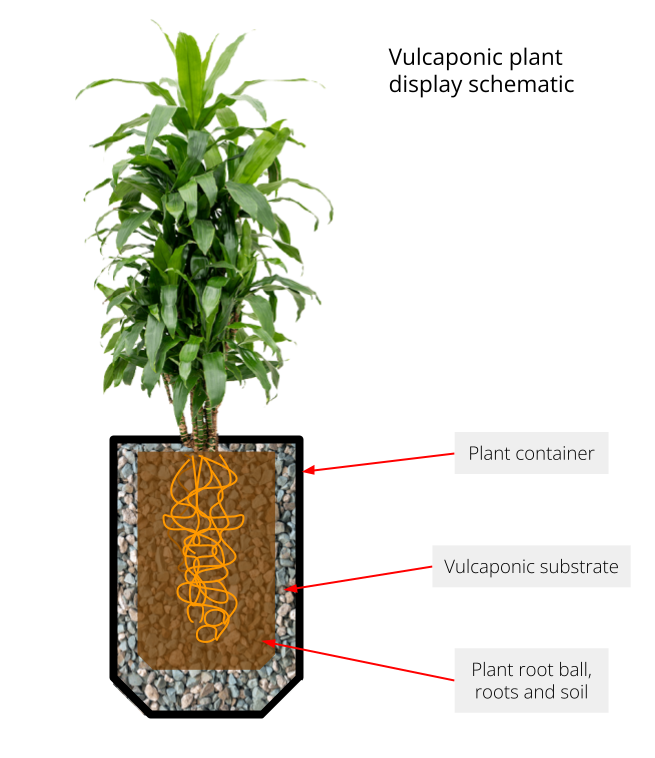
Vulcaponics is a hybrid growing system that combines the benefits of both soil and hydroculture systems. It is effectively a semi-hydro system: the plants start out as conventional soil-cultured plants growing in a lightweight compost but over the course of a few weeks, the roots grow into the vulcaponic substrate and behave more like the water roots that are found with hydroculture plants.
In many respects, the system is similar to the Seramis system that developed in the 1990s, and which encourages exceptional root growth. Seramis is composed of small granules of expanded, aerated clay (much smaller and denser than LECA, used in hydroculture plants), which are able to hold water and allow root hairs to penetrate them. If I remember correctly, the product was originally developed as a type of cat litter, but was soon found to be an exceptional substrate for indoor plants.
Vulcaponic substrate shares many of the same characteristics, but instead of being made from clay, is composed of fine granules of pumice (the result of volcanic activity – hence the name) and some other naturally-occurring minerals.
What are the benefits?
Vulcaponic systems have several benefits, and most relate to better root growth and root health due to improved water management.
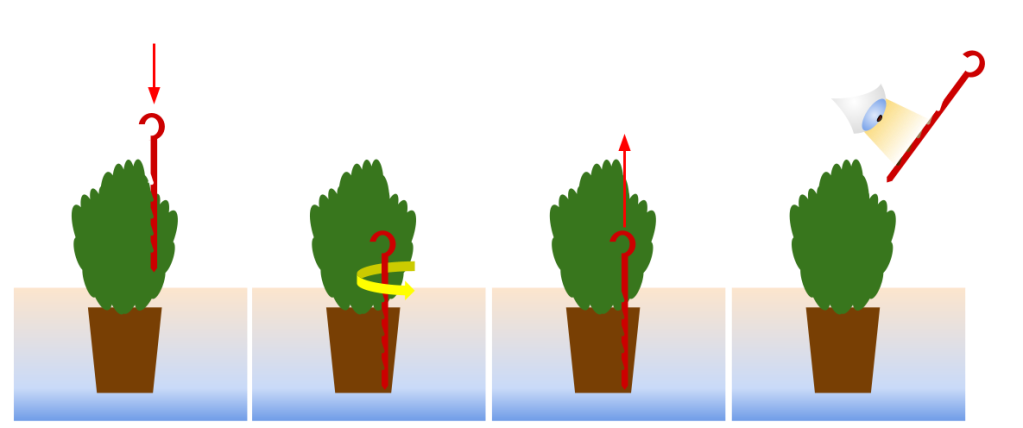
Watering a vulcaponic system is very easy – you check the soil moisture of the root ball (using a soil probe), and if it is dry, you add water. Sometimes, vulcaponic displays are fitted with a float gauge (the same as with a full hydroculture system), but it isn’t essential.
Assessing moisture in the rootball of a plant when a depth gauge is not used
Water is added to substrate, which then percolates down the to the bottom. The water is then absorbed by the substrate, which can lift it as much as 20cm. This then creates a jacket of moisture right around the root ball which initially soaks into the soil. After a while, roots from the rootball will grow into the vulcaponic substrate and take water from there. This means that the rootball remains aerated and oxygen can get to the roots easily. It also means that the soil is not compacted as it often is when top-watered.
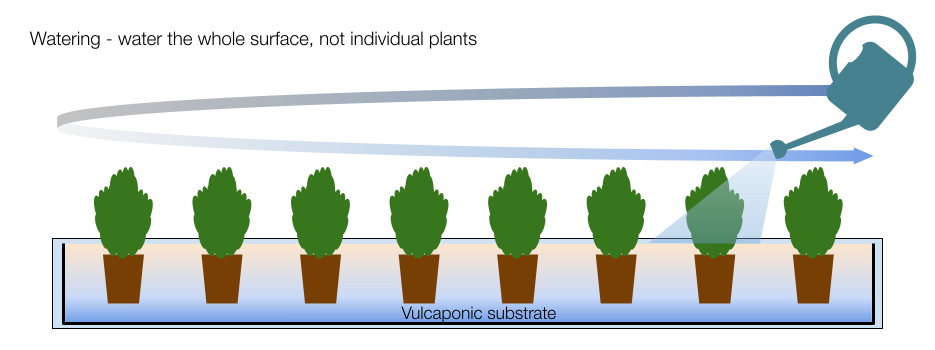
Water the surface, not individual plants
Delivering the water to the roots this way has another benefit – the soil surface remains dry. If the soil surface is dry, then fungus gnats (sciarid flies) have a hard time getting established. Furthermore, a vulcaponic display should include a 2 – 3cm deep layer on the surface as well as around the sides and underneath the rootball. This makes it even harder for soil-dwelling pests to establish.
Watering intervals can also be extended. My own experiments have shown that it is easily possible to extend watering intervals to as much as six weeks (depending on plant species). This means that interior landscapers can spend more time cleaning, grooming, trimming and pruning their plants (the interesting part of the job) and less time lugging heavy watering cans around and just having enough time to give the plants a quick drink. The ‘splash and dash’ approach to plant maintenance can be eliminated, resulting in higher quality, longer lasting plant displays. Commercial interior landscapers will have fewer customer complaints, fewer plant replacements and improved operating margins.
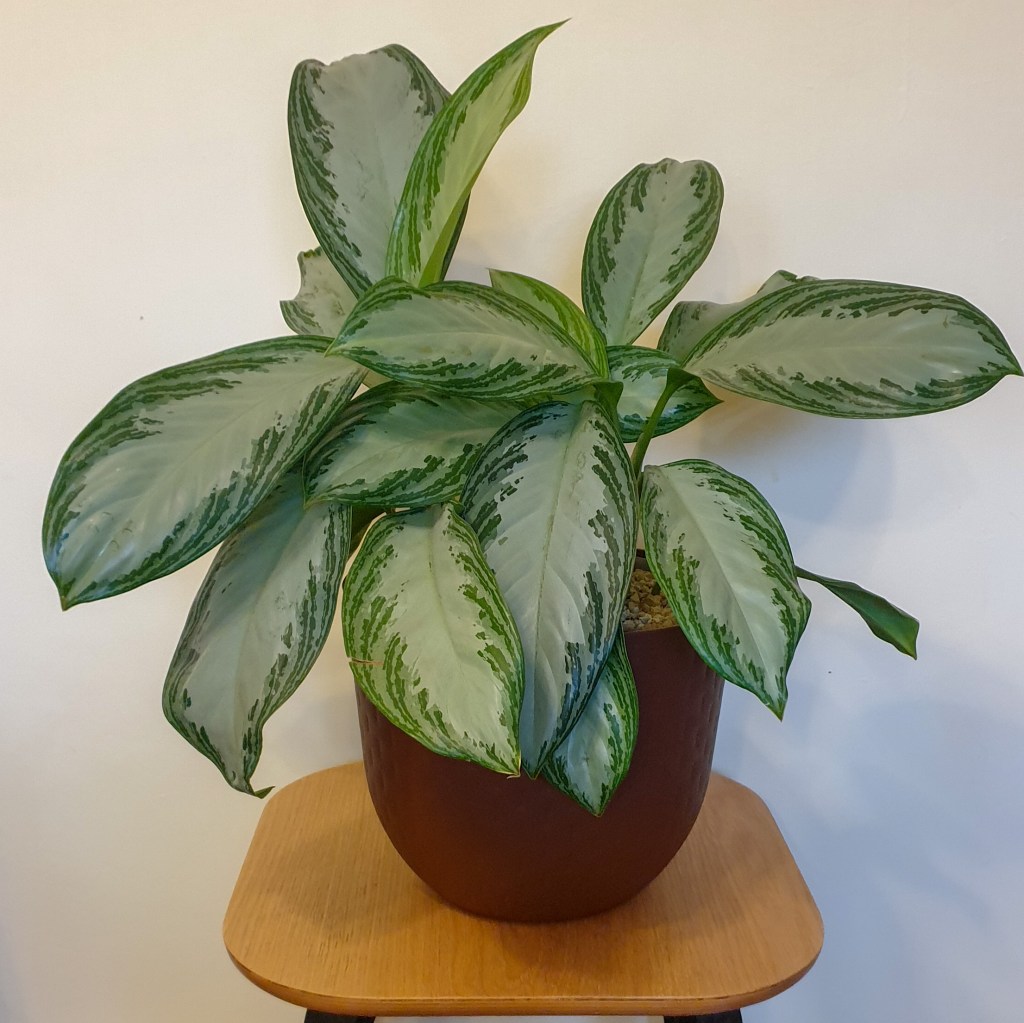
Planter containing two 17cm Aglaonema plants set up in a vulcaponic system. These are typically watered every 5 – 6 weeks
The downsides
Vulcaponics are not a panacea, but the system is ideal for small and medium-sized plants (up to about 2m in height). Really large plants are still better off in a decent soil-based compost. The main disadvantages are:
Vulcaponic substrate is heavy, so you must ensure that any plant containers, or furniture that they are placed on, can take the extra weight.
Compared with lightweight compost media, vulcaponic substrate can be pricey. However, the benefits outweigh the initial expense quite quickly
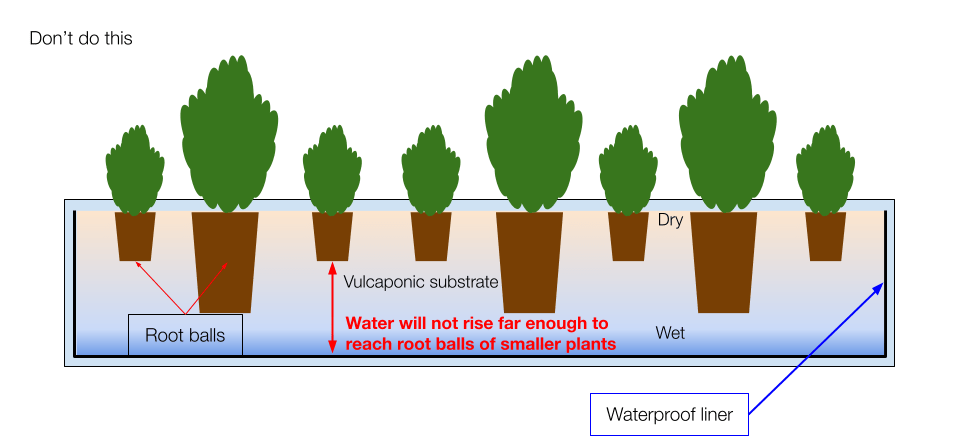
When planting mixtures of plants in a large container, it is important to ensure that the plants have a similar rootball depth
For deeper plant containers, you will have to use a liner – you don’t want more than 5 – 8cm depth of vulcaponic substrate under the rootball, otherwise the water will not rise far enough
The problems associated with using different-sized plants in a mixed planter when using the vulcaponic system
Want to learn more?
If you are an interior landscaper interested in discovering more about vulcaponics, please get in touch. I’d be happy to discuss the system and I offer a training programme on this subject.
Even before the pandemic, the nature of office work was changing. There was an increasing shift to creating more purpose-based workspaces that accommodated different styles of activity, such as collaborative working or quiet focused work. This also led to an increase in the use of non-allocated desks (let alone private offices), so there was no guarantee, or expectation, that an office user would be at the same desk every hour of every day.
Then, the pandemic forced huge numbers of office workers to work from home, and many of them found it preferable. This has led to a rise in hybrid working, but has also acted as a catalyst for evolution of workplace design.
A decade’s-worth of change seems to have happened in about 18 months and many employers have completely remodelled their office space as a result: partly to attract workers back to the office by making them more comfortable and homely, and partly to adapt them to new ways of working.
However, with all the changes in workspace design, many offices are still less than half full for several days a week. A recent report quoted in The Guardian suggests that the Monday to Friday office occupancy rate across the UK is 29% for the first three months of 2023, and slightly less in London, compared with typical pre-pandemic levels of 60%-80% (according to data from Remit Consulting).
Where is everyone?
As a result of this, it is quite likely that suppliers of business-to-business (B2B) services are going to be impacted. Those companies selling discretionary B2B services, such as interior landscaping (my area of interest), are probably going to be especially exposed.
B2B companies that already have a nicely diverse mix of customers in terms of sector, size, and geography are probably going to be able to absorb some of the possible shocks, for reasons I’ll discuss later. However, those that are heavily dependent on one part of the marketplace, such as large corporate offices, might find themselves living in ‘interesting times.’ This is especially true where B2B service providers are not a directly-employed contractor, but appointed by a facilities management company.
What does this mean for interior landscapers?
The benefits of interior landscaping and workplace wellbeing are pretty much understood and accepted, so I don’t think there will be a large-scale chuck-out of plants as a cost-saving measure that we have seen in the past (such as the aftermath of the 2008 financial crisis). However, if offices are only – on average – one third full, then it stands to reason that there will be a significant reduction in the floor space needed for organizations. Those empty floors won’t need plants, art, ambient scenting or coffee machines.
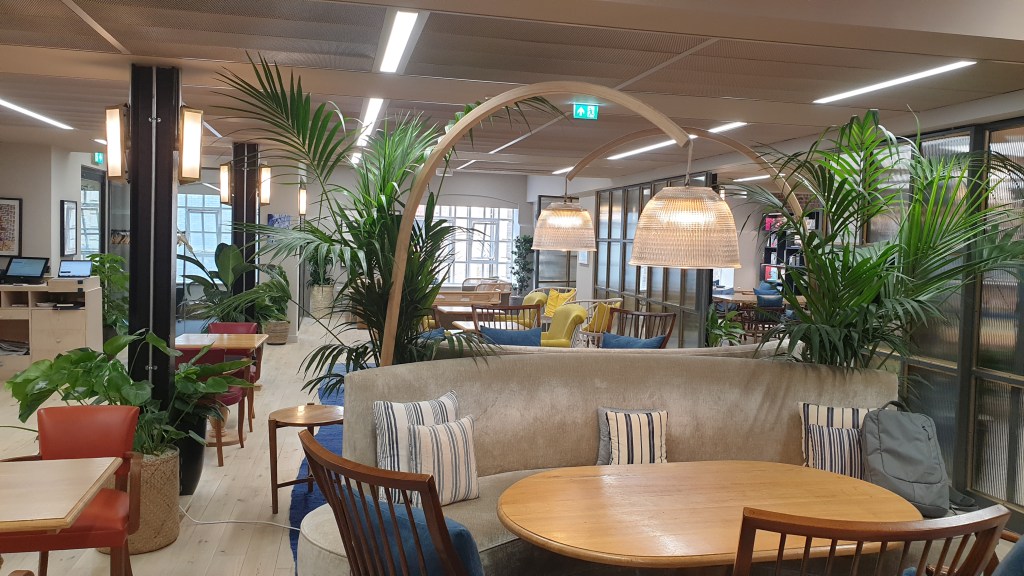
There is an upside for those businesses agile and imaginative to grasp the opportunities. Those office workers not commuting as often will still be working somewhere – and not necessarily at home. They will probably be spending more time working in places such as local co-working venues (several being set up in the suburbs and small satellite towns), coffee shops, or even in hotel lounges. All of these settings (often called third spaces) would certainly benefit from some nice plants – ideally supplied and maintained by a good interior landscaper. By offering their services to these spaces, interior landscapers can ensure that their plants continue to be seen and appreciated by workers, even if they are not based in a traditional office environment.
Even when the workforce is remote, employers still have a responsibility for the health, safety, and wellbeing of all their staff. It stands to reason that some of those discretionary B2B services could be reimagined as something to enhance wellbeing in the home working environment.
Many interior plant companies, especially those that have the infrastructure in place to deliver plant displays, could adapt quite quickly – some have already by offering mail order houseplants. Those companies could easily refine their offer by providing plants that are especially well suited to home working environments.
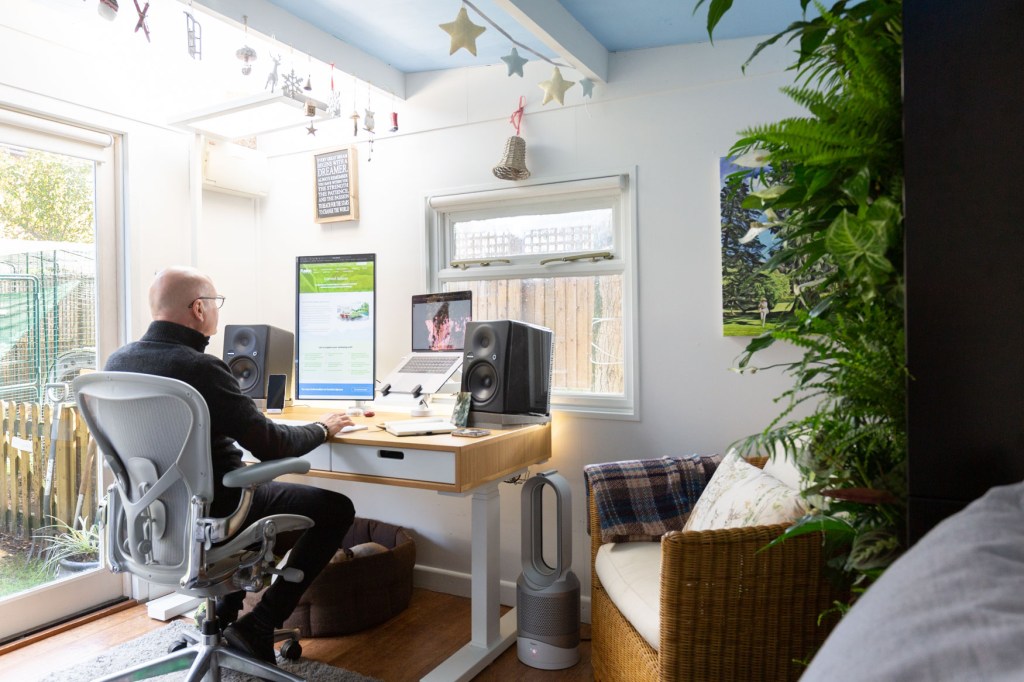
A well-designed home office
These could include plants that are easy to maintain (and maybe even be set up in such a way as to make plant care especially straightforward), and be properly matched to the home worker’s office environment. Advice and guidance on selecting the right plants for the space, together with instructions on plant care could be given, alongside tips on how to create a more effective home office space.
On the 8th March, Plants@Work (the UK trade association for the interior landscaping industry) was delighted to welcome Kali Hamerton-Stove of The Glasshouse to tell us about a project to help women ex-offenders back into employment through training, work experience and work placements in horticulture, especially interior landscaping and houseplant retail and mail order.
If you can spare half an hour, please watch the video of the presentation that Kali gave.
Having worked with The Glasshouse and some of the women in the project a few times, I can’t express enough how important this project is.
If you are a UK interior landscaper looking for new staff, please consider employing some of the Glasshouse alumni – they are trained in interior horticulture, highly motivated, have great personalities and have experience working in a wide variety of customer locations.
The Glasshouse’s interior current interior landscaping customers include businesses in financial services and hospitality.
An example of the work of The Glasshouse – the interior planting in a private members’ club in London, installed and maintained by women ex-offenders
I recently came across an interesting video, via a post on LinkedIn, on YouTube that explained, with the aid of Nerf guns of all things, how room acoustics could be modified by using different shaped acoustic panels.
The explanation is simple and very elegantly delivered. It also reminded me of some research carried out in the mid 1990s by Dr Peter Costa at Southbank University in London. His research looked at how interior plants can be effective at modifying room acoustics and make loud places quieter.
Noise, especially in offices, can be very distracting and can even cause stress. Mental discomfort, as well as being distracted from the task at hand, can make work unnecessarily tiresome and unproductive.
As people start heading back to the office, they may rediscover the nuisance of noise that might have been missing when working at home. Most homes are actually quite quiet (apart from the noises of children, domestic appliances and pets), and this is because of the amount of soft furnishings, fabrics and carpets that are commonly found.
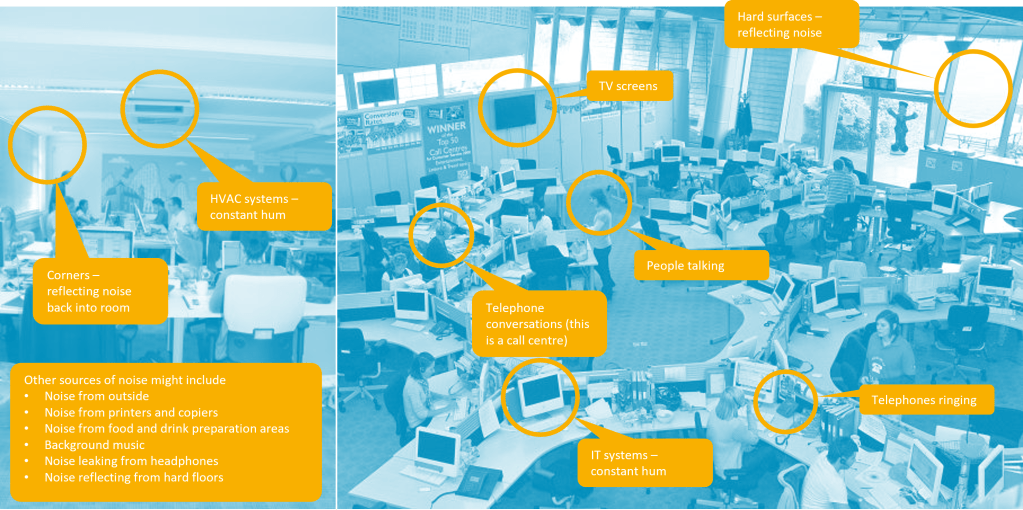
The office, however, is different. Large, open plan spaces with hard surfaces and lots of right angles can be very noisy places. Sound is reflected all over the place and often not well absorbed. Sometimes you can find yourself tuning into a conversation from several desks away just because you happen to be in the path of the sound that is being bounced around the place.
There are very many excellent manufactured acoustic products that can minimize the effects of distracting noise in such places, ranging from fantastically sophisticated computer-controlled sound masking systems, using arrays of microphones and speakers, to simpler (yet still highly effective) products such as acoustic panels that can be placed in just the right places to deaden the noise.
Noise reducing vegetation
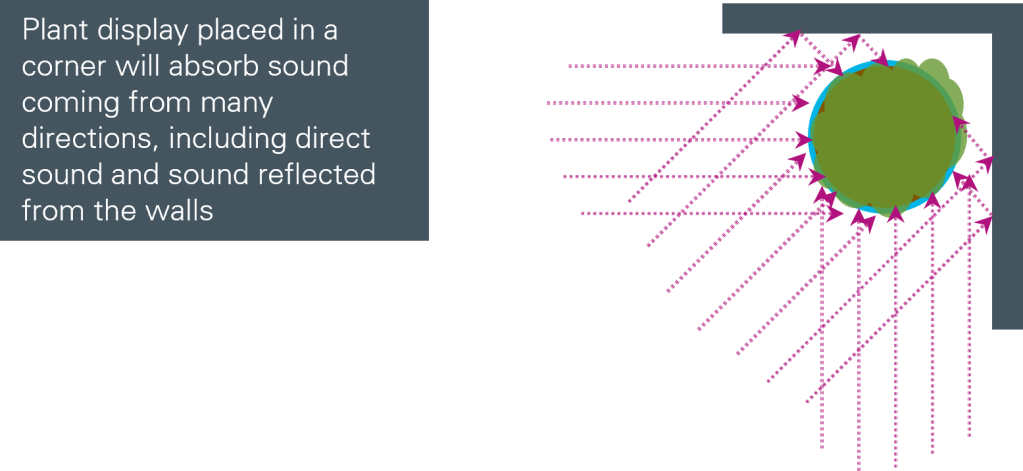
Looking again at the video, the key point is that by introducing shapes that disrupt the path of soundwaves as well as absorbing them, is a very effective way of reducing noise. This is where plants can make a useful (and very cost-effective) impact.
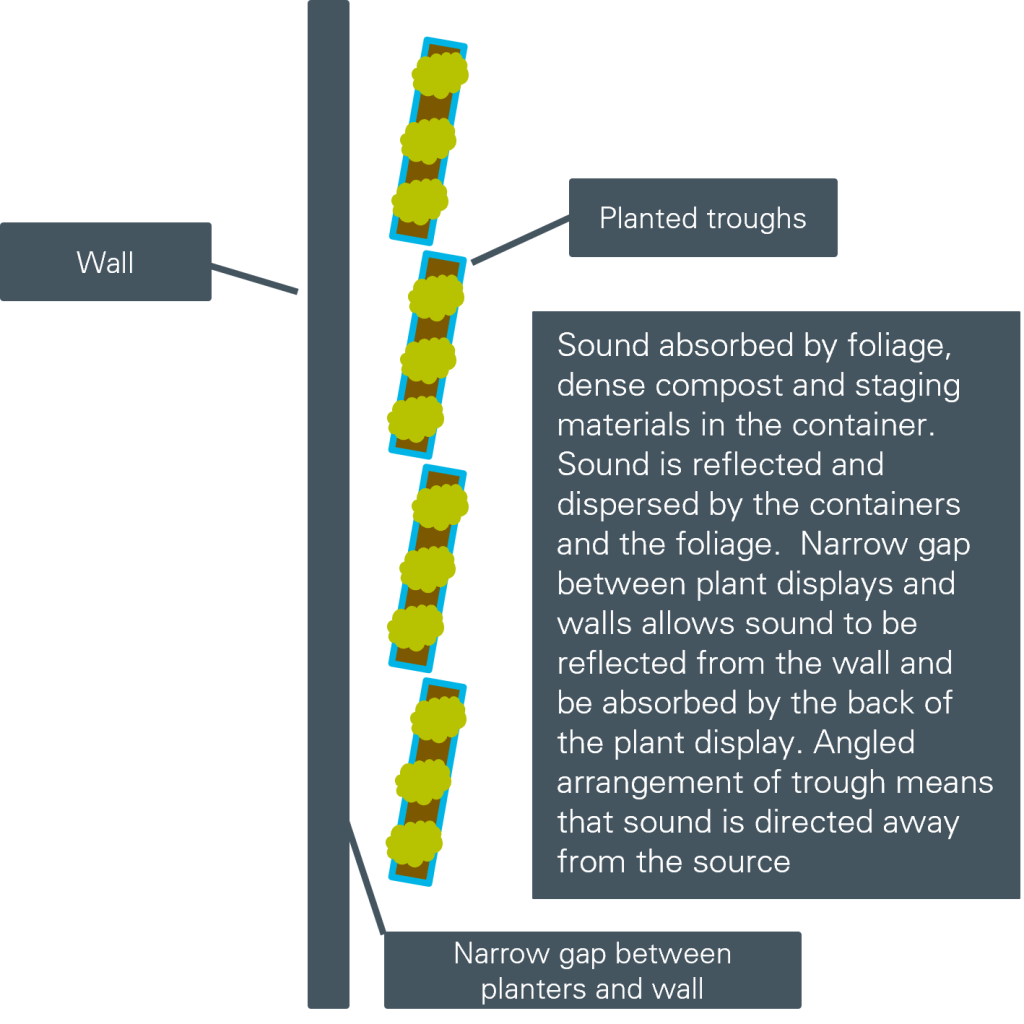
Plants are very irregular in shape. Their leaves point in different directions, are often textured, and foliage comes in all sorts of shapes and sizes. Mix up a variety of plant types and you will have surfaces scattering soundwaves all over the place.
Plants reduce noise by either absorbing sound or by breaking up the sound and scattering it through diffraction and reflection.
Absorption
Plants alter room acoustics by reducing the reverberation time. Plants work better in acoustically live spaces, such as those that have hard surfaces like marble walls, exposed concrete and stone floors.
Diffraction and reflection
At lower frequencies plants may diffract and reflect sound. This is because the leaf size is small by comparison to the noise wavelength. Plants with lots of small leaves are useful as they scatter and diffuse sound. At higher frequencies the leaves may reflect sound towards other surfaces that may then absorb the noise.
By placing plants around a space where noise reflections are most likely to cause problems, you can achieve some meaningful improvements.
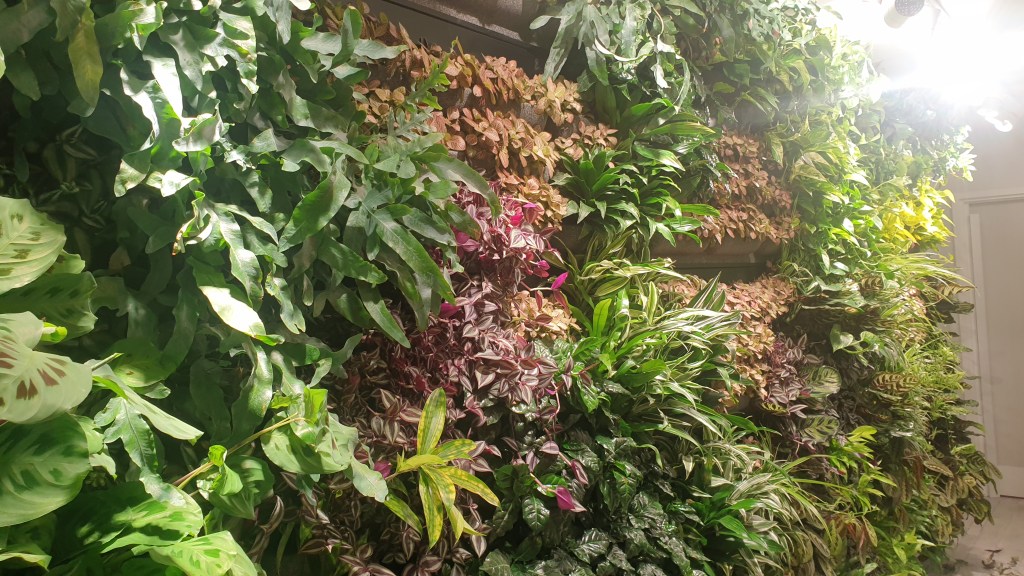
Green walls and moss walls have especially good acoustic properties. Green walls, as well as having a mass of dense foliage, are often mounted on panels made from products such as rockwool or dense foam plastics, both of which have excellent sound absorbing properties in their own right.
Green wall in the UK, designed by the author and installed by SH Goss and Co. Ltd
Moss walls are an excellent choice where a live plant green wall is not practical. The shape of moss deflects sound, whilst the texture of soft moss absorbs sound. Mounting materials also have some acoustic properties and, as they cover a large surface area, they absorb sound at different heights and from all directions.
Moss wall by Metiez Moss, Netherlands
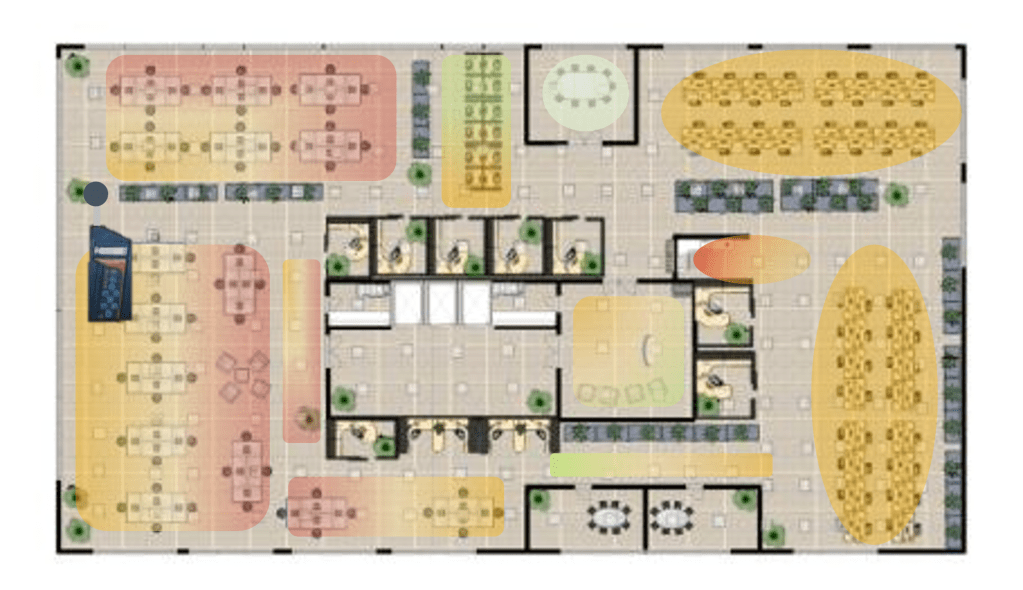
As discussed earlier, noise levels in a large space are often not uniform. There are multiple noise sources, and the sound from any particular noise source can be magnified or focused some way from its origin due to the layout of the space. Sound might be reflected in one direction and blocked from going elsewhere. A distracting noise might be perceived some distance from its source. Sometimes the only way to be sure of where noise is coming from is to take some objective measurements with a noise meter and map where the noise ‘hotspots’ are found.
Measure the noise levels all around space, ideally when noise levels are typical for the location (e.g. during normal working hours for offices). You can create a map of the noise levels on a floor plan of the space by noting where noise levels are especially high or low. Then, try and identify the sources of the noise as well as where the noise is loudest (as discussed earlier – that isn’t necessarily the same place.
schematic of an open plan office floor plan
schematic of an open plan office with noise hotspots mapped
Noise meters are relatively inexpensive, and there are some quite useful apps for smartphones too that can be quite accurate (and are certainly capable enough to be able to measure relative differences in noise from place to place).
Once you have a map of noise levels and sound sources, then you can think about where vegetation will have its greatest impact.
Green multi-taskers
As well as being excellent noise management tools, don’t forget that plants in buildings have a multitude of other benefits, not least their ability to improve wellbeing (and workplace effectiveness) when used as part of biophilic design.
For more information about how plants can make buildings better places to be, please get in touch. I can help building managers with your properties, or interior designers and interior landscapers seeking to add evidence-based value to your designs.
The workplace is no-longer the traditional office for many. Many organizations are challenged by the need to embrace new ways of physically working: planning space, maintaining higher standards of hygiene, enabling teams to work effectively together and recognizing that home working is going to be needed (and even wanted) for the foreseeable future. All of those challenges are overlaid with the absolute need to ensure the physical and mental wellbeing of staff.
As we move through summer, many offices and other workplaces are re-opening and businesses are trying to imagine how on Earth they are going to be able to ensure effective working. This uncertainty and the requirements for correct physical distancing and enhanced hygiene standards is going to place a strain on employers and employees alike.
We’re beginning to get some hints about the way things might look in the period immediately after lockdown ends. One thing is for sure, the world of work (especially the office) is going to have to adapt very quickly. Even when buildings reopen, it seems likely that some degree of physical distancing and enhanced hygiene will be necessary.
After the second world war, a great leader found himself ruthlessly put out of power. Churchill led the country through a crisis and might have expected a reward in the subsequent general election. However, to his surprise, and that of the press and the establishment, he fell victim to the closest thing the UK ever had to a revolution.
Comparing the horrors of global warfare to the enforced changes to office life is a bit extreme, although it is worth drawing a few parallels.
Wartime highlighted the faultlines in society. The old order had to be abandoned in order to fight the war and the idea that society would willingly return to the established ways of doing things was rejected. Now, organizations are going to have to face up to the facts that the established ways of managing people and workspaces are also going to have to change.
We may even have to reconsider what we mean by workspaces.
It is going to be a long time before this is normal again, if ever Photo by fauxels on Pexels.com
Do we mean just the one (or more) physical spaces to carry out work – the realm of the designer – or does it include the headspace too?
Opportunities
Workplace managers are going to have to consider whole new interactions of disciplines in the very near future: space, furniture, technology, connectivity, restoration and recuperation, and new approaches to managing people. All will need repackaging to create work environments that people want to use, and we must learn from our experiences over the last few months to create those new working environments.
What does that mean for the commercial interior and exterior plantscaping industry?
There are certainly going to be challenges, but also opportunities for those firms imaginative and agile enough to change.
Let’s first look at some of the challenges. These include adapting to new ways of working, such as maintaining physical distancing in clients’ offices whilst carrying out plant care, ensuring that plant displays are kept clean and disinfected and adapting to new office layouts that might be less accommodating for plants if desks and workstations have to be spread out.
One thing seems certain: high density offices are going to have to change. If physical distancing is going to be successful, then either desks are going to have to be spread out, or there are going to have to be screens between workstations, or fewer people are going to be allowed in the office at any one time. Pedestrian routes will also have to be altered. It will be no good if desks are isolated only for colleagues to have to squeeze behind the back of your chair or walk within a few inches of you as they go and get their coffee.
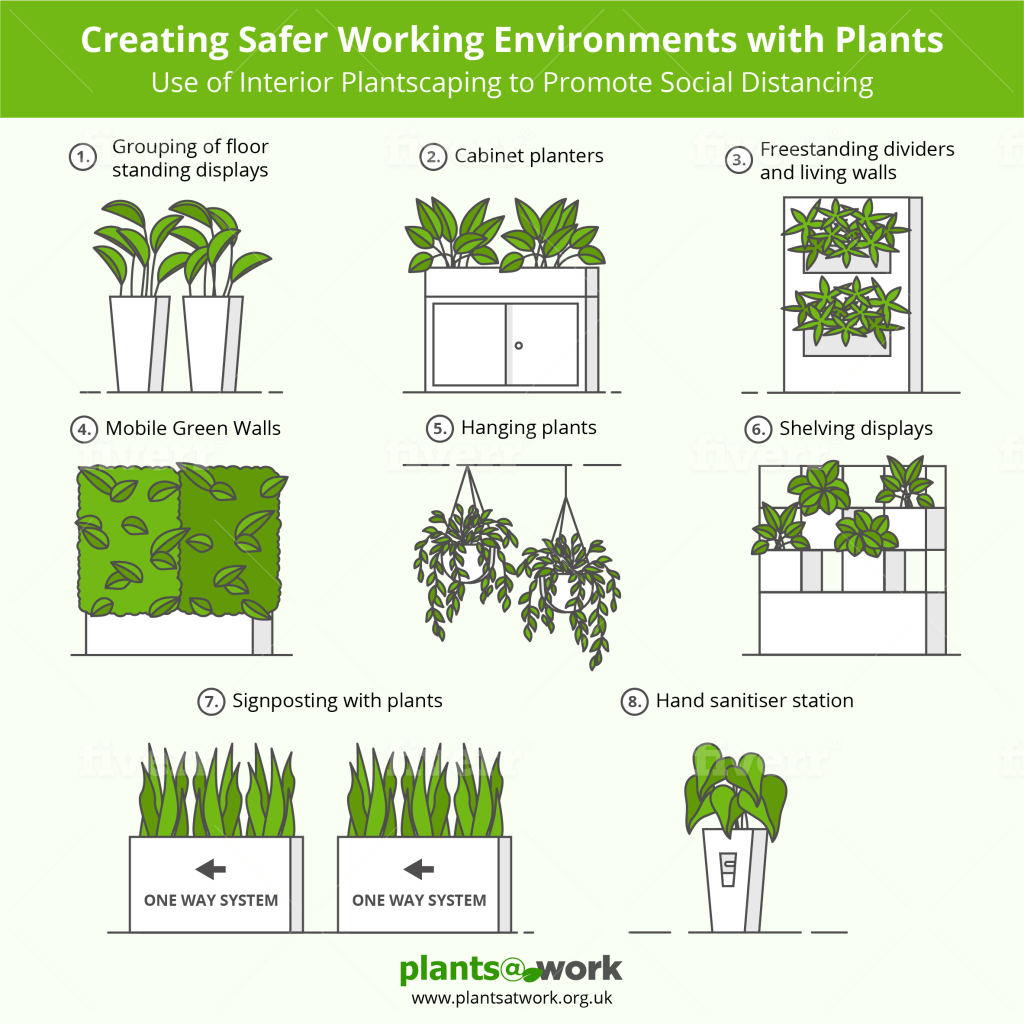
Graphic by Plants@Work – the UK trade association for interior landscapers
Already, interior designers and architects are producing their visions of the new normal office. Many solutions seem to revolve around an adaptation of conventional open plan spaces with designated empty desks and plastic screens to facilitate physical isolation. Some designers are a little more imaginative than others and have started investigating how people can be safely separated with items such as plant displays and green dividers comprising of moss, live plants or even replica foliage. These are, on the face of it, attractive options.
The most imaginative of all are re-thinking the way that offices are going to work. After months of homeworking, most people have found that they can do their work pretty well from home, or at least can manage without missing the office too much. Work habits have changed and people are finding ways to adapt to remote working. The traditional corporate office environment has been shown, by and large, to be unnecessary.
Those organizations with the imagination to grasp the opportunity to create better office environments, rather than rush to adapting what already exists, may look to the types of environment typified by co-working spaces and serviced offices. Such places often resemble hotel lobbies and coffee shops, but also with a wide variety of working spaces to accommodate any type of activity. Such places are designed to get specific types of work done, rather than be a place to go to work.
The new office might be fitted out with better furniture, art and plants. They won’t be designed for dense occupation, but will enable physical distancing, and they will be adaptable to a time when such extreme distancing is no-longer needed.
In part two of this article, I’m going to look at some practical considerations for plantscapers. But if you can’t wait, do get in touch and we can talk about some ideas.
Thoughts on biophilia and biophilic design (part 1) – it’s as much to do with human physiology as it is an emotional response
I’ve been thinking a lot about why Biophilia and biophilic design has much more to do with evolution and the way our senses work, rather than the emotional response to nature that is so-often suggested.
Let’s look at one definition of biophilia. The most famous, and most important is that given by EO Wilson – the man who catalysed the development of the concept. In 1984, he defined Biophilia as “…the innate affiliation people seek with other organisms and especially the natural world.”
This is a strong statement. Wilson also speaks of the human bond with other species, which is beautifully explained in his book. This all suggests that biophilia is essentially an emotional need to connect with nature and natural surroundings.
Stephen Kellert, the grandfather of biophilic design, spoke of “our physical, emotional and intellectual inclinations for nature and life”. By expressing our need to connect with nature on an emotional level, we instinctively understand the concept. We remember that being in natural places makes us feel good and that the countryside or woodlands are instantly relaxing.
Bringing nature into our built environment – our offices and cities – is a great response to that feeling of calm we get when in nature. However, let’s examine why being in nature really makes us feel comfortable.
I contend that it isn’t wholly a psychological or emotional need, but much more of a physiological need, based on humanity’s evolutionary history and our origins in the plains of Africa.
If you were to take a mole away from its burrow and place it in an open, sunny garden, such as where we might want to spend some time, it would be stressed, frightened and try to dig a new hole. Its senses are not able to cope with the bright light, the lack of close skin contact and the shrill noises of birdsong. Millions of years of evolution have produced a creature that thrives in dark, damp, tight tunnels. This is where it finds food, shelter and other moles with which to mate. If we were to create an environment for a captive mole, it too would be dark, damp and tight, because that would be the humane thing to do.
A mole would rather be underneath this garden than in it!
When we create environments for humans – offices, for example – we tend to make them very space efficient, very energy efficient and completely unlike the environment where our species has spent over 99% of its evolutionary history.
Not our natural habitat
Humanity evolved on the plains of Africa. Wide open spaces with undulating landscapes. The vegetation was scattered and grew in clusters; water was plentiful and skies were bright.
Humans use their eyes to look for food and threats – sight is our most developed sense. Colour perception for us – the part of the spectrum that we can see – enables us to spot shapes (food or danger) against the background of vegetation, and recognise when fruits are ripe.
Our hearing is fine tuned to the noises of prey animals and the sound of running water. Our sense of touch helps us to determine the quality of materials that we can use for shelter, and our sense of smell tells us what is safe to eat. Our senses are highly adapted to that environment. Those senses evolved to enable our species to survive. If we stress our senses, we react as if there is a threat to our survival. Stress hormones prepare us to fight or flee. Our senses become overwhelmed or under used.
Biophilic design is the trend of the moment and is associated with wellbeing. However, many designers think mainly, or only, in terms of the emotional, almost spiritual, need to connect with nature. This can be an effective approach, is easily understood and has a lot of merit.
However, I think we can create more effective spaces if we unpick what we mean by an emotional response and use a sensory approach to design. Let’s stimulate our senses the way nature intended.