Just a quick plug for my session at AmericanHort’s Cultivate’20 Virtual conference and trade show. which is on Sunday at 6.30pm UK time (1.30pm Eastern Time), and then available on demand from 13th July
I’ll post a summary of its content after the conference, but please do register online at CultivateVirtual.org
Over the last three months, as spring has turned to summer, and the weather in my corner of England has been spectacular, I have been acutely aware of how the landscape has been transformed by the colour green. The green things in the landscape have also changed, from the vibrant fresh shades of new foliage, to darker greens as leaves mature, or from the deep greens of cereal crops as they begin to ripen towards yellower shades and ultimately to golden brown.
Sensitivity
The human eye is especially sensitive to green. The shades that we name as green fall right in the middle of the visible spectrum and extend from the citrusy yellow greens to minerally blue greens. I have been told that humans can distinguish as many as 350 shades of green (although that may be an artefact of language – how do we really define green, especially at the extremes of what might reasonably be described as green?)
How many shades of green?
Symbolism
Green is a hugely symbolic colour too. Pagan religions from all over the world have symbols, such as the Green Man of North European folklore. These often represent both the power of nature and its sustenance. Green is sometimes related to magic and the presence of spirits too.
There was even a time – within living memory – that green cars were regarded as unlucky (at least that is what my grandmother told me. She was aghast when my father bought a mint green car in the 1970s, but that might just have been a comment on his taste).
Rosslyn Chapel Green Man – photo by Johanne McInnes. (licence CC by 3.0)
More positively, green represents sustainability and environmental responsibility. Green also means progress. Green for go is the universal convention for traffic management and for a safe state of affairs.
All of this symbolism can be directly linked to the colour’s ubiquity, and that is also directly related to the life giving quality of a green pigment called chlorophyll, without which, no complex life on Earth would be possible. You can almost feel the force of life coursing through green spaces in nature.
Green workspaces
Workplaces have been given the green light to re-open as the worst of the pandemic eases. Some have taken the opportunity to go green: plants screens and moss walls are being specified to ensure physical distancing and aid with pedestrian traffic flow.
Other workplaces are embracing the environmental opportunities that are afforded by allowing more people to be home based (for part, or even all of the time), reducing commuting time, emissions and energy bills and being available for those that cannot work anywhere else, or for when face-to-face collaboration is unavoidable. This might even lead to a significant reduction in office space occupancy, as this article in the Guardian recently explained.
Some are looking to a more human-centred future. Instead of offices being a place to go for all work, they might be hubs for collaborative effort: occasional places that are both sociable and productive.
Workplace managers are going to have to consider whole new interactions of disciplines in the very near future: space, furniture, technology, connectivity, restoration and recuperation, and new approaches to managing people. All will need repackaging to create work environments that people want to use.
Unfortunately, a large number of workplaces are doing their best to recreate the pre-pandemic state, but with perspex and cubicles. A look at some of the FM web sites and magazines shows just how uninspiring some of these places can be. High screens, often in shades of grey, blocking not just the view of a colleague, but preventing views of the broader interior landscape or even through a window. Such spaces are, no doubt, hygienic, but they are also emotionally sterile too.
Maybe, our new-found appreciation of nature and a greater understanding of how we, as animals, respond to the rhythms of the seasons can help us create better working environments as a result.
In a fragile economy, those organizations willing to invest in creating more humane working cultures will be in the best place to attract and retain eager and talented people. Fortunately, those investments need not be huge in terms of cash and capital, but instead may require taking a little time to learn and reflect on what has been learned.
If you would like more detailed advice on creating workspaces that are humane and effective, please get in touch.
The workplace is no-longer the traditional office for many. Many organizations are challenged by the need to embrace new ways of physically working: planning space, maintaining higher standards of hygiene, enabling teams to work effectively together and recognizing that home working is going to be needed (and even wanted) for the foreseeable future. All of those challenges are overlaid with the absolute need to ensure the physical and mental wellbeing of staff.
As we move through summer, many offices and other workplaces are re-opening and businesses are trying to imagine how on Earth they are going to be able to ensure effective working. This uncertainty and the requirements for correct physical distancing and enhanced hygiene standards is going to place a strain on employers and employees alike.
We’re beginning to get some hints about the way things might look in the period immediately after lockdown ends. One thing is for sure, the world of work (especially the office) is going to have to adapt very quickly. Even when buildings reopen, it seems likely that some degree of physical distancing and enhanced hygiene will be necessary.
After the second world war, a great leader found himself ruthlessly put out of power. Churchill led the country through a crisis and might have expected a reward in the subsequent general election. However, to his surprise, and that of the press and the establishment, he fell victim to the closest thing the UK ever had to a revolution.
Comparing the horrors of global warfare to the enforced changes to office life is a bit extreme, although it is worth drawing a few parallels.
Wartime highlighted the faultlines in society. The old order had to be abandoned in order to fight the war and the idea that society would willingly return to the established ways of doing things was rejected. Now, organizations are going to have to face up to the facts that the established ways of managing people and workspaces are also going to have to change.
We may even have to reconsider what we mean by workspaces.
It is going to be a long time before this is normal again, if ever Photo by fauxels on Pexels.com
Do we mean just the one (or more) physical spaces to carry out work – the realm of the designer – or does it include the headspace too?
Opportunities
Workplace managers are going to have to consider whole new interactions of disciplines in the very near future: space, furniture, technology, connectivity, restoration and recuperation, and new approaches to managing people. All will need repackaging to create work environments that people want to use, and we must learn from our experiences over the last few months to create those new working environments.
What does that mean for the commercial interior and exterior plantscaping industry?
There are certainly going to be challenges, but also opportunities for those firms imaginative and agile enough to change.
Let’s first look at some of the challenges. These include adapting to new ways of working, such as maintaining physical distancing in clients’ offices whilst carrying out plant care, ensuring that plant displays are kept clean and disinfected and adapting to new office layouts that might be less accommodating for plants if desks and workstations have to be spread out.
One thing seems certain: high density offices are going to have to change. If physical distancing is going to be successful, then either desks are going to have to be spread out, or there are going to have to be screens between workstations, or fewer people are going to be allowed in the office at any one time. Pedestrian routes will also have to be altered. It will be no good if desks are isolated only for colleagues to have to squeeze behind the back of your chair or walk within a few inches of you as they go and get their coffee.
Graphic by Plants@Work – the UK trade association for interior landscapers
Already, interior designers and architects are producing their visions of the new normal office. Many solutions seem to revolve around an adaptation of conventional open plan spaces with designated empty desks and plastic screens to facilitate physical isolation. Some designers are a little more imaginative than others and have started investigating how people can be safely separated with items such as plant displays and green dividers comprising of moss, live plants or even replica foliage. These are, on the face of it, attractive options.
The most imaginative of all are re-thinking the way that offices are going to work. After months of homeworking, most people have found that they can do their work pretty well from home, or at least can manage without missing the office too much. Work habits have changed and people are finding ways to adapt to remote working. The traditional corporate office environment has been shown, by and large, to be unnecessary.
Those organizations with the imagination to grasp the opportunity to create better office environments, rather than rush to adapting what already exists, may look to the types of environment typified by co-working spaces and serviced offices. Such places often resemble hotel lobbies and coffee shops, but also with a wide variety of working spaces to accommodate any type of activity. Such places are designed to get specific types of work done, rather than be a place to go to work.
The new office might be fitted out with better furniture, art and plants. They won’t be designed for dense occupation, but will enable physical distancing, and they will be adaptable to a time when such extreme distancing is no-longer needed.
In part two of this article, I’m going to look at some practical considerations for plantscapers. But if you can’t wait, do get in touch and we can talk about some ideas.
I am strongly of the belief that biophilia is far more than the emotional and psychological connection to nature that is most often suggested as the basis of biophilic design. For me, true biophilic design is about creating physical and psychological comfort. It involves creating a sensory environment where our senses are stimulated congruently.
Physical comfort depends on our brain interpreting the inputs of sense receptors, which allows us to create an internal map of our environment. This helps us know how to behave: whether to fight, flee, feed, shelter, nurture, create, etc. Stress hormones can prime us to move quickly, whereas our pleasure centres can encourage us to stay put and indulge more.
An environment that allows our senses to work in concert should be comfortable and, in a workplace setting, will enhance effectiveness (thence engagement, productivity, job satisfaction, etc.)
Designers can be very good at addressing many of our sensory needs, but all too often, our largest sensory organ is ignored.
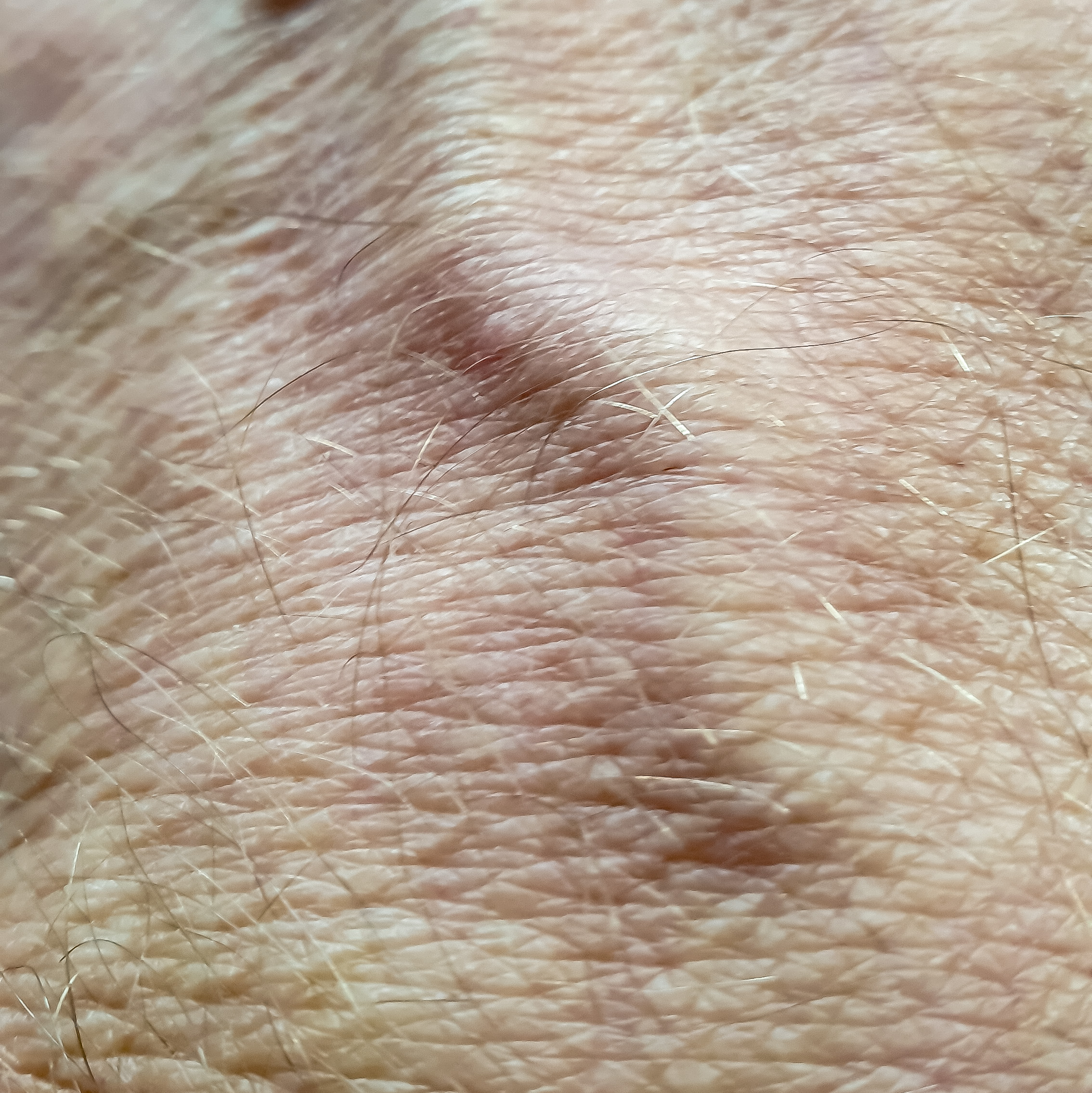
Our skin is densely packed with sensors that react to temperature, air movement, pressure and even static electricity and chemical irritation. Our skin sensors tell us when a surface is safe to grip or walk on. We have sensors that provide feedback about the things we pick up, bend, twist, press, push and pull. Other sensors tell us when we are being exposed to excess heat or cold.
Human beings are unique in nature in that we are the only species that covers most of its skin, thus depriving us of a huge amount of sensory information. However, that particular behaviour is a relatively recent innovation. Modern humans have only worn clothes for about a third of their time on Earth, and there is very little evidence to suggest that our hominid ancestors ever saw the need. As with our other senses (although to a lesser degree), evolution hasn’t caught up with the changes we have made to our habitats through migration and building – we are still essentially adapted to living wild on the open plains of Africa.
Depending on the nature of the sensory inputs through our skin, we can experience great pleasure or immense pain. Those experiences are enhanced the more that the skin is exposed.
One of the reasons we find draughts so annoying is that our skin is detecting air movement over only small parts of exposed skin, but not the rest. As a result, we get conflicting sensory inputs. Our neck and face might feel chilly, turbulent air currents, but the rest of us is wrapped up snug and warm. We have to use mental effort to understand what is going on.
In workplaces, we deprive ourselves of tactile and haptic experiences. Surfaces are smooth (for easy cleaning, as well as aesthetics) and we spend so much of our time still, apart from tapping at keyboards or picking up the phone.
So, what is the answer?
There are few opportunities to expose the skin to the environment in most workplaces. Society is probably not yet ready for naturist offices (although homeworking during the pandemic lockdowns offered many the chance to experiment), so any tactile and haptic stimulation needs to be directed at whatever skin is exposed (face and hands in the main), or be felt through clothing.
But it is not enough just to stimulate the skin, there can be purpose behind it.
Textures can be used very effectively to demarcate spaces and indicate safe, or preferred routes (think of textured pavements near pedestrian crossings). They can also be used to indicate status and authority – thick carpets and soft textiles are often associated with luxury and opulence, as are natural materials such as wood and stone. Whilst the general office accommodation in a building might be a sea of laminate desks and hard-wearing carpet tiles, the executive floors tend to be more cosseting. These areas have an abundance of more natural materials and they often feature more interesting and varied textures.
The indoor climate can also be managed in a way that is more in keeping with our sensory needs. I’ve already mentioned a reason why draughts are irritating, but other aspects of thermal regulation are important too. Heat and humidity, as well as air flow, can have a significant impact our comfort.
Humidity is especially important as far as comfort is concerned. Too humid and the air is clammy and our clothes get sticky and damp, which is not comfortable. Too dry, and our skin needs artificial moisturising to prevent itching and irritation.
In a typical workplace, our environment is pretty much fixed, or variable within a very limited range. In open offices, personal control is very limited. Office workers can neither change the environment nor their behaviours beyond a narrow spectrum.
When not in the office, we can make adjustments to our behaviour to adapt to a changing environment. Uncomfortable skin can be made more comfortable by moving from one place to another, by adding or removing clothes or by taking a refreshing shower. We can choose to walk on carpet or a hard floor, or sit on a soft cushion or wooden bench. We can often change some elements of the environment ourselves, by changing the temperature, for example. We have agency.
I first wrote this in May 2020, during the fifth week of the first lockdown in the UK. Most office workers were working from home. Perhaps, for the first time in their working lives, people were able to manage their working environment in ways that are not possible in an office building. Whilst it might have been lonely to be away from colleagues, it is likely to have been a more physically comfortable place to be. I wonder how much people will miss their control over their sensory environment when they return to the office. Maybe this is one reason why remote and hybrid working remains popular).
My recent post about the benefits of indoor air quality (IAQ) monitoring spoke about how monitoring can be empowering and lead to improved productivity and business effectiveness. It was written before the full impact of the Coronavirus lockdown really hit. One of the most interesting things about monitoring and measuring IAQ is how our perception of what is important varies according what we are doing and how we are feeling at any time. Our urge to control our environment, even if that control may end up with exposure to something harmful, is very strong.
A recent article in the Guardian highlighted some interesting research about the link between high levels of pollution and high levels of Covid-19 mortality, in particular, pollutants such as fine particulates, sulphur dioxide, nitrogen dioxide and ozone. Exposure to these pollutants seems to weaken the immune response and also damage the fine lining of the upper respiratory tract – the main site of infection by the virus.
There is an excellent podcast featuring Professor Anna Hansell (professor of environmental epidemiology and director of the centre for environmental health and sustainability at the University of Leicester)explaining all of this here.
Another report, also in The Guardian, adds weight to the link between Covid-19 and fine particulates, but this time suggesting that the virus might be carried on those particulates – two health threats for the price of one!
What does this have to do with indoor air quality and monitoring, especially at the workplace?
In modern airtight buildings with complex air management systems, it is possible to keep levels of these externally-generated pollutants down to safe levels. There are any number of air purifiers, filters and indoor vegetation systems that will help to manage this. And there are good IAQ monitors to help building operators to keep an eye on conditions. What cannot be managed, though, is the exposure of office workers to these pollutants on their daily commute or in their own homes.
Older buildings are more difficult to manage. They are often permeable (or just plain draughty), may have opening windows (which many office workers regard as being very important, and which are very effective at enabling people to reduce productivity-destroying carbon dioxide in a matter of minutes).
Openable windows would, in many situations, be great for businesses. Empowerment and physical comfort – both of which can be managed by the simple act of opening a window – are known to be drivers of performance. However, when opening a window means bringing in a load of invisible and harmful pollutants, then other measures must be taken.
An IAQ monitor (preferably with a real-time display) would, of course, be the an ideal tool to have. It would show when levels of harmful pollutants exceed safe limits and show when to close the windows. By making the monitor visible to staff, as well as building managers, the decision to act is in the hands of the workers – empowerment is restored.
Covid-19 has brought home how vulnerable we are when our respiratory tract is damaged. Pollution is something that we must pay more attention to – it is a modifiable risk factor. Not just within and immediately surrounding our workplaces (including our home workplaces – and who measures IAQ there?), but in the wider environment too. On our commute to work, where we take exercise, where we educate our children or house our senior citizens.
The old saw, “you cannot manage what you cannot measure”, is in many instances nothing more useful than the cliched utterances of a contestant on The Apprentice. However, where air quality is concerned, there is a lot to be gained by measurement.
One of the most pernicious aspects of modern working is the use of monitoring equipment by organizations to keep their staff on their toes. Often such monitoring is used to determine productivity metrics (without much understanding of what productivity really means).
However, there are some occasions where monitoring can be quite empowering, and that is in the area surrounding the use of environmental monitors, especially those for air quality.
The new RESET standard, for example, is one of those certifications that has the potential to empower and embolden building users (office workers, retail customers, hotel guests, etc.) to demand changes to the environment for comfort and safety (and also productivity).
The RESET standard (which has some degree of alignment with other building certification systems, such as WELL) not only requires several important parameters of indoor air quality to be measured and recorded (useful for building managers assessing the performance of their HVAC systems), but also to have indoor air quality reported in real time and displayed in such a way as to be accessible and understood by building users.
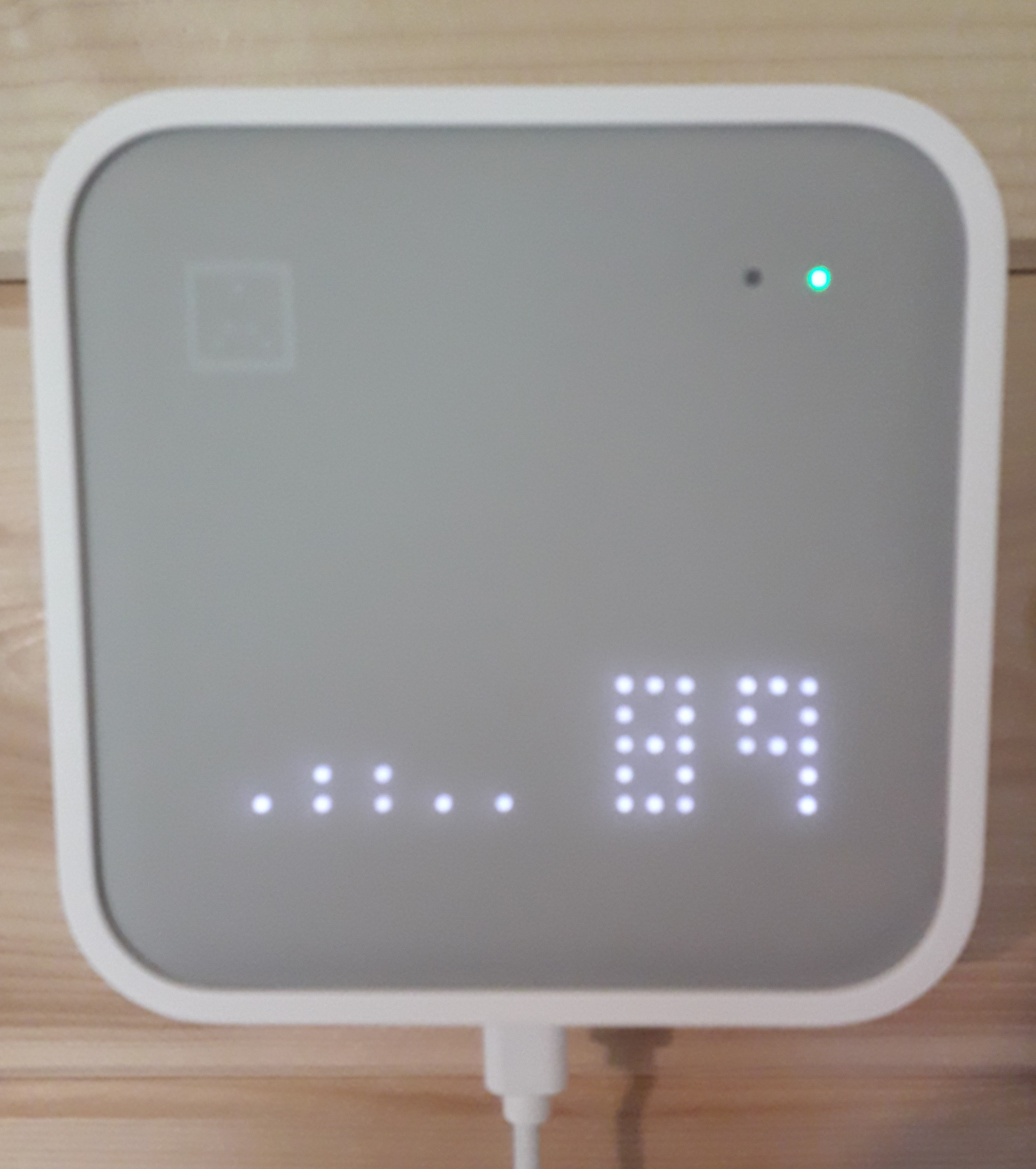
Awair Omni indoor air quality monitor. The green indicator light and the score show that the air here is very good
Such monitors can be very empowering. If they are visible and showing that there is something not quite right about the air, then that provides the evidence required to make a complaint to the facilities help desk. As well as the office worker seeing the data, the facilities help desk should be able to see the same information. Not only that, but there will be a record of the data, so trends can be observed and potential problems identified and fixed quickly. Furthermore, employers can be held to account if monitor data are not acted upon.
Sometimes, people are reluctant to complain, for fear of being regarded as moaners. However, a dispassionate air quality monitor certainly empowers and emboldens people to encourage their employers to manage the environment better, or even hand over control, where practical, to the users of the space concerned. Where organizations are struggling to retain and recruit, such a visual demonstration of provision of a decent quality working environment is very helpful.
Taking appropriate action
My recent forays into the complex world of indoor air quality (and I claim little expertise beyond a couple of online courses and some fascinating discussions with real experts) has demonstrated just how complex and multi-dimensional the subject is. Even though there are many indices for air quality, it is an understanding of the relative importance of each parameter in different situations that is fascinating – and this goes beyond purely objective physiological impacts. It strays well into aspects of human behaviour.
It is actually very important to recognise how individuals are pretty good at determining what matters to them.
Whilst maintaining a safe environment always has to be a top priority for building operators, the fickleness and resourcefulness of the apparently irrational humans that populate the building have to be taken into account.
In buildings where it is still possible to open windows, there is a risk that pollutants from outside will be brought in, which might worry a facilities manager doing their best to keep particulates out. However, that simple act of opening a window because the office is stuffy is both empowering (individual control rather than imposed conditions), but also might be the most effective way of getting rid of pollutants building up inside the building (carbon dioxide and VOCs for example).
People are actually quite good at assessing some risks. At one building where I carried out some interviews of office workers, most people readily appreciated that there were risks of pollution coming in when opening a window (the office was only a few hundred metres from a busy motorway), but they were prepared to do that because they wanted to freshen the air and reduce stuffiness (associated with carbon dioxide, temperature and humidity).
An air quality monitor might be one way to resolve arguments between facilities managers and building users – the decision to open the window can be validated by an improvement in the particular indoor air quality parameters that mattered to the user at the time.
Air quality monitoring for performance
Some recent research, for example that carried out by Joseph Allen (https://ehp.niehs.nih.gov/doi/10.1289/ehp.1510037, for example) shows clearly that elevated levels of carbon dioxide have a significant impact on cognitive ability.
It only takes a few minutes in a meeting room for carbon dioxide levels to increase above levels that are detrimental to cognitive ability. One of Allen’s studies showed that, on average, a 400-ppm increase in carbon dioxide was associated with a 21% decrease in a typical participant’s cognitive scores.
My own (rather informal) studies carried out in a small (but not untypical) meeting room showed that a small group of people in a 36 cubic metre room could increase carbon dioxide concentrations from a base level of approximately 500 ppm to over 1,200 ppm in under fifteen minutes.
Given that important business decisions are often made in small meeting rooms, rather than well-ventilated open-plan offices, it is potentially very concerning that those critical decisions are made by people whose cognitive abilities are compromised by high levels of carbon dioxide – senior executives are just as susceptible to the effects of elevated carbon dioxide as anyone else.
With office workers rightly being told to work from home during the coronavirus crisis, employers seem very keen to pass on tips for how to do it. Interestingly, the people who do it regularly are rarely asked for their advice. So here are some thoughts and tips for employers as well as new home workers.
Tip No. 1 for managers: trust your staff. They probably know how to do their job and don’t need micromanaging or check-ins every 20 minutes. Timetabled calls and clear plans are fine – everyone welcomes clear direction and constructive review.
Tip No. 1 for new home workers. It’s OK to mute notifications. If you are lucky enough to be able to get into a state of flow whilst working, you can do without the buzz and distraction of chat messages. Every interruption is going to take about 20 minutes to recover from.
Tip No. 2 for managers. Don’t be frightened that your lack of direct supervision will make you irrelevant or in some way invalidate your purpose. If you are any good at management, you will be respected more by trusting and empowering your team.
Research shows that empowerment results in better business outcomes (my good friend Dr Craig Knight – @TheBritishPsych – can tell you more about that). You might find your team becoming even more productive and you will be a hero.
Of course, if you do want to micromanage and over monitor under really stressful times, your team’s performance will drop, you will lose respect and credibility and will rightly be considered an arse.
Tip 2 for home workers. Put yourself and family first. You will find a way to work and come up with routines that will work for you. The complications of suddenly becoming home educators don’t help and it may take a week or two to adapt. At the end of this, managers and workers might want to rethink the working dynamic. This is an opportunity to learn a lot about individual working styles and how to accommodate them for the benefit of all.
If homeworking turns out to be more successful than traditional managers hope, then physical offices are going to be much more like co-working spaces than the battery farms of now – free-range humans, having tasted freedom and flexibility might be reluctant to return to the old ways. It has been said that the mistake Churchill made at the end of WW2 was that he assumed that successful wartime leadership would be rewarded by a return to the status quo ante. It wasn’t.
There was a social revolution then. There may be a workplace revolution in the autumn.
Evolution is often a gradual process, but massive change applies the greatest selection pressure. Those that can adapt and adjust to new circumstances will fill the voids left by the dinosaurs. Tyrannosaurus rex was top of the tree once.
Thoughts on biophilia and biophilic design (part 1) – it’s as much to do with human physiology as it is an emotional response
I’ve been thinking a lot about why Biophilia and biophilic design has much more to do with evolution and the way our senses work, rather than the emotional response to nature that is so-often suggested.
Let’s look at one definition of biophilia. The most famous, and most important is that given by EO Wilson – the man who catalysed the development of the concept. In 1984, he defined Biophilia as “…the innate affiliation people seek with other organisms and especially the natural world.”
This is a strong statement. Wilson also speaks of the human bond with other species, which is beautifully explained in his book. This all suggests that biophilia is essentially an emotional need to connect with nature and natural surroundings.
Stephen Kellert, the grandfather of biophilic design, spoke of “our physical, emotional and intellectual inclinations for nature and life”. By expressing our need to connect with nature on an emotional level, we instinctively understand the concept. We remember that being in natural places makes us feel good and that the countryside or woodlands are instantly relaxing.
Bringing nature into our built environment – our offices and cities – is a great response to that feeling of calm we get when in nature. However, let’s examine why being in nature really makes us feel comfortable.
I contend that it isn’t wholly a psychological or emotional need, but much more of a physiological need, based on humanity’s evolutionary history and our origins in the plains of Africa.
If you were to take a mole away from its burrow and place it in an open, sunny garden, such as where we might want to spend some time, it would be stressed, frightened and try to dig a new hole. Its senses are not able to cope with the bright light, the lack of close skin contact and the shrill noises of birdsong. Millions of years of evolution have produced a creature that thrives in dark, damp, tight tunnels. This is where it finds food, shelter and other moles with which to mate. If we were to create an environment for a captive mole, it too would be dark, damp and tight, because that would be the humane thing to do.
A mole would rather be underneath this garden than in it!
When we create environments for humans – offices, for example – we tend to make them very space efficient, very energy efficient and completely unlike the environment where our species has spent over 99% of its evolutionary history.
Not our natural habitat
Humanity evolved on the plains of Africa. Wide open spaces with undulating landscapes. The vegetation was scattered and grew in clusters; water was plentiful and skies were bright.
Humans use their eyes to look for food and threats – sight is our most developed sense. Colour perception for us – the part of the spectrum that we can see – enables us to spot shapes (food or danger) against the background of vegetation, and recognise when fruits are ripe.
Our hearing is fine tuned to the noises of prey animals and the sound of running water. Our sense of touch helps us to determine the quality of materials that we can use for shelter, and our sense of smell tells us what is safe to eat. Our senses are highly adapted to that environment. Those senses evolved to enable our species to survive. If we stress our senses, we react as if there is a threat to our survival. Stress hormones prepare us to fight or flee. Our senses become overwhelmed or under used.
Biophilic design is the trend of the moment and is associated with wellbeing. However, many designers think mainly, or only, in terms of the emotional, almost spiritual, need to connect with nature. This can be an effective approach, is easily understood and has a lot of merit.
However, I think we can create more effective spaces if we unpick what we mean by an emotional response and use a sensory approach to design. Let’s stimulate our senses the way nature intended.