Lots of people are selling products that are supposed to improve indoor air quality. They may be air purifiers, filter systems, complex green walls or even pot plants. Many claims are made, but how do you know whether the systems you are buying are doing what you need them to do? This is where air quality monitoring comes into its own.
(By the way – I’m not trying to sell you an indoor air quality monitor, or any form of air purifier. However, I can help your business set up an IAQ monitoring project and even help you on your way to gaining a RESET certification for your buildings, which will also help you with WELL and Fitwel certifications – please get in touch if you want to know more).
Why monitor indoor air quality?
Good indoor air quality is often thought of subjectively. Human perception of good air quality is difficult as our senses evolved to deal with environments that were unpolluted. As long as we could detect smoke, which suggested an immediate threat (or, conversely, the possibility of a cooked meal and convivial company), air quality was not much of a concern to our plains-dwelling ancestors.
Inside buildings, we often only notice an issue with air quality when it directly affects our comfort. We might describe the air as heavy, fusty, stale or stuffy. Stuffiness (often as a result of elevated carbon dioxide from our exhalation, combined with warm temperatures and high humidity) can be alleviated by opening a window. Carbon dioxide (and airborne viruses, such as Covid-19) inside the building is diluted by bringing outside air in, and humidity and temperature might also be made more comfortable. This improvement to our comfort, achieved by a perceived improvement to indoor air quality, is not the whole story.
Opening the windows might risk exposure to other harms that are not readily detected by human senses. Fine particulates, volatile organic compounds or various oxides of nitrogen or sulphur are not usually detectable by human senses, so how do we know whether they are present?
Only by using calibrated IAQ monitors that measure, record and report key parameters of air quality can you then set out to manage air quality and reassure the users of the building that their safety and comfort is being looked after.
Without data from air monitoring, any management of indoor air quality is pretty-much based on guesswork, which is inadequate for the proper management of risk in a building.
My new white paper explains how and why organizations should develop an indoor air quality monitoring and management programme, which you can download here.
A lot of indoor plant sellers will tell you that indoor plants will purify the air. Sometimes, they refer to experiments carried out by NASA (40-odd years ago) to prove the point. However, careful analysis of some of these claims shows that the claims are often exaggerated, or taken out of context.
That doesn’t mean that plants have no impact on indoor air quality – they can. So, how can you get the most of plants’ abilities to affect the indoor environment? I can’t promise miracles, however.
A brief history
In the early 1980s, NASA was investigating the ways that astronauts could maintain their environments whilst on long-term missions. The reaction of photosynthesis is a way of producing fresh oxygen for the astronauts to breathe, and some plants are good at removing other pollutants from the air and water.
The idea was that by having completely sealed living environments, humans and plants could live in complete balance. Coupling this with optimal growing conditions for vast amounts of greenery, the resources needed for a long-term mission could be reduced. This was only a few years after the last manned landing on the moon. Early space stations (Skylab and Mir – the forerunners of the International Space Station) had been launched and were being lived in for months at a time. This research clearly became very important.
Skylab space station (image from NASA)
The results of the experiments showed that some plants were especially good at removing pollutants such as some volatile organic compounds (VOCs). Some of these are quite unpleasant and are associated with harmful indoor air quality. These plants have become quite well known and are often referred to as the NASA list of air cleaning plants.
Sick buildings – could plants be the answer?
In 1984, the World Health Organization gave a name to a recently discovered phenomenon. People were feeling ill in modern buildings, and analysis of the environments in some of these buildings identified a number of VOCs as being likely causes of the problem. That problem became known as Sick Building Syndrome, and a great deal of effort was expended trying to identify the building components most responsible for the release of these chemicals into the air inside buildings.
It didn’t take long for someone to notice that a lot of the VOCs identified as being associated with sick building syndrome were those that some plants seemed to be good at removing. Indeed, one of the scientists involved with the original NASA experiments – Bill Wolverton – has since made a career writing about how houseplants can create fresh air.
However…
Thinking back to the original NASA experiments, you will notice that they were carried out with a specific purpose in mind. The plants were grown under conditions that made them actively grow – their metabolism was optimized by controlling the environment with high light levels, good humidity, warm temperatures and precise levels of plant nutrients. There were also vast numbers of plants in the growth chambers.
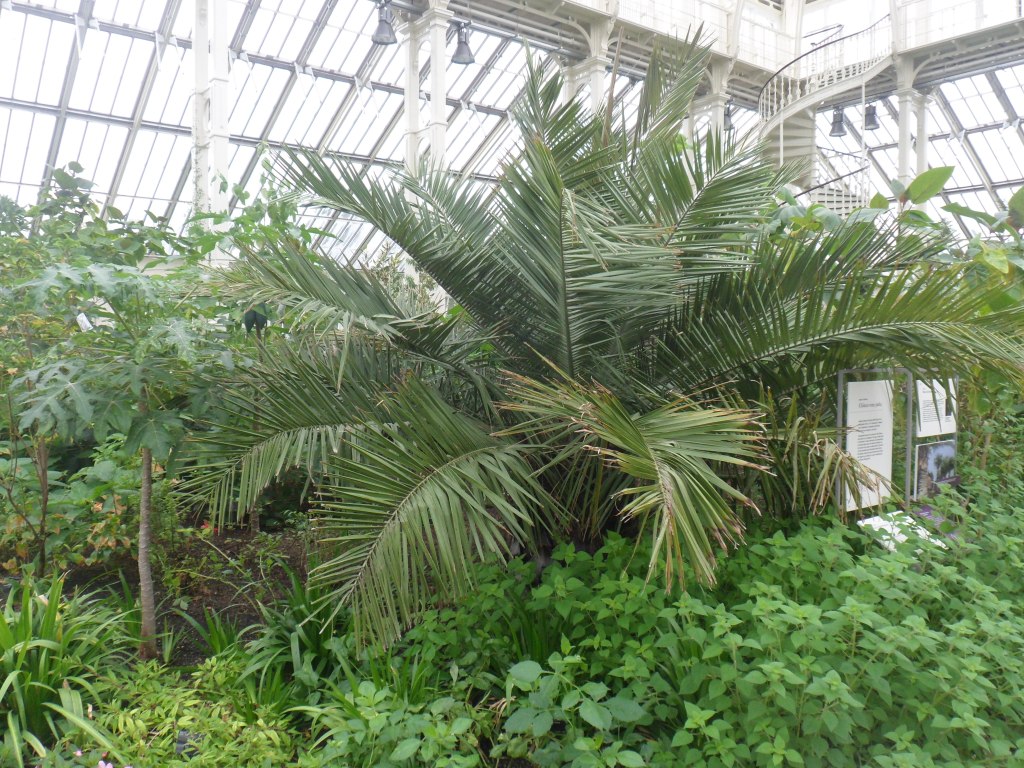
If you ever visit the hot houses at a botanic garden, such as Kew or the Eden Project, you will experience exactly the type of environment the plants experienced in the NASA experiments. The air inside those spaces is uplifting, fresh and life-supporting. The difficulty lies in recreating those conditions in homes and offices.
Issues of indoor air quality
Fortunately, since the early 1980s, the use of products in buildings associated with sick building syndrome has been significantly reduced. Most homes and offices are not full of nasty VOCs. However, there are some pollutants that have the potential to cause harm, or at least discomfort.
Volatile organic compounds (VOCs)
There are many sources of VOCs in houses. In fact, almost everything you can smell is a VOC of one type or another. Paints and new furnishings often release some compounds, but more mundane products are the biggest source: cleaning products, cosmetics and toiletries. Cooking, too, also produces types of VOC, as does opening a bottle of wine or mixing a cocktail. Most of these VOCs are harmless, although some can be irritating. Other VOCs are actually the result of human physiology. When you breathe out, there will be some VOCs on your breath as well as carbon dioxide and water – these are just the products of digestion and metabolism.
More worryingly are the VOCs that can enter the house from outside. Vehicle emissions, agricultural and industrial activities all contribute to VOCs in the atmosphere that will find their way indoors.
Fine particulates
A more pernicious threat to human health comes from ultra-fine particulate matter, usually produced as a result of combustion. These are often classified as PM10 (particles smaller than 10 μm in diameter) and PM2.5 (particles smaller than 2.5 μm in diameter). These particles can be breathed deeply into the respiratory system, where they remain. Fine particulates come from vehicle exhausts, inefficient combustion of gases and even cooking.
Dust
Larger particulates, such as dust, can irritate the respiratory system and contribute to asthma and allergies. These are either produced inside buildings (and are usually composed of dead skin cells and pet dander), or can be blown indoors through doors and windows (such as fine dust from roads and fields or construction, or pollen from trees and grass). Since most homes are not airtight (and most people wouldn’t want them to be – opening a window is a great way to refresh the air and create cooling breezes indoors), there is little that can be done to prevent dust from getting in from the outdoors. Remember, also, that good ventilation is recommended as a way of reducing the risk of Covid.
Carbon dioxide
The atmosphere is composed of approximately 78% nitrogen, 21% oxygen, 0.9% argon and 0.1% of all other gases (including 0.04% carbon dioxide).
About 80% of the entire atmosphere is within 15km (10 miles) of the earth’s surface (which is only 0.2% of the earth’s diameter) – a fragile and wafer-thin envelope upon which all life depends.
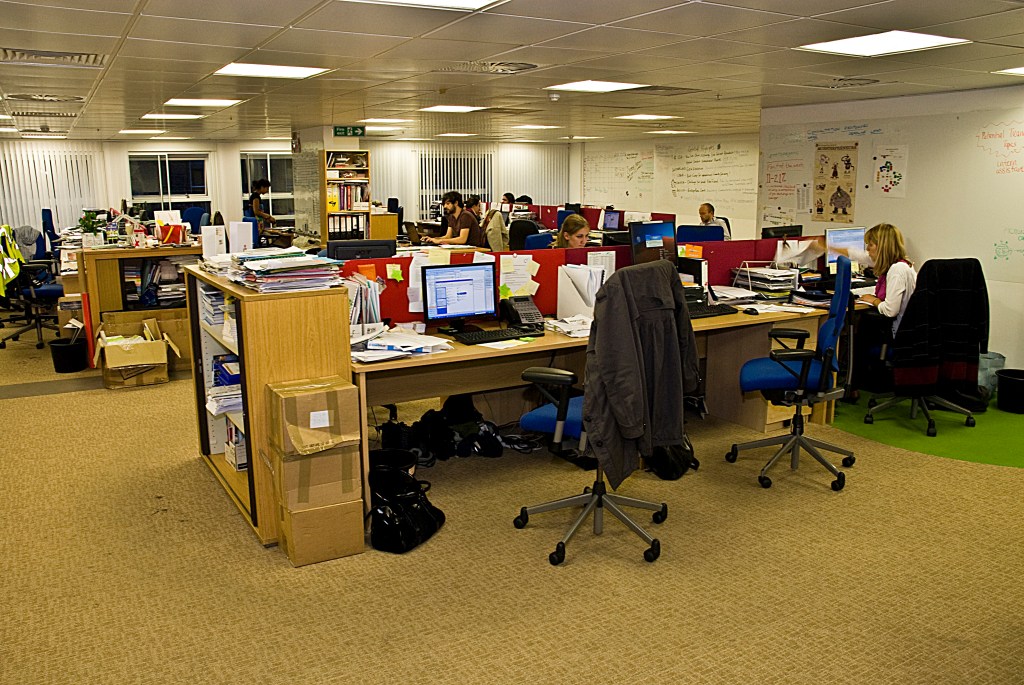
Elevated levels of carbon dioxide are more of a problem in offices than in homes. Small meeting rooms with lots of people, will result in CO2 levels rising fast and getting to concentrations high enough to cause drowsiness and impair cognitive function – just one reason why outdoor meetings might make for better business decisions. In the home, this is less of a problem, although in the winter, when everyone is indoors and windows remain firmly shut, CO2 levels might rise above comfortable levels.
How can plants help
Most homes cannot house enough houseplants to actively purify the air. They also cannot provide the necessary conditions for houseplants to be physiologically active. An environment that could replicate the effects found in laboratory experiments would be extremely uncomfortable for people to live in.
However, there are ways to use plants indoors to improve air quality, and some plants are better than others at doing this.
The key is to match the plants well to their environment. The more closely matched they are, the more physiologically active they will be, and that is when the effects will be greatest.
When you search for indoor plants online (whether for home or office), you will often see that retailers often include details about the conditions that they do best under. If you choose plants that suit the different conditions found in the various spaces in your home or office, then you are more likely to notice an effect.
Plants affect the indoor environment in three main ways
Volatile organic compounds
First, the bacteria in the soil that live amongst the roots are able to break down some VOCs, and convert them into substances useful to the plants. This is an entirely natural phenomenon, although only relatively recently properly understood in horticulture. Plants with healthy roots and good soil will have the biggest impact, and those that are the fastest growing will also be the most effective.
Carbon dioxide removal
Second, plants that are actively photosynthesizing will be removing some carbon dioxide from the air. Plants that originate in dark tropical conditions (such as rainforest floors) are able to photosynthesize extremely efficiently – they have evolved ways of making photosynthesis work even in very low light conditions, so that means more carbon dioxide is used by the plants.
It must be emphasized that the benefits to air quality are due to carbon dioxide removal, not increasing oxygen. Why?
The simple equation for photosynthesis shows that for every molecule of carbon dioxide removed from the atmosphere, a molecule of oxygen is added. So, in an office where the concentration of carbon dioxide might be, say, 600ppm, removing 100ppm is a massive reduction (about 17%) and will have quite an impact on the way you feel. However, at best, you will only be adding 100 ppm to the oxygen in the same space. As there is already roughly 210,000 ppm of oxygen in the atmosphere, adding an extra 100ppm to that is an increase of less than 0.05% – not noticeable at all. Actually, you get even that much back as the plants also need some of that oxygen for aspects of their metabolism.
Fine particulates
Third, plants with hairy or slightly sticky leaves are able to trap particulates on the leaf surfaces, including fine particulates. In fact, plants such as ivy and Cotoneaster are used outdoors to mitigate the effects of pollution in urban areas. Some indoor plants can do that too (although they will need to be cleaned – there is no rain indoors to wash that pollution away). In fact, research carried out at Washington State University some years back showed that many different types of foliage plant attracted dust to their leaf surfaces – possibly as a result of an electrostatic effect – so almost any leafy plant will be useful.
Which plants work best
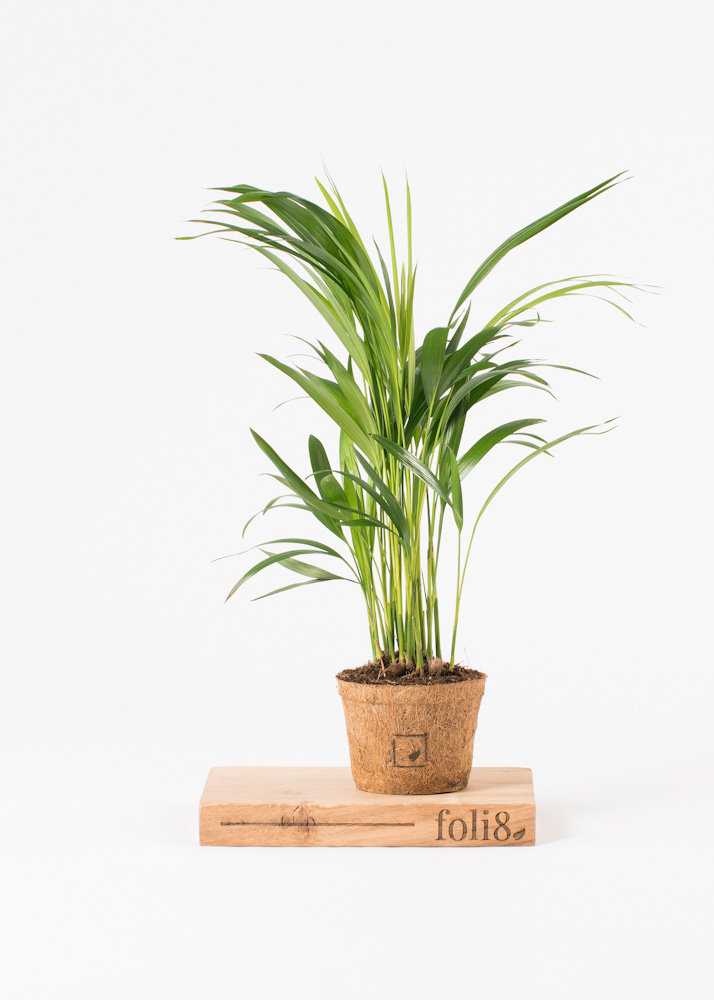
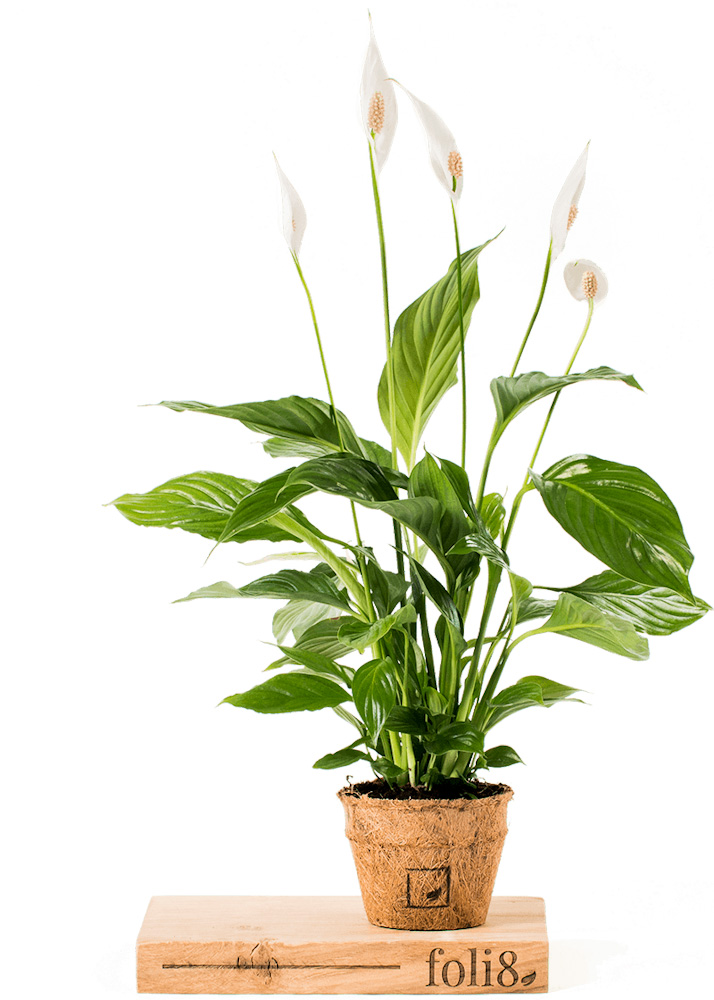
Plants that are adapted to low light conditions will be the best to improve indoor air quality. They are especially effective in reducing VOCs and carbon dioxide. Plants in the aroid family, such as Spathiphyllum, Philodendron species, Aglaonema species or Monstera species will be good, as will other jungle-floor plants such as Calathea species, Ctenanthe and even small palms, such as Dypsis lutescens.
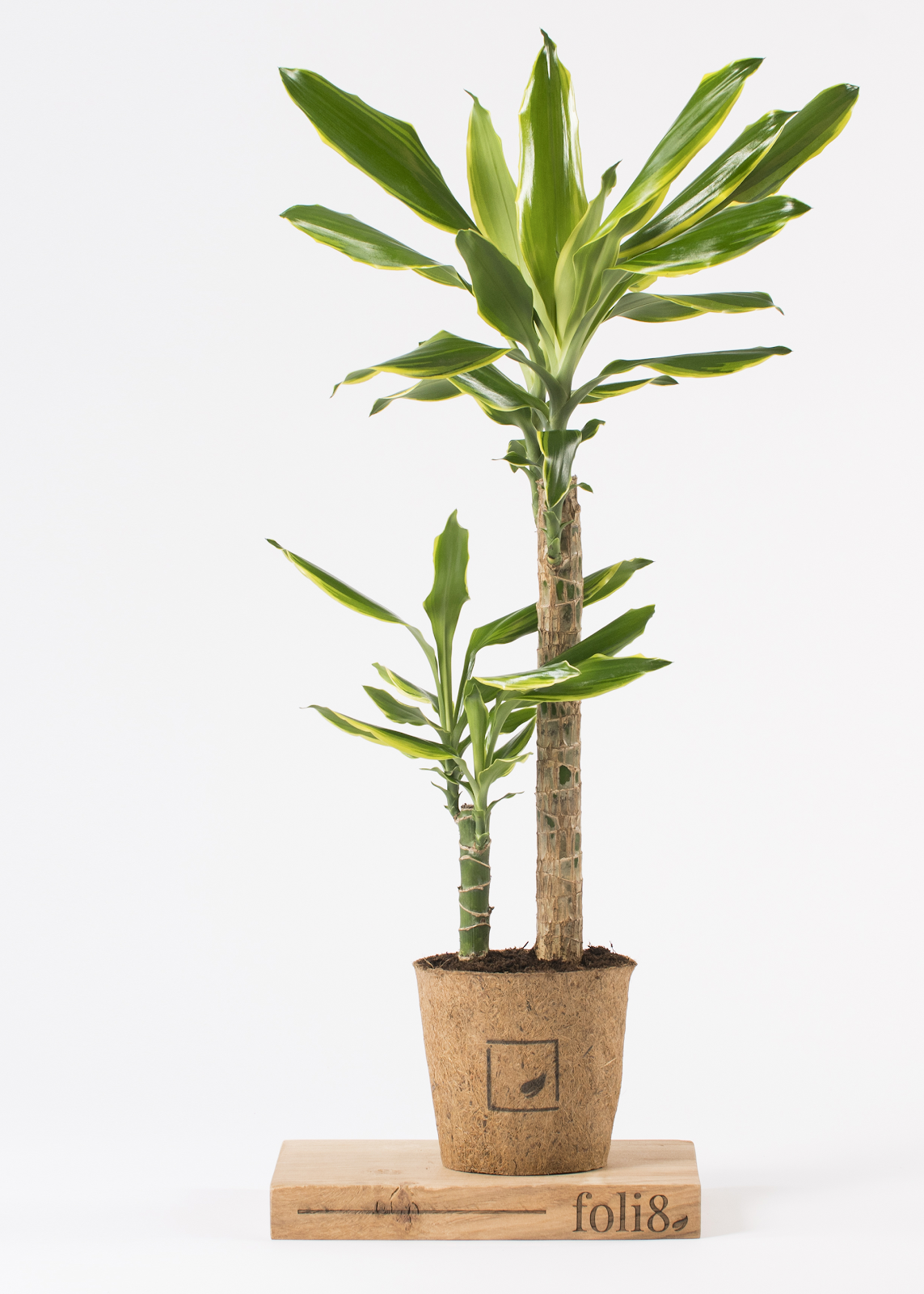
If light levels are slightly higher, Dracaena specieshave been shown to be effective at reducing levels of carbon dioxide. Experiments carried out in Australia by Margaret Burchett, Fraser Torpy and colleagues, in real office conditions, have shown that relatively few plants are needed to have a measurable effect).
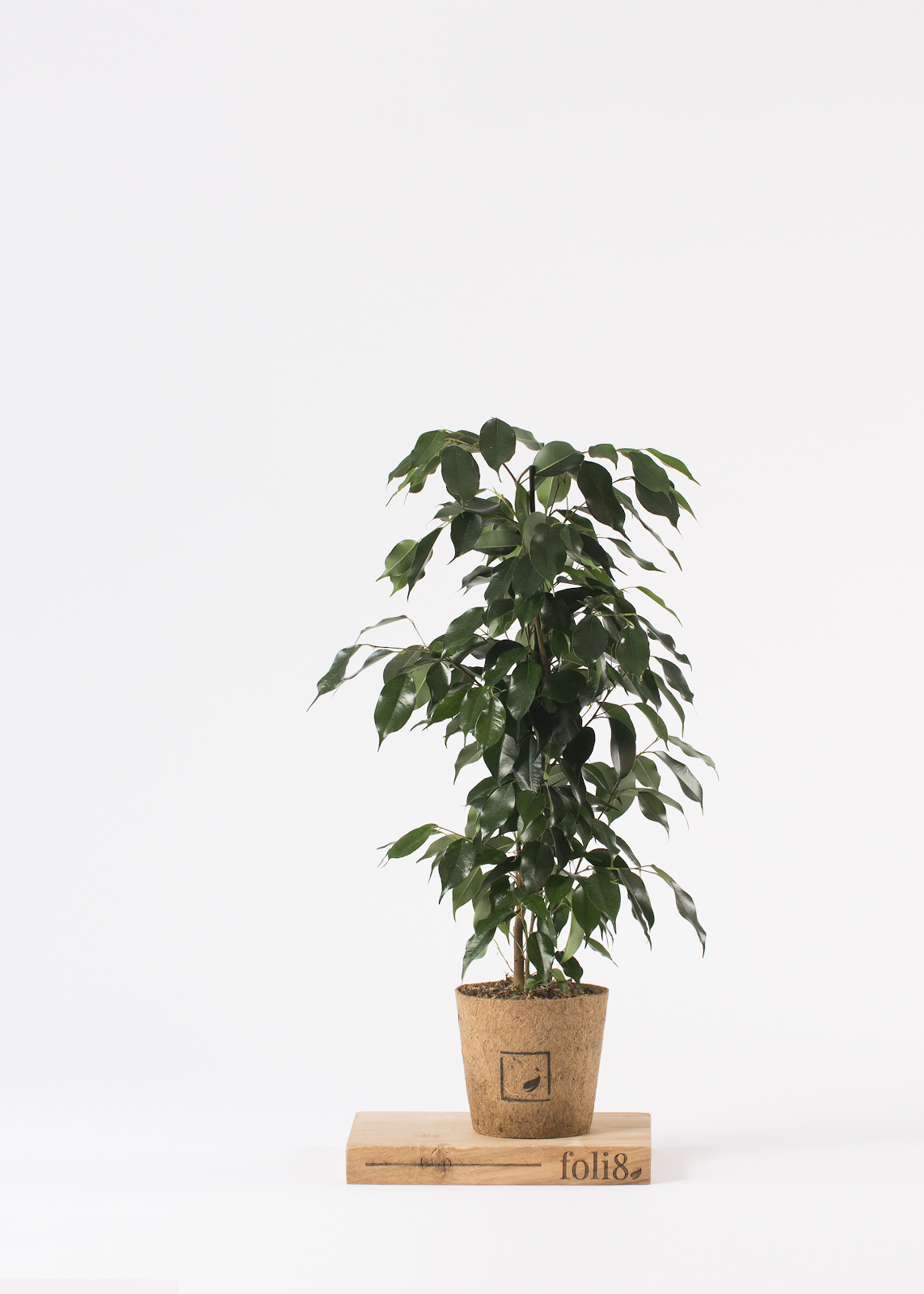
Plants such as Ficus benjamina and varieties of ivy (Hedera helix) and some ferns that do well indoors are good at removing particulates.
Technological solutions
Over recent years, the plant/microbe interactions in the soil have led to a number of innovations that use plants to actively clean the air. These systems were originally designed for large commercial spaces, but domestic-scale systems are becoming available.
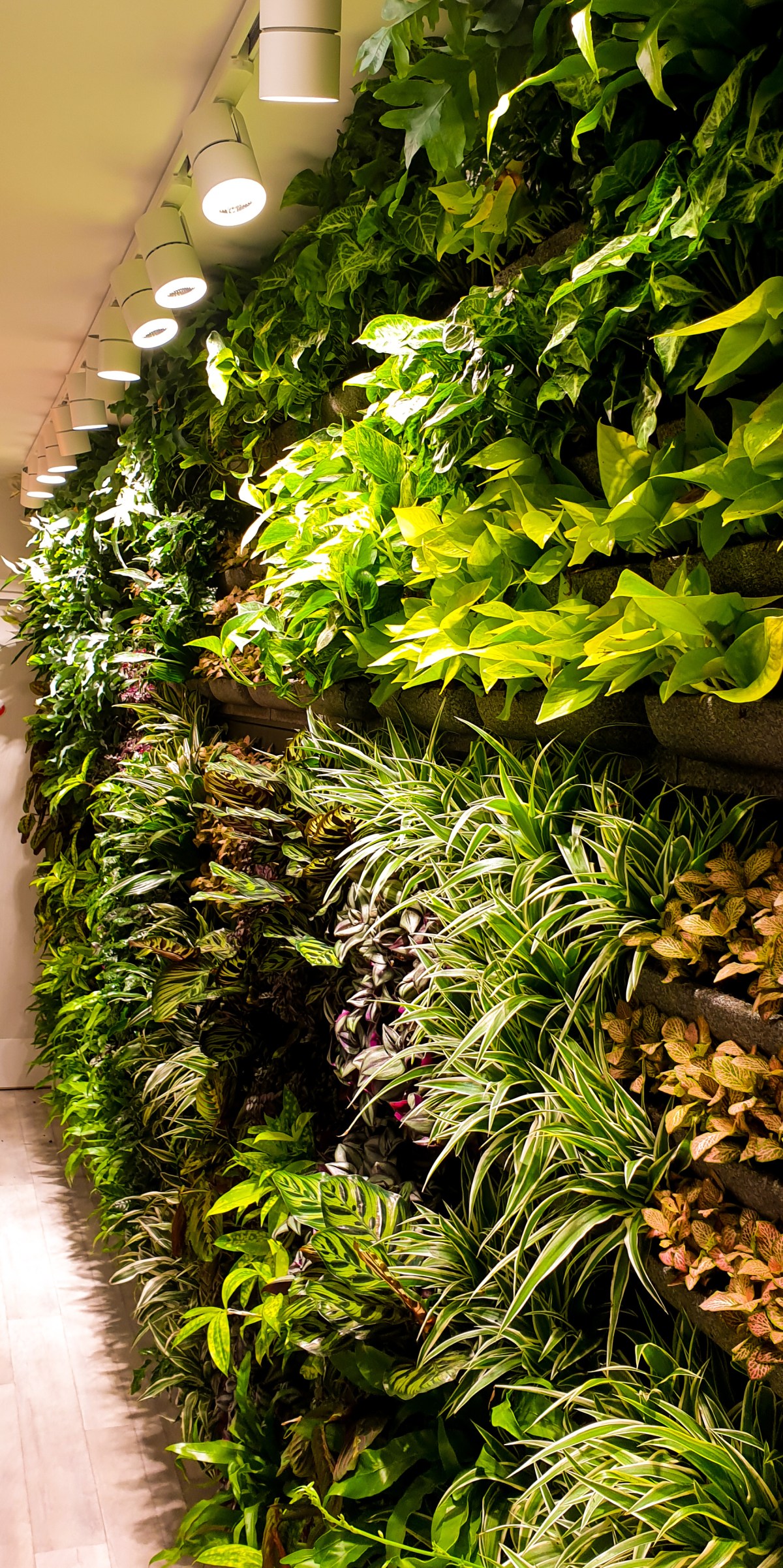
In commercial buildings, green walls can have a dramatic effect on indoor air quality – especially when set up with good lighting systems. This is because green walls are set up with lighting systems, proper irrigation and, of course, hundreds of plants – all of which are physiologically active.
In the home, small green walls can now be purchased for relatively low cost, and can be installed by a competent DIYer. Not only do they take up little in the way of floor space, the large volume of compact plants in a good root environment means that they are going to be very effective – especially if you invest in some plant lights to illuminate them (and these are also getting much cheaper).
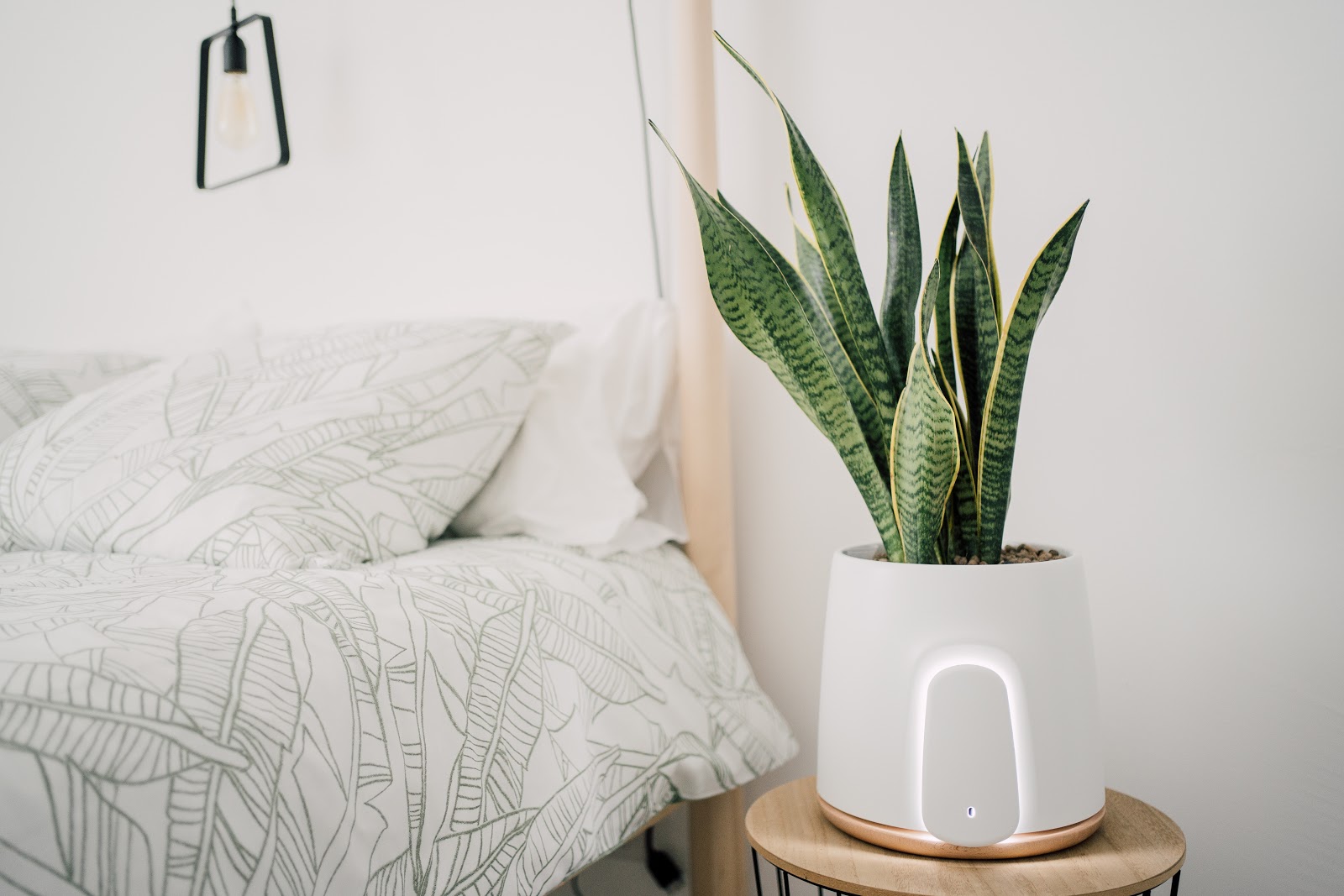
More recently, active air systems have been developed that use fans to pass air through the foliage and the roots to increase the size of the effect. Domestic-scale active air green walls are being developed and table-top systems, such as Vitesy’s Natede planter, are now already on the market.
Disclosure note: the author has commercial relationships with both foli8 and Vitesy. The author acknowledges their ownership of the copyright of their images in this article. The author is happy to recommend both companies. Their products and services are genuinely excellent.
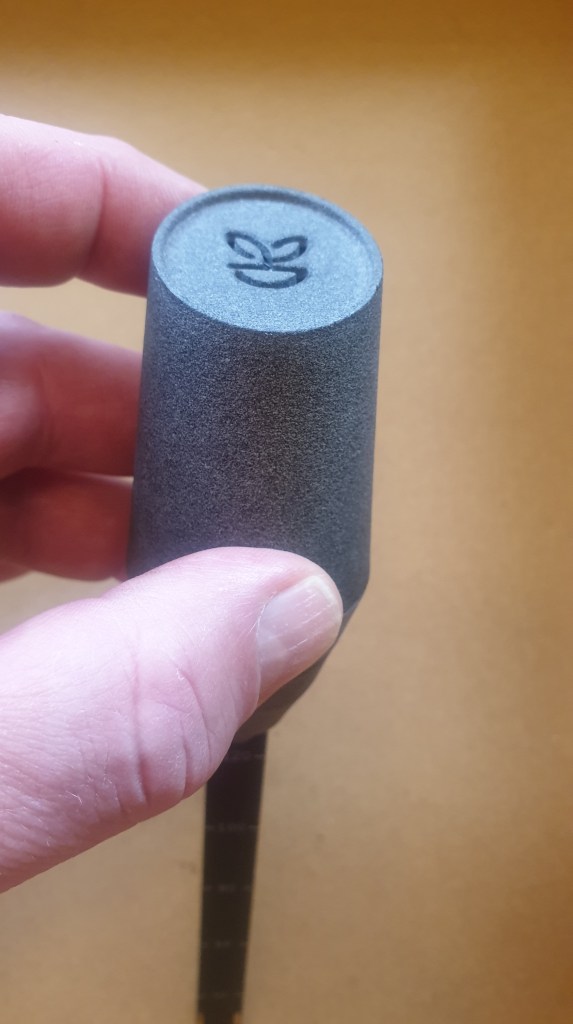
Pre-production samples of Nurtio Technologies sensors have arrived for testing. Three different soil probe lengths and a sensor for hydro plants – all fit into a common power unit that connects to a gateway, and which also houses the light and air temperature sensors.
Everything fits together really well and is a breeze to install – here into a 12 yr old semi-hydro Schefflera arboricola. Data being fed back to Nurtio and will be displayed on a dashboard and app.
This is a really well designed system and will bring great benefits to interior landscapers for service planning, training, assurance and customer care. These are ideal for high value displays, such as expensive indoor trees or green walls when you need to know quickly when the environment changes. The system is also have great value for standard container plants too – it will learn about the needs of the plants and help plan service schedules.
If you are an interior landscaper and would like to know more about this system, please get in touch – this could make your service operations in 2021 much more efficient, especially if your plants are more spread out than before in the new world of dispersed workplaces.
It might be a tempting shorthand, but too many interior designers and interior landscapers talk about biophilic design in terms of bringing nature indoors. This is simply not true. The last thing you should be doing is to bring nature indoors – at the moment it is wet, windy, cold, muddy and the trees are shedding leaves by the ton. I don’t want foxes and crows gallivanting on my desk or slugs climbing my walls. If I want to be surrounded by nature – which I often do – I go for a walk in the fields or woods nearby.
Biophilic design is about improving wellbeing by using some of the cues of nature. As animals, we are as prone to being stressed in unnatural environments as any other species, which is why enclosures in zoos are designed to be as close to the animal’s natural surroundings as possible (and safe).
As a species, we have spent less than a 1% of our history as a domesticated animal (Professor Alice Roberts’ book, ‘Tamed‘, explains rather brilliantly why humans are the ultimate domesticated species – we domesticated ourselves). With that in mind, we need to create our enclosures to be as stimulating and stress free as possible.
We can do that by recreating natural stimuli in buildings – physical and mental – and that does include bringing some natural, or naturalistic elements into our buildings, but it doesn’t mean bringing nature indoors, because that is a bit messy.
For any advice on biophilic design, or if you are working on a project where biophilic design is an important element (and perhaps you are thinking only of plants), please get in touch.
Without a purpose behind a design, and the intent to make an environment better for the people that use it, we cannot describe a space as biophilic.
Over the next few paragraphs (which are based on my presentation to Cultivate ’20 Virtual in July 2020), I am going to discuss what I think it means to build a biophilic design brand for interior landscapers and designers.
It doesn’t mean what logo to use, or what name to give your business. It is more about the philosophy behind your business – your vision and your values.
Why am I banging on about biophilic design – isn’t it what everyone is doing right now anyway?
Biophilic design is the design trend of the moment. It is associated with greater wellbeing. However, many of its proponents think mainly, or only, in terms of the emotional, almost spiritual, need to connect with nature.
This can be an effective approach, is easily understood and has a lot of merit.
Let’s did a little deeper
Research has consistently shown, for almost 50 years (maybe longer) that when we put plants in buildings, things get better.
People feel happier
Symptoms associated with sick building syndrome disappear
Stress can be reduced
People become more productive
Various mechanisms for the benefits have been suggested – physical and psychological – but for years, all we had was a catalogue of discrete research projects without a compelling narrative to tie them all together.
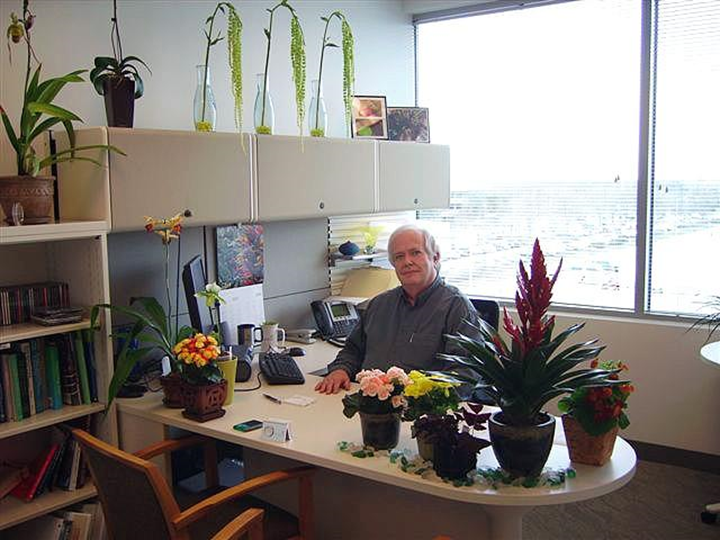
This is Ken Brewer. He was with Ambius (my former employer), and its predecessor companies for over 30 years and was the North America Technical Director. As well as being a much missed colleague and friend, he is the man who first told me about biophilia – some time in the early 2000’s.
When he told me about it, the research that I (and many others) were doing suddenly made a lot more sense.
The concept of Biophilia is not new
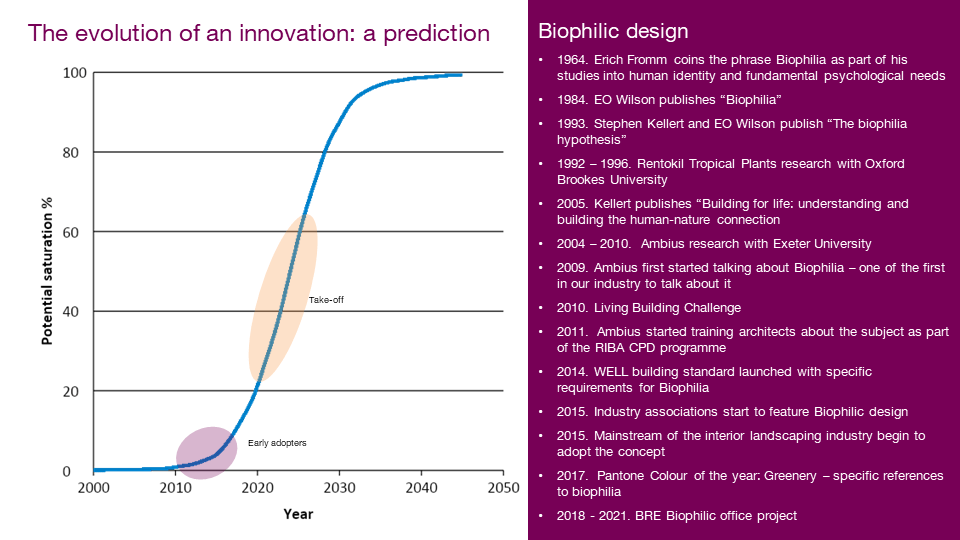
However, it has been the work of Edward Wilson since 1984 (incidentally, the same year that the WHO first recognized Sick Building Syndrome), and more latterly Stephen Kellert, that has brought the concept of biophilic design to a much wider audience.
Biophilia theory is rooted in evolutionary biology and genetics. It contends that we, as a species, have an inherent need to be in an environment that relates to our basic needs as a species.
We evolved, and spent over 99% of our species’ history, in an environment resembling the savannah, and that is the environment that we instinctively feel most comfortable in: open, undulating landscapes with scattered and clustered vegetation and good access to water and shelter.
Our senses evolved to work at their best in such an environment, and so it makes sense to create our artificial environments to stimulate our senses is much the same way as in our wild setting. This is where biophilic design differs from conventional interior design – it combines multiple design elements in a holistic way to stimulate our senses.
The difference between a space full of pretty plants and biophilic design
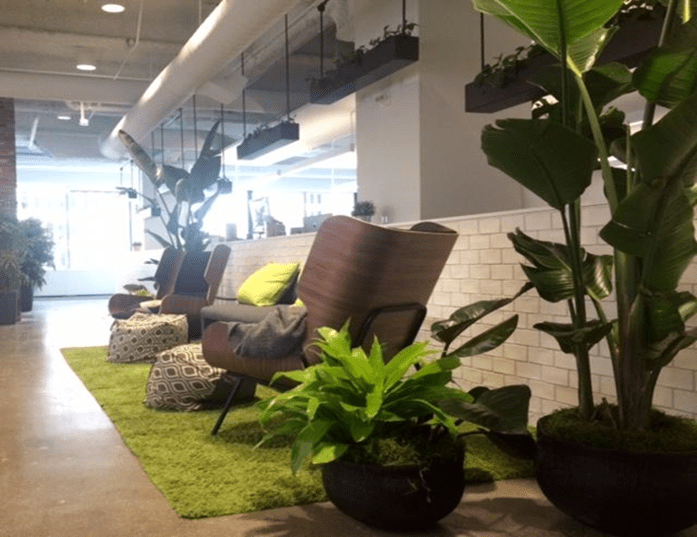
The offices of Segment in California (image by Ambius North America) incorporating many elements that might be considered biophilic
At its core, biophilic design is a design philosophy that is based on biophilia, which incorporates natural elements and natural analogues in such a way as to create an environment that is stimulating, engaging and provides sensory stimuli that work together to minimize stress and discomfort.
It triggers an emotional connection with the space as a result of an appropriate sensory balance and sense of psychological and physical comfort.
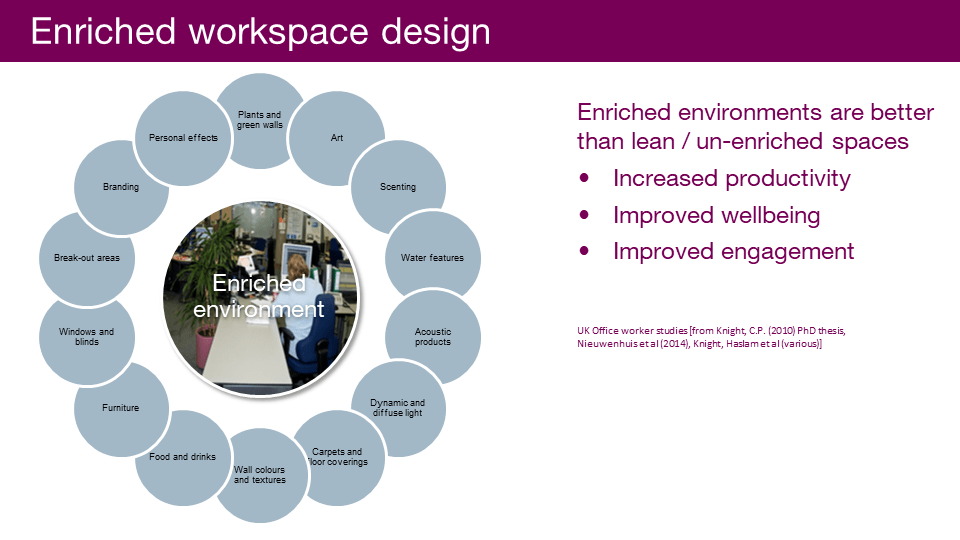
There is a huge benefit to putting plants into buildings – the very act of enriching a space can have some profound effects in terms of wellbeing and productivity.
The difference, however, between doing interior landscaping and biophilic design isn’t what you put in a building, but how what you put in a building speaks to the people that use the building. In other words, it isn’t about the products.
It is also about why.
Why has your client asked you to put plants in their building? What is the intent?
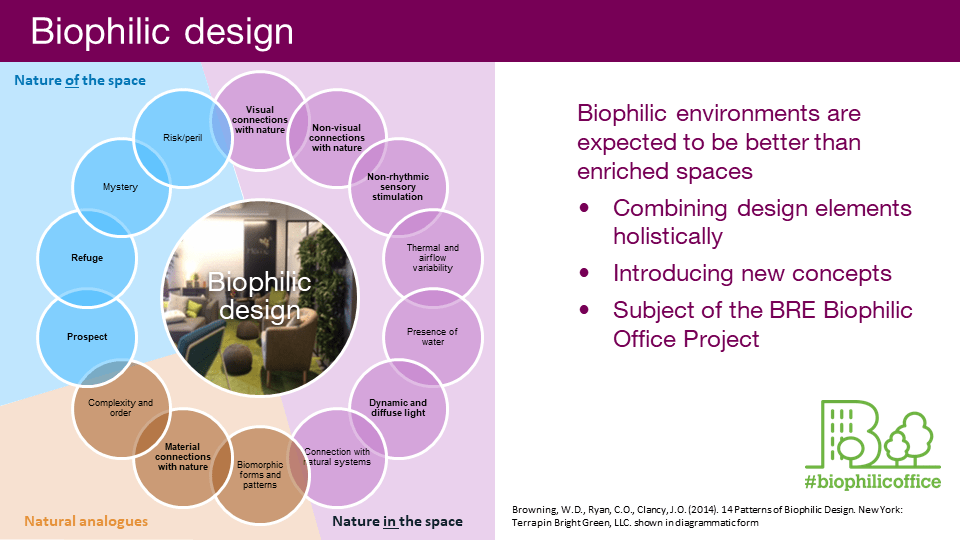
Biophilic design has many definitions. Terrapin, for example, propose a number of characteristics that make up biophilic design in three broad categories, as we can see here.
Nature in the space
Nature of the space
Natural analogues
The first and last of these are areas are what interior designers and interior landscapers are really good at. With a bit of imagination, they can be pretty good at the other as well.
When combined well, these elements create a sensory environment that is harmonious. The sensory inputs we experience are congruent. They complement each other and allow us to understand our environment.
When our senses are stimulated discordantly, when we can’t make sense of what we are seeing, feeling, hearing and smelling, then we become stressed. If we hear a threat, but can’t see it, or if we smell the ocean but see the grey walls of an office, it takes mental effort to come to terms with those stimuli.
The importance of good organizational culture
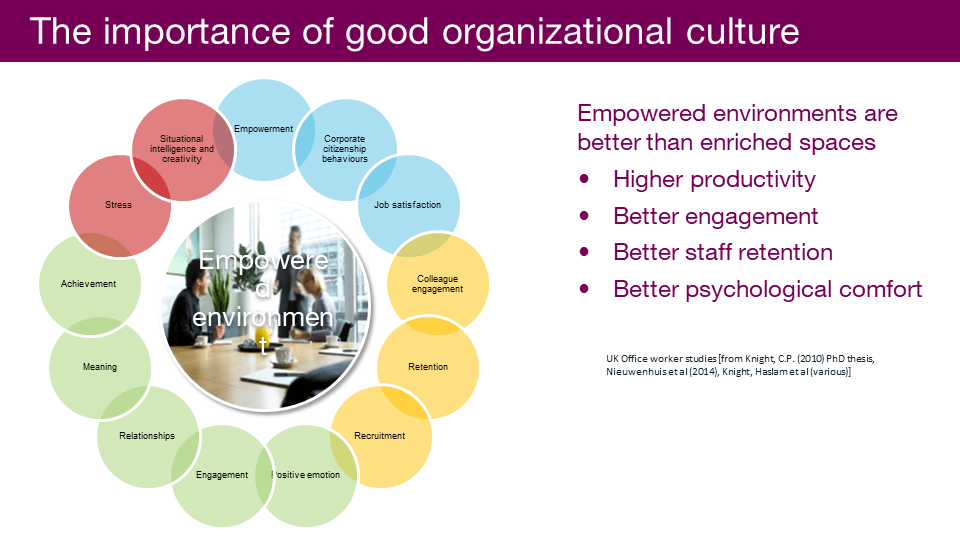
Craig Knight’s research, and that of others, has shown that the biggest impact on performance and wellbeing isn’t plants, art, smells, and everything else that we do, but it is organizational culture.
The more people are empowered to manage their work and their work space, the better things are. Such empowerment can, and should for our industry, extend to engaging as far as possible with the end users of buildings – e.g. office workers – and giving them some agency over the plants and other enrichments.
Get empowerment right, everything else follows
And this doesn’t just mean with the clients. If designers get it right within their own organizations, they too will reap the benefits.
In fact, I think that designers need to live the values that are sold to clients in order to sell those ideas credibly, and for employees to sell and service those ideas with conviction
That’s how you build a biophilic brand identity: human-centric companies providing human-centric services.
It seems to me that it is likely that there is quite a strong interaction between design and organizational culture (although more evidence is needed to determine the strength of the effect), and that there are some synergies to be exploited.
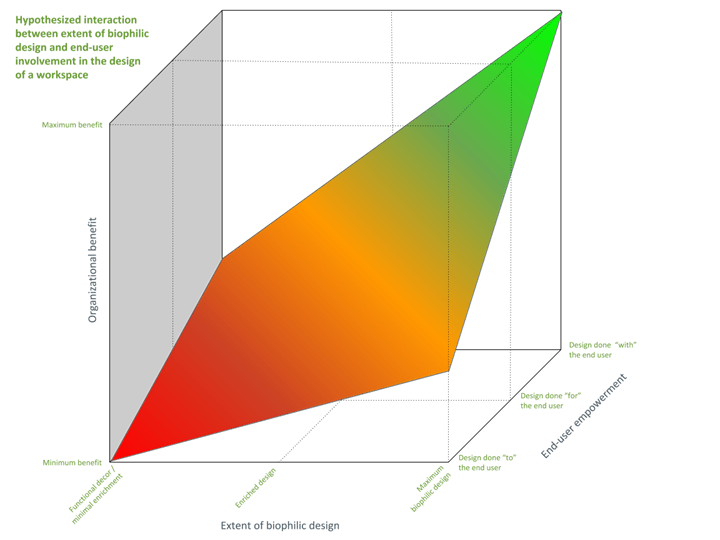
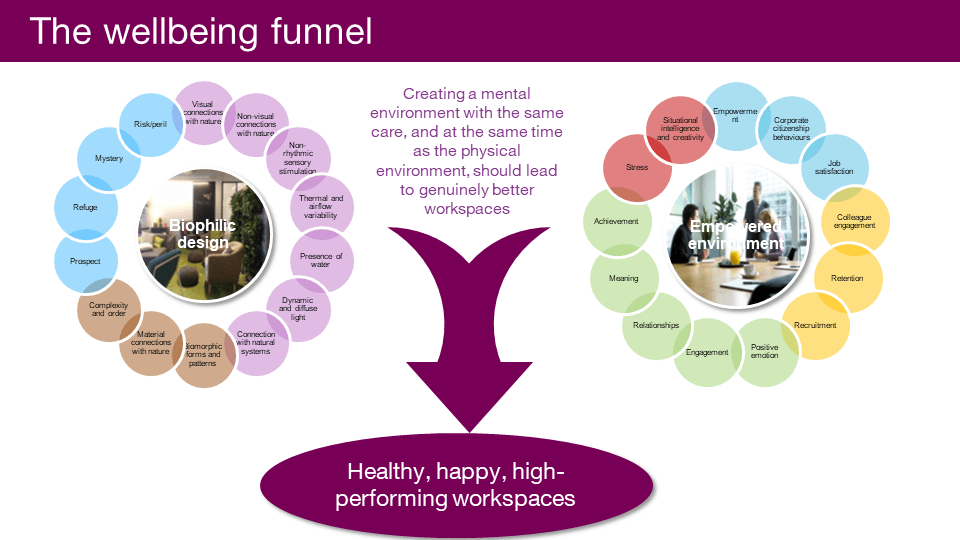
This can be represented simply as a diagram. This is merely an untested hypothesis at present, but based on current evidence, an interaction between the extent of biophilic design and end-user empowerment might reasonably be expected to look something like this.
The more you enrich a space, and make it interesting and biophilic, the better.
Likewise, the more the end user is considered, the better – moving from design being done to the user, through being done for them, ultimately to being done with them.
And this is where the principle of intent comes in.
If an organization is willing to invest large sums to enrich a space with wellbeing in mind, then it may be reasonable to assume that the culture behind such a decision looks beyond physical comfort and considers issues such as empowerment, engagement, corporate citizenship behaviours, identity, and monitoring.
And, unless organizations make efforts to address the mental space in their organizations as well as the physical space, then they, and their workers are unlikely to fully realise their potential.
For me, the ultimate goal of biophilic design is combining the best in design – all the plants and other elements – with the intent to make life better for the users of the space.
If the intent for creating wellbeing isn’t there, then all you are doing is making spaces pretty.
That’s better than nothing, but it’s not what I think is truly biophilic – genuine, human-centred spaces created with the wellbeing of the user in mind, with our senses stimulated harmoniously and designed by someone who really gets it.
The workplace is no-longer the traditional office for many. Many organizations are challenged by the need to embrace new ways of physically working: planning space, maintaining higher standards of hygiene, enabling teams to work effectively together and recognizing that home working is going to be needed (and even wanted) for the foreseeable future. All of those challenges are overlaid with the absolute need to ensure the physical and mental wellbeing of staff.
As we move through summer, many offices and other workplaces are re-opening and businesses are trying to imagine how on Earth they are going to be able to ensure effective working. This uncertainty and the requirements for correct physical distancing and enhanced hygiene standards is going to place a strain on employers and employees alike.
We’re beginning to get some hints about the way things might look in the period immediately after lockdown ends. One thing is for sure, the world of work (especially the office) is going to have to adapt very quickly. Even when buildings reopen, it seems likely that some degree of physical distancing and enhanced hygiene will be necessary.
After the second world war, a great leader found himself ruthlessly put out of power. Churchill led the country through a crisis and might have expected a reward in the subsequent general election. However, to his surprise, and that of the press and the establishment, he fell victim to the closest thing the UK ever had to a revolution.
Comparing the horrors of global warfare to the enforced changes to office life is a bit extreme, although it is worth drawing a few parallels.
Wartime highlighted the faultlines in society. The old order had to be abandoned in order to fight the war and the idea that society would willingly return to the established ways of doing things was rejected. Now, organizations are going to have to face up to the facts that the established ways of managing people and workspaces are also going to have to change.
We may even have to reconsider what we mean by workspaces.
It is going to be a long time before this is normal again, if ever Photo by fauxels on Pexels.com
Do we mean just the one (or more) physical spaces to carry out work – the realm of the designer – or does it include the headspace too?
Opportunities
Workplace managers are going to have to consider whole new interactions of disciplines in the very near future: space, furniture, technology, connectivity, restoration and recuperation, and new approaches to managing people. All will need repackaging to create work environments that people want to use, and we must learn from our experiences over the last few months to create those new working environments.
What does that mean for the commercial interior and exterior plantscaping industry?
There are certainly going to be challenges, but also opportunities for those firms imaginative and agile enough to change.
Let’s first look at some of the challenges. These include adapting to new ways of working, such as maintaining physical distancing in clients’ offices whilst carrying out plant care, ensuring that plant displays are kept clean and disinfected and adapting to new office layouts that might be less accommodating for plants if desks and workstations have to be spread out.
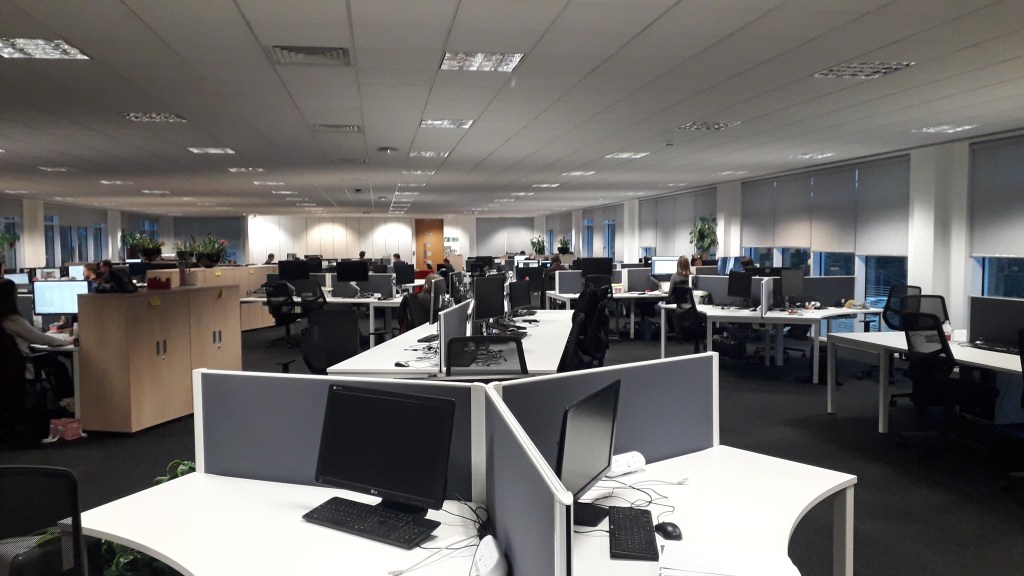
One thing seems certain: high density offices are going to have to change. If physical distancing is going to be successful, then either desks are going to have to be spread out, or there are going to have to be screens between workstations, or fewer people are going to be allowed in the office at any one time. Pedestrian routes will also have to be altered. It will be no good if desks are isolated only for colleagues to have to squeeze behind the back of your chair or walk within a few inches of you as they go and get their coffee.
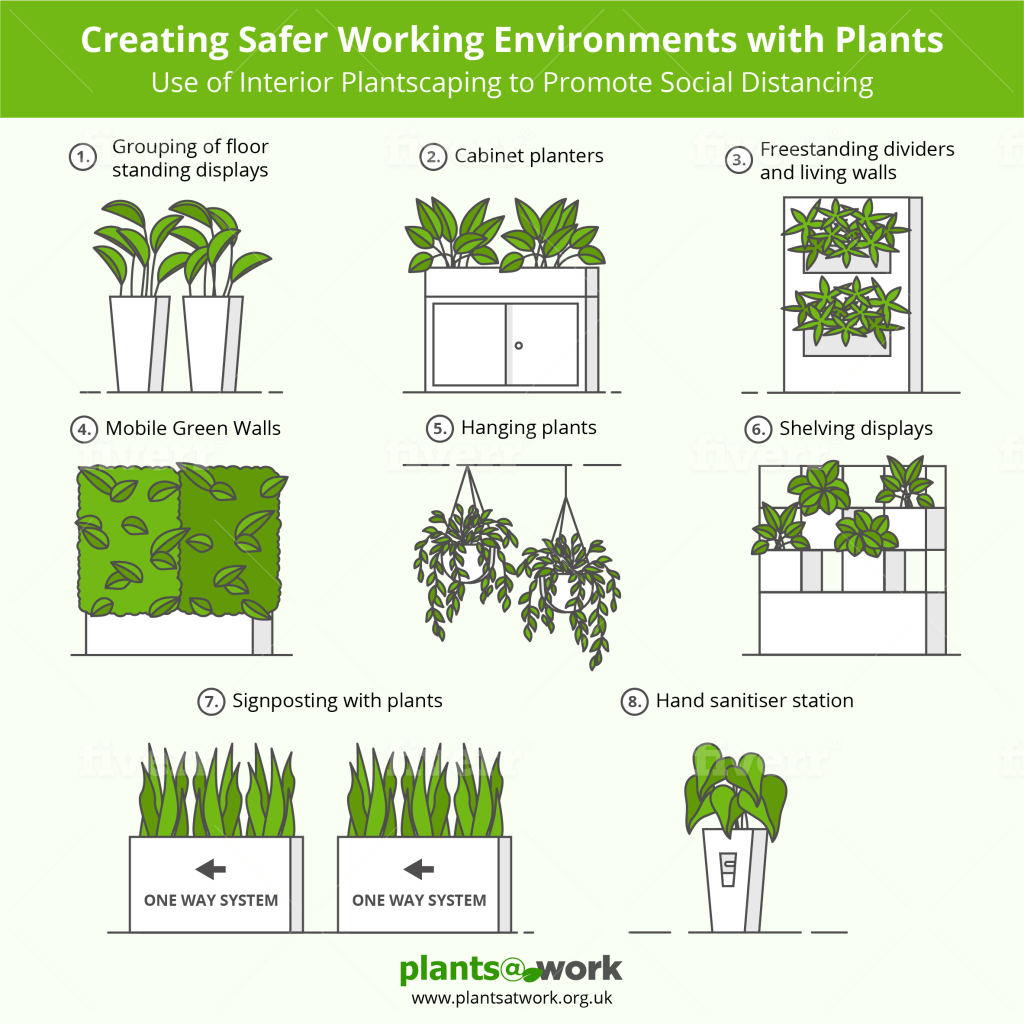
Graphic by Plants@Work – the UK trade association for interior landscapers
Already, interior designers and architects are producing their visions of the new normal office. Many solutions seem to revolve around an adaptation of conventional open plan spaces with designated empty desks and plastic screens to facilitate physical isolation. Some designers are a little more imaginative than others and have started investigating how people can be safely separated with items such as plant displays and green dividers comprising of moss, live plants or even replica foliage. These are, on the face of it, attractive options.
The most imaginative of all are re-thinking the way that offices are going to work. After months of homeworking, most people have found that they can do their work pretty well from home, or at least can manage without missing the office too much. Work habits have changed and people are finding ways to adapt to remote working. The traditional corporate office environment has been shown, by and large, to be unnecessary.
Those organizations with the imagination to grasp the opportunity to create better office environments, rather than rush to adapting what already exists, may look to the types of environment typified by co-working spaces and serviced offices. Such places often resemble hotel lobbies and coffee shops, but also with a wide variety of working spaces to accommodate any type of activity. Such places are designed to get specific types of work done, rather than be a place to go to work.
The new office might be fitted out with better furniture, art and plants. They won’t be designed for dense occupation, but will enable physical distancing, and they will be adaptable to a time when such extreme distancing is no-longer needed.
In part two of this article, I’m going to look at some practical considerations for plantscapers. But if you can’t wait, do get in touch and we can talk about some ideas.
Thoughts on biophilia and biophilic design (part 1) – it’s as much to do with human physiology as it is an emotional response
I’ve been thinking a lot about why Biophilia and biophilic design has much more to do with evolution and the way our senses work, rather than the emotional response to nature that is so-often suggested.
Let’s look at one definition of biophilia. The most famous, and most important is that given by EO Wilson – the man who catalysed the development of the concept. In 1984, he defined Biophilia as “…the innate affiliation people seek with other organisms and especially the natural world.”
This is a strong statement. Wilson also speaks of the human bond with other species, which is beautifully explained in his book. This all suggests that biophilia is essentially an emotional need to connect with nature and natural surroundings.
Stephen Kellert, the grandfather of biophilic design, spoke of “our physical, emotional and intellectual inclinations for nature and life”. By expressing our need to connect with nature on an emotional level, we instinctively understand the concept. We remember that being in natural places makes us feel good and that the countryside or woodlands are instantly relaxing.
Bringing nature into our built environment – our offices and cities – is a great response to that feeling of calm we get when in nature. However, let’s examine why being in nature really makes us feel comfortable.
I contend that it isn’t wholly a psychological or emotional need, but much more of a physiological need, based on humanity’s evolutionary history and our origins in the plains of Africa.
If you were to take a mole away from its burrow and place it in an open, sunny garden, such as where we might want to spend some time, it would be stressed, frightened and try to dig a new hole. Its senses are not able to cope with the bright light, the lack of close skin contact and the shrill noises of birdsong. Millions of years of evolution have produced a creature that thrives in dark, damp, tight tunnels. This is where it finds food, shelter and other moles with which to mate. If we were to create an environment for a captive mole, it too would be dark, damp and tight, because that would be the humane thing to do.
A mole would rather be underneath this garden than in it!
When we create environments for humans – offices, for example – we tend to make them very space efficient, very energy efficient and completely unlike the environment where our species has spent over 99% of its evolutionary history.
Not our natural habitat
Humanity evolved on the plains of Africa. Wide open spaces with undulating landscapes. The vegetation was scattered and grew in clusters; water was plentiful and skies were bright.
Humans use their eyes to look for food and threats – sight is our most developed sense. Colour perception for us – the part of the spectrum that we can see – enables us to spot shapes (food or danger) against the background of vegetation, and recognise when fruits are ripe.
Our hearing is fine tuned to the noises of prey animals and the sound of running water. Our sense of touch helps us to determine the quality of materials that we can use for shelter, and our sense of smell tells us what is safe to eat. Our senses are highly adapted to that environment. Those senses evolved to enable our species to survive. If we stress our senses, we react as if there is a threat to our survival. Stress hormones prepare us to fight or flee. Our senses become overwhelmed or under used.
Biophilic design is the trend of the moment and is associated with wellbeing. However, many designers think mainly, or only, in terms of the emotional, almost spiritual, need to connect with nature. This can be an effective approach, is easily understood and has a lot of merit.
However, I think we can create more effective spaces if we unpick what we mean by an emotional response and use a sensory approach to design. Let’s stimulate our senses the way nature intended.


















 Kenneth Freeman | Purposeful Places