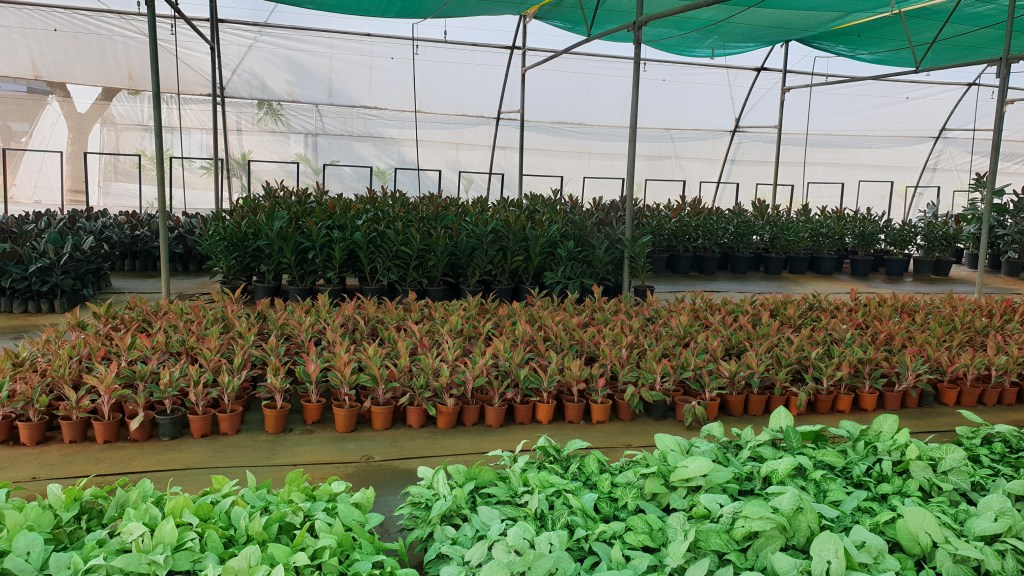
Biophilic design is all about creating spaces in the built environment that are healthy, happy, engaging and effective. You may know that the reason why biophilic design works is because we create spaces that allow us to rebuild connections to nature and our natural habitat. We enrich our spaces to make the lives of domesticated, ‘battery humans’ so much better. In the workplace, biophilic design can lead to better business outcomes. More productivity per kilowatt hour of energy consumed – so possibly a gain for the environment.
A significant element of almost every biophilic design is greenery – indoor and outdoor plants displayed in a naturalistic fashion. It is easy to assume that, because live plants are being used, that they must be an environmentally-friendly addition to any building.
But does that assumption survive scrutiny?
Does the green part of biophilic design create a net benefit to our environment?
Interior landscapers, the providers of office greenery, use a variety of plants in their schemes. Indoor plants tend to have their natural origins in the tropics and subtropics – places where seasonal variation is minimal (much like the insides of buildings, which also have a near constant environment. Office blocks and rainforests have more in common than you might think.) This doesn’t mean that indoor plants are sourced from the wild – that would definitely be bad for the environment. They are grown by specialists under controlled environmental conditions in nurseries. In temperate climates, the use of native species in buildings is guaranteed to fail.
In Europe, most indoor plants are sourced from The Netherlands. Dutch growers have perfected the art of producing millions of plants using quite complex technology to regulate the light, temperature, water and plant nutrients used in their glasshouses to produce pristine crops to exacting specifications. However, this comes at a cost. The energy used to heat and light their glasshouses has to be generated somewhere. The water used for irrigation is treated with fertilizers and any left over has to be recycled and re-treated before it finds its way back into the environment.

Over the last few years, the Dutch nursery industry has significantly reduced its inputs, with a significant reduction in the impact it has on the wider environment, but let’s not shy away from the fact that nursery production is a resource-consuming industry.
Another impact on the environment comes from the substrates used to grow the plants. Peat is still used (and not just in Europe). Even where it is no-longer extracted from fragile habitats, its extraction can lead to significant greenhouse gas emissions. As the peat dries out and oxidizes, it releases carbon dioxide. This carbon dioxide is, essentially, a fossil fuel. It was originally taken out of the atmosphere thousands of years ago by the mosses and sedges alive at the time.
Fortunately, peat is being used less and more sustainable substrates are now being used, such as coir, composted green waste and even volcanic minerals (vulcaponics).

Once the plants have been produced, they need to be transported to the buildings where they are going to be installed. Hundreds of trucks burn diesel fuel transporting plants from the Netherlands to all over Europe and beyond.
What about other countries?
In North America, plant production is rather less intensive. In the major growing areas of Florida and California, plants are grown more-or-less outdoors under polythene and heavy shade cloth. The energy inputs are significantly less than in Europe, but other inputs, such as pesticides tend to be higher.
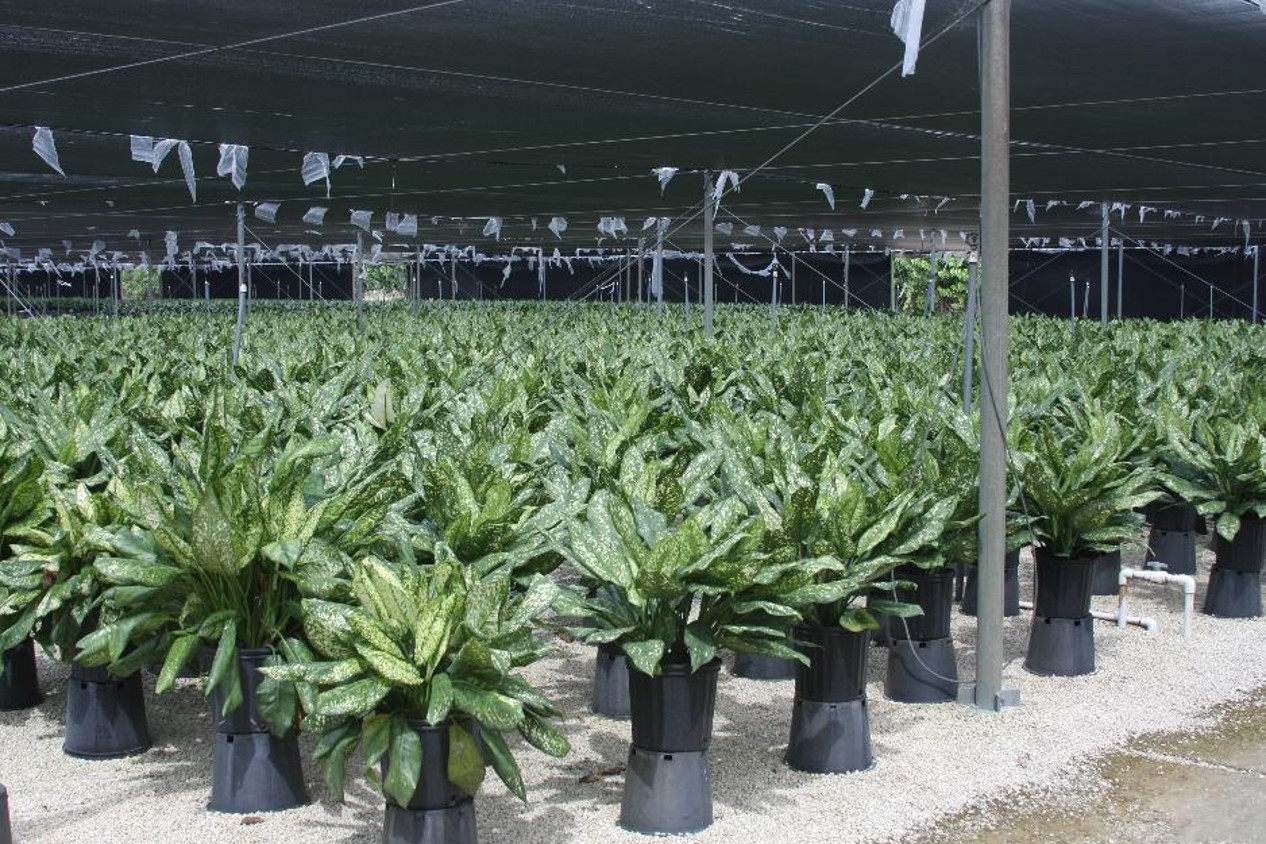
Here, as in Europe, plants need to be transported across an entire continent. Large, climate-controlled trucks drive thousands of kilometres to deliver plants from Florida to Montreal and all places in between and sometimes, plants are even transported by air.
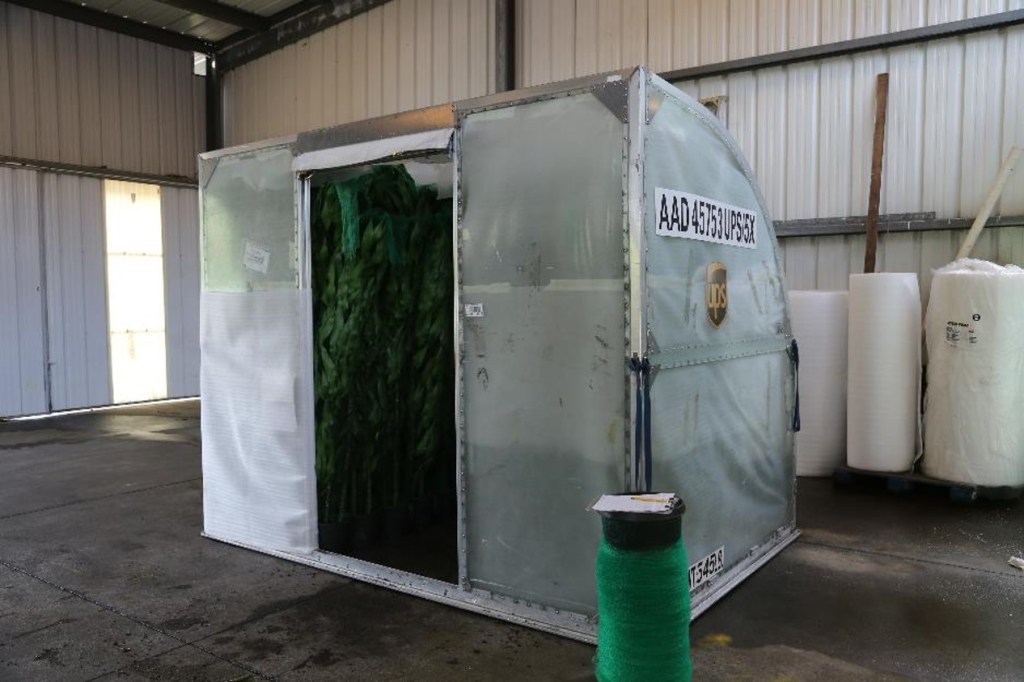
Many plants used by interior landscapers in Europe also spend some of their lives growing in fields in Central America before being sent to the Netherlands for finishing, and many large trees and palms used in European buildings are grown in Florida and shipped to the Netherlands for acclimation and preparation before they are then sent to their final destination.
Florida and California are both subject to ever more extreme climate events. The Florida nursery industry has often suffered existential threats due to hurricanes, and California is frequently under severe water stress.
There are other places in the world where indoor plants are grown. I have recently visited India, where vast office complexes are being constructed at an astonishing rate. These buildings are being constructed to the highest standards – often to high LEED and WELL buildings specifications. Biophilic design is integral to these projects, both inside the buildings and in the campus environments where so many of them are being developed.
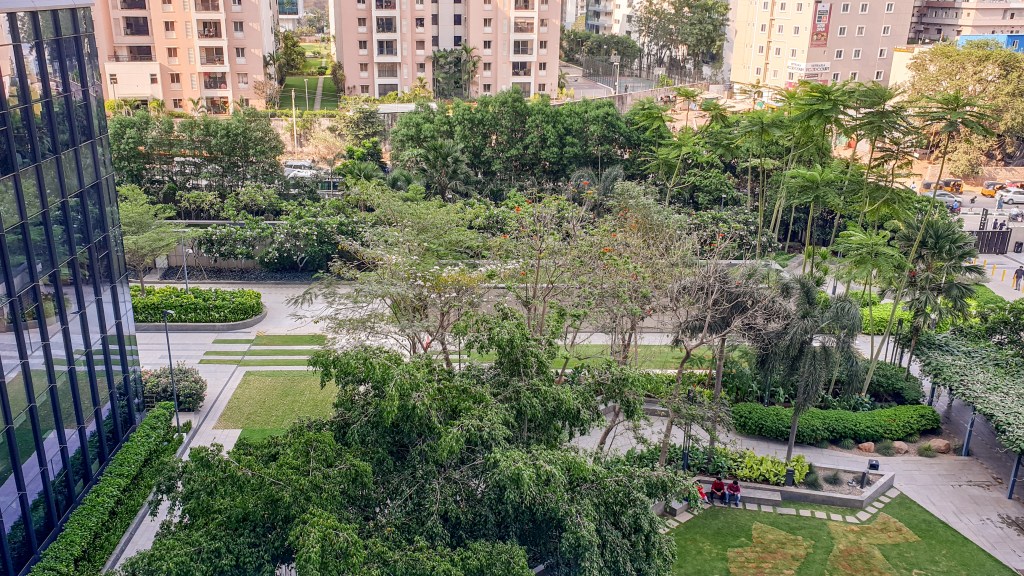
In India, most of the plants used are grown locally by commercial nurseries. It is a very well developed industry, which is superficially similar to the Florida industry. Vast, heavily shaded polythene structures are used to grow exceptionally-good plants for both the retail and interior landscaping markets. Pesticide inputs are low, growing media are often locally-sourced coir-based products (essentially a waste product of coconut farming) and little, or no energy is used for lighting their nurseries. Supply chains tend to be relatively short (there are nurseries relatively close to many of the big cities), so that too is a benefit.
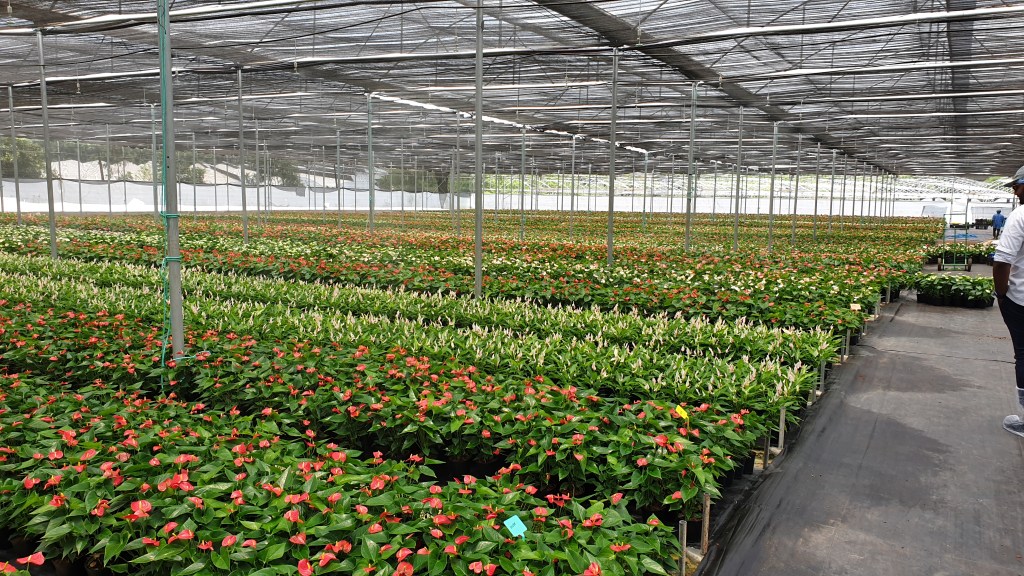
However, every nursery owner that I spoke to (and it was a lot) is seriously concerned about climate change. Near Pune and Bangalore, temperatures are significantly above average, and rainfall is scarce. This is partly explained by the El Niño effect, which is near its peak, but there is no doubt that man-made climate change also has an impact.
Water shortages are a major concern. High on the Deccan Plateau, rivers are uncommon and much irrigation water is often sourced from boreholes and stored rainwater. Groundwater is rapidly diminishing and rains are increasingly unreliable.
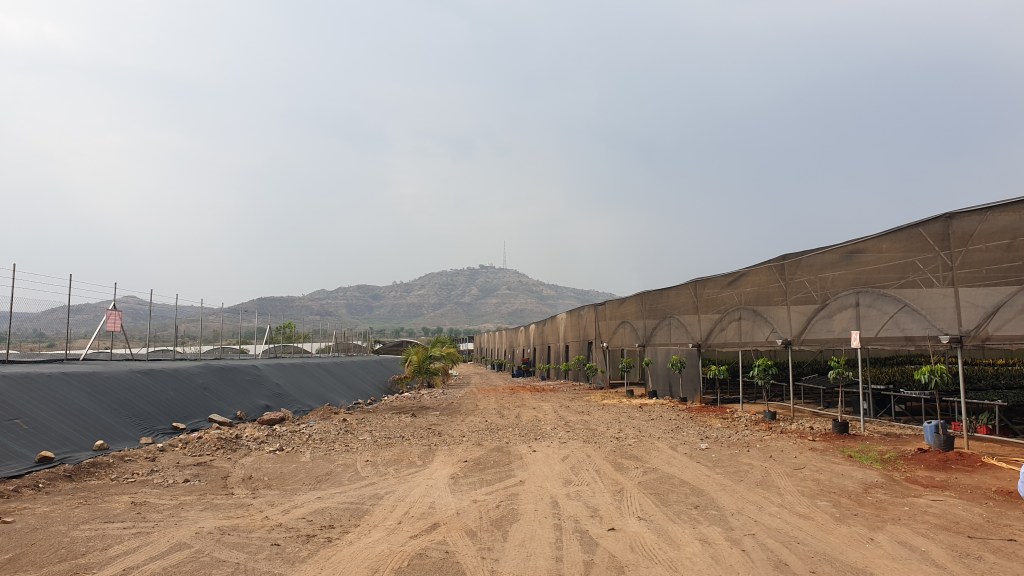
The seemingly insatiable desire for indoor plants in India, due to the rapidly developing commercial real estate market, is threatened by changes happening to the environment right now.
Reasons to be cheerful
I don’t want to be too gloomy, though. Compared with other elements in the built environment (including other elements found in a biophilic space), greenery still contributes comparatively little to the environmental damage caused by commercial development (though it can be improved).
Plants are still a high impact, low cost addition to the built environment. If they make an organization more effective, you get more output (however you choose to measure it) for every tonne of carbon dioxide (or other harmful emission) put into our environment.
 Kenneth Freeman | Purposeful Places
wow!! 13Are plants in buildings really green? The environmental impact of interior landscaping
LikeLike
This article brings an important perspective to the growing trend of biophilic design by questioning whether the “green” aesthetic of indoor plants is as environmentally friendly as it seems. It highlights the hidden environmental costs of producing and transporting plants, such as energy use in nurseries, peat extraction, and the carbon footprint from transport. While biophilic design has proven benefits for well-being and productivity, the piece makes a compelling case for rethinking how we source and grow plants to truly align with sustainability goals. It’s a valuable reminder that being “green” requires more than just adding greenery—it involves thoughtful choices that minimize environmental impact. 🌿
LikeLike