How do you know whether a design is going to be (or has been) successful? A simple guide to evidence based design

What is evidence-based design?

Evidence-based design (EBD) is the design of spaces based on evidence, not simple ‘rules of thumb’ (also referred to as heuristics). The discipline of EBD was first developed in the healthcare industry, and its principles are increasingly being applied across the built environment.

An important part of the design process has to be a real understanding of what the client is really trying to achieve and then develop some metrics and indicators to determine whether those objectives have been achieved.

For example, is the client concerned about health and wellbeing, colleague engagement or productivity? These can all be measured, to an extent.

Some measurements may be physical or observational, e.g. how space is used. Other measurements might be associated with HR indicators such as absenteeism or complaints about the indoor air quality.

Maybe, the client is mainly interested in achieving a building certification (such as WELL) or a high Glassdoor rating in order to attract and retain staff (or to gain a “great place to work” recognition). These may require a different set of metrics and, in some cases, might be achieved by ticking boxes and completing spreadsheets without needing to engage with the end-users of the space at all. 

Having said that, such a workplace, whilst meeting the specified end point of getting a certification, may not be especially effective. It is now well known that empowered, involved and engaged workers tend to be happier, healthier, more satisfied and more productive than those for whom a change was imposed.

However, without defining terms at the beginning of a project, the designer cannot really justify claims for its subsequent success. Objectives and KPIs must be clearly defined. If not, the wrong metrics may be used. Without good evidence, knowing what tweaks might be needed is impossible. This is especially true once a new workplace design has been commissioned to keep it working effectively.

If EBD is applied without direct involvement from the end-users, the designer limits the amount and quality of evidence available.

Five-step approach to evidence-based guided design
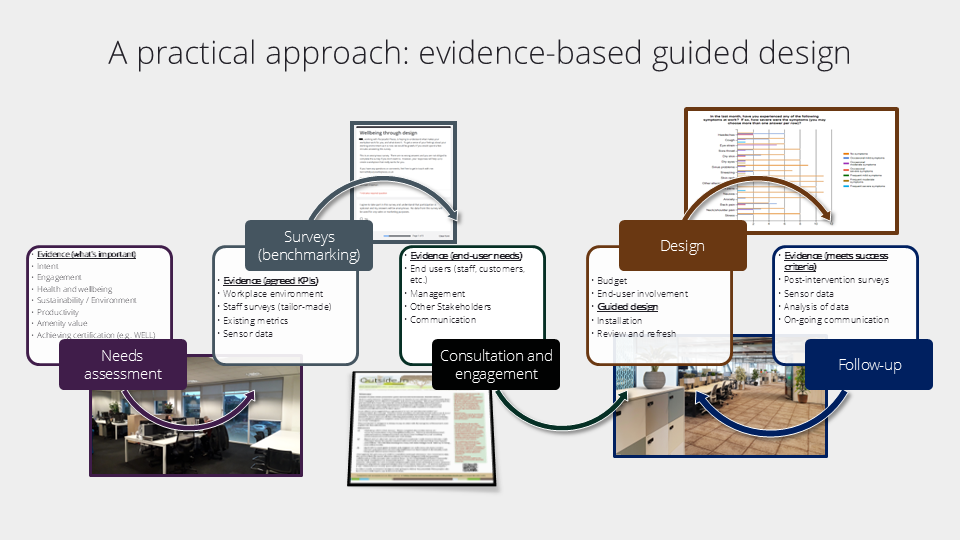
Diagram showing the 5-step evidence-based design process

I will illustrate the process using an example of creating an new interior landscape scheme in an office-based workplace, although the principles would apply to almost any types of design project. Get in touch to discuss your specific needs.

Step 1: setting the intent and identifying needs

Here, we state the intent of the exercise. We seek to discover the needs of the client and identify any issues or areas that are important to the organization. These may relate to health and well being, productivity / financial indicators, staff engagement or even sustainability. Initial discussions would probably be with the client’s management team. It would be wise to also engage informally with the premises users at this time. This helps see if the management’s concerns align with those of their staff.

Outputs: KPIs agreed, scope and boundaries of surveys agreed, communications plan, workshops and end-user communications (e.g. newsletters)

Step 2: surveys and initial data

The next step would be to carry out a detailed set of surveys. This will include an assessment of the physical space (light, noise, layout, air quality, etc.) and a tailor-made staff survey, which will identify and quantify areas of concern. I can design these surveys for you so you get the information you really need.

The designer would also ensure that we have some objective baseline data from the client (if required) that could be compared against the designer’s own findings.

Outputs: initial surveys and data analysis, second staff communications, scope and boundaries of design agreed, design budget agreed.

Step 3: consultation and engagement

Before any intervention is made (for example, a redesign of the office space), the office staff should be kept engaged.

Research has demonstrated that giving office workers a genuine stake in the project (hearing their views and giving them real choices) results in better, and more durable, outcomes.

Throughout the process, the designer would ensure that all stakeholders in the project are kept informed of the progress of the project. This will be achieved using newsletters, social media and face-to-face discussions. At this point, the designer would have a fair idea of options available.

Outputs: ideas and requests collected from client’s staff, third staff communications

Step 4: design

At this point, an experienced design team would be brought in to discuss design options with all the stakeholders. The designer will have an idea of what might work after reviewing all the initial survey information. The designer will then present some outline options to the client.

The designer would then take their collected ideas forward for discussion and engage all users of the office space in the final decision. Once this has been agreed, the design team would make arrangements for the space to be redesigned accordingly.

Throughout this process, it is important to keep all stakeholders informed. There is often a few weeks lead time for a design to be installed. The designer and the client need to keep everyone’s enthusiasm alive. They should build up to the day when their ideas are realized in their newly-designed work space.

Outputs: first design proposals for discussion by staff and management. Revisions and final design choices. Design specification and order. Fourth (and possibly fifth) staff newsletter. Design installation.

Step 5: Follow-up and continuous review

The client will need to know whether the interventions carried out in the offices have been successful. Therefore, a series of follow-up surveys could be carried out shortly after the new designs have been installed. These surveys could include staff questionnaires, analysis of the client’s data, and physical measurements of the environment.

Such surveys might be repeated every 2 months or so for at least 9 months to confirm that the interventions have had a durable effect. If necessary, designs could be reviewed and adjusted as needed to satisfy the customer or end-users. Their experience may highlight unforeseen needs.

Again, the designer would continue to communicate and engage with all stakeholders to let them know what is going on, and to get some qualitative evidence as well as quantitative data.

Outputs: follow-up surveys, data analysis, continuing staff newsletters

How will you know whether an environment is successful?

At each step of the process, data will be gathered to determine whether process is working. Data for evidence-based design can come from direct, indirect or proxy sources.

Pre-interventionAt installationPost intervention
Direct measures (examples)
End-user surveys
End-user focus groups
Sentiment / satisfaction measures
Customer interviews
Observational data
Sensors and monitors
Discussions with end users – confirm needs have been met
Discussions with customer – confirm needs have been met
Sentiment / satisfaction measures

Ongoing Post intervention surveys (every few months for at least one year)
Ongoing sentiment / satisfaction measures
Interviews and focus groups
Observational data
Sensors and monitors
Indirect measures (examples)
WELL scorecard
Fitwel scorecard
RESET scorecard
Sustainability scorecard
Leesman index
Revenue / person
Revenue / square foot
Absenteeism records
Staff retention rates
Review sites (e.g. Glassdoor, Trustpilot, etc.)
Absenteeism records
Staff retention rates
Review sites (e.g. Glassdoor, Trustpilot, etc.)


WELL scorecard
Fitwel scorecard
RESET scorecard
Sustainability scorecard
Leesman index
Revenue / person
Revenue / square foot
Absenteeism records
Staff retention rates
Review sites (e.g. Glassdoor, Trustpilot, etc.)
Proxy measures (examples)
Tests and quizzes
Simulations
Comparison with similar organizations (impact seen with them probably similar to impact on us)
Case studies
References
Tests and quizzes
Simulations
Designer feedback


Tests and quizzes
Simulations
Comparison with similar organizations (impact seen with them probably similar to impact on us)

Big Brother is watching you

Direct sources of data may be from automated systems and sensors. Sensors are increasingly being used to give building managers and space planners real-time data on how space is used and the environmental conditions in different parts of a building. This is becoming increasingly important now that hybrid ways of working are becoming more common and workplace usage patterns are changing rapidly.

Data collected on environmental and space utilization parameters allows for rapid changes in layout or environmental management. This ensures that users get as comfortable and as useful a workspace as possible.

Mapping survey data to culture, demographics and location: unveiling the nuances

Understanding the collective preferences of the end users of the workplace – the office workers – is crucial. However, digging deeper into the data is essential. Attempting to map these preferences onto the cultural, demographic, and locational peculiarities of the organization can give invaluable insights. This reveals patterns and nuances that can be easily overlooked in broader surveys.

The benefits of longitudinal studies

Collecting survey data immediately before and after the installation of a new interior design is not especially valuable. People notice the immediate impact of change. However, tracking individual responses over time (whilst meticulously maintaining privacy) is very beneficial. It includes collecting data for an extended period post-intervention. This allows the designer to distinguish the subtle effects of design interventions from the larger waves of, say, a new CEO or a major business shift.

Granular analysis of data over time, ideally with the aid of a statistician, can offer a clear picture. It will reduce the risk of misinterpretations and helps to ensure that design decisions are informed by the most accurate trends.

Longitudinal studies, with frequent data analysis, also allow for post-design tweaks. Whilst easy-to-digest broad data can be appealing, the detail is where hidden gems of insight can be found.

Hidden gems

Demographic studies can hold surprising potential, as long as you know what to look for. For example, a seemingly innocuous study (carried out in the late 1990s) into the plant preferences of staff in a local government office revealed a hidden layer of cultural influence. The headline findings clearly showed a relationship between plant preference and the seniority of the office worker. Closer examination unearthed a deeper connection to gender, rooted in the organization’s history and norms. Men occupied the bulk of the senior positions, whilst there were far more women occupying more junior roles. This highlights the importance of not solely relying on surface-level observations and instead delving into the details woven into the data.

Another small study challenged preconceived notions by demonstrating that job role, regardless of age, could be a stronger reflector of plant preferences than previously thought. Stereotypes, both reinforced and shattered, illustrate the power of data to illuminate the complexities of human behaviour within a specific context.

Ultimately, mapping data to culture, demographics, and location is not about finding definitive answers, but rather about uncovering the rich tapestry of influences that shape how people interact with their environment. By exploring the nuances found in data, evidence-based design transcends mere aesthetics and can be a tool that transforms workplaces into spaces that truly resonate with their users.

Measuring the right thing!

If the aim of a project is to improve employee wellbeing, then there is no point in measuring the organization’s Net Promoter Score. Likewise, measuring indoor air quality is unlikely to tell you much about a company’s brand reputation.

Having said that, there are likely to be some interesting interactions. Improving indoor air quality may well have an impact on productivity, especially if carbon dioxide levels are kept low, leading to greater alertness and less fatigue. However, you won’t know if productivity has been improved unless you actually measure it. Similarly, whilst improving employee wellbeing may lead to a better NPS score – happy staff are probably going to give better customer service after all – NPS isn’t, on its own, going to be a reliable measure of wellbeing.

Here are some possible aims of a design interventions with some of the metrics that could be used.

Project aimPossible metrics
Improved productivity
Revenue (or profit) per employee
Revenue (or profit) per unit area of office space
Reduced absenteeismWork days lost, long term absence, etc.
Increased office space utilization

Time spent in the office
Workspace occupancy
Sensor data
Improved wellbeing

Survey data: complaints of SBS, symptoms, reasons for absenteeism, etc.
Health monitoring data
Improved environmental quality

Survey data: workplace comfort
Physical data: temperature, RH, noise, VOCs, CO2
Enhanced brand reputation

NPS data
Ranking in reviews / indices (e.g. Glassdoor, Leesman, Trustpilot, etc.)
Improved colleague engagement
Staff engagement surveys, e.g. Q10, Hays Group,
Improved customer engagement


NPS
Customer comments and complaints, reviews, etc.
Customer satisfaction surveys
Trip Advisor scores (for hospitality sector)
Trustpilot scores (for service providers, retail, etc.)
Increased footfall or dwell time (retail sector)
Increase in return custom (retail, healthcare and hospitality)
Customer referrals (retail, healthcare, hospitality)
Improved sustainability

GHG emissions normalized against revenue or per capita (rather than against floor space)
Reductions in energy costs

Add value to your interior design

If you are involved in design, consider an evidence-based approach. This is especially important if you are an interior landscaper who wants to add value to your service. If you need help in putting together a programme, or if you need assistance designing surveys and other elements of data collection, then please get in touch. Check out my services page for information about my specific areas of expertise and consultancy.

Go back

Your message has been sent

Warning
Warning
Warning
Warning!

Indoor air quality in the age of hybrid working: what employers should consider

Workspaces are not as full as they used to be and hybrid and remote working is more common and more popular than ever before. Even with incentives (and demands) that people ‘return to the office’, there seems little evidence that office occupancy rates are getting back to pre-pandemic levels any time soon, or even ever. Indeed a recent report quoted in The Guardian suggests that the Monday to Friday office occupancy rate across the UK is 29% for 2023 to date, and slightly less in London, compared with typical pre-pandemic levels of 60%-80% (according to data from Remit Consulting).

Home workers have needs as well as office workers, and employers have a duty of care to their home-based colleagues as well as those in the office.

Here we discuss how the pandemic has accelerated the evolution of the workspace and why personal control over the working environment can benefit organizations and workers alike, especially when it comes to the air that we breathe.

Personal, portable air purifiers and monitors empower workers to maintain a healthy working environment, whether at home or in the office, and give reassurance to employers that they are fulfilling their obligations to ensure that their staff are safe while they are working.

Accelerated evolution

Even before the pandemic, the nature of office work was changing. There was an increasing shift to creating more purpose-based workspaces that accommodated different styles of activity, such as collaborative working or quiet focused work. This also led to an increase in the use of non-allocated desks (let alone private offices), so there was no guarantee, or expectation, that an office user would be at the same desk every hour of every day.

The pandemic forced huge numbers of office workers to work from home, and many of them found it preferable. This has led to a rise in hybrid working, but has also acted as a catalyst for evolution of workplace design. A decade’s-worth of change seems to have happened in about 18 months and many employers have completely remodelled their office space as a result: partly to attract workers back to the office by making them more comfortable and homely, and partly to adapt them to new ways of working. However, with all the improvements in workspace design, many offices are still less than half full for several days a week and those workers that do go to the office are often scattered widely around the place.

Inviting Big Brother to watch over us

Another element of our lives that has changed considerably over the last 10 years, and especially rapidly in the last five, is the use of technology to record aspects of our health and wellbeing. The first Apple watch was launched as recently as 2015 and, as well as being a smart timepiece, it can track many aspects of personal health and fitness. The data generated are available for detailed analysis and lifestyle changes can be encouraged.

Smart watches and smart fitness devices provide a minute-by-minute history of activity and health – including data about health whilst at work. These devices can be used to provide objective evidence of the health of employees in an organization.

And employers have an obligation to ensure that their employees are working in a safe and healthy environment – wherever they work.

Other smart, connected devices are also found in the workplace, providing valuable data in real time. These include occupancy sensors and, importantly for wellbeing as well as building management, environmental sensors such as air quality monitors.

The pandemic also increased awareness of indoor air quality, especially once it was recognized that Covid was transmitted in the air. Air monitoring is a useful tool here. For example, carbon dioxide concentration is a good proxy measurement of ventilation rate – the lower the CO2, the more the air is being refreshed from outside. Higher ventilation rates clearly result in the concentration of airborne pathogens being reduced. However, CO2 is not the only thing worth measuring – increasing ventilation might reduce CO2 and virus concentration, but it could mean bringing in other pollutants from outside, which also need to be measured and controlled.
Some recent research has shown a relationship between relative humidity, CO2, temperature and virus transmission – this has led to an interesting algorithm that has been deployed on some air monitors that gives an indication of Covid risk(1) (see this Whitepaper, published by RESET).

Creating wellness instead of fixing problems

Alongside the development of health and wellness tracking devices, there has been a proliferation of voluntary standards designed to encourage and demonstrate how buildings impact the environment and the people that use them.

The WELL building standard is one of the best known. It rates a building’s ability to sustain and promote wellbeing across a wide range of parameters. Since launching in 2014, many thousands of buildings around the world have been certified. Other standards include Fitwel and the Living Building Challenge. A very useful comparison of 15 environmental and wellbeing standards can be found here.

However, these standards primarily relate to how a building works rather than how people work. There is an overlap, but the standards have not yet caught up with hybrid, or completely remote, ways of working.
How can we know whether our working environment is healthy?

When offices were predictably occupied, it was very easy to ensure that the working environment met legal and voluntary standards. The environment rarely changed and, if it did, it changed in a predictable and manageable way. Data were collected and facilities managers were able to control the environment of whole buildings from their computer.

This is still, of course, possible. But the control of whole buildings, or even fixed zones within buildings, is a bit of a blunt instrument when you don’t know where your employees are, when they will be in the building, or what they will be doing whilst they are there. At worst, it means making sure that the whole building is lighted, heated and air-conditioned just in case someone wants to use part of it. This is potentially wasteful of energy and resources.

Obviously, smart technology, such as occupancy sensors and light sensors can help, but even then, it is often the case that a large zone in a building is ‘switched on’ even if only 20% of the desks are occupied, and the occupiers of those desks scatter themselves as far and wide as possible.

In these cases, the building provides a safe working environment, even if the resources deployed are used inefficiently and expensively, but how can an organization discharge its health and safety obligations to remote workers – especially those that are new to remote working, or doing work that was previously wholly office based?

Empowerment

Over recent years, a lot of interesting research carried out in the UK and The Netherlands(2,3) has demonstrated that empowerment of the working environment yields huge benefits to workers and their employers.

Data can be very empowering. As discussed earlier, wearable technology and connected devices provide a huge amount of real time data about health and the environment.

Indoor air quality monitors can be very empowering. If they are visible and showing that there is something not quite right about the air, then the evidence required to make a complaint to the facilities help desk is provided.
As well as the office worker seeing the data, the facilities help desk should be able to see the same information. Not only that, but there will be a record of the data, so trends can be observed and potential problems identified and fixed quickly.

Sometimes, people are reluctant to complain, for fear of being regarded as moaners. However, a dispassionate air quality monitor can empower and embolden people to encourage their employers to manage the environment better, or even hand over control, where practical, to the users of the space concerned.
Where organizations are struggling to retain and recruit, such a visual demonstration of provision of a decent quality working environment is very helpful.

An air quality monitor might be one way to resolve arguments between facilities managers and building users – the decision to open a window can be validated by an improvement in the particular indoor air quality parameters that mattered to the user at the time.

This applies to home-based workers as well as those permanently in the office. Although the solution to the problem may not be in the hands of the facilities manager, it can still be facilitated by the employer.

Taking the solution with you

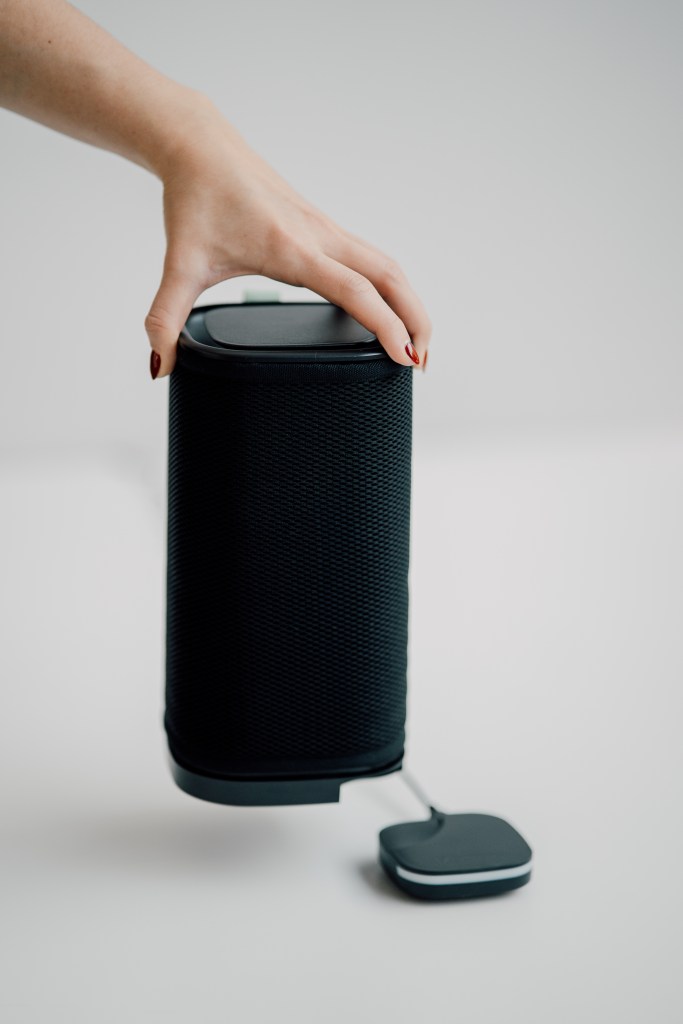
Portable, personal air purifiers, such as Vitesy’s Eteria, offer employers and their staff the ability to manage one very important aspect of their working environment – the air they breathe.

It is a low power personal air purifier that creates a ‘bubble’ of cleaned air around the user, regardless of the size of the room. Instead of cleaning the air in the whole space, it is possible to optimize the quality of the air just where it is needed – around the person. Eteria uses information from the smart air quality monitor module to control the power of the purifier unit when it is connected.

Important indoor air pollutants can be removed or reduced below safety thresholds in approximately one hour, and the low air velocities means less noise. Low air velocities also means less air turbulence, which means that pollutants are not stirred up and spread around the room.

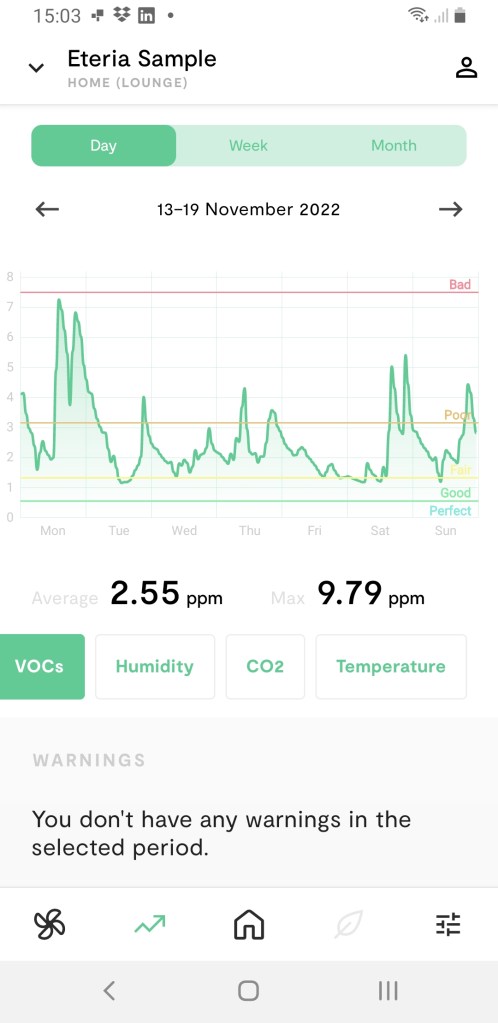
The air monitor component is very small, powered through a USB cable and is separate from the purifier. The purifier only works when connected to the monitor, but the monitor works all the time, providing data in real time and accessible through an app.

This means that it is possible to have a monitor on the desk at home as well as monitors on desks in the office – whether they are assigned workspaces or hot desks.

The purifier unit is very lightweight and can fit in a small bag or briefcase, making it easy to transport between home and the office.


(1) Raefer Wallis, Anjanette Green, Bela Nigudkar, Shichuan Xi, Stanton Wong. (2022) RESET Viral Index v1.1

(2) Knight, C., Postmes, T., & Haslam, S. A (2010). The Relative Merits of Lean, Enriched, and Empowered Offices: An Experimental Examination of the Impact of Workspace Management Strategies on Well-Being and Productivity. Journal of Experimental Psychology: Applied Vol. 16, No. 2, 158–172

(3) Nieuwenhuis, M., Knight, C., Postmes, T., & Haslam, S. A. (2014, July 28). The Relative Benefits of Green Versus Lean Office Space: Three Field Experiments. Journal of Experimental Psychology: Applied.

Why the golf course might really be a good place for important business meetings (but not for the reasons you might be thinking)

Photo by Nathan Nedley on Pexels.com

The golf course meeting is a bit of a cliche. Executives in silly trousers getting together to hit little balls with clubs whilst at the same time sealing deals or hatching cunning business plans.

Such meetings were usually pretty exclusionary and often served to massage egos and provide tremendous opportunities for flattery and sycophancy. These days, they probably don’t occur as often.

However, aside from what passes as sport, there are probably some sound reasons why holding important meetings outdoors in a vast open green space is a good idea.

Most important business decisions are made during meetings behind closed doors. Meeting rooms – occupied by several people all concentrating hard on presentations and spreadsheets – may be private, but they might also be making it hard to think clearly.

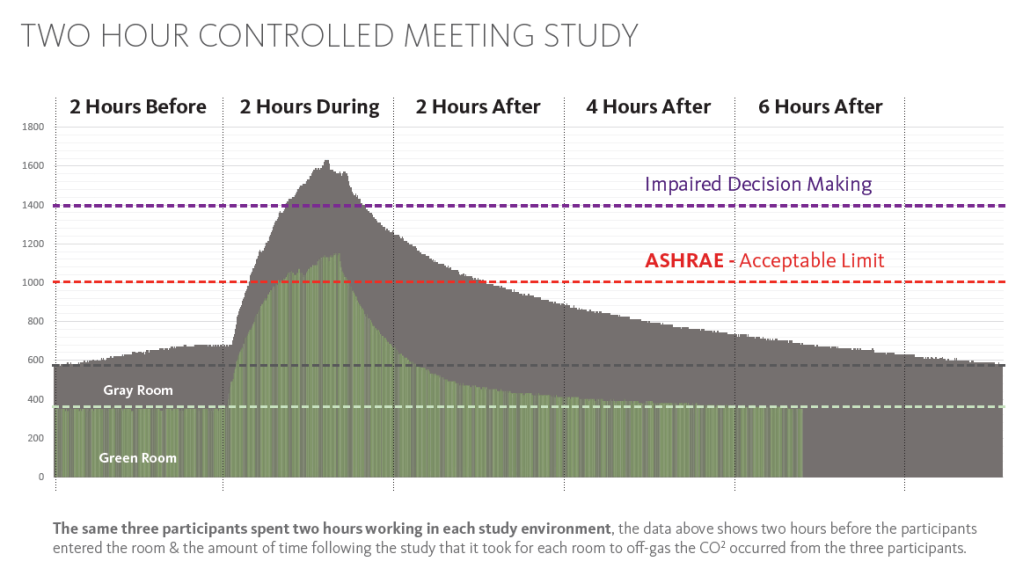
At ground level, carbon dioxide concentration in the air is approximately 400 ppm. When carbon dioxide concentrations rise to about 1,000 ppm, humans start feeling a little drowsy, and when they rise above 1,400 ppm our cognitive abilities start to decline – we find it harder to concentrate and make quick, rational decisions. A study carried out at the Lawrence Berkeley National Laboratory in the USA showed that “On nine scales of decision-making performance, test subjects showed significant reductions on six of the scales at CO2 levels of 1,000 parts per million (ppm) and large reductions on seven of the scales at 2,500 ppm. The most dramatic declines in performance, in which subjects were rated as ‘dysfunctional,’ were for taking initiative and thinking strategically.”

So, what’s the problem? 1,400 ppm is over three times the carbon dioxide concentration in the atmosphere – is it really possible to get to those levels?

The answer is yes, and it doesn’t take too long for a few breathing adults in a confined space to manage it.

Back in 2016, Gensler carried out a study in two identical meeting rooms (one of which was fitted with a small green wall) – a floor area of 21 square metres each, so about 50 cubic metres in volume. Three people working in those spaces, doing ordinary office tasks were able to elevate carbon dioxide levels to well over 1,400 ppm in a matter of minutes in the unplanted room (in the planted room, carbon dioxide exceeded 1,000 ppm, but reduced quite quickly – possibly as a result of the plants beginning to photosynthesize).

Chart from the Gensler meeting room study showing the effects of vegetation on carbon dioxide concentration in a small meeting room

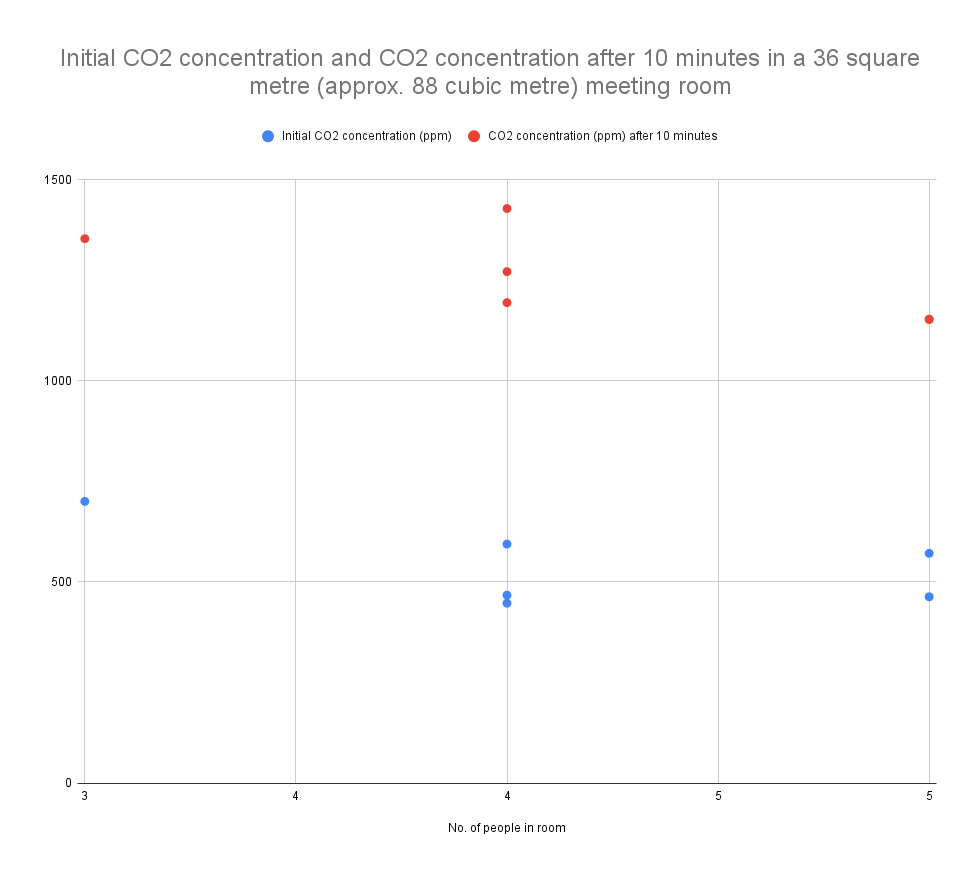
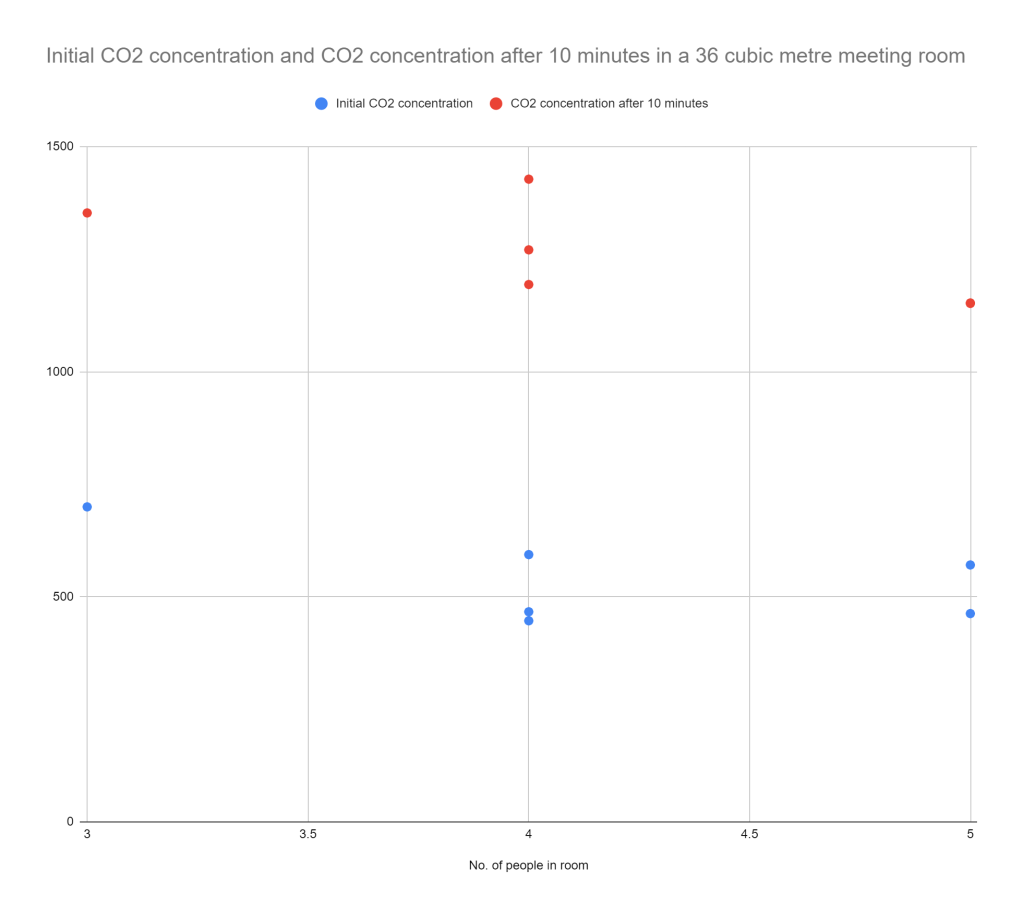
I carried out my own studies in a meeting room that had a floor area of 35 square metres (volume of just under 90 cubic metres), and it was possible for groups of only three or four to increase carbon dioxide concentrations to almost 1,500 ppm in 10 minutes, and that was in an office in an old building which wasn’t especially airtight.

Chart showing how carbon dioxide concentrations in a small meeting room increased over a period of 10 minutes

As well as having an impact on cognitive ability and fatigue, high levels of carbon dioxide in a room are usually associated with other symptoms of discomfort, such as a feeling of stuffiness. This may have something to do with an increase in humidity and a rise in temperature that can also happen in confined spaces. Interestingly, some new research has shown a relationship between high levels of carbon dioxide and humidity with the transmissibility of airborne viruses – this is probably related to ventilation rates and is one of the reasons that carbon dioxide monitors are used to determine whether windows should be opened in school classrooms.

Holding meetings outdoors means that, as well as being exposed to fresher air, you are also exposed to the other sensory stimuli found in nature, and as discussed before, coherent sensory stimulation is one of the key components of biophilia.

Business meetings don’t have to take place on golf courses: a local park or woodland would do the job just as well. Imagine how much more productive businesses would be if they allowed the minds behind the business to work more effectively.

You can’t manage indoor air quality without measuring it first

Lots of people are selling products that are supposed to improve indoor air quality. They may be air purifiers, filter systems, complex green walls or even pot plants. Many claims are made, but how do you know whether the systems you are buying are doing what you need them to do? This is where air quality monitoring comes into its own.

(By the way – I’m not trying to sell you an indoor air quality monitor, or any form of air purifier. However, I can help your business set up an IAQ monitoring project and even help you on your way to gaining a RESET certification for your buildings, which will also help you with WELL and Fitwel certifications – please get in touch if you want to know more).

Why monitor indoor air quality?

Good indoor air quality is often thought of subjectively.  Human perception of good air quality is difficult as our senses evolved to deal with environments that were unpolluted.  As long as we could detect smoke, which suggested an immediate threat (or, conversely, the possibility of a cooked meal and convivial company), air quality was not much of a concern to our plains-dwelling ancestors.

Inside buildings, we often only notice an issue with air quality when it directly affects our comfort. We might describe the air as heavy, fusty, stale or stuffy. Stuffiness (often as a result of elevated carbon dioxide from our exhalation, combined with warm temperatures and high humidity) can be alleviated by opening a window. Carbon dioxide (and airborne viruses, such as Covid-19) inside the building is diluted by bringing outside air in, and humidity and temperature might also be made more comfortable.  This improvement to our comfort, achieved by a perceived improvement to indoor air quality, is not the whole story.

Opening the windows might risk exposure to other harms that are not readily detected by human senses.  Fine particulates, volatile organic compounds or various oxides of nitrogen or sulphur are not usually detectable by human senses, so how do we know whether they are present?

Only by using calibrated IAQ monitors that measure, record and report key parameters of air quality can you then set out to manage air quality and reassure the users of the building that their safety and comfort is being looked after.

Without data from air monitoring, any management of indoor air quality is pretty-much based on guesswork, which is inadequate for the proper management of risk in a building.

My new white paper explains how and why organizations should develop an indoor air quality monitoring and management programme, which you can download here.

I am now a RESET Accredited Professional: what does that mean?

A few weeks ago, I completed my training and passed an exam to become a RESET Accredited Professional (AP) – one of approximately 500 around the world, and one of 51 offering services in the UK.

RESET is a data standard relating to the monitoring, recording and communication of indoor air quality. By being an accredited professional, I can now advise organizations and help them deploy an IAQ monitoring and reporting set-up that provides credible and independently-verifiable data on several key IAQ parameters, which can then be used to inform decisions on what IAQ solutions to deploy.

All too often, IAQ products and services are offered without sufficient evidence to demonstrate efficacy, or even need. Sometimes, some quite outlandish claims are made and impressive statistics are quoted that might be completely irrelevant to the context of the space concerned (interior landscapers – I’m looking at you. You can’t keep banging on about so-called NASA research on using plants to improve air quality if you don’t know how to measure it).

If you don’t know where to place an air monitor, how to interpret its data or even whether the monitor is accurate, then how can you be sure that your interventions to improve air quality are working? This is where a data standard is really useful.

The RESET approach is not a design standard – it doesn’t tell you what you must put in your buildings to improve air quality. RESET is a data standard. This means that if your organization is RESET certified, then you (and the users of your building) can be sure that the monitors you use measure the key IAQ parameters correctly (carbon dioxide, VOCs, temperature, humidity and fine particulates), and that the data provided by those monitors is handled, recorded and reported securely and impartially.

RESET also requires that IAQ data is made available in real time to the end users of the building (not just the building manager). This empowers users (e.g. office workers) to hold employers to account for the health and safety of their environment and can even help people make their own decisions about adjusting the environment to be more comfortable and healthy.

For me, being a RESET AP allows me to offer genuinely evidence-based solutions to my clients. I know how to set up an IAQ monitoring system, and I can then apply my knowledge of indoor air quality to recommend the most appropriate solutions (or point my customers in the direction of someone who knows better than me).

RESET is aligned with WELL, Fitwel and the Living Building Challenge, so if you are pursuing one of those standards, having a RESET-certified project will allow you achieve the relevant prerequisites relating to IAQ monitoring and reporting.

Another indoor air quality conundrum

Yesterday, the UK government announced that all remaining restrictions relating to Covid-19 are to be relaxed on July 19th. There will no longer be a requirement to work from home when possible (something that seems to have been gradually ignored by many organizations for weeks already) and schools can abandon bubbles and even mask wearing and social distancing.

To mitigate some of the effects of increasing infections and the removal of passive measures such as masks and distancing, better ventilation of buildings is encouraged.

One way to measure ventilation is by using a proxy measure of carbon dioxide concentration, and that is pretty easily achieved with IAQ monitors. Carbon dioxide concentration is a good proxy measurement for ventilation as the higher the levels of CO2, the fewer air changes are taking place. If CO2 levels are high, then increasing ventilation is a good option. Not only will it have an impact on virus transmission, but it will also improve cognitive ability and reduce the risk of drowsiness. High levels of CO2 are very much associated with poor productivity.

Awair Omni OAQ monitor

The easiest way to improve ventilation is to open some doors and windows. In most schools, that is the only way to do it – very few schools have complex HVAC systems that can adjust ventilation rates and still pass air through filters.

If you have an IAQ monitor that measures a range of parameters, such as particulates and VOCs as well as CO2, then as soon as you open a window, you might discover that other pollutants increase rapidly – and then what are you going to do? Balancing the health risks of the different contributors to poor IAQ is hard enough already, without the added complications of a nasty virus

Many schools, especially those in urban areas, as well as office buildings, are situated near busy roads and particulate pollution especially is known to be very damaging to respiratory health. Measurements of particulates near roads are sometimes way above safe limits and high concentrations of fine particulates can kill or seriously damage health.

Photo by thevibrantmachine on Pexels.com

So, here is the puzzle that has to be solved. Will opening windows to reduce the risk of ill health due to airborne viruses (such as Covid-19) cause a bigger impact on health by letting in a whole load of other pollutants, especially fine particulates?

There are, of course, some things that can be done to reduce the amount of particulates getting into buildings.

The first is to reduce them at source. In urban areas, the main source is traffic, especially traffic using internal combustion engines. The rapid increase in electric vehicles is certainly going to help, but it will take many years before they are off the roads completely, and the most polluting types of vehicle are the hardest, at the moment, to electrify (big goods vehicles).

Next, you can try and reduce the chances of those particulates getting inside a building with open windows. This is not going to be easy, but there are some effective measures, and they are mostly green.

Green walls, green screens, climbing and scrambling vegetation, trees and hedges are all capable of trapping large quantities of particulates on their foliage, and have an impact on urban heat islands too.

A Mobilane Ivy screen trapping particulates and keeping the noise down

Trees, hedges and plants like ivy are actually quite cheap too, and they are self repairing. They also reduce noise and look good too.


In the short term, using ventilation to flush out viruses (along with excess CO2) is going to be better than leaving windows closed and minimizing the ingress of fine particulates, but that is not a viable long term solution. Ideally, we should always have good ventilation to flush out viruses (it would be a good idea to use ventilation against all respiratory viruses, not just Covid-19), but if that is the case, we must do more to prevent other pollutants getting inside buildings. Vegetation is going to help a lot, but removing the source of those pollutants has to be the ultimate goal.

Air quality monitors for empowerment and performance

One of the most pernicious aspects of modern working is the use of monitoring equipment by organizations to keep their staff on their toes. Often such monitoring is used to determine productivity metrics (without much understanding of what productivity really means).

However, there are some occasions where monitoring can be quite empowering, and that is in the area surrounding the use of environmental monitors, especially those for air quality.

The new RESET standard, for example, is one of those certifications that has the potential to empower and embolden building users (office workers, retail customers, hotel guests, etc.) to demand changes to the environment for comfort and safety (and also productivity).

The RESET standard (which has some degree of alignment with other building certification systems, such as WELL) not only requires several important parameters of indoor air quality to be measured and recorded (useful for building managers assessing the performance of their HVAC systems), but also to have indoor air quality reported in real time and displayed in such a way as to be accessible and understood by building users.

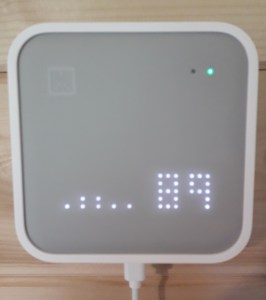
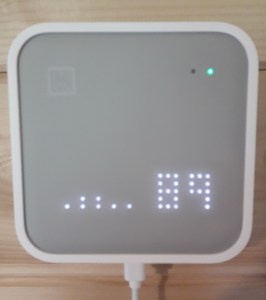
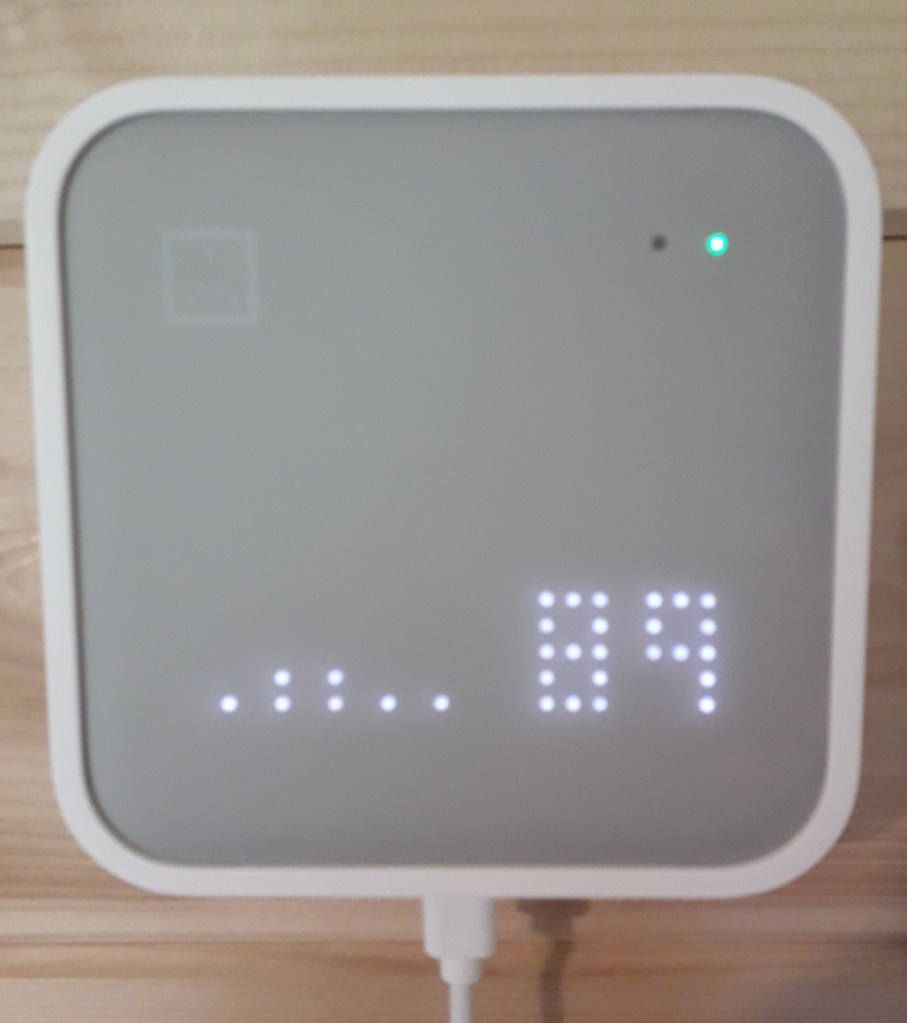
Awair Omni indoor air quality monitor. The green indicator light and the score show that the air here is very good

Such monitors can be very empowering. If they are visible and showing that there is something not quite right about the air, then that provides the evidence required to make a complaint to the facilities help desk. As well as the office worker seeing the data, the facilities help desk should be able to see the same information. Not only that, but there will be a record of the data, so trends can be observed and potential problems identified and fixed quickly. Furthermore, employers can be held to account if monitor data are not acted upon.

Sometimes, people are reluctant to complain, for fear of being regarded as moaners. However, a dispassionate air quality monitor certainly empowers and emboldens people to encourage their employers to manage the environment better, or even hand over control, where practical, to the users of the space concerned. Where organizations are struggling to retain and recruit, such a visual demonstration of provision of a decent quality working environment is very helpful.

Taking appropriate action

My recent forays into the complex world of indoor air quality (and I claim little expertise beyond a couple of online courses and some fascinating discussions with real experts) has demonstrated just how complex and multi-dimensional the subject is. Even though there are many indices for air quality, it is an understanding of the relative importance of each parameter in different situations that is fascinating – and this goes beyond purely objective physiological impacts. It strays well into aspects of human behaviour.

It is actually very important to recognise how individuals are pretty good at determining what matters to them.

Whilst maintaining a safe environment always has to be a top priority for building operators, the fickleness and resourcefulness of the apparently irrational humans that populate the building have to be taken into account.

In buildings where it is still possible to open windows, there is a risk that pollutants from outside will be brought in, which might worry a facilities manager doing their best to keep particulates out. However, that simple act of opening a window because the office is stuffy is both empowering (individual control rather than imposed conditions), but also might be the most effective way of getting rid of pollutants building up inside the building (carbon dioxide and VOCs for example).

People are actually quite good at assessing some risks. At one building where I carried out some interviews of office workers, most people readily appreciated that there were risks of pollution coming in when opening a window (the office was only a few hundred metres from a busy motorway), but they were prepared to do that because they wanted to freshen the air and reduce stuffiness (associated with carbon dioxide, temperature and humidity).

An air quality monitor might be one way to resolve arguments between facilities managers and building users – the decision to open the window can be validated by an improvement in the particular indoor air quality parameters that mattered to the user at the time.

Air quality monitoring for performance

Some recent research, for example that carried out by Joseph Allen (https://ehp.niehs.nih.gov/doi/10.1289/ehp.1510037, for example) shows clearly that elevated levels of carbon dioxide have a significant impact on cognitive ability.

It only takes a few minutes in a meeting room for carbon dioxide levels to increase above levels that are detrimental to cognitive ability. One of Allen’s studies showed that, on average, a 400-ppm increase in carbon dioxide was associated with a 21% decrease in a typical participant’s cognitive scores.

My own (rather informal) studies carried out in a small (but not untypical) meeting room showed that a small group of people in a 36 cubic metre room could increase carbon dioxide concentrations from a base level of approximately 500 ppm to over 1,200 ppm in under fifteen minutes.

Given that important business decisions are often made in small meeting rooms, rather than well-ventilated open-plan offices, it is potentially very concerning that those critical decisions are made by people whose cognitive abilities are compromised by high levels of carbon dioxide – senior executives are just as susceptible to the effects of elevated carbon dioxide as anyone else.

Photo by Christina Morillo on Pexels.com

A good quality indoor air quality monitor might be one of the best investments a business can make.