The interior landscaping industry is doing very well at the moment. This is a good thing as it keeps me and my colleagues in work.
The demand for greenery in, on and around buildings remains strong. Architects, designers and facilities managers are planning their spaces to fully integrate plants into their designs.
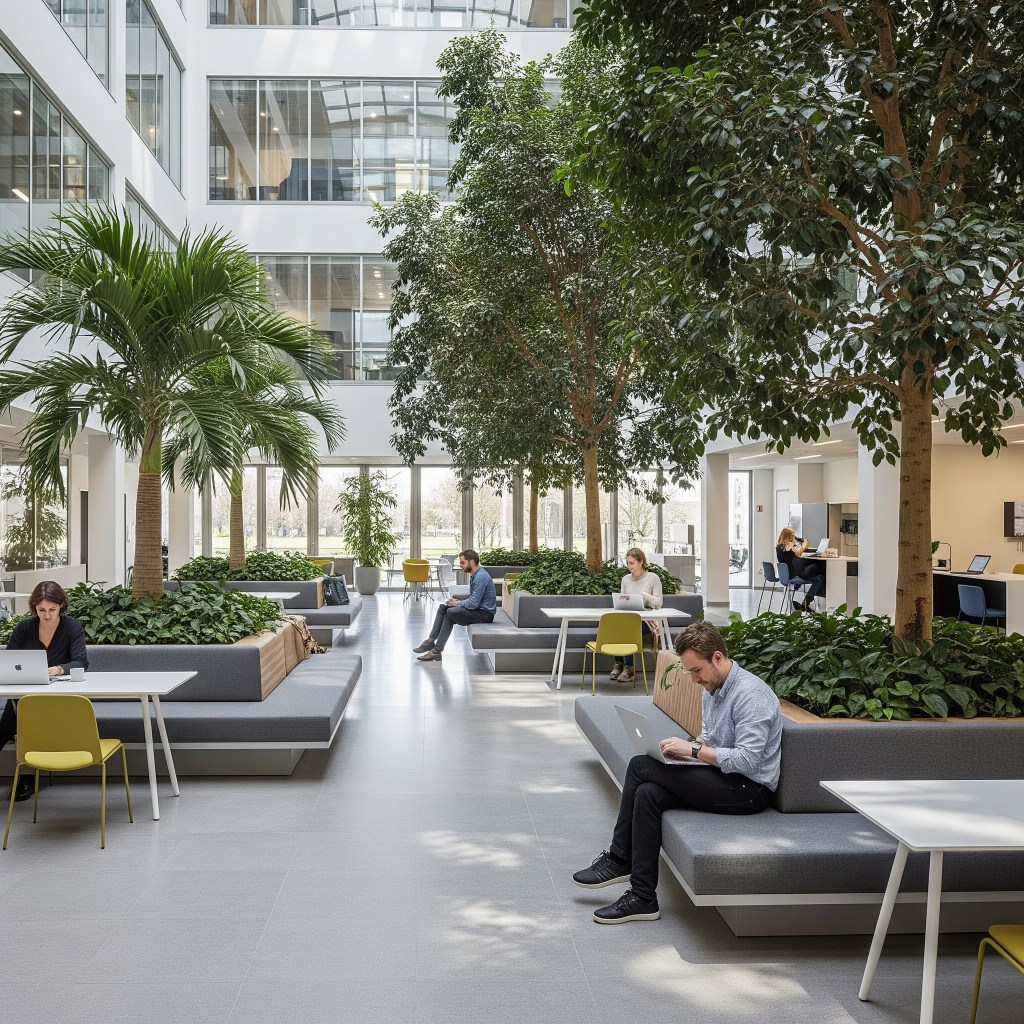
The justification for all of this very welcome plant life is to improve wellbeing and make the office more welcoming. Employers are keen to attract and retain staff (those Glassdoor ratings aren’t going to write themselves). Commercial real estate firms need to get people through the doors in order to justify the existence of their cathedrals of capitalism. It doesn’t take too long before ‘biophilic design’ is mentioned.
I have written before about why just putting plants in buildings is not the same as biophilic design. I am increasingly worried that the phrase has gone beyond being a synonym for office plants and are now weasel words that are losing all meaning. However, that is not the purpose of this article.
Sense of connection
Biophilic design should be about creating a sense of reconnecting with our natural environment. Zoos design their animal enclosures to be as much like the natural environment of the animals as possible. This helps them to live as well as possible given their captive state. The human animal also thrives in naturalistic environments, but the modern office is nowhere near getting there.

I understand that buildings are easier to construct with lots of straight lines and right angles – and that’s fine. But the spaces inside don’t have to be like that.
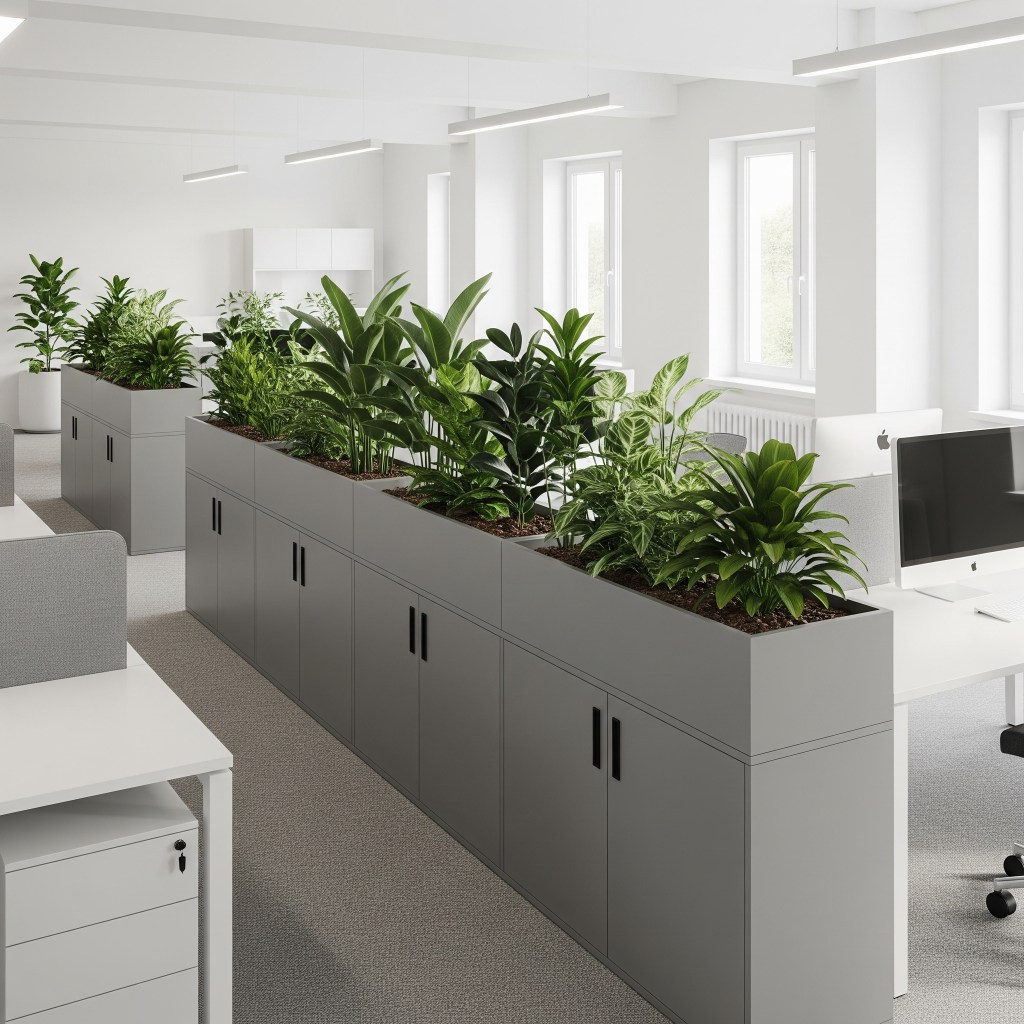
The trend of the moment is cabinet-top (furniture-based) planting. I have written about the practical issues of this style of planting, so won’t go over those again. You can read about my gripes here and here.
No, the problem I wish to address here is how such planting reinforces straight lines and right angles, making the spaces even more artificial.
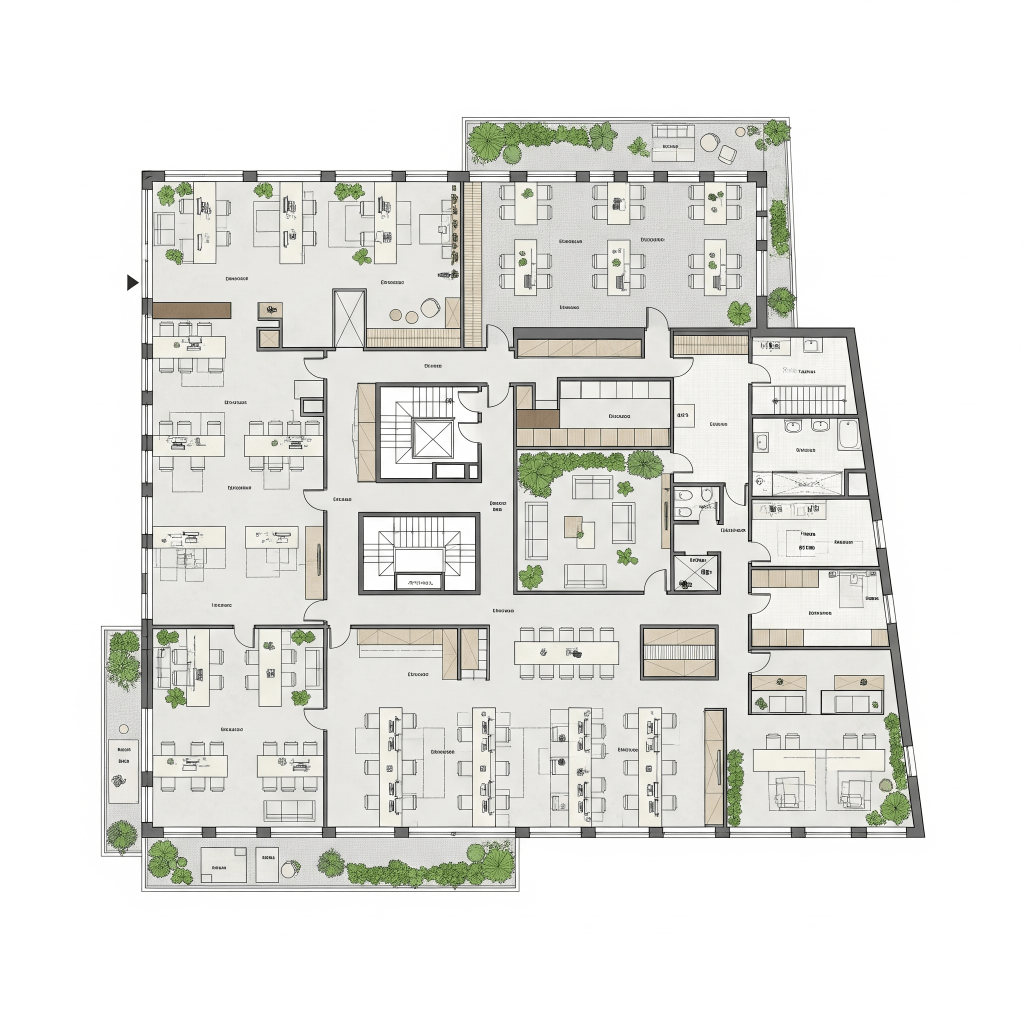
Nature is pretty random. There are curves and undulations. Vegetation is clustered, scattered and varied. Sometimes you can see over long distances, other times, there are mysteries to explore. There are wide-open spaces as well as sheltered spots. All of this can be alluded to in an office, but so rarely is.
Ticking boxes
Interior landscapers are often presented with a set of floor plans with the furniture already specified. These frequently include cabinet-top planters (which are often far too shallow, but that’s a different issue). The layout is fixed. The interior landscaper’s creativity has been hobbled and the inevitable consequences are hedgerows and plantations.
These hedges and plantations allow boxes to be ticked. Vegetation is visible from the majority of workstations, even though it is uniform. Surfaces are free from clutter and circulation routes are well defined. You might even get a certificate to show how healthy your building is.
But, without the variation that could be introduced, that would bring a sense of connection with the outside world, that could draw the eye away from the screen – even if only for a few seconds – are these spaces really biophilic?

Be braver
Embrace the irregularity of nature. If even it isn’t as space-efficient, you might find that the benefits, in terms of wellbeing and performance, more than outweigh the cost of the odd curve here and there. If you need some help with that – take a look at my services page and get in touch.
 Kenneth Freeman | Purposeful Places