I am strongly of the belief that biophilia is far more than the emotional and psychological connection to nature that is most often suggested as the basis of biophilic design. For me, true biophilic design is about creating physical and psychological comfort. It involves creating a sensory environment where our senses are stimulated congruently.
Physical comfort depends on our brain interpreting the inputs of sense receptors, which allows us to create an internal map of our environment. This helps us know how to behave: whether to fight, flee, feed, shelter, nurture, create, etc. Stress hormones can prime us to move quickly, whereas our pleasure centres can encourage us to stay put and indulge more.
An environment that allows our senses to work in concert should be comfortable and, in a workplace setting, will enhance effectiveness (thence engagement, productivity, job satisfaction, etc.)
Designers can be very good at addressing many of our sensory needs, but all too often, our largest sensory organ is ignored.
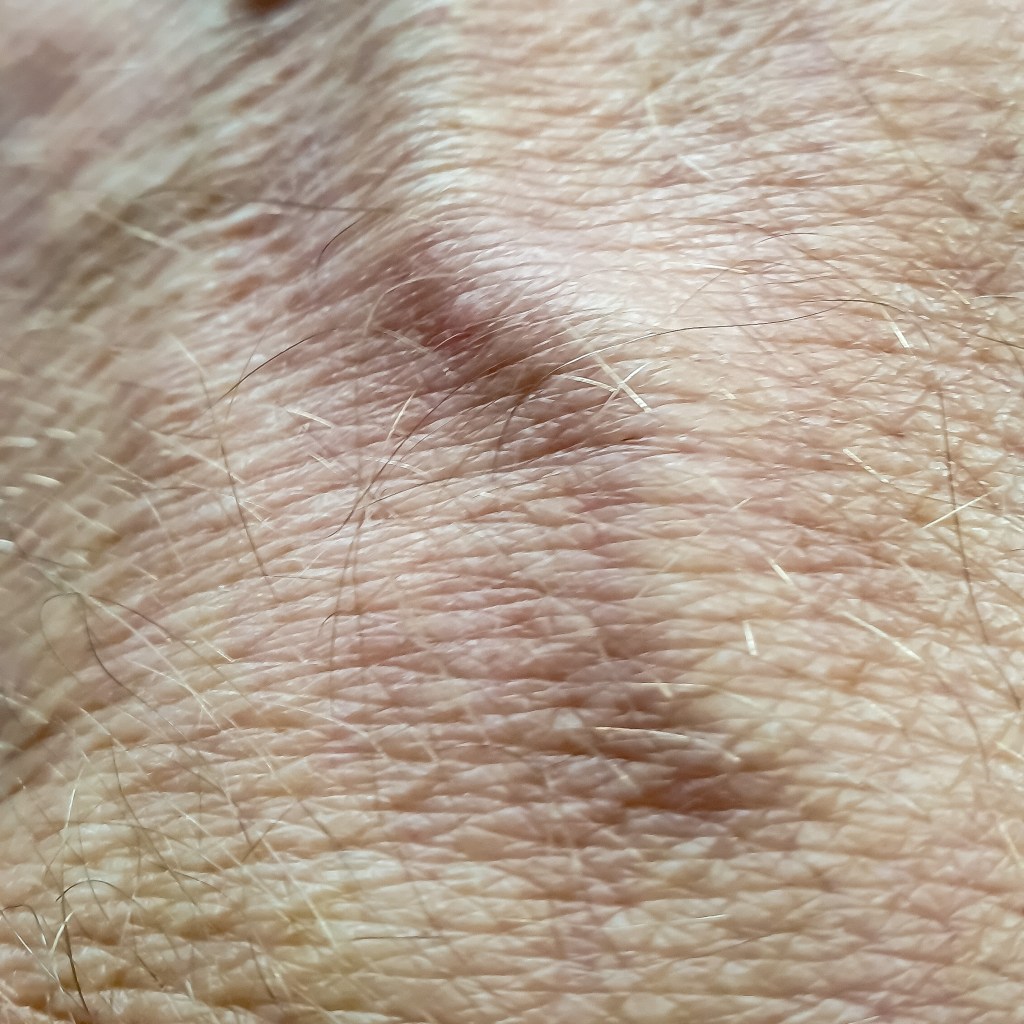
Our skin is densely packed with sensors that react to temperature, air movement, pressure and even static electricity and chemical irritation. Our skin sensors tell us when a surface is safe to grip or walk on. We have sensors that provide feedback about the things we pick up, bend, twist, press, push and pull. Other sensors tell us when we are being exposed to excess heat or cold.
Human beings are unique in nature in that we are the only species that covers most of its skin, thus depriving us of a huge amount of sensory information. However, that particular behaviour is a relatively recent innovation. Modern humans have only worn clothes for about a third of their time on Earth, and there is very little evidence to suggest that our hominid ancestors ever saw the need. As with our other senses (although to a lesser degree), evolution hasn’t caught up with the changes we have made to our habitats through migration and building – we are still essentially adapted to living wild on the open plains of Africa.
Depending on the nature of the sensory inputs through our skin, we can experience great pleasure or immense pain. Those experiences are enhanced the more that the skin is exposed.
One of the reasons we find draughts so annoying is that our skin is detecting air movement over only small parts of exposed skin, but not the rest. As a result, we get conflicting sensory inputs. Our neck and face might feel chilly, turbulent air currents, but the rest of us is wrapped up snug and warm. We have to use mental effort to understand what is going on.
In workplaces, we deprive ourselves of tactile and haptic experiences. Surfaces are smooth (for easy cleaning, as well as aesthetics) and we spend so much of our time still, apart from tapping at keyboards or picking up the phone.
So, what is the answer?
There are few opportunities to expose the skin to the environment in most workplaces. Society is probably not yet ready for naturist offices (although homeworking during the pandemic lockdowns offered many the chance to experiment), so any tactile and haptic stimulation needs to be directed at whatever skin is exposed (face and hands in the main), or be felt through clothing.
But it is not enough just to stimulate the skin, there can be purpose behind it.
Textures can be used very effectively to demarcate spaces and indicate safe, or preferred routes (think of textured pavements near pedestrian crossings). They can also be used to indicate status and authority – thick carpets and soft textiles are often associated with luxury and opulence, as are natural materials such as wood and stone. Whilst the general office accommodation in a building might be a sea of laminate desks and hard-wearing carpet tiles, the executive floors tend to be more cosseting. These areas have an abundance of more natural materials and they often feature more interesting and varied textures.
The indoor climate can also be managed in a way that is more in keeping with our sensory needs. I’ve already mentioned a reason why draughts are irritating, but other aspects of thermal regulation are important too. Heat and humidity, as well as air flow, can have a significant impact our comfort.
Humidity is especially important as far as comfort is concerned. Too humid and the air is clammy and our clothes get sticky and damp, which is not comfortable. Too dry, and our skin needs artificial moisturising to prevent itching and irritation.
In a typical workplace, our environment is pretty much fixed, or variable within a very limited range. In open offices, personal control is very limited. Office workers can neither change the environment nor their behaviours beyond a narrow spectrum.
When not in the office, we can make adjustments to our behaviour to adapt to a changing environment. Uncomfortable skin can be made more comfortable by moving from one place to another, by adding or removing clothes or by taking a refreshing shower. We can choose to walk on carpet or a hard floor, or sit on a soft cushion or wooden bench. We can often change some elements of the environment ourselves, by changing the temperature, for example. We have agency.
I first wrote this in May 2020, during the fifth week of the first lockdown in the UK. Most office workers were working from home. Perhaps, for the first time in their working lives, people were able to manage their working environment in ways that are not possible in an office building. Whilst it might have been lonely to be away from colleagues, it is likely to have been a more physically comfortable place to be. I wonder how much people will miss their control over their sensory environment when they return to the office. Maybe this is one reason why remote and hybrid working remains popular).
 Kenneth Freeman | Purposeful Places
2 thoughts on “Skin: our largest sense organ, and our least stimulated in the workplace”